Predicting Microscopic Polymer Degradation and Moisture Flash out during High Velocity Thermal Compression
High velocity thermal compression triggers polyolefin chain scission and steam explosion pinholing when moisture flash pressure exceeds melt cohesion.
Kinetics
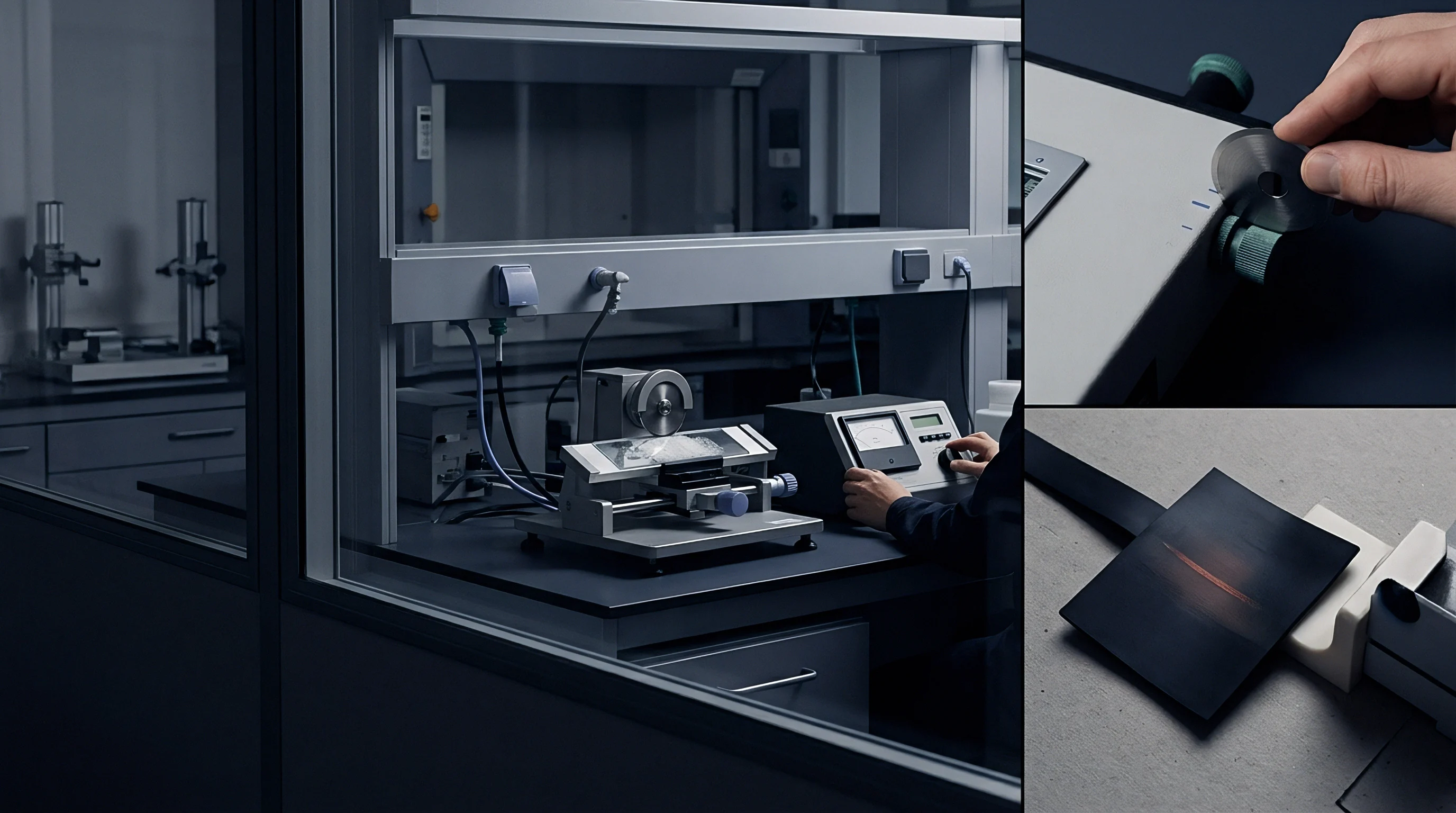
High-velocity thermal compression lines operating between 150 and 350 meters per minute subject polymer-coated paperboards to steep thermal transients. Heat transfers rapidly. Within a nip contact zone measuring between 12 and 25 millimeters in length, total contact duration collapses to a window of 2 to 10 milliseconds.
Steel platen temperatures maintained at 180°C to 240°C must drive sufficient caloric energy through an extruded polymer film, typically 12 to 30 micrometers thick, to reach its softening point and form a fiber-interlocking bond before the web exits the pressure zone.
Energy transfer across the steel-to-polymer interface is governed by transient conduction where interfacial contact resistance dominates the early milliseconds. Surface roughness of the steel anvil roll, combined with the instantly modulated elasticity of the heating roll cover, dictates real contact area under load. As line velocity increases, fluid dynamic boundary layers of air trapped on the substrate surface insulate the coating, delaying heat penetration.
High line speeds require elevated roll surface temperatures to compensate for brief dwell times, elevating the instantaneous surface thermal flux above 250 kilowatts per square meter.
Thermal Diffusivity in Millisecond Dwell Windows
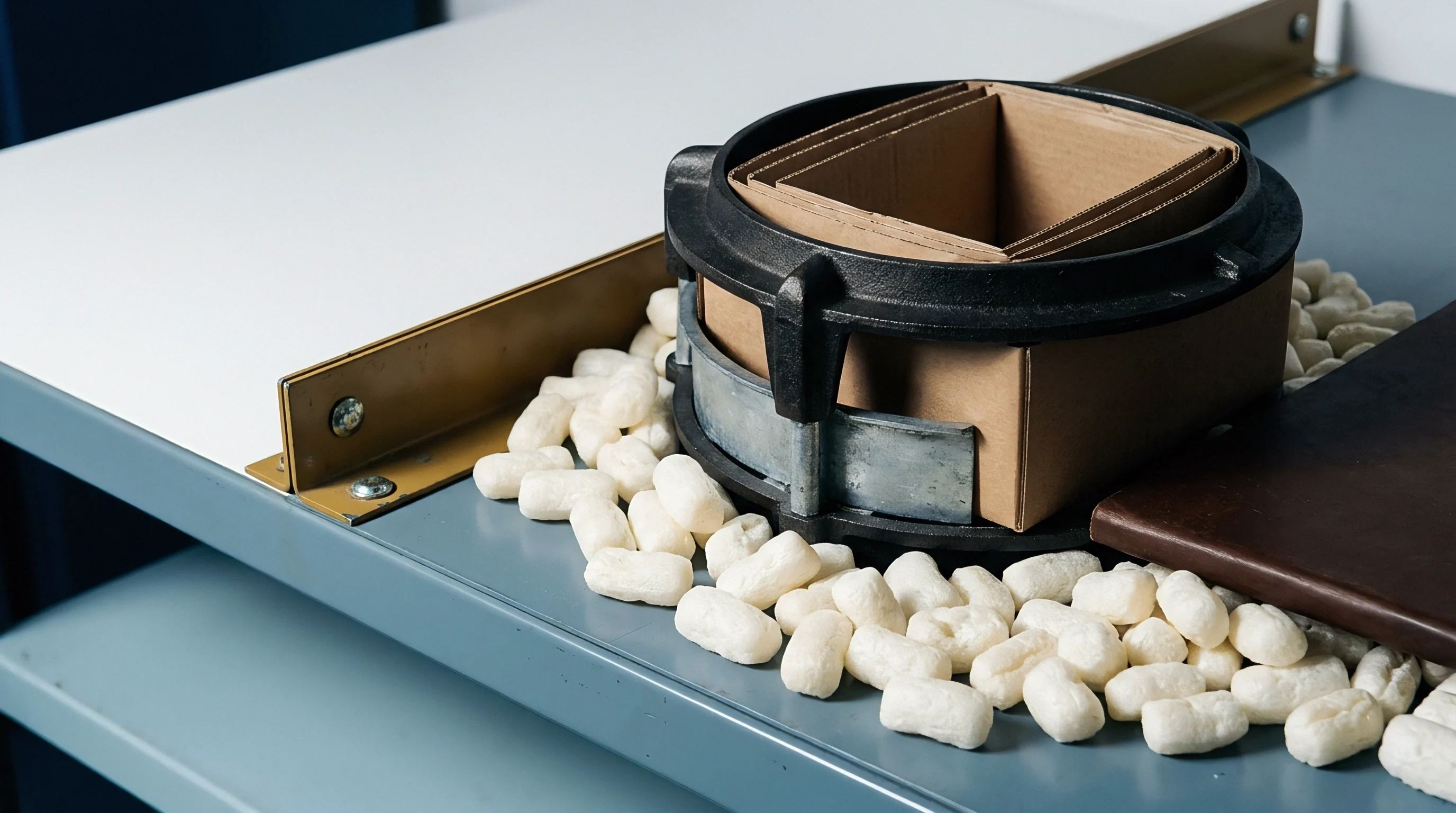
Conduction through semi-crystalline polyolefins depends on temperature-dependent thermal diffusivity, which drops as the polymer approaches its melting peak. Low-density polyethylene exhibits a room-temperature thermal diffusivity near 1.6 times 10 to the minus seven meters squared per second, falling toward 0.9 times 10 to the minus seven meters squared per second in the melt phase. This non-linear drop restricts thermal penetration depth during short compression cycles.
The thermal boundary layer penetrates only 8 to 15 micrometers into the coating layer during a 5-millisecond compression pulse.
Substrate moisture content alters total system thermal capacitance. Paperboard with a 7 percent moisture content absorbs energy through the latent heat of vaporization of water, creating a thermal sink at 100°C within the fiber matrix adjacent to the polymer interface. This thermodynamic delay prevents uniform temperature propagation through the adhesive interface, concentrating high thermal gradients within the outer 5 micrometers of the polymer film.
Peak outer skin temperatures frequently exceed the thermal decomposition threshold of the polyolefin while the inner fiber interface remains below the minimum flow temperature necessary for mechanical anchoring.
Standard ISO 11357-3 thermal analysis mandates heating rate corrections when predicting melt behavior under industrial conversion heat fluxes exceeding fifty degrees Celsius per second.

Nip Pressure Distribution and Viscous Shear
Compressive force within the nip nip generates continuous hydrodynamic shear rates exceeding 10,000 reciprocal seconds within the molten polymer layer. Hydraulic pressure profiles peak near the centerline of the rubber nip backing roll, reaching local pressures between 2.5 and 6.5 MPa. This rapid compression forces molten polymer into the surface macro-voids of the cellulose substrate.
Viscosity drops during compression.
Non-Newtonian fluid behavior governs molten polyolefin displacement under these deformation rates. Shear thinning reduces the apparent viscosity of high-melt-index polyethylenes by up to two orders of magnitude within the nip center, allowing liquid resin to penetrate paperboard pores. This rapid displacement generates intense internal friction, causing viscous dissipation that raises local polymer melt temperatures by an additional 5°C to 12°C beyond the conductive energy supplied by the heated cylinder.
| Polymer Grade | Density (g/cm³) | Melt Peak (°C) | Diffusivity at 20°C (m²/s) | Diffusivity at 150°C (m²/s) | Penetration Depth at 5ms (µm) |
|---|---|---|---|---|---|
| Low-Density Polyethylene (LDPE) | 0.918 | 108 to 112 | 1.65 × 10⁻⁷ | 0.92 × 10⁻⁷ | 13.6 |
| High-Density Polyethylene (HDPE) | 0.955 | 130 to 135 | 2.10 × 10⁻⁷ | 1.15 × 10⁻⁷ | 15.2 |
| Polypropylene Homopolymer (PP) | 0.905 | 160 to 165 | 1.40 × 10⁻⁷ | 0.81 × 10⁻⁷ | 12.7 |
| Polylactic Acid (PLA) | 0.125 | 150 to 170 | 1.10 × 10⁻⁷ | 0.65 × 10⁻⁷ | 11.4 |
| Polybutylene Succinate (PBS) | 0.126 | 112 to 115 | 1.25 × 10⁻⁷ | 0.72 × 10⁻⁷ | 12.0 |
Equipment supply agreements governing high-speed thermal laminators define operational velocity windows that specify peak heat flux limits, stating that exceeding roll temperature boundaries to offset speed increases voids the performance warranty on roll cover hardness and sleeve geometry.

Scission
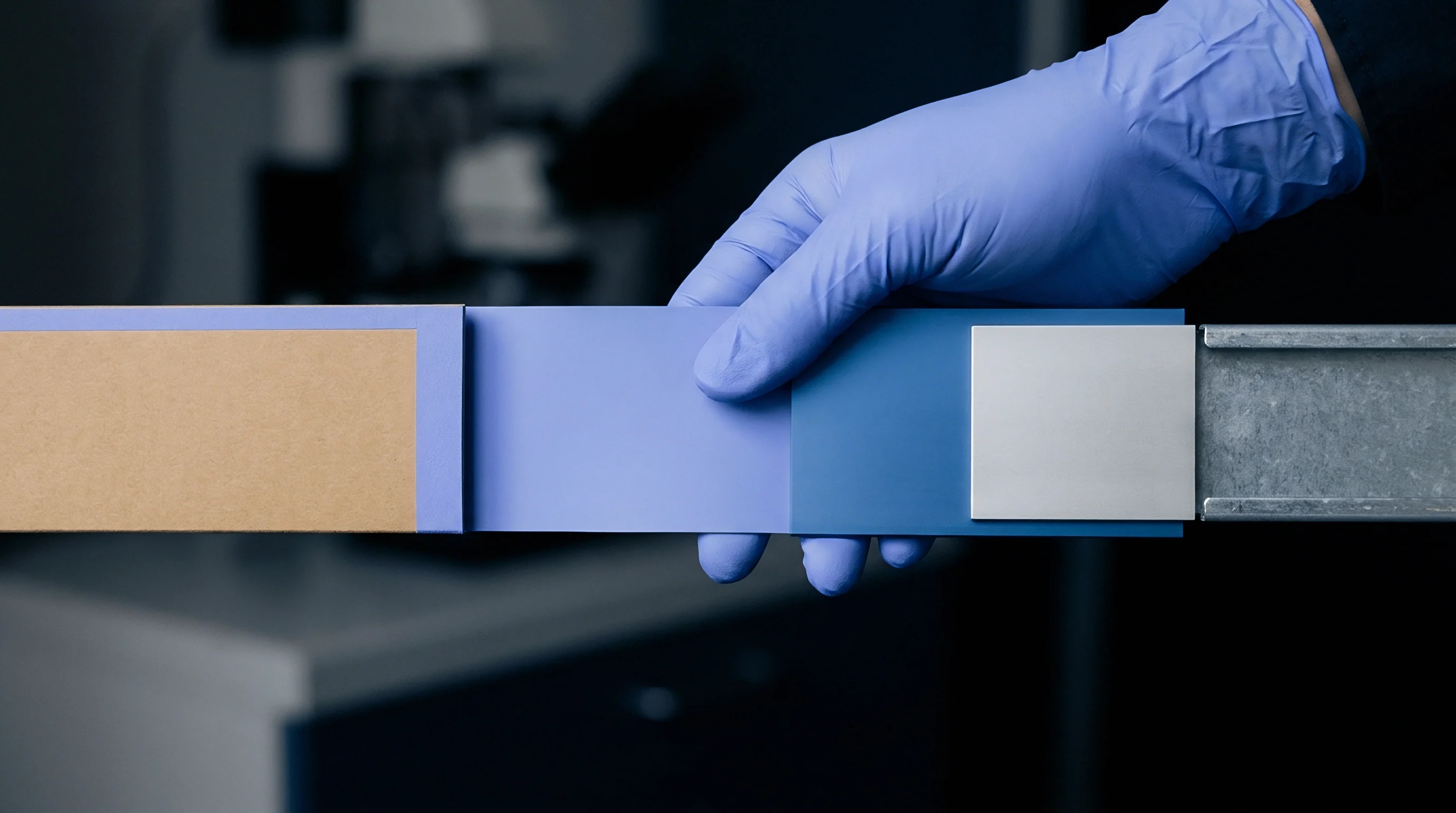
Thermal-mechanical energy input within high-shear nips triggers microscopic degradation pathways inside polyolefin matrix coatings. Molecular weight drops. Mechanical stress ruptures carbon-carbon bonds along the polymer backbone, producing alkyl primary free radicals.
These radical sites react instantly with residual atmospheric oxygen trapped within the paperboard void network, initiating thermo-oxidative autocatalytic cascades.
Degradation rates scale non-linearly with processing temperature and residence time above the activation energy threshold. Polyethylene experiences primary beta-scission at temperatures exceeding 200°C under high shear, yielding shorter polymer chains, terminal vinyl groups, and volatile low-molecular-weight hydrocarbons. Polypropylene displays higher sensitivity to radical degradation, undergoing hydroperoxide-mediated tertiary carbon scission that severely narrows molecular weight distribution and degrades mechanical tough properties.

Free Radical Thermal Oxidation under High Shear
Autoxidation in molten polyolefins follows classical radical kinetics involving initiation, propagation, branching, and termination phase events. Oxygen molecules dissolved in the molten polymer or present in paperboard pores react with alkyl radicals at diffusion-controlled rates, forming alkylperoxy radicals. These peroxy radicals abstract hydrogen atoms from adjacent polymer chains, generating alkyl hydroperoxides and fresh alkyl radical sites.
Homolytic cleavage of alkyl hydroperoxides creates alkoxy and hydroxyl free radicals, accelerating chain cleavage. Alkoxy radicals undergo beta-scission to form aldehydes, ketones, and carboxylic acids. These polar degradation products accumulate along the thermal compression interface, increasing the carbonyl index of the polymer skin layer.
A elevated carbonyl index increases surface energy, but concurrent reduction in mean molecular weight severely weakens the cohesive shear strength of the boundary layer, leading to delamination under mechanical stress.

Crystalline Reorganisation and Molecular Weight Shifts
Chain cleavage alters the crystallisation kinetics of the polymer during the rapid cooling phase immediately following nip exit. Shortened polymer chains possess higher chain mobility, allowing them to crystallize at higher temperatures and form large, brittle spherulitic structures. Polymer chains break.
Spherulitic crystal growth increases density differentials between amorphous and crystalline domains, inducing high localized internal tensile stress. Micro-cracks form along spherulite boundaries under moderate folding or scoring operations on converting lines. Lowering weight-average molecular weight expands the polydispersity index, shifting the viscoelastic response of the film toward low-viscosity liquid behavior that lacks the melt strength needed to resist internal vapor forces.
Differential scanning calorimetry tests confirm that a ten percent drop in low-density polyethylene weight-average molecular weight lowers its stress-crack resistance threshold by forty-two percent under standard flexural fatigue conditions.
Continuous thermal degradation generates specific physical and structural failure modes across converted packaging substrates:
- Boundary Layer Cohesion Loss occurs when intense beta-scission degrades polymer chains within the top 2 micrometers of the coating, causing interface shearing without fiber tear.
- Carbonyl Index Elevation results from free radical oxidation, introducing volatile low-molecular-weight organic compounds that degrade heat-seal purity and taint organoleptic properties.
- Spherulitic Embrittlement develops during uncontrolled crystallization of degraded short chains, producing micro-fractures along score lines during package blank folding.
- Melt Strength Collapse follows rapid reduction of high-molecular-weight polymer tails, causing web instability and film neck-in during downstream high-speed thermal processing.
- Pinholing via Cross-Linking Inhomogeneity occurs when secondary radical recombination creates localized hyper-crosslinked gels alongside degraded liquid domains, disrupting film thickness uniformity.
Failure to limit melt temperature profiles below critical scission thresholds results in catastrophic line rejection when converted packages exhibit zero fiber-tear adhesion during high-speed heat sealing passes.


Steam
Moisture flash out occurs when water bound within paperboard fibers undergoes explosive Phase change during thermal compression. Water expands dramatically. Paperboard substrates contain between 5 and 9 percent moisture by weight under standard converting plant atmospheres.
When compressed against a 200°C heated roll, this water converts to high-pressure steam within milliseconds.
Volumetric expansion of liquid water turning to steam reaches roughly 1,600 times at atmospheric pressure. Inside the closed environment of the nip zone, physical confinement prevents immediate vapor expansion, causing local internal pore vapor pressures to surge beyond 1.5 MPa. As the web exits the nip roll peak pressure center, atmospheric pressure drops rapidly, creating an intense vapor pressure gradient across the molten polymer coating layer.
Phase Change Mechanics and Vapor Trapping
Vapor nucleation initiates at microscopic cellulose fiber defect sites beneath the hot polymer film. If the polymer layer remains above its glass transition temperature but below a sufficient melt flow state, the impermeable resin skin traps the expanding steam bubble against the paperboard interface. Micro-voids expand fast.
Vapor pressure spikes.
Internal vapor pressure calculation follows the Clausius-Clapeyron relation, establishing saturated steam pressure based on localized interface temperatures. At an interface temperature of 160°C, equilibrium water vapor pressure reaches 0.62 MPa. If local nip pressure falls below this vapor pressure value prior to polymer solidification, steam forces its way through the viscous melt layer, creating micro-channels and blisters.

Delamination and Microscopic Pinhole Formation
Trapped steam explodes. Pinhole formation occurs through two distinct physical mechanisms depending on polymer viscosity and vapor volume. In high melt-flow-index coatings, expanding steam blows completely through the thin liquid film, leaving open craters between 10 and 100 micrometers in diameter that destroy gas and moisture barrier performance.
In high-viscosity or partially cross-linked coatings, steam cannot breach the elastic skin, forming sub-surface micro-blisters instead. These blisters lift the polymer away from the cellulose fibers, creating dry unbonded pockets that lower overall peel strength. Melt cohesion fails.
Pinholes ruin barriers.
| Substrate Equilibrium Moisture (%) | Interface Temp Peak (°C) | Calculated Vapor Pressure (MPa) | Minimum Nip Pressure Needed (MPa) | Micro-Blister Density (blisters/m²) | Barrier Failure Rate (Pinholes/m²) |
|---|---|---|---|---|---|
| 4.5 | 140 | 0.36 | 0.80 | < 5 | 0.0 |
| 5.8 | 155 | 0.54 | 1.20 | 18 | 0.2 |
| 7.0 | 170 | 0.79 | 1.85 | 145 | 4.5 |
| 8.2 | 185 | 1.12 | 2.60 | 680 | 38.0 |
| 9.5 | 200 | 1.55 | 3.80 | 2,400 | 210.0 |
An operator diagnosing moisture flash blisters on a high-velocity line follows a specific sequence of actions to isolate and resolve root causes:
- Verify raw paperboard web moisture using an inline infrared moisture sensor immediately before the heating pass.
- Cross-check recorded inline roll surface temperatures against calibrated contact pyrometer readings to verify actual heat delivery.
- Inspect first-off converted sheets under 50x magnification using optical microscopy to classify defects as open craters or unbonded micro-blisters.
- Perform dye penetration testing according to ASTM F1929 using red penetrant fluid to count pinhole frequency per square meter.
- Increase roll nip pressure in increments of 0.2 MPa until micro-blister formation ceases, maintaining web speed constant.
- Reduce heated cylinder setpoint by 5°C steps if pinholing persists, balancing steam reduction against minimum heat-seal adhesion strength.
Test protocol ASTM F1929 confirms that dye penetration through thermal-compression barrier board directly correlates with localized moisture flash out sites formed at converting web speeds above two hundred meters per minute.
Film extruders and converting suppliers routinely attribute post-lamination pinholing to paperboard pinhole defects or raw material pinhole contamination, claiming that incoming base paper stock contained excessive open porosity before thermal processing occurred.


Sensing
Predictive modeling of microscopic polymer degradation and moisture vapor flash out demands real-time monitoring combined with chemical analytical techniques. Mathematical models integrate transient heat conduction equations with Arrhenius-based oxidation kinetics and thermodynamic state equations for water phase change. Moisture regain alters heat.
Predictive models process web speed, substrate thickness, density, heat capacity, incoming moisture content, and roll surface temperatures to calculate continuous three-dimensional temperature and vapor pressure fields inside the nip.
Model accuracy depends on exact knowledge of degradation activation energy values for specific polyolefin grades. Low-density polyethylene oxidation carries an activation energy between 95 and 115 kilojoules per mole, whereas thermal-mechanical scission under shear drops to 60 kilojoules per mole. High-speed thermal conversion control algorithms execute these models to adjust roll temperature setpoints dynamically as web speed ramps during roll changes, avoiding overheating during line acceleration.
When Does Moisture Vapor Pressure Exceed Polymer Melt Cohesion?
Flash out conditions occur when internal steam pressure exceeds the combined restraint of applied external hydraulic nip pressure and the cohesive melt strength of the polymer layer. Cohesive melt strength depends heavily on temperature and strain rate. As temperature rises within the thermal compression nip, polymer melt strength declines exponentially.
Target temperatures remain narrow.
Hydrodynamic pressure profiles inside the nip drop to atmospheric levels faster than the polymer coating can cool below its crystallization temperature. This phase lag defines the critical failure window. If localized steam pressure inside the paperboard structure exceeds polymer melt cohesion during the final 3 milliseconds of nip exit, vapor ruptures the viscous layer, forming pinholes and micro-voids.
Spectroscopic and Chromatographic Decay Tracking
Laboratory quantification of thermal degradation uses Fourier-Transform Infrared Spectroscopy in Attenuated Total Reflectance mode (FTIR-ATR) to measure oxidation indicators. The carbonyl index is calculated by taking the ratio of the carbonyl absorbance peak near 1715 reciprocal centimeters to the reference methylene vibration peak near 1463 reciprocal centimeters. Clean polyolefin films present a carbonyl index below 0.02, while thermally degraded skin layers exhibit values exceeding 0.15.
High-Temperature Gel Permeation Chromatography (HT-GPC) tracks chain scission by measuring molecular weight distributions in trichlorobenzene at 140°C. Degradation shifts the distribution curve toward lower molecular weight fractions, reducing the weight-average molecular weight while broadening polydispersity. Complementary Differential Scanning Calorimetry (DSC) records decreases in oxidation induction time (OIT) tested under pure oxygen at 200°C according to ISO 11357-6, where OIT values below 10 minutes signal severe antioxidant consumption during processing.
Accurate verification of thermal-compression integrity requires specialized analytical testing documentation:
- FTIR Carbonyl Index Map detailing surface oxidation gradients across the web width to identify localized hot-spots on heating cylinders.
- HT-GPC Molecular Weight Profile proving weight-average molecular weight retention remains within ten percent of virgin resin specifications.
- DSC Oxidation Induction Time Certificate confirming sufficient active antioxidant primary stabilization survives the thermal compression pass.
- ASTM F1249 MVTR Test Docket validating water vapor transmission rates remain below target threshold limits after mechanical creasing.
- High-Speed Thermal Imaging Log verifying transverse temperature uniformity across the nip impression area during continuous high-speed runs.
Whether inline spectroscopic sensors can achieve sufficient signal-to-noise ratios at web speeds exceeding four hundred meters per minute to detect sub-micron carbonyl index shifts before physical blistering occurs remains an open technical challenge.

Margin
Process control parameters dictate the narrow operational margin where strong thermal adhesion occurs without inducing polymer scission or moisture flash out. Controlling incoming raw material moisture content represents the primary defense against vapor explosion defects. Paperboard converters must mandate strict moisture envelope specifications, holding incoming board between 5.5 and 6.5 percent equilibrium moisture content prior to lamination passes.
Web conditioning systems placed immediately ahead of the thermal compression roll assist in stabilizing substrate surface moisture. Non-contact infrared moisture meters connected to closed-loop steam humidification or high-velocity dry air curtains dynamically adjust board moisture prior to heating, preventing volatile moisture spikes from entering the nip.

Pre-Conditioning Control and Dew Point Operations
Plant environmental conditions influence substrate moisture balance through hygroscopic absorption. Ambient converting room conditions maintained at 23°C and 50 percent relative humidity preserve equilibrium moisture in stored board rolls. Unconditioned storage allows web edges to absorb moisture, creating high-moisture edge bands that trigger localized steam flashing and edge delamination during processing.
Chilled nip backing rolls require precise temperature management above ambient dew points to prevent water condensation onto the rubber sleeve. Surface condensation entering the thermal compression zone flashes into steam instantly upon contact with the heated platen cylinder, causing mass surface pinholing across the converted web. Backing roll coolant temperature control systems must hold sleeve temperatures at least 3°C above surrounding hall dew point temperatures.
Line Speed Optimization and Yield Calculations
Balancing web speed against roll cylinder temperature expands the operational window while optimizing economic yield. Running a line at 250 meters per minute with a 210°C roll setting delivers equivalent thermal transfer to running 180 meters per minute at 190°C, but drastically reduces degradation risks by shortening exposure time above scission thresholds. Operational speed balancing prevents thermal scrap.
Scrap costs mount quickly. Scrap rates linked to thermal degradation defects, such as heat-seal failure, micro-blistering, and pinholing, escalate packaging conversion costs. A 3 percent waste rate on a high-speed line converting 100,000 cartons per hour adds substantial financial loss through discarded board, wasted polymer, machine downtime, and customer claim liabilities.
| Process Window Setting | Line Speed (m/min) | Roll Temp (°C) | Nip Force (kN/m) | Scrap Rate (%) | Pass Cost per 10k Units (€) | Landed Net Cost per 100k (€) |
|---|---|---|---|---|---|---|
| Low Speed / High Heat (Degraded) | 150 | 225 | 35 | 4.8 | 142.00 | 1,488.16 |
| Balanced High-Speed (Optimized) | 280 | 205 | 50 | 0.4 | 112.50 | 1,129.50 |
| High Speed / Low Pressure (Flash Defect) | 320 | 190 | 25 | 6.2 | 105.00 | 1,115.10 |
A simple rule of thumb for thermal compression operators dictates that web speed increases should be met with increased nip pressure rather than elevated cylinder temperatures to preserve polymer integrity while preventing steam formation.