Modeling Slip Additive Migration Kinetics and Surface Decay in Converting
Fickian migration models balance additive saturation and winding nip forces to stop slip transfer and preserve lamination bond strength across converting runs.


Diffusion
Primary fatty acid amides migrate through semi-crystalline polyolefin webs along thermodynamic activity gradients established during film extrusion and subsequent cooling. Erucamide (cis-13-docosenamide) and oleamide (cis-9-octadecenamide) exist initially as dissolved solutes dispersed homogeneously throughout the molten polymer melt at concentrations typically spanning 500 to 2000 parts per million. As the extruded web quenches below its crystallization temperature, the polymer chains fold into lamellar crystallites, expelling the bulky, low-solubility fatty amide molecules into the mobile amorphous fractions.
Amorphous volume fractions become supersaturated instantaneously. This phase imbalance forces the amide species toward the film boundaries, initiating the bloom phenomenon that governs converting line speeds, web tracking, and surface lubricity.
Mathematical representation of this transport mechanism relies on Fickian second-order diffusion equations modified for concentration-dependent diffusion coefficients and finite polymer boundaries. The basic one-dimensional differential expression relates local concentration change over time to the spatial flux across the web thickness:
dC/dt = d/dz (D(C, T) (dC/dz))
Here, C represents the local additive concentration at depth z, t is elapsed storage time, and D(C, T) denotes the temperature- and concentration-dependent diffusion coefficient. The diffusion coefficient follows Arrhenius kinetics above the glass transition temperature of the amorphous matrix:
D(T) = D_0 exp(-E_a / (R T))
Within this relationship, D_0 defines the pre-exponential factor, E_a is the activation energy for amide migration (typically 75 to 95 kJ/mol for erucamide in low-density polyethylene), R represents the universal gas constant, and T is absolute temperature in Kelvin. The migration rate scales directly with ambient warehouse temperatures. Cooled storage slows surface bloom significantly, whereas elevated roll temperatures inside curing chambers accelerate additive exhaustion.

Concentration Gradients across Blown Polyolefin Films
Extrusion cooling profiles establish distinct morphology across blown film cross-sections, producing asymmetric amorphous channel pathways between the inner bubble surface and the outer air-ring face. Rapid external chilling creates smaller spherulitic structures with tighter tortuosity near the chill-air boundary. Slower internal bubble cooling permits the growth of coarser lamellae, lowering resistance to mass transport toward the inner sealant layer.
Consequently, symmetrical initial dosing of 1200 parts per million erucamide yields divergent surface arrival rates across opposing film faces, skewing static slip performance within forty-eight hours of collection.
Additive depletion in the core sub-surface regions creates steep internal concentration slopes. When the local dissolved concentration drops below the matrix solubility limit, internal migration ceases, freezing remaining additive reserves in place. The surface boundary conditions dictate that additive leaving the bulk phase deposits as an external crystalline monolayer.
Mathematical modeling of this boundary condition incorporates mass transfer resistance at the solid-gas interface alongside redissolution tendencies back into the boundary layer under localized thermal load.
Erucamide migration rates drop by sixty percent when warehouse storage temperatures shift from thirty degrees Celsius down to fifteen degrees.

Equilibrium Solubility Limits in Polyethylene Matrices
Polymer matrix density dictates the thermodynamic room available for additive solubilization. High-density polyethylene, possessing crystal volume fractions exceeding seventy percent, exhibits an erucamide room-temperature solubility limit below 150 parts per million. Standard low-density polyethylene accommodates roughly 400 to 600 parts per million prior to phase separation.
Linear low-density resins synthesized with short-chain hexene or octene branches present intermediate amorphous space, altering migration velocity and plateau time.
Exceeding equilibrium capacity guarantees rapid exudation, yet gross overdosing provokes macroscopic crystalline crusting. This white powdery bloom sloughs off during slitting, generating airborne debris and contaminating tension load cells. Polymer converters balancing slip efficacy against print adhesion select additive formulations calibrated precisely to resin branch frequency.
Resin suppliers routinely explain away surface drag variations across summer resin shipments by stating that warehouse thermal fluctuations remain outside standard resin manufacturing sales specifications.


Nip
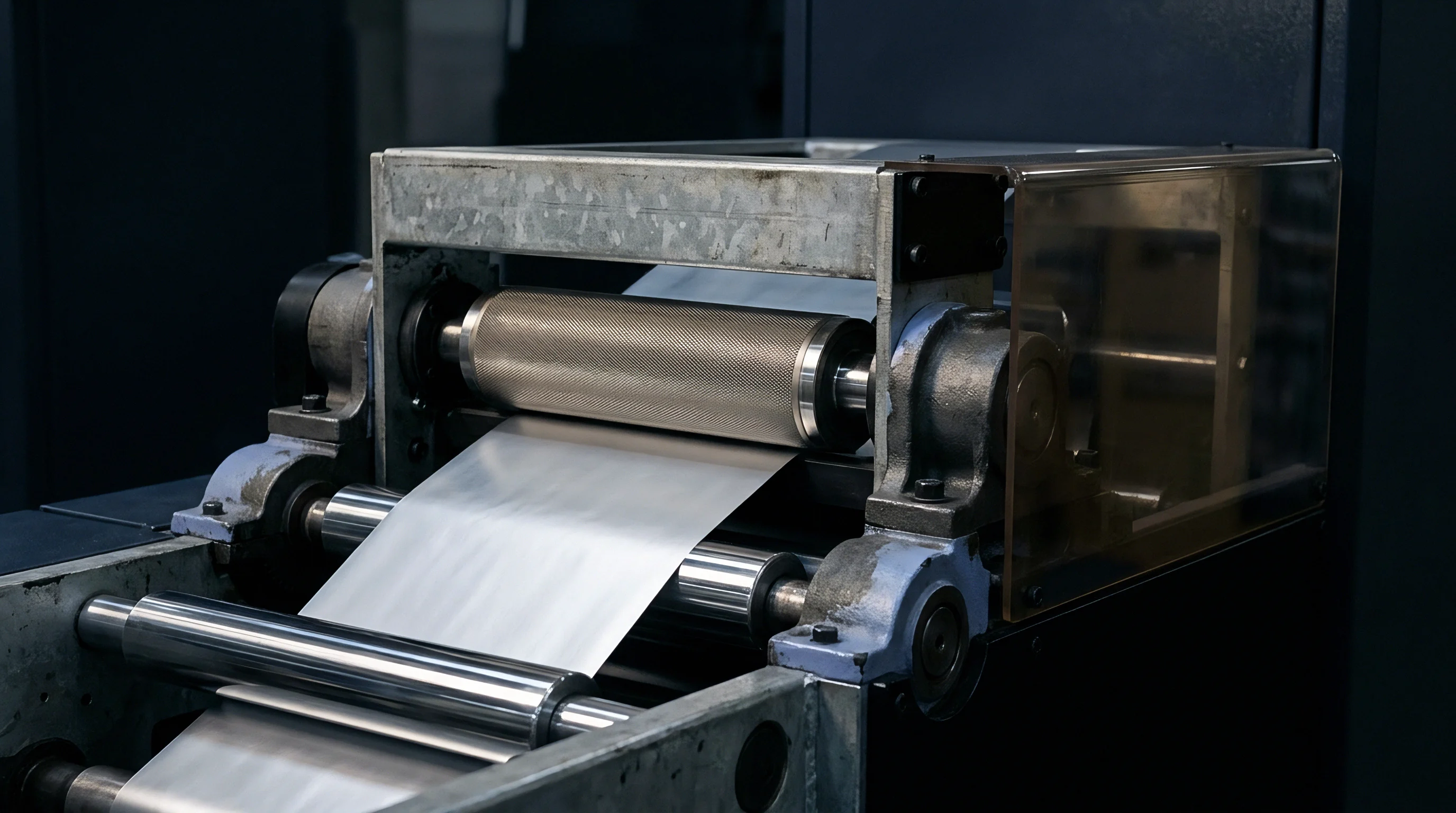
Mechanical pressure exerted within web winders and laminator rollers alters additive distribution across confronting film boundaries. Roll winders exert continuous radial compressive forces exceeding 0.8 MPa at the core, declining gradually toward outer wraps. This compressive stress gradient drives physical transfer of bloomed crystalline slip layers across from the functional sealant surface directly onto the untreated reverse face.
Surface-to-surface contact under pressure eliminates the boundary air layer, enabling direct solid-state transfer without requiring polymer remelting.
Wound film stacks act as closed physical systems. The bloomed amide molecules on the inside sealant face migrate under mechanical contact into the corona-treated backing of the adjacent layer. Amide back-transfer degrades the surface free energy of treated films, dropping dynes from 44 dynes/cm down to 32 dynes/cm within seventy-two hours of rewinding.
Printing inks applied to this contaminated face suffer catastrophic pinholing and cross-hatch tape peel delamination during downstream flexographic converting.
Pressure Induced Crystallization and Boundary Layers
Sustained compression forces the exuded fatty amides into flattened, interlocked crystalline platelets rather than discrete nodular crystals. Atomic force microscopy reveals these flattened morphology patches spreading laterally across amorphous polymer regions. Mechanical deformation from nip rolls flattens the original three-dimensional molecular hairpins, increasing real contact area with subsequent guide rolls.
Static contact under tension also drives partial additive dissolution back into localized surface zones where shear heating raises localized temperatures. Web tension spikes around un-driven idlers generate microscopic frictional heating spikes. These thermal transients exceed sixty-five degrees Celsius at contact peaks, dissolving slip amides instantly back into the superficial five-nanometer polymer skin.
Immediate recrystallization upon cooling forms irregular glassy domains displaying erratic kinetic drag.
Does Roll Pressure Drive Additive Back-Transfer?
Compression levels inside finished rolls dictate the migration rate of slip additives from coated front layers to raw reverse substrates. When web winders maintain taper tension control profiles, wound-in roll tension remains uniform, minimizing localized pressure peaks that accelerate transfer. Constant-torque winding, conversely, generates extreme compressive forces at the core, driving heavy additive transfer into the first five hundred meters of web.
Testing roll sections across radial depths confirms substantial disparity in slip concentrations between core and outer wraps. Converters unwinding the final third of a parent roll frequently encounter unexpected coefficient spikes accompanied by failed solventless lamination bond strength. Back-transferred amides chemically shield terminal polyurethanic hydroxyl groups from isocyanate crosslinkers, retarding adhesive network cure.
| Radial Roll Position | Interlayer Pressure (MPa) | Face Erucamide (mg/m2) | Reverse Transfer (mg/m2) | Treated Face Energy (dyn/cm) |
|---|---|---|---|---|
| Core Layer (0-10%) | 0.85 | 8.2 | 4.6 | 31 |
| Mid Pack (40-50%) | 0.42 | 10.4 | 2.1 | 37 |
| Outer Wrap (90-100%) | 0.12 | 12.1 | 0.5 | 42 |
Procurement documents protect downstream converter margins when purchase orders incorporate explicit mechanical limits on winding tension profiles. Standard supply contracts enforcing technical annex DIN 55437 mandate that rolls displaying back-transfer surface tension degradation exceeding two dynes per centimeter face commercial debit and immediate reel quarantine.

Friction
Sliding resistance along converting equipment depends directly on the surface coverage density of bloomed fatty amides. As additive molecules emerge from the amorphous matrix, polar amide head groups (-CONH2) orient toward the polar surface oxide sites or self-associate through hydrogen bonding networks. Non-polar eighteen-to-twenty-two carbon aliphatic tails extend outward toward the atmosphere, creating a low-energy waxy carpet that prevents intimate polymer-to-metal contact during web movement.
Mathematical modeling of the dynamic coefficient of friction (CoF) tracks surface coverage theta as an evolving boundary function over post-extrusion storage time. A widely validated empirical-kinetic relationship couples coverage fraction directly to sliding resistance:
CoF(t) = CoF_inf + (CoF_0 – CoF_inf) exp(-k_bloom t)
In this equation, CoF_0 denotes initial bare-polymer friction measured directly at the extrusion take-up reel (typically 0.65 to 0.90 for pristine polyethylene), CoF_inf defines the terminal equilibrium friction achieved at complete monolayer saturation (typically 0.12 to 0.20), and k_bloom represents the rate constant governed by matrix diffusivity and storage temperature. A thin crystalline film provides maximum hydrodynamic lubrication under boundary friction conditions.

Transient Sled Dynamics under ASTM D1894
Measurement protocols standardized under ASTM D1894 capture both peak breakaway resistance and steady dynamic drag using a weighted 200-gram sled drawn across test specimens at 150 millimeters per minute. Oscillations during testing reveal stick-slip behavior caused by non-uniform additive distribution. When surface concentration falls below 4 mg/m2, discontinuous crystalline islands form, permitting momentary polymer asperities to weld under the moving sled load.
The resulting load cell output displays ragged periodic force spikes rather than a smooth horizontal plateau.
Dynamic friction requirements vary sharply by converting machinery configuration. High-speed vertical form-fill-seal lines operating at 180 cycles per minute require stable dynamic CoF between 0.18 and 0.22 over metal forming collars. Low slip levels above 0.30 cause web stutter, bag jams, and register hunting.
Conversely, dynamic friction dropping below 0.14 generates severe roll telescoping, bag tracking wander, and poor stack registration in automated palletizers.
CoF values below zero point one four cause roll telescoping on primary slitter winders.

Aging Regimes across Variable Storage Temperatures
Crystalline bloom progression divides into three distinct operational regimes across calendar aging. The initial induction stage spans zero to twelve hours post-extrusion, where surface additive concentrations remain insufficient to establish a continuous slip layer. The second phase features rapid kinetic decay of friction, typically extending from twelve to seventy-two hours, during which boundary lubrication achieves commercial specifications.
The final phase represents saturation equilibrium, where surface coverage plateaus and migration balances environmental mechanical loss.
- Induction Regime ~ Unstable friction levels persist while initial molecules travel through amorphous boundaries to reach the exterior film plane. Surface drag remains above 0.50 during early slitting operations.
- Kinetic Bloom Phase ~ Rapid drop in both static and dynamic resistance occurs as fatty amide networks assemble across eighty percent of the web plane. Converting operations achieve optimal tracking velocity throughout this intermediate window.
- Equilibrium Plateau ~ Additive arrival terminates as the bulk core drops toward thermodynamic solubility limits. Film surfaces exhibit stabilized dynamic drag across standard handling speeds.
- Degradation Phase ~ Extended warehouse storage past ninety days initiates environmental oxidation of unsaturated aliphatic bonds, causing yellowing and gradual friction rise. Crystalline amides dust off through abrasive contact across guide rolls.
High warehouse heat shortens the kinetic phase from forty-eight hours down to nine hours while accelerating eventual oxidative decay. Thin films reach terminal slip velocity far faster than heavy-gauge structures due to shortened internal diffusion paths. A film web running perfectly through converting machines in winter will crawl or jam across identical form collars during July production runs.

Corona
Dielectric barrier discharge treatments bombard the moving web surface with electrons, ozone, and excited oxygen radicals to introduce polar functionalities necessary for ink wet-out. Energy densities spanning 1.5 to 3.0 kW-min/m2 cleave polymer backbone chains, generating carboxyl, carbonyl, and hydroxyl groups. This oxidative shower alters bloomed slip additive molecules occupying the topmost molecular layer, breaking down unsaturated aliphatic chains into shorter, volatile fragments while oxidizing amide nitrogen centers into polar derivatives.
Corona oxidation turns low-energy aliphatic coatings into high-surface-energy polar species. The modified molecules fail to deliver boundary lubrication, raising measured kinetic friction instantaneously. Exposed double bonds present in erucamide and oleamide act as primary scavengers for plasma-generated ozone, forming hydroperoxides, aldehydes, and carboxylic acids.
These cleaved fragments bond strongly to the oxidized polymer surface, forming an immobilized, sticky boundary interphase.

Where Does Corona Oxidation Sever Slip Performance?
Oxidative discharge attacks double bonds precisely at the ninth carbon position in oleamide and the thirteenth position in erucamide. Ozonolysis cleaves the long-chain amide into two shorter fragments: pelargonic acid and azelaic acid monoamide from oleamide, or nonanoic acid and brassylic acid monoamide from erucamide. These polar, truncated cleavage products exhibit elevated melting points and aggressive adhesion to bare steel tooling.
Sled tests performed across corona-treated zones show dynamic CoF spikes exceeding 0.70 within seconds of electrode exposure.
Erucamide resists oxidation marginally better than oleamide due to its longer aliphatic tail shielding the internal double bond. Saturated alternatives such as behenamide (docosanamide) and stearamide (octadecanamide) eliminate double bonds entirely, exhibiting exceptional resistance to corona-induced fragmentation. Their elevated melting points and slow room-temperature diffusion limit their deployment to specialized hot-fill applications where prolonged high-temperature converting justifies extended bloom waiting periods.
| Additive Molecule | Chemical Structure | Melting Point (C) | CoF Before Corona | CoF After Corona | Oxidative Cleavage Loss (%) |
|---|---|---|---|---|---|
| Oleamide | C18H35NO (cis-9) | 70 | 0.16 | 0.68 | 84 |
| Erucamide | C22H43NO (cis-13) | 82 | 0.18 | 0.54 | 62 |
| Stearamide | C18H37NO (saturated) | 102 | 0.28 | 0.36 | 12 |
| Behenamide | C22H45NO (saturated) | 110 | 0.30 | 0.35 | 8 |
Saturated fatty amides survive corona discharge without generating cleaved polar acid fragments.

Competitive Adsorption at the Print Primer Boundary
Subsequent printing and solvent-based coating passes encounter intense surface competition between migrating slip additives and liquid primers. Polyurethane laminating inks require direct access to active oxygen sites on the corona-treated polyolefin skin. Continuing post-treatment diffusion of un-oxidized amides from the internal matrix pushes new additive molecules into the interface between the dry ink film and the polyolefin skin, disrupting primary mechanical anchor points.
Ink adhesion decay manifests as late-stage bond release occurring weeks after shipping converted roll goods to packaging plants. Standard water-based flexographic formulations fail rapidly when slip concentrations exceed 15 mg/m2 at the ink interface. The un-anchored additive creates a cohesive weak boundary layer, peeling away intact ink films under minor scotch tape pull testing.
Engineers remain uncertain whether plasma pre-treatments under pure nitrogen gas atmospheres can permanently suppress competitive migration without escalating converter utility costs beyond commercial recovery thresholds.


Outlay
Formulation decisions balancing slip kinetics directly dictate operational converting profitability and material yield. Primary amides represent raw compounding expenses ranging from 4.50 to 8.20 USD per kilogram above standard base polyolefin resin prices. Masterbatch dosing errors propagate rapidly across continuous blown film campaigns.
An operational over-dosing of 400 parts per million erucamide across a typical 50-tonne packaging film production order adds 140 to 200 USD in unnecessary direct chemical spend while initiating high risk of lamination failure.
Costly line stoppages during automated pouch-making or horizontal flow-wrapping represent the financial consequence of unmonitored additive kinetics. Downstream convertor machinery operating at 350 packages per minute carries line overhead rates averaging 450 to 900 USD per operating hour. When dynamic slip drifts outside processing tolerance windows, automated packaging lines abort feeding cycles continuously, escalating scrap rates from normal 1.5 percent levels to catastrophic peaks above 12 percent.
Compounding Premiums for Secondary Amides
High-performance converting applications requiring continuous thermal exposure frequently employ secondary fatty bis-amides such as ethylene bis-stearamide (EBS) or erucyl erucamide. These advanced slip additives exhibit exceptional thermal stability, resisting volatilization at extrusion melt temperatures exceeding 260 degrees Celsius. Their cost profiles reflect synthesis complexity, commanding market pricing spanning 9.00 to 14.50 USD per kilogram.
The higher price structure earns economic justification by suppressing additive evaporation at the die lips, eliminating die-lip build-up defects that force line shutdowns every twelve hours.
Secondary amides exhibit substantially lower diffusion rates within standard polyethylene matrices. Slower migration prevents rapid surface replenishment during high-speed rewinding passes where idler rolls strip away bloomed surface films. Converters running secondary amides must build extended warehouse curing windows into job costing dockets, funding inventory holding expenses for five to seven days before slitting or pouch manufacturing begins.

Line Stoppages and Incompatible Laminating Adhesives
Adhesive laminating operations incur severe financial losses when slip migration disrupts polyurethane crosslinking chemistry. Unreacted amides consume aromatic isocyanate monomers (methylene diphenyl diisocyanate), forming substituted urea linkages that terminate polymer chain propagation. The resulting lamination web fails to achieve specified peel strength, dropping bond values from a target 4.0 N/15mm down to un-bonded values below 0.8 N/15mm.
- Scrap Web Generation ~ Delaminated laminate rolls cannot undergo reclamation or direct recycling due to crosslinked adhesive contamination. Material disposal costs add 120 USD per tonne in landfill or incineration surcharges alongside total raw stock asset write-offs.
- Press Speed Derating ~ Unstable CoF forces machine operators to derate printing press speeds by twenty to forty percent. Operating an eight-color flexo line at 180 meters per minute instead of 300 meters per minute doubles per-pack allocation of fixed plant depreciation.
- Forming Collar Contamination ~ Excess fatty amide crystals wipe onto stainless steel forming collars during vertical packaging, creating sticky gum deposits. Maintenance crews expend two labor hours per shift scrubbing collars with hot solvent blends to prevent film tearing.
- Customer Rejection Claims ~ Delamination failures occurring inside consumer goods distribution chains trigger complete production batch recalls. Brand owners charge sorting fees, restocking penalties, and production downtime back to the converter ledger under standard indemnification clauses.
A typical high-volume converting business miscalculating additive migration schedules loses several hundred thousand dollars annually in unrecoverable raw film inventory, press derating losses, and processed pouch warranty liabilities.