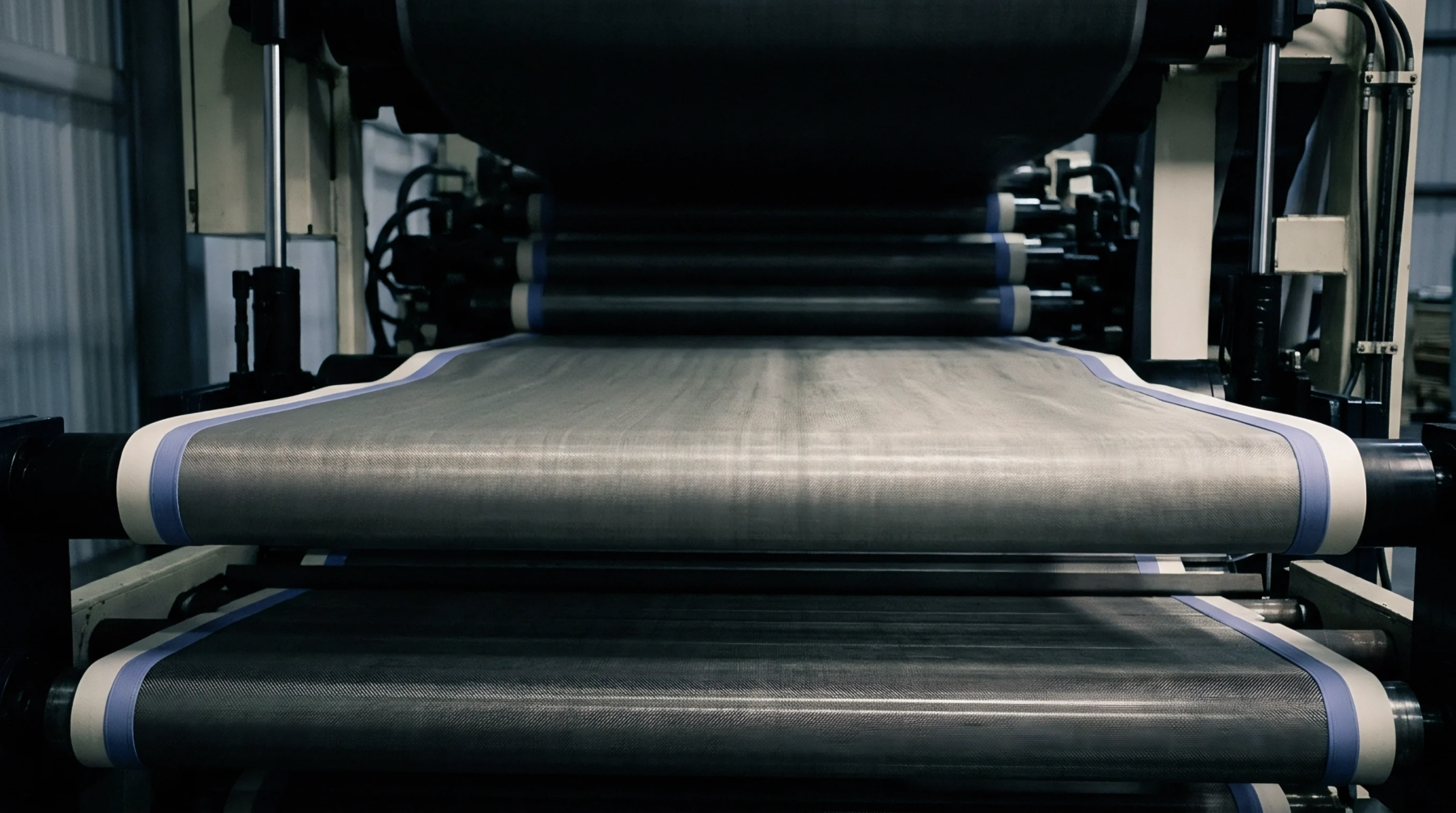
Compression Zone
Mechanical compression zones formed by the contact of two rotating rolls apply controlled pressure to a moving web of paper or paperboard. The calender nip reduces the thickness of the sheet and compresses the surface structure to create a uniform finish. These compression zones operate under high linear load to consolidate the fiber network.
Smoothness Modification
Surface topography alterations occur as the fiber sheet is forced through the high-pressure area. The intensity of the calender nip determines the final gloss and smoothness of the paperboard, which affects printability. Friction and heat within the contact area cause the plasticization of surface fibers and coatings.
This deformation creates a uniform substrate that improves ink transfer and coating laydown.
Density Distribution
Bulk reduction must be balanced against stiffness loss because excessive pressure collapses the internal voids of the board. Multi-ply boards utilize the calender nip to achieve surface uniformity on outer plies while preserving the low-density structure of the inner plies. Advanced setups employ soft rolls or heated steel rolls to concentrate the compression at the surface rather than throughout the entire thickness of the sheet.
This structural management keeps the board thick enough to resist bending while providing a high quality printing surface.