Optimizing Calender Moisture Profiles for Board Bulk Retention
Retain board bulk and bending stiffness by applying surface moisture gradients to lower outer ply glass transition temperatures before soft nip compression.
Gradient
A caliper gauge closing on a multi-ply folding boxboard web measures the structural resistance of distinct furnish layers. Structural board performance requires a high ratio of thickness to basis weight, expressed as bulk in cubic centimetres per gram under ISO 534. Solid bleached board and multi-ply boxboard achieve bending stiffness through spatial separation of the outer tensile skins from the neutral axis.
Water acts as a plasticizing agent inside the furnish. Water plasticizes cellulose.
The glass transition temperature of amorphous wood polymers drops rapidly as moisture content rises. Dry lignin exhibits a glass transition temperature near 140 °C. Adding moisture to eight percent drops this transition threshold below 60 °C. Hemicellulose experiences an identical shift. When a uniform moisture distribution of eight percent passes through a calender nip at elevated temperature, the mechanical energy compresses the entire sheet thickness indiscriminately.
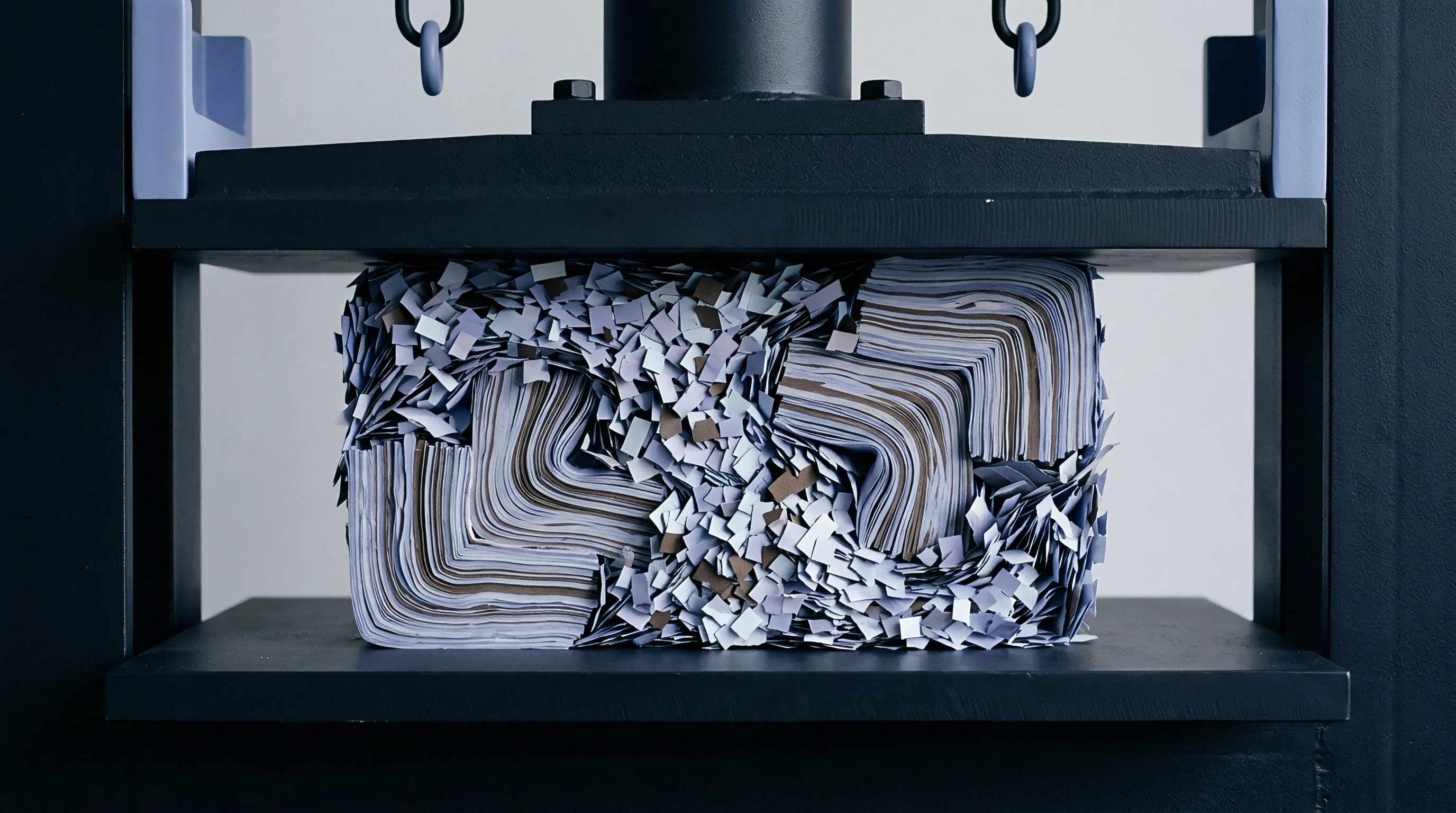
The structural core collapses alongside the surface layers. Bulk vanishes, and Taber stiffness per ISO 2493 drops with the third power of that thickness loss.
| Ply Location | Furnish Type | Target Moisture (%) | Local Glass Transition (°C) | Core Density Preservation (%) |
|---|---|---|---|---|
| Top Surface Ply | Bleached Kraft Hardwood | 10.5 – 12.0 | 42 – 48 | N/A (Intended Density Gain) |
| Sub-surface Layer | Bleached Kraft Softwood | 8.0 – 9.0 | 58 – 65 | 88.5 |
| Central Core Ply | Mechanical BCTMP | 5.5 – 6.5 | 85 – 95 | 97.2 |
| Bottom Surface Ply | Unbleached Kraft Softwood | 10.0 – 11.5 | 45 – 50 | N/A (Intended Density Gain) |
| Data recorded following ISO 187 conditioning at 23 °C and 50% relative humidity. Test nip pressure set at 4.5 MPa. | ||||
Retention of board bulk during surface smoothing demands a steep transverse moisture differential. Moisture added exclusively to the outermost fibres lowers the surface glass transition temperature without dampening the core. Lignin softens under heat.
A moisture concentration exceeding nine percent in the middle ply reduces chemi-thermomechanical pulp bulk by fourteen percent under a three megapascal soft nip load at ISO 187 standard atmosphere.
When the web enters the calender nip, the heated metal roll contacts only the thin, high-moisture surface layer. Thermomechanical deformation remains localized within the outer twenty micrometres of the sheet surface. Peak pressure smooths surface roughness spikes while the cool, dry internal furnish maintains its elastic response.
The central mechanical pulp fibres resist plastic collapse because their internal temperature remains below their elevated glass transition threshold. Whether acoustic emission sensors can measure the instantaneous transverse compression rate inside a three-ply nip before thermal equilibrium occurs remains unproven under commercial machine speeds exceeding seven hundred metres per minute.
Steam
Moisture condensation at the calender entry transfers heat energy directly into the top and bottom fibre walls. Applying precise quantities of water vapor immediately prior to web compression creates the required surface plasticization. Condensation releases latent heat.
Steam condenses on cool fibres.
Application systems position high-velocity condensation hoods within fifty to two hundred millimetres of the calender roll entry. Droplet size control dictates surface uniformity. Water droplets larger than forty micrometres create localized density variations, leading to print mottle and calender blackening.
Nozzles operating under high-frequency ultrasonic vibration generate micro-droplets between ten and twenty micrometres. These tiny droplets condense into a continuous, uniform liquid film across the surface fibres without penetrating the sheet interior.
- Verify that web temperature at the condensation hood inlet remains at least fifteen degrees Celsius below the saturated steam temperature to ensure immediate vapor condensation.
- Adjust condensation zone pressure to match machine speed, maintaining a residence time between three and eight milliseconds before the web strikes the roll nip.
- Inspect condensate drainage traps continuously to prevent droplet entrainment in the high-velocity air boundary layer surrounding the moving sheet.
- Monitor cross-machine surface moisture via high-resolution near-infrared reflection sensors positioned three hundred millimetres downstream from the application zone.
Dwell time between steam application and nip contact dictates moisture migration depth. Dwell time alters temperature penetration. At line speeds of eight hundred metres per minute, a fifty-millimetre separation between the steam shower and the nip contact point yields a dwell time of under four milliseconds.
Within this brief window, water vapor condenses on the surface fibres, raising surface moisture to twelve percent while the central ply remains unaffected at six percent.
Contractual compliance under ISO 534 demands caliper tolerances within plus or minus three percent across the full web width, triggering pallet rejection when local moisture peaks compress the bulk.
Increasing the distance between application and compression allows water to migrate inward via capillary action into the central furnish. Capillary absorption homogenizes the transverse moisture gradient. Once moisture reaches the middle ply, the bulk retention advantage vanishes.
Core density dictates board stiffness. Equipment vendors frequently claim that steam shower condensation units eliminate core rewetting completely, attributing any subsequent bulk collapse to uncontrolled basis weight variation across the forming wire.
Softness
Roll covers constructed from synthetic polymer composites deform under hydraulic loading to lengthen the contact zone inside the calender stack. Elastic deformation reduces peak nip pressure while extending dwell time. Longer contact under moderate pressure allows thermal energy to flow into the moisture-softened surface fibres without exceeding the yield strength of the dry core ply.
Hard steel rolls concentrate mechanical force into a narrow nip width of two to three millimetres. Peak pressures in hard nips frequently exceed thirty megapascal. Force of this magnitude crushes the structural core regardless of moisture profile.
Soft nip calenders utilize roll covers with elastic moduli ranging from eighty-five to ninety-two Shore D hardness. Under equal line loads, an elastic roll cover widens the nip zone to fifteen or twenty millimetres. Surface moisture creates thermal gradients.
| Roll Cover Type | Cover Hardness (Shore D) | Surface Moisture Added (%) | Nip Peak Pressure (MPa) | PPS Roughness 10 MPa (µm) | Bulk Retention (%) |
|---|---|---|---|---|---|
| Chilled Cast Iron | N/A (Hard) | 0.0 | 32.0 | 1.85 | 82.1 |
| Chilled Cast Iron | N/A (Hard) | 2.5 | 28.5 | 1.35 | 84.6 |
| Polyurethane Composite | 92 | 1.5 | 8.5 | 1.40 | 91.3 |
| Synthetic Polymer | 88 | 2.2 | 5.2 | 1.12 | 95.8 |
Matching surface moisture application to roll cover compliance prevents operational defects during high-speed board finishing.
- Calender Blackening occurs when excessive surface moisture combines with high peak pressure, collapsing fibre pores and rendering the sheet transparent in localized patches.
- Core Densification results from long nip dwell times coupled with high internal board moisture, destroying structural bending stiffness.
- Surface Fibre Picking takes place when wet surface fibres adhere to hot roll surfaces operating above 180 °C, pulling material from the sheet top ply.
- Moisture Streak Mottle appears when uneven transverse water application creates alternating bands of dense and porous board surface, leading to non-uniform ink absorption in offset printing.
Moisture added strictly to the surface plies flattens roughness spikes while leaving the structural core uncompressed.
Dry core fibres resist crushing. Thermal energy penetrating the surface layer triggers viscoelastic flow in the moist outer cellulose matrix. Smooth surfaces accept coating evenly.
The elastic roll cover yields under macroscopic sheet variations, applying uniform pressure across peaks and valleys alike. Soft roll covers deform under pressure to lengthen the nip dwell time, allowing heat transfer to remain on the surface without penetrating the inner furnish.
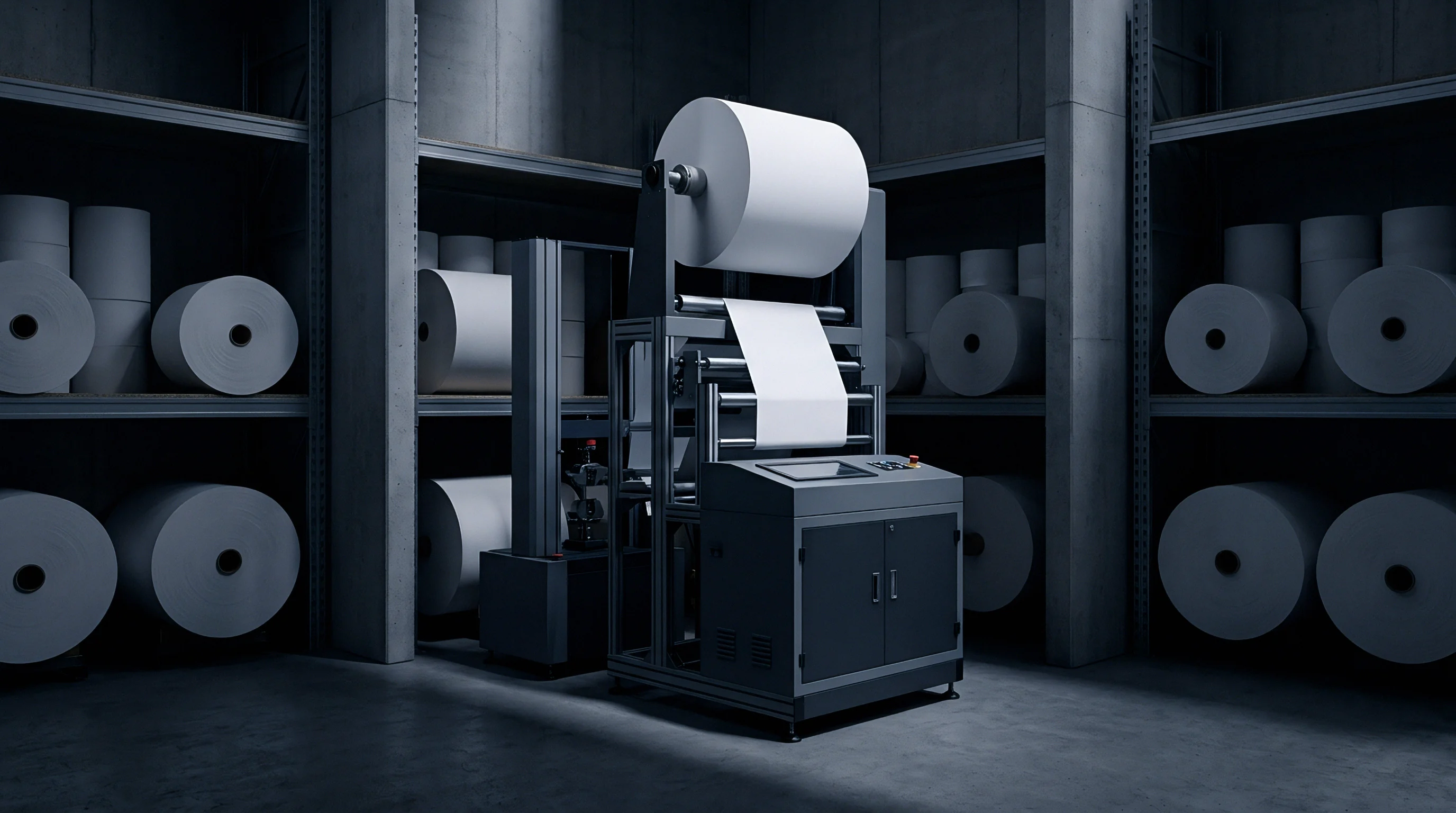

Caliper
Bending stiffness forms the primary physical requirement for packaging board intended for automated carton converting. Machine readability on carton filling lines depends on predictable board resistance during blank creasing and folding. Bending resistance correlates directly with sheet caliper raised to the third power, multiplied by the elastic modulus of the outer plies.
Retaining caliper while achieving required Parker Print-Surf values under ISO 8791-4 dictates board economic value. Thick boards preserve bending resistance.
Where Drops the Glass Transition Temperature?
The transition threshold drops precisely where water concentration increases. When water remains locked in the top and bottom plies, the elastic modulus of the inner chemi-thermomechanical pulp ply remains high. The dry core functions as a rigid structural spacer between the stiff tensile skins.
Compressing the sheet uniformly reduces caliper by fifteen percent, which slashes bending stiffness by nearly thirty-eight percent. Preserving core bulk preserves structural performance.
Single-ply solid bleached board presents different calendering dynamics than multi-ply folding boxboard. Lacking a bulky mechanical pulp center, solid bleached board relies entirely on chemical pulp fibre network architecture. Surface moisture gradient control in solid bleached board prevents total sheet collapse by restricting thermal plasticization to the top ten micrometres.
The middle chemical pulp fibres remain cold and unyielding.
Bending stiffness drops with the third power of thickness loss, making core volume preservation mandatory during surface smoothing.
Over-calendering the web to force a smooth print surface reduces carton crease stiffness, causing high-speed packaging lines to jam during automatic side-seam gluing and box erecting.
Profile
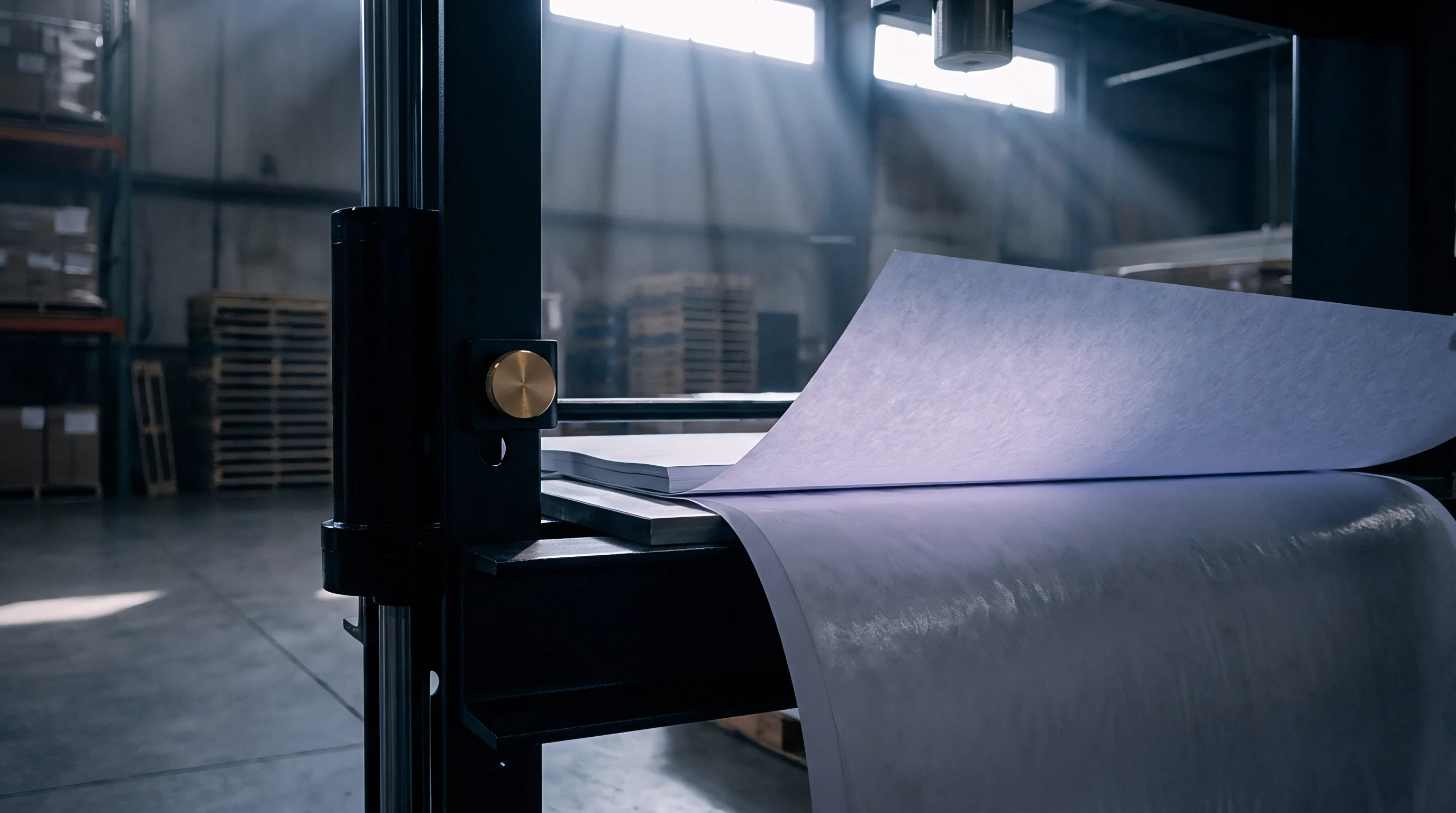
Cross-web variation in moisture content creates uneven web compression across the machine width. Localized damp streaks pass through the calender stack and emerge as thin, overly dense bands. Dry bands resist compression, yielding rough surface zones that fail print smoothness specifications.
Profile control systems address this variance by applying zone-controlled moisture sprays across fifty-millimetre web segments. Actuators adjust cross-machine water application.
High-resolution infrared scanners located at the dry end measure moisture and basis weight profiles at five hundred Hertz. Control algorithms map these measurement profiles directly to the cross-machine moisture spray bar. When the scanner detects a dry streak, the corresponding actuator increases spray volume.
Moist streaks receive zero water addition. This dynamic response flattens the moisture profile entering the calender nip to within plus or minus 0.2 percent moisture across a six-metre web width.
- Scanner Calibration Verification confirms that near-infrared absorption signals distinguish between surface moisture films and internal board water content.
- Actuator Nozzle Alignment verifies that atomized water sprays land within their designated fifty-millimetre cross-machine track without overlapping adjacent control zones.
- Dry Edge Compensation applies supplementary water volume to the outer ten centimetres of the board web to counteract edge evaporation during web transit.
- Feedback Loop Tuning sets integral and derivative control constants to prevent actuator hunting during rapid machine speed changes.
Blackening degrades print appearance. Flattest possible cross-machine moisture profiles enable higher average sheet moisture levels prior to calendering. Running a web at 7.5 percent average moisture instead of 6.5 percent reduces dryer section steam consumption while improving sheet flexibility.
Standard delivery contracts referencing TAPPI T 411 mandate uniform caliper across the reel width, where uncorrected moisture streaks force the mill to lower overall nip pressure and accept higher surface roughness across the entire order.
Calculus
Mill economics depend on the total tonnage required to yield a given surface area of carton blank. Paperboard purchase contracts specify area delivered, but production costs follow raw material mass processed through the pulper. A board mill capable of retaining bulk during surface finishing can lower product basis weight while holding caliper constant.
Yield drives converter profitability. Lower basis weight reduces freight.
Consider a production run producing 300 µm caliper folding boxboard. Conventional hard nip calendering requires a basis weight of 250 g/m² to achieve this thickness alongside acceptable PPS smoothness. Implementing surface moisture profile control and soft nip calendering allows the mill to produce the identical 300 µm caliper and print smoothness using only 225 g/m² basis weight.
The ten percent reduction in raw material usage translates directly into lower fiber consumption and diminished freight costs per unit area.
| Parameter | Conventional Hard Nip Operation | Gradient Surface Moisture Operation | Net Commercial Difference |
|---|---|---|---|
| Target Board Caliper (µm) | 300 | 300 | 0 µm (Unchanged) |
| Required Basis Weight (g/m²) | 250 | 225 | -25 g/m² (-10.0%) |
| Board Sheet Bulk (cm³/g) | 1.20 | 1.33 | +0.13 cm³/g (+10.8%) |
| Delivered Area per Tonne (m²) | 4,000 | 4,444 | +444 m² (+11.1%) |
| Fiber Tonnage for 40,000,000 m² | 10,000 tonnes | 9,000 tonnes | -1,000 tonnes Saved |
| Raw Material Fiber Cost ($650/t) | $6,500,000 | $5,850,000 | -$650,000 Direct Savings |
A ten percent reduction in mass lowers extended producer responsibility compliance fees in jurisdictions taxing total packaging weight placed on the consumer market. Lowering basis weight without losing structural bending performance alters the competitive baseline across folding boxboard markets. Fiber savings lower chemical usage in pulping, reduce dry-end energy demands, and maximize total square metres of board delivered per machine operating hour.