Water Distribution
Uniformity across a paper sheet dictates the physical dimensions and structural integrity of the substrate as it leaves the drying section of a machine. A moisture profile defines the cross-directional measurement of water content expressed as a percentage of total mass. Variations in these levels trigger uneven expansion or contraction of cellulose fibres during final finishing.
High local concentrations of water lead to localized swelling which creates baggy zones or tight edges in the finished reel. These irregularities disrupt print registration and cause misfeeds during high speed converting operations.
Calibration Stability
Sensing devices mounted on scanning frames across the paper web collect continuous data to map the local humidity level against the target set point. Infrared gauges transmit energy through the sheet to detect absorbance at wavelengths sensitive to hydroxyl groups in water molecules. The mill control system translates these readings into localized adjustments for steam boxes or induction heaters that regulate sheet dryness before the calender stack.
Accurate adjustments ensure the sheet maintains a level surface during the hardening of coatings. Operators verify the accuracy of these readings against laboratory gravimetric testing of oven-dried samples taken from the reel edge and centre. Persistent drift in the scanning sensor necessitates recalibration against a reference standard to prevent false data from triggering improper dryer adjustments.
Converting Impact
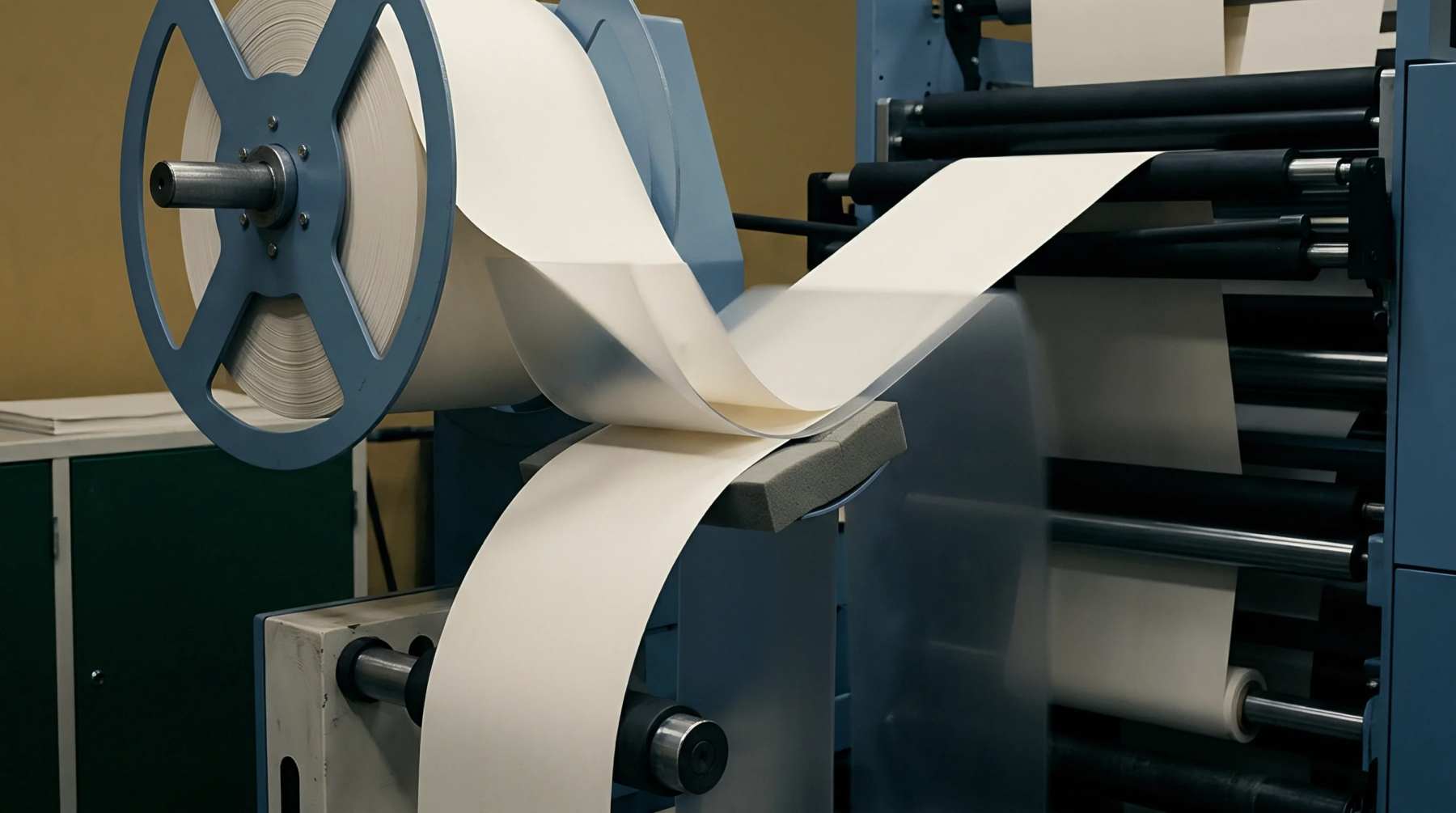
Precise control over this property prevents the creation of wavy edges which occurs when the outer zones of a web absorb atmospheric humidity at a rate differing from the core. Excessive dryness at the centre of a roll causes the paper to pull away from the tension of the winding process while overly damp edges lead to a soft reel structure. Damage to the internal web geometry complicates the smooth unwinding of material during lamination or high speed gravure printing.
Consistent levels allow for predictable friction coefficients between the sheet and press rollers. Stability in the paper structure reduces the risk of web breaks under mechanical load.