Optimizing Board Factor Multipliers for High Bulk Uncoated Stocks
High bulk uncoated board requires expanding crease matrix channel widths to 1.8-2.1 times caliper to prevent liner cracking while adjusting stiffness board factor multipliers down to 0.82-0.88.

Volume
Heavyweight uncoated paperboard grades achieving high bulk rely on coarse thermo-mechanical pulp or unbleached kraft furnish blends with minimal machine calendering. When structural packaging designers specify high-bulk uncoated substrates with specific volumes between 1.4 cm³/g and 2.2 cm³/g, the internal geometry of the sheet alters converting physics. Standard board factor calculations derived for dense, fully bleached coated folding boxboard (1.1 cm³ to 1.3 cm³/g) miscalculate the required creasing matrix dimensions, press impression nip pressures, and structural bending resistance.
Furnish Architecture and Density Physics
Coarse mechanical fibers create an open, porous internal network inside the sheet structure. Softwood thermo-mechanical pulp (TMP) and chemithermomechanical pulp (CTMP) retain rigid, tubular lumen structures because the chemical defibration process leaves lignin intact. Lignin stiffens individual fiber walls, preventing collapsed double-wall ribbon formations during web formation on the Fourdrinier or multi-ply cylinder machine.
Fibre walls retain air. High-bulk uncoated boards achieve target calipers at significantly lower grammages than fully bleached sulphate boards. Mechanical pulp yields bulk.
The absence of heavy mineral pigment coatings (such as calcium carbonate or kaolin clay) maintains low Z-directional density. Fillers in coated board fill inter-fiber voids, increasing mass without contributing to bending stiffness. Uncoated high-bulk boards eliminate this dead weight, maximizing the distance between the outer fiber layers per unit of basis weight.
ISO 536 testing verifies grammage, while ISO 534 establishes caliper under a static pressure load of 50 kPa. Measuring a 250 gsm board with a caliper of 425 microns yields a specific volume of 1.70 cm³/g. A standard coated board at the same 250 gsm caliper measures approximately 325 microns, yielding a specific volume of 1.30 cm³/g.
At 23 °C and 50 percent relative humidity under ISO 534, a 250 gsm high-bulk thermo-mechanical board achieves a 425 micron thickness at a specific volume of 1.70 cm³/g.
Fiber Matrix Delamination Mechanisms
Z-directional tensile force causes the internal layers of low-density board to shear apart under mechanical bending strain. TAPPI T541 internal bond strength tests demonstrate that high-bulk uncoated boards display lower z-axis pick resistance (100 J/m² to 140 J/m²) compared to dense coated boards (180 J/m² to 240 J/m²). This lower internal cohesion directly influences how the board responds during die-cutting and creasing operations.
During score line formation, the male crease rule forces top fibers downward into the matrix cavity. High-density boards resist z-directional compression, forcing stress laterally into delamination zones. High-bulk uncoated boards compress locally under the rule tip, absorbing energy through pore collapse before delamination initiates.
Caliper exceeds target thickness. Without adjusting board factor multipliers in conversion formulas, female score channels remain too narrow, causing surface liner rupture and jagged, uneven 90-degree corner folds on automated cartoning lines.
| Property | Test Method | Standard Coated Board | High-Bulk Uncoated Board |
|---|---|---|---|
| Grammage (gsm) | ISO 536 | 300 | 230 |
| Caliper (microns) | ISO 534 | 380 | 415 |
| Specific Volume (cm³/g) | Calculated | 1.27 | 1.80 |
| Internal Bond Strength (J/m²) | TAPPI T541 | 210 | 125 |
| Taber Bending Stiffness MD (mN·m) | ISO 2493 | 19.5 | 18.8 |
| Bendtsen Roughness (mL/min) | ISO 8791-2 | 50 | 850 |
| Data generated from standard mill MTR samples conditioned for 24 hours under ISO 187 standard environment. | |||
Higher bulk furnish demands wider scoring matrices to prevent liner rupture during fold formation.


Calibre
Thickness measurements dictate structural performance when converting high-bulk uncoated substrates. Conventional packaging engineering software calculates score allowance, female channel width, and bending stiffness based on linear caliper scaling. High-bulk uncoated board breaks these classical linear models.
When specific volume rises above 1.5 cm³/g, board factor multipliers must drop below traditional coefficients to account for increased compressibility and reduced interlaminar shear modulus.

Adjusting Stiffness Calculations for Low-Density Sheets
Theoretical bending formulas developed for dense folding boxboard overstate the actual rigidity of high-yield uncoated stocks. Bending stiffness (Sb) follows the fundamental beam equation where stiffness scales with elasticity (E) and the cube of caliper (t3):
S_b = (E · t³) / 12
Increasing caliper while reducing basis weight lowers the elastic modulus (E) of the sheet because fewer refined fibers occupy the cross-sectional volume. Board factor adjustments offset strain. While a standard board may use a board factor multiplier (Ks) of 1.0 in Taber or L&W stiffness estimations, high-bulk uncoated boards demand an adjusted multiplier (Ks) between 0.82 and 0.88.
A packaging engineer specifying a 400-micron high-bulk board expecting the Taber stiffness of a 400-micron solid bleached sulfate board will experience carton collapse during top-load vertical stack tests. The McKee formula for Box Compression Test (BCT) prediction must integrate a modified board factor coefficient (Kbct) when evaluating high-bulk uncoated containers:
BCT = 5.876 · ECT · (P · t)^0.5 · K_{bct}
For standard coated folding boxboard, Kbct equals 1.00. For uncoated stocks with specific volume exceeding 1.65 cm³/g, testing establishes Kbct between 0.89 and 0.93. Failing to apply this reduction leads to overestimating box stacking strength by ten to twelve percent.
Standard DIN 55437 specifies that caliper tolerances across a mill roll must stay within plus or minus five percent to maintain valid crease matrix depths.
The Board Factor Multiplier Deviation Curve
Converting calculators apply correction parameters to account for non-linear behavior in spongy fiber webs. Standard crease channel width (W) calculation follows the standard formula:
W = (A · t) + g
where t is board caliper, g is crease rule thickness (typically 0.71 mm or 2-pt rule), and A is the standard board factor multiplier. For standard coated folding boxboard, A ranges from 1.5 to 1.7. Applying a multiplier of 1.6 to a 450-micron standard board yields a matrix channel width of:
W = (1.6 · 0.45 mm) + 0.71 mm = 1.43 mm
When converting a 450-micron high-bulk uncoated board (specific volume 1.80 cm³/g), using A = 1.6 results in severe liner tearing along the outer bend. The reduced Z-directional tensile strength cannot withstand the sharp shear angle induced by a 1.43 mm channel. High-bulk uncoated stocks demand an elevated board factor multiplier (Ahb) between 1.8 and 2.1.
Recalculating with Ahb = 1.95 yields:
W = (1.95 · 0.45 mm) + 0.71 mm = 1.59 mm
This 0.16 mm expansion in matrix channel width reduces local shearing strain during female penetration, allowing unrefined CTMP fibers in the core to compress without cracking the outer bleached liner.
Mill technical sheets frequently claim that elevated bulk compensates entirely for reduced grammage without altering converting tool geometry.
Score
Creasing rule width and female matrix channel geometry determine structural integrity along fold lines. High-bulk uncoated sheets possess lower z-directional tensile strength and lower interlaminar shear resistance. Converting these stocks requires precise tool selection on flatbed and rotary die-cutters to maintain crisp score lines without fiber fracture.
Matrix Channel Sizing Formulas
Standard packaging engineering equations calculate channel width based on total sheet thickness and rule thickness. When setting up steel rule dies for high-bulk uncoated board, rule height (hr) selection must account for initial sheet impression compression before delamination occurs. Crease rule height is calculated relative to cutting blade height (hc):
h_r = h_c – (t · K_d)
where t is uncompressed caliper and Kd is the score depth board factor multiplier. On dense coated boards, Kd equals 1.00 to 1.05, meaning rule height is reduced exactly by sheet caliper. High-bulk uncoated boards compress up to 20 percent under scoring impact before resisting penetration.
Consequently, Kd drops to 0.80 – 0.85. Selecting a crease rule that is too short results in shallow, unformed creases that cause panel bulging; selecting a rule that is too tall cuts through the top liner.
Why Do High Bulk Uncoated Boards Delaminate at Standard Crease Depths?
Weak interlaminar hydrogen bonds between unrefined mechanical pulp fibers fail when the male scoring blade compresses the board into the female matrix. In dense woodfree boards, fibers slip past one another smoothly, creating multiple microscopic delamination planes that form a neat internal hinge. In high-bulk uncoated webs, coarse mechanical fibers lock together rigidly until stress reaches a critical threshold, resulting in a single cataclysmic rupture plane along the score centerline.
Delamination prevents surface cracking.
Expanding matrix channel width and rounding rule crowns mitigates this localized stress concentration. Using a 2-pt crease rule (0.71 mm width) with a continuous radio-cut top edge (R = 0.35 mm) prevents sharp point compression into low-density core fibers. Rule thickness alters torque.
Channel width expands inward.
- Surface Liner Cracking occurs when matrix channel width falls below 1.8 times sheet caliper, forcing outer bleached fibers beyond their ultimate elongation limit during 90-degree folding.
- Interlaminar Shearing Delamination appears as uncontrolled internal splitting along the sheet center when male rule penetration depth exceeds 85 percent of uncompressed board thickness.
- Crease Roll Back Flaws develop when female channel depth is shallower than sheet caliper, preventing male rule entry and leaving wide, soft score lines with low vertical standing strength.
- Folding Torque Spikes happen when crease matrix parameters are under-dimensioned, requiring automated packaging lines to exert excessive force to close flaps, leading to machine jam-ups.
| Substrate Caliper (mm) | Stock Type | Crease Rule Width (pt / mm) | Standard Matrix Width (mm) | High-Bulk Matrix Width (mm) | Matrix Depth (mm) |
|---|---|---|---|---|---|
| 0.35 | Coated FBB | 2-pt / 0.71 | 1.27 | 1.39 | 0.35 |
| 0.35 | Uncoated High-Bulk | 2-pt / 0.71 | 1.27 | 1.52 | 0.40 |
| 0.50 | Coated FBB | 2-pt / 0.71 | 1.51 | 1.68 | 0.50 |
| 0.50 | Uncoated High-Bulk | 3-pt / 1.05 | 1.85 | 2.10 | 0.55 |
| 0.65 | Coated FBB | 3-pt / 1.05 | 2.09 | 2.35 | 0.65 |
| 0.65 | Uncoated High-Bulk | 3-pt / 1.05 | 2.09 | 2.58 | 0.70 |
Deep score penetration on low-density sheets splits inner fiber networks before ninety-degree panel folding begins.
Inaccurate crease matrix selection causes glue-line fractures and panel bowing on automatic cartoning lines, forcing press stoppages and commercial batch rejections.

Impression
Printing nip pressure squeezes low-density unbleached and bleached uncoated fiber webs under offset lithographic and flexographic cylinders. Unlike smooth coated boards that present a rigid, non-compressible surface to the printing blanket, high-bulk uncoated substrates deform dynamic nip contact zones. Sheet stiffness governs runnability.
Ink absorption reduces gloss. Compression alters print density.
Nip Compressibility and Surface Roughness
Rubber blanket force flattens raised surface fibers during the wet ink transfer phase. Bendtsen roughness measurements under ISO 8791-2 reveal that high-bulk uncoated boards present uncompressed roughness values between 600 mL/min and 1200 mL/min. Under print nip pressures ranging from 1.2 MPa to 2.5 MPa, surface roughness drops by up to 60 percent.
Blanket squeeze must increase by 0.03 mm to 0.06 mm compared to coated board settings to achieve uniform ink coverage across microscopic surface valleys.
Excessive impression pressure causes permanent structural caliper loss across printed areas. A 400-micron board printed with heavy full-bleed ink coverage across folding creases can suffer a localized caliper reduction of 25 to 40 microns. This localized crush alters board factor multipliers along fold lines, shifting crease score geometry unpredictable during converting.
- Measure Bendtsen roughness under ISO 8791-2 to establish baseline porosity.
- Reduce blanket packing by fifteen microns to compensate for sheet resilience.
- Adjust ink tack levels below ten gram-centimeters on IGT testing apparatus.
- Monitor dampening solution dosage to limit surface fiber swelling.

Ink Absorption Rates and Micro-Picking Hazards
Porous uncoated paper surfaces draw liquid vehicle quickly into the capillary network of the sheet. Modern vegetable oil offset litho inks rely on balanced absorption and oxidation stages. High-bulk uncoated substrates strip low-viscosity solvent oils from the ink film within milliseconds of nip departure.
Rapid oil drawdown leaves high-viscosity pigment particles stranded on surface fibers, raising effective ink film tack.
Uncoated board surfaces absorb ink vehicle oils rapidly, leaving pigment resin binders dry on top fibers.
If surface fiber surface sizing is insufficient (measured via TAPPI T441 Cobb water absorption tests exceeding 35 g/m² over 60 seconds), high ink tack causes surface micro-picking. Loose mechanical fibers lift off the web, contaminating dampening rollers and print blankets. Printers running high-bulk uncoated board must lower ink tack levels by two to three units using gel reducers while backing off impression cylinder squeeze to prevent sheet surface picking.
How far press speed reductions offset the compression rebound lag of low-density mechanical furnish remains an open engineering debate on high-speed sheet-fed presses.
Ledger
Commercial calculations rely on accurate yield factors when substituting traditional folding boxboard with high-bulk uncoated substrates. Paperboard mills invoice raw material per metric tonne, whereas converters, packaging specs, and consumer goods manufacturers sell or buy individual carton blanks. The mathematical relationship between basis weight, caliper, and landed sheet area determines the financial viability of stock downgauging strategy.
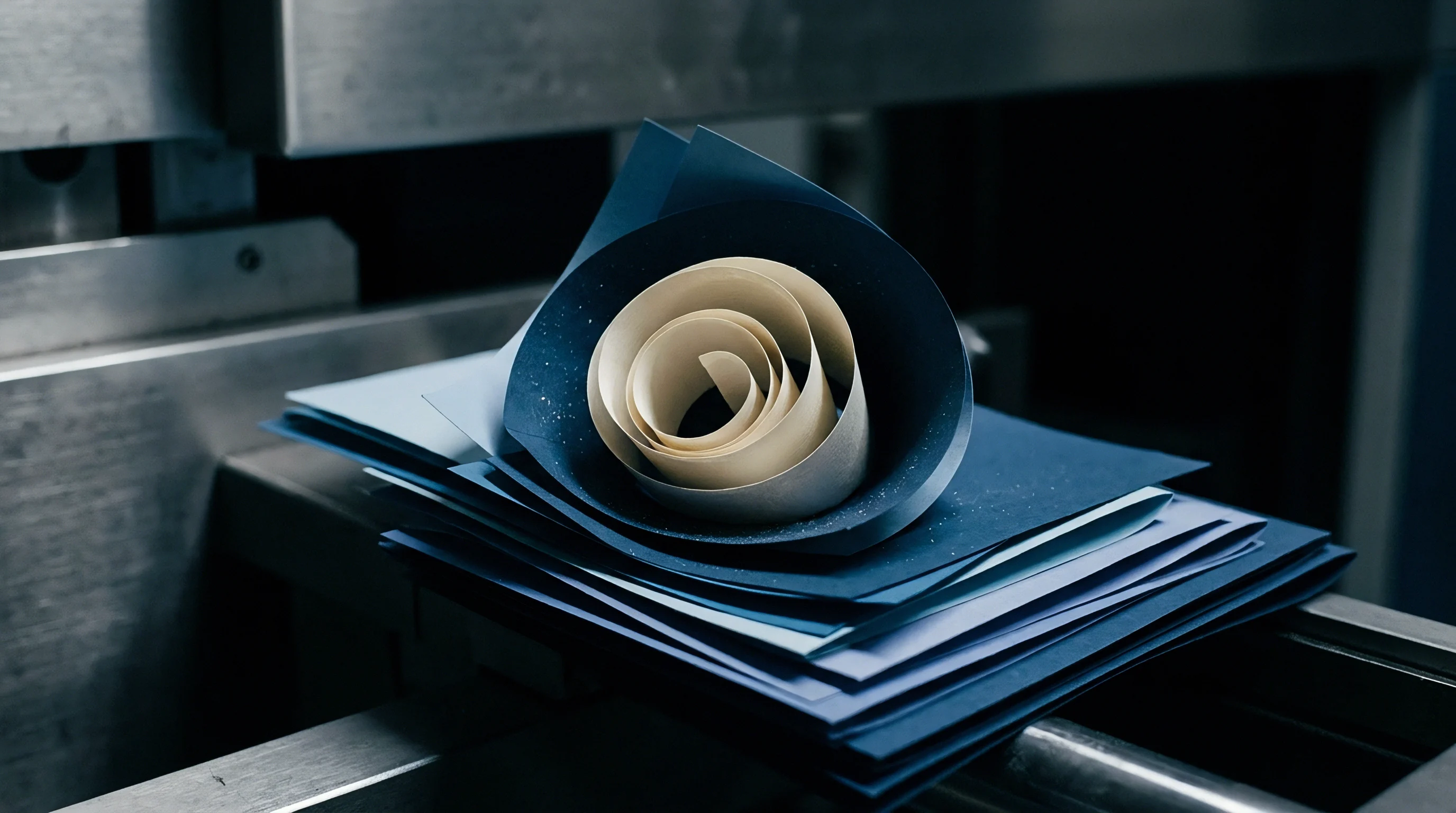
Sheet Yield Arithmetic and Parent Sheet Costing
Purchasing paperboard by the metric tonne yields more printed packaging units when specifiers target lower basis weights at equivalent thickness. Consider a project requiring 100,000 packaging blanks with a minimum structural caliper requirement of 400 microns. Yield calculations drop weight.
Parent sheets lose margin.
A standard coated folding boxboard (FBB) requires a 310 gsm sheet to achieve 400 microns (specific volume = 1.29 cm³/g). A high-bulk uncoated board achieves 400 microns at 235 gsm (specific volume = 1.70 cm³/g). Calculating total mass required for a parent sheet size yielding ten blanks per sheet (10,000 parent sheets total, size 700 mm x 1000 mm = 0.70 m² per sheet):
Standard Board Mass = 10,000 sheets · 0.70 m² · 0.310 kg/m² = 2,170 kg (2.17 tonnes)
High-Bulk Board Mass = 10,000 sheets · 0.70 m² · 0.235 kg/m² = 1,645 kg (1.65 tonnes)
Substituting high-bulk uncoated stock reduces total raw material mass by 525 kg per 100,000 blanks, a 24.2 percent tonnage saving. Even when the high-bulk uncoated grade carries a 12 percent higher purchase price per tonne than standard coated board, the net landed material cost drops by over 15 percent due to area yield advantages.
| Parameter | Standard Coated FBB | High-Bulk Uncoated Board | Variance / Impact |
|---|---|---|---|
| Target Caliper (microns) | 400 | 400 | 0% (Parity) |
| Basis Weight (gsm) | 310 | 235 | -24.2% Grammage Shift |
| Specific Volume (cm³/g) | 1.29 | 1.70 | +31.8% Yield Gain |
| Required Mass (Tonnes) | 2.170 | 1.645 | -0.525 Tonnes Saved |
| Price per Tonne (€) | 1,200 | 1,350 | +12.5% Premium Grade |
| Total Material Cost (€) | 2,604 | 2,221 | -€383 (-14.7% Net Savings) |
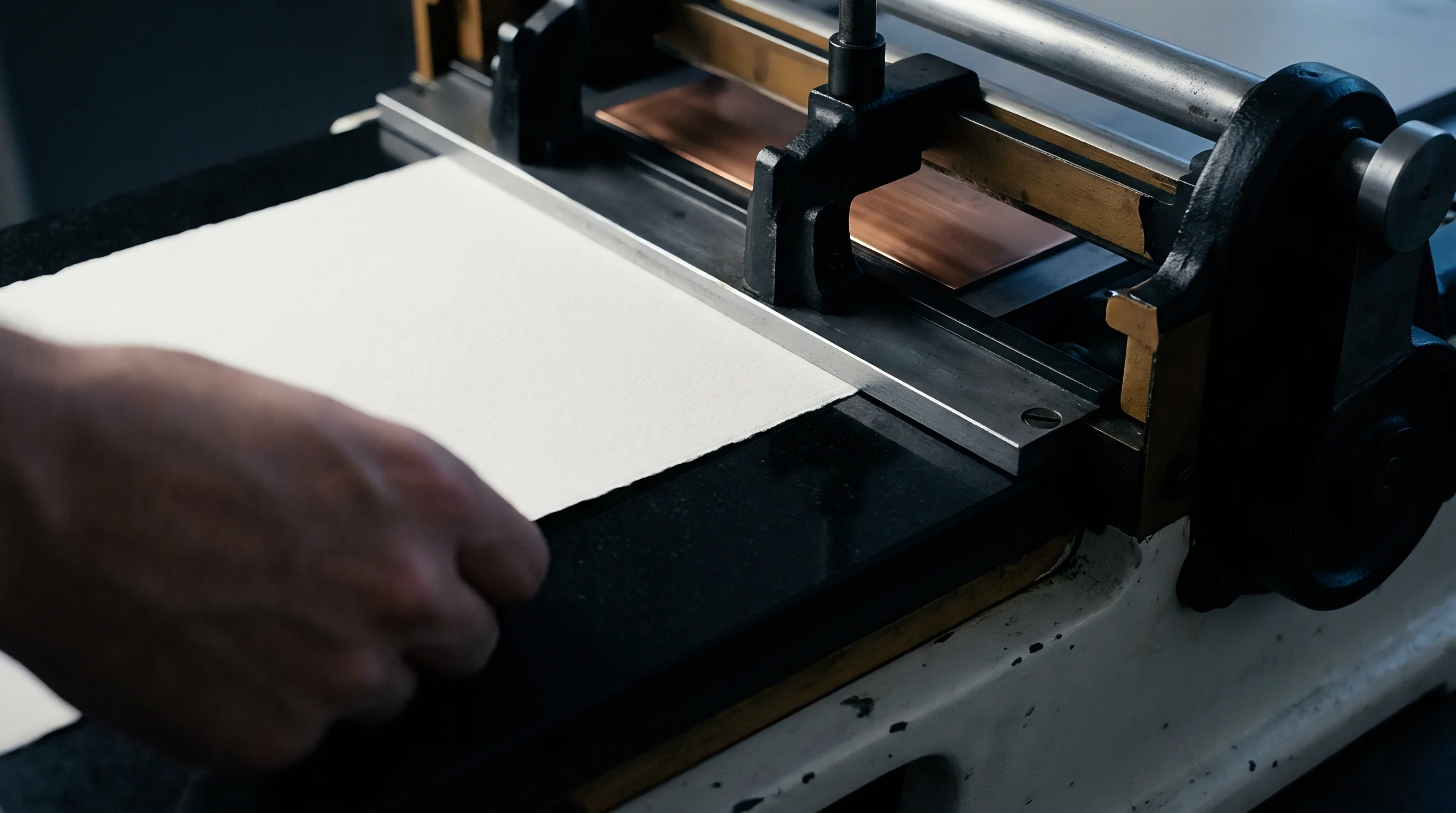
Converter Spoilage and Trim Allowance Economics
Running uncalendered high-bulk stock through die-cutters introduces specific waste patterns at sheet edges. Because low-density sheets suffer greater edge crush under stripping pins, waste margins on parent sheet layouts must widen by 2 mm to 4 mm. Die-cutting trim allowance calculation must reflect this physical edge stability threshold.
- Grammage Downgauging Target identifies minimum caliper requirements to ensure structural stiffness while dropping basis weight by at least twenty percent.
- Matrix Tooling Inventory Sizing verifies availability of wider female crease channel profiles (1.8x to 2.1x caliper) before releasing press dockets to avoiding die modification surcharges.
- Ink Consumption Allowance Adjustment increases ink volume estimations by fifteen to twenty-five percent on continuous coverage jobs due to high substrate absorbency.
- Pallet Stacking Density Verification recalculates transport shipping limits, acknowledging that high-bulk stock fills trailer volumetric capacity before reaching gross weight maximums.
Section 4.2 of FEFCO trade customs dictates that basis weight variations exceeding four percent allow buyers to claim unit-price yield adjustments on delivered tonnage.

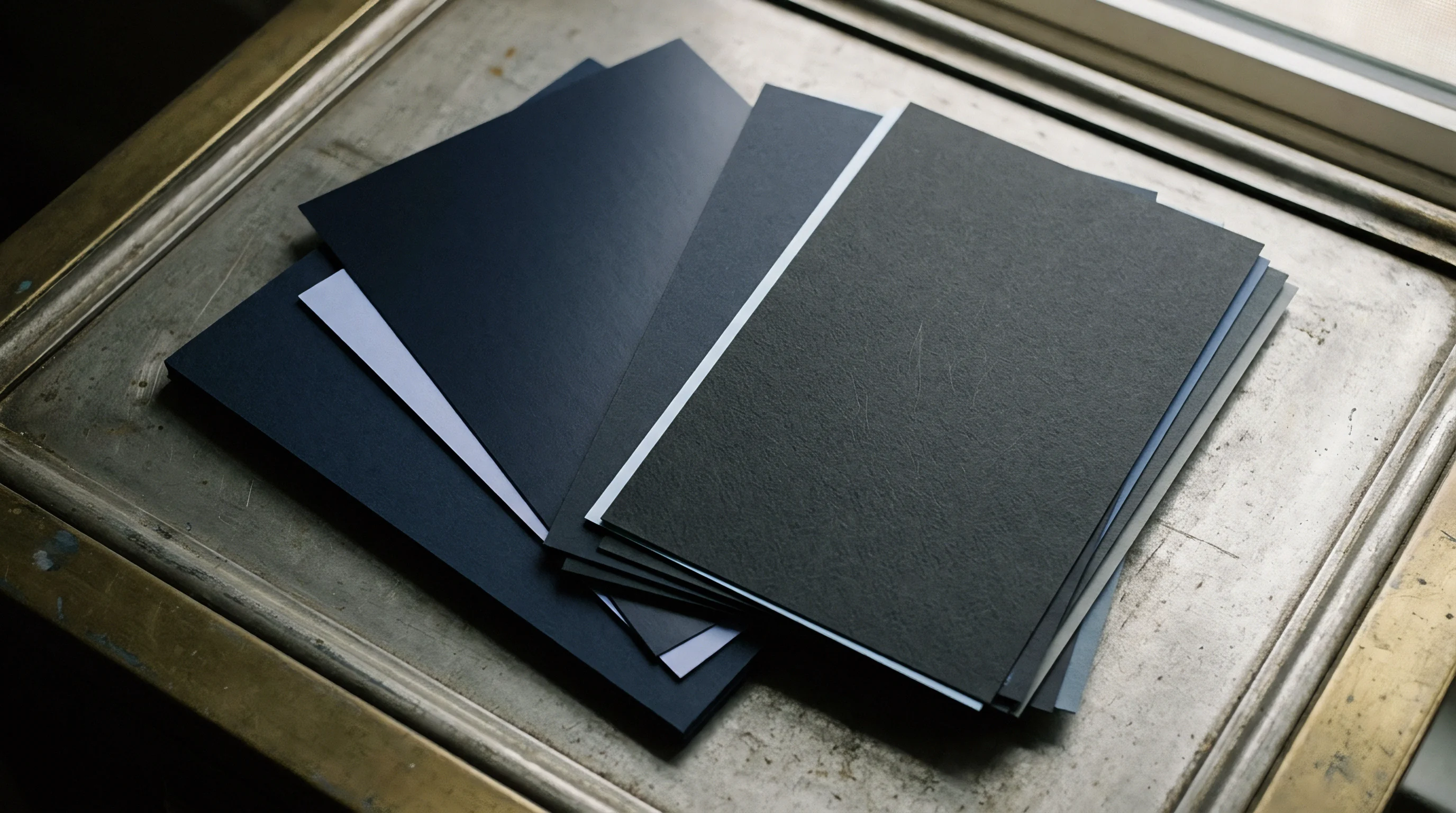
Tariff
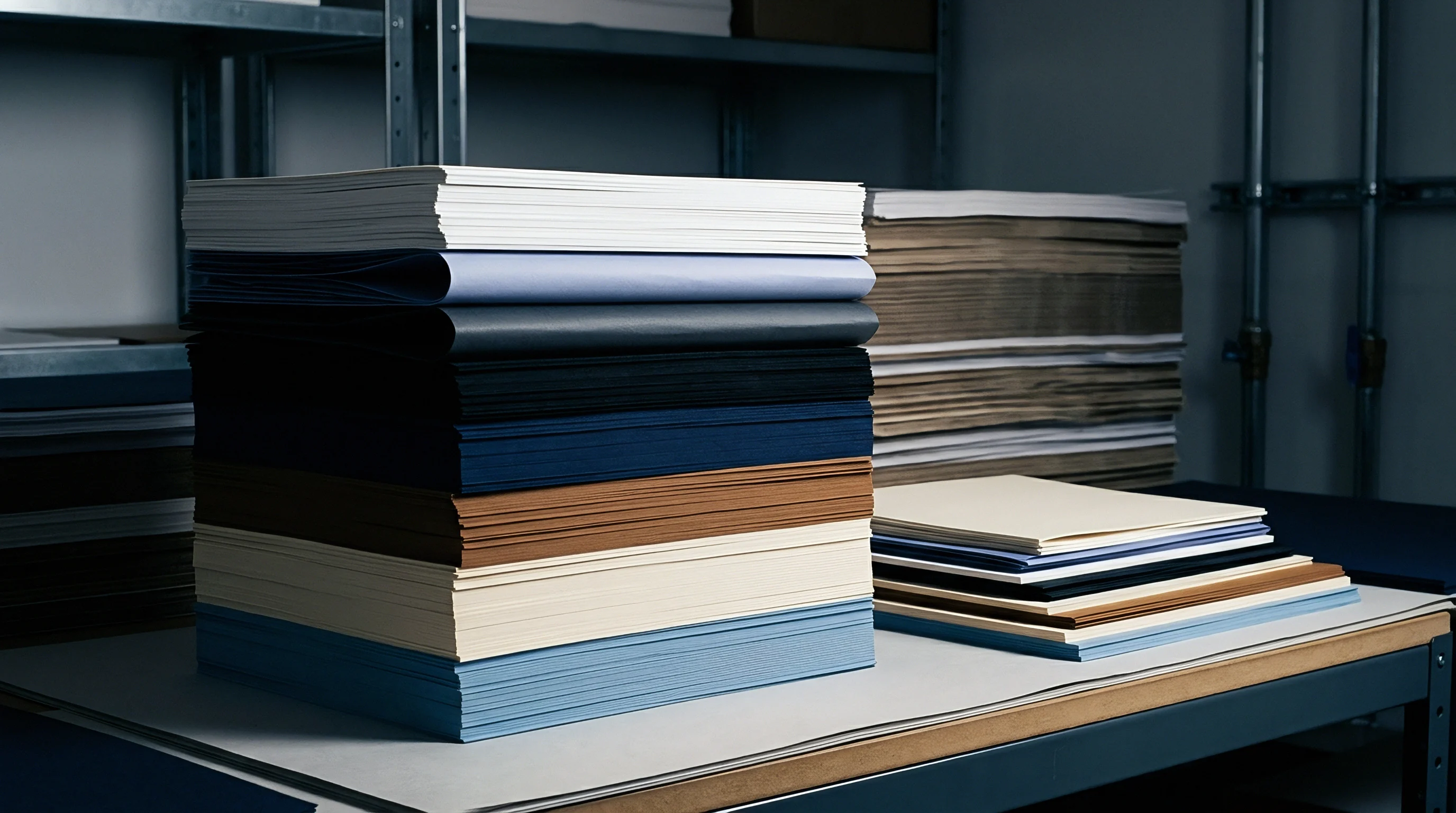
Regulatory compliance and freight economics depend on packaging volume, raw material origin, and end-of-life recovery fees. High-bulk uncoated paperboard alters freight logistics because transport vehicles reach volumetric capacity limits long before hitting gross payload mass limits. Freight charges trigger fees.
Pallet height limits volume.
EPR Eco-Modulation Classifications
Extended producer responsibility schemes charge lower packaging waste packaging fees for unlaminated, single-material fiber structures. Uncoated boards without plastic film laminations (such as polyethylene or PET barriers) qualify for top-tier eco-modulation discounts under European Union packaging directive frameworks. Under typical national EPR fee structures, standard plastic-laminated cartonboard incurs recovery fees between €150 and €320 per tonne.
Monomaterial uncoated high-bulk board qualifies for reduced EPR fee categories, ranging from €20 to €45 per tonne.
Removing synthetic pigment coatings further simplifies repulping chemistry during municipal recycling streams. Coarse mechanical fibers in high-bulk uncoated substrates disintegrate rapidly during hydrapulping at ambient water temperatures (20 °C to 25 °C), consuming less energy than wet-strength coated wet-waste streams.

Recyclability Guidelines and Deinking Standards
Standard mill repulping trials under PTS RH 021/97 prove that uncoated boards release print coatings without chemical pre-treatment. Deinking protocols (INGEDE Method 11) evaluate ink flake detachment during flotation deinking. Mineral oil-free vegetable inks printed on uncoated high-bulk substrate detach efficiently, achieving deinkability scores above 85 out of 100.
Freight density calculations dictate shipping economics. Standard coated board ships at approximately 850 kg per cubic meter on wooden pallets. High-bulk uncoated board drops freight density to 520 – 580 kg per cubic meter.
Transporting high-bulk board across international borders triggers volumetric freight tariffs when shipping via standard 40-foot sea containers, where cargo volume caps out at 67 cubic meters before gross mass limits (26,000 kg) are approached.