Roll Geometry
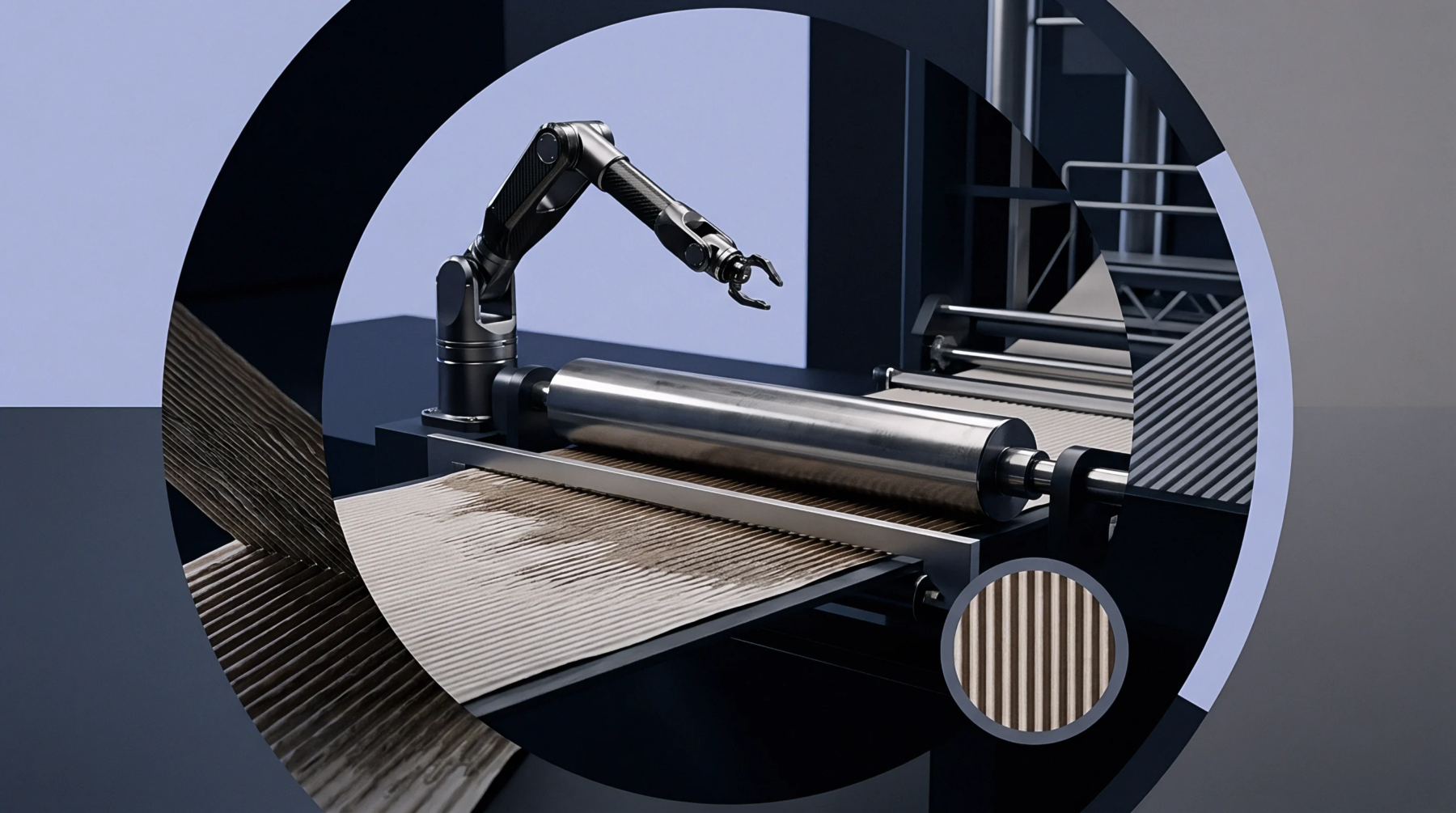
A precision surface contour compensates for the deflection caused by gravity and high nip pressures in a paper machine finishing stack. By applying a calender roll crown, the roll is machined with a slightly larger diameter at its center than at its edges. This geometric variation ensures that when the rolls are pressed together under heavy loads, the nip pressure remains uniform across the entire width of the sheet.
The treatment applies to both hard nip and soft nip calenders in paperboard production.
Deflection Correction
When two parallel cylinders are loaded against each other at their ends, the center of each roll bends outward, creating an uneven gap. This deflection results in lower compaction and thickness at the center of the paperboard sheet compared to its edges. In a calender roll crown, the calculated bulge fills this gap when the rolls are subjected to the designed operating load.
If the roll is run under loads that deviate from this design point, the nip pressure profile becomes uneven, leading to inconsistent caliper.
Operating Limitation
Since the machined shape is optimized for a single load, changes in paperboard grade can exceed the correction limit. An incorrect crown can cause over-compaction, leading to localized gloss variations or surface crushing. Uneven stress distribution also increases the risk of web breaks during calendering.