Geometry Standard
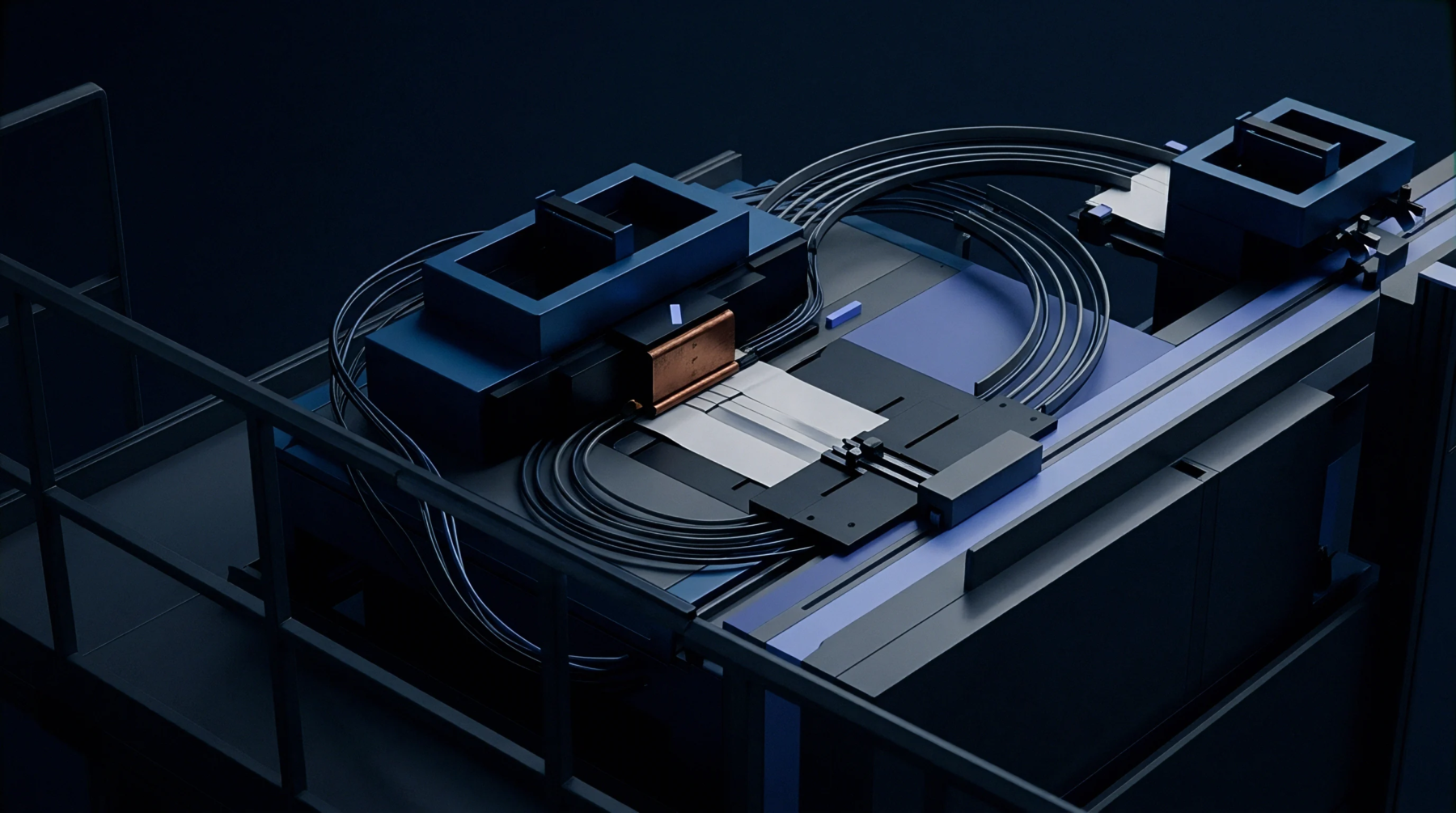
Contoured metallic funnels mounted on automatic bagging machinery fold continuous flat webs into tubular configurations prior to longitudinal sealing. Continuous movement draws flexible packaging materials across this forming collar, forcing the flat substrate over curved shoulder angles and down into an internal mandrel. The three-dimensional profile governs the tension profile across the web width, redirecting planar motion into cylindrical geometry without stretching the base material.
Precision manufacturing relies on hard chromium-plated steel, polished stainless steel, or ceramic composites to minimise abrasive drag on thin polymer coatings. Boundary limits depend strictly on substrate thickness and bending modulus, because excessive sheet rigidity resists curvature and induces structural wrinkles along the converging seams.
Web Tracking
Substrate guidance through the shoulder relies on uniform sliding contact and calibrated draw-down belt pressures. When paper-based barrier structures travel over the forming collar, friction coefficients dictate the motor power demanded by pull belts downstream. Uneven web tension causes lateral drift, misaligning heat-seal coatings and offsetting printed eye marks relative to photocell sensors.
Sharp transitional radii generate localized stress concentrations, cracking interior polyethylene or metallised vacuum depositions applied for moisture resistance. Heated back-seam bars weld overlapping edges as the curled edges meet inside the mandrel gap, requiring the collar to hold the margins parallel within fractional millimetre tolerances.
Convertibility Limit
Heavy basis weight laminates exhibit severe resistance along acute bend angles, generating flute formations and back-seam misalignments. High-friction barrier papers demand specialized micro-textured collar surfaces or fluoropolymer dry lubricants to avoid line chatter and web rupture. Operating speeds above one hundred cycles per minute elevate surface temperatures across metal shoulders, potentially melting external print lacquers or softening wax barriers.
Tooling angles engineered for elastic polyethylene film frequently fail when threaded with virgin kraft paper, producing diagnostic longitudinal creasing near the transition apex where compression forces overcome the local shear strength of the sheet.