Blade Tolerance
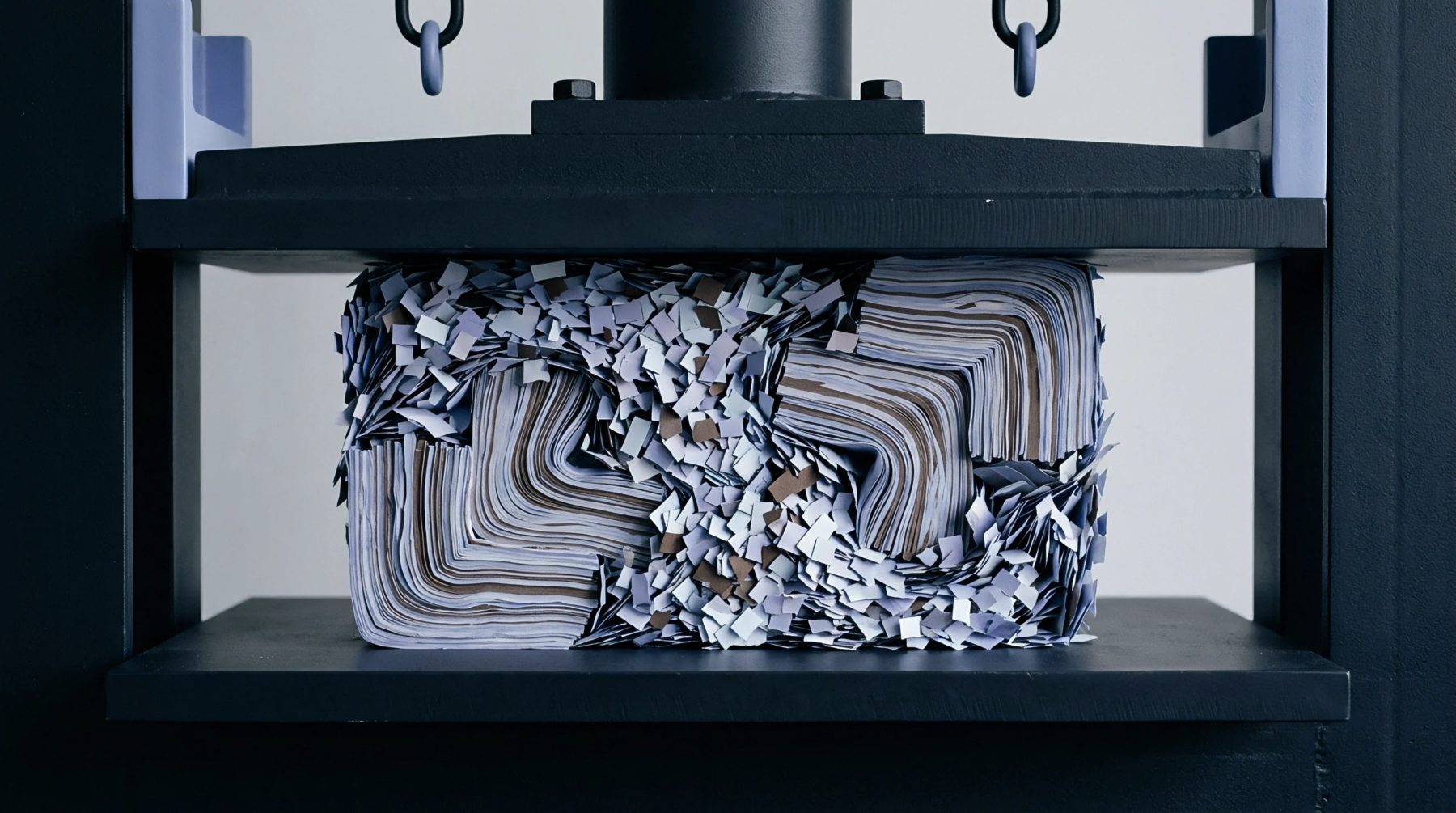
Mechanical precision dictates the physical distance between the descending knife edge and the opposing counter blade during industrial paper shearing. Guillotine cut clearance prevents excessive friction while eliminating the risk of edge crushing on thick substrates such as solid bleached board. Sub-optimal adjustment creates burrs on the lower ply or bends the sheet downward before separation occurs.
Fine-tuning this gap protects the mechanical integrity of the machinery and ensures clean orthogonal edges across high-speed production runs. Operators measure the resulting edge quality against flatness standards to confirm correct calibration before initiating commercial print finishing.
Substrate Shear
Paperboard deformation occurs when compressive stress exceeds internal bond strength prior to complete blade penetration. Guillotine cut clearance management requires specific adjustments when switching between coated art papers and heavier corrugated packaging grades. Fibre resilience dictates the required opening width because high elasticity causes the material to spring back against the descending steel.
Moisture content variations within the pallet alter resistance levels and demand constant mechanical compensation during multi-ream cutting operations.
Conversion Quality
Final trim accuracy determines whether stacked sheets feed reliably into automatic gluing and folding machinery downstream. Guillotine cut clearance errors introduce angular deviations that ruin register during subsequent high-speed lithographic printing passes. Production lines suffer high waste percentages when improper blade settings cause edge delamination on laminated carton stock.
Quality controllers reject entire lots when angular perpendicularity falls outside the tight tolerances demanded by pharmaceutical packaging clients.