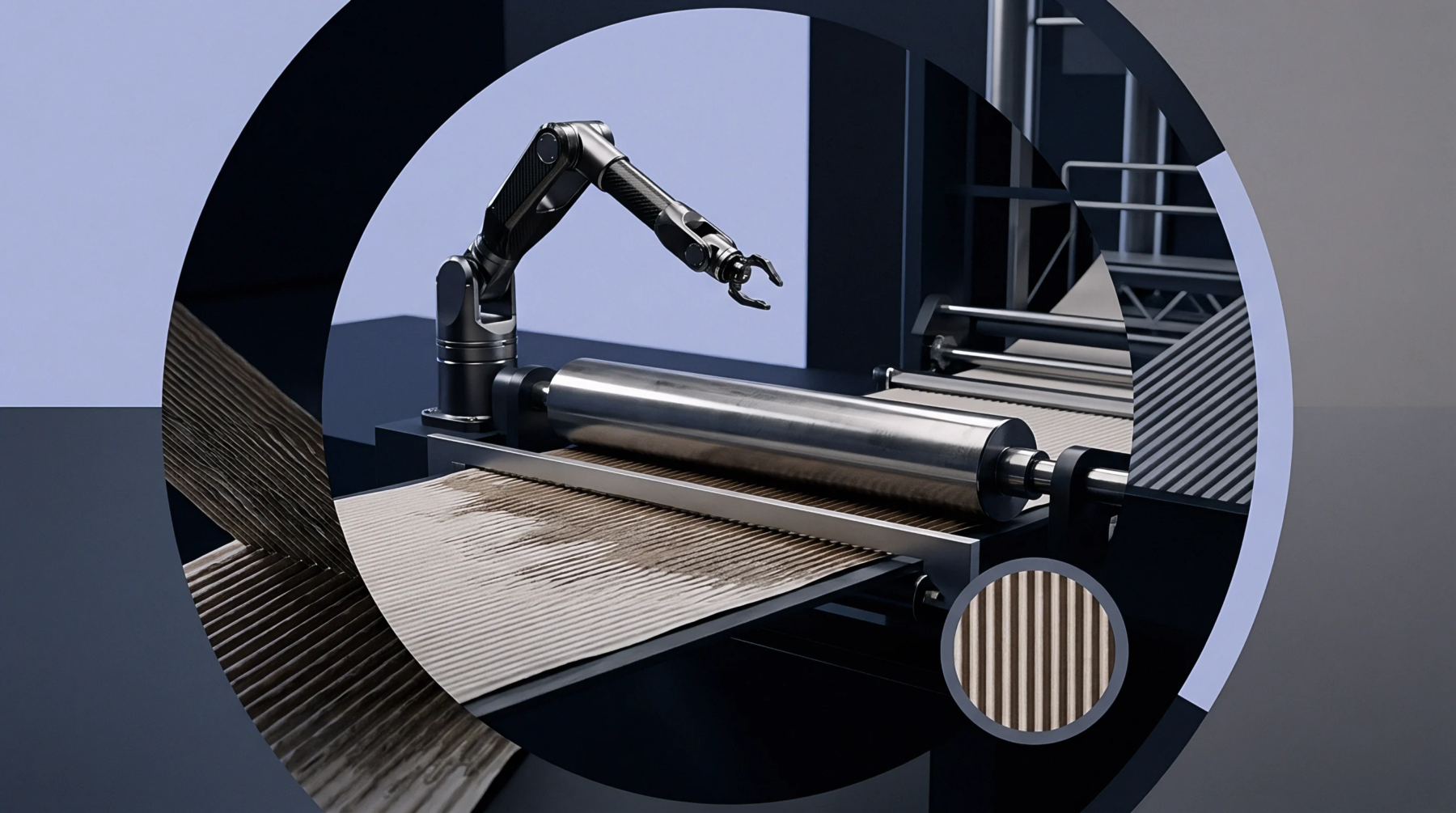
Pressure Management
A high force actuator system applies controlled pressure to the contact zone between two rotating rolls in a press or calender section. Through hydraulic nip loading, the machine generates the necessary mechanical compression to dewater the wet web or consolidate the paper surface. This control regulates the pressure profile across the width of the machine, preventing uneven thickness or moisture variations in the finished paperboard.
The process stops applying if the hydraulic system pressure drops below the safety threshold required to prevent roll bouncing.
Dewatering Action
The hydraulic cylinders press the rolls together, forcing water out of the wet paper sheet into the press felt. High nip pressure reduces the bulk of the paperboard while increasing its density and tensile strength. By carefully adjusting this hydraulic pressure, operators optimize the water removal rate without crushing the fragile fibre network.
This dewatering stage reduces the thermal energy required in the subsequent drying section, lowering the overall energy consumption of the mill.
Calendering Control
In the calender stack, the high pressure consolidates the surface fibres to improve smoothness and printability. Precise regulation prevents excessive thickness reduction, which would lower the stiffness of the packaging board. Proper load control is essential for maintaining the target bulk of the product.