Tooling Construction
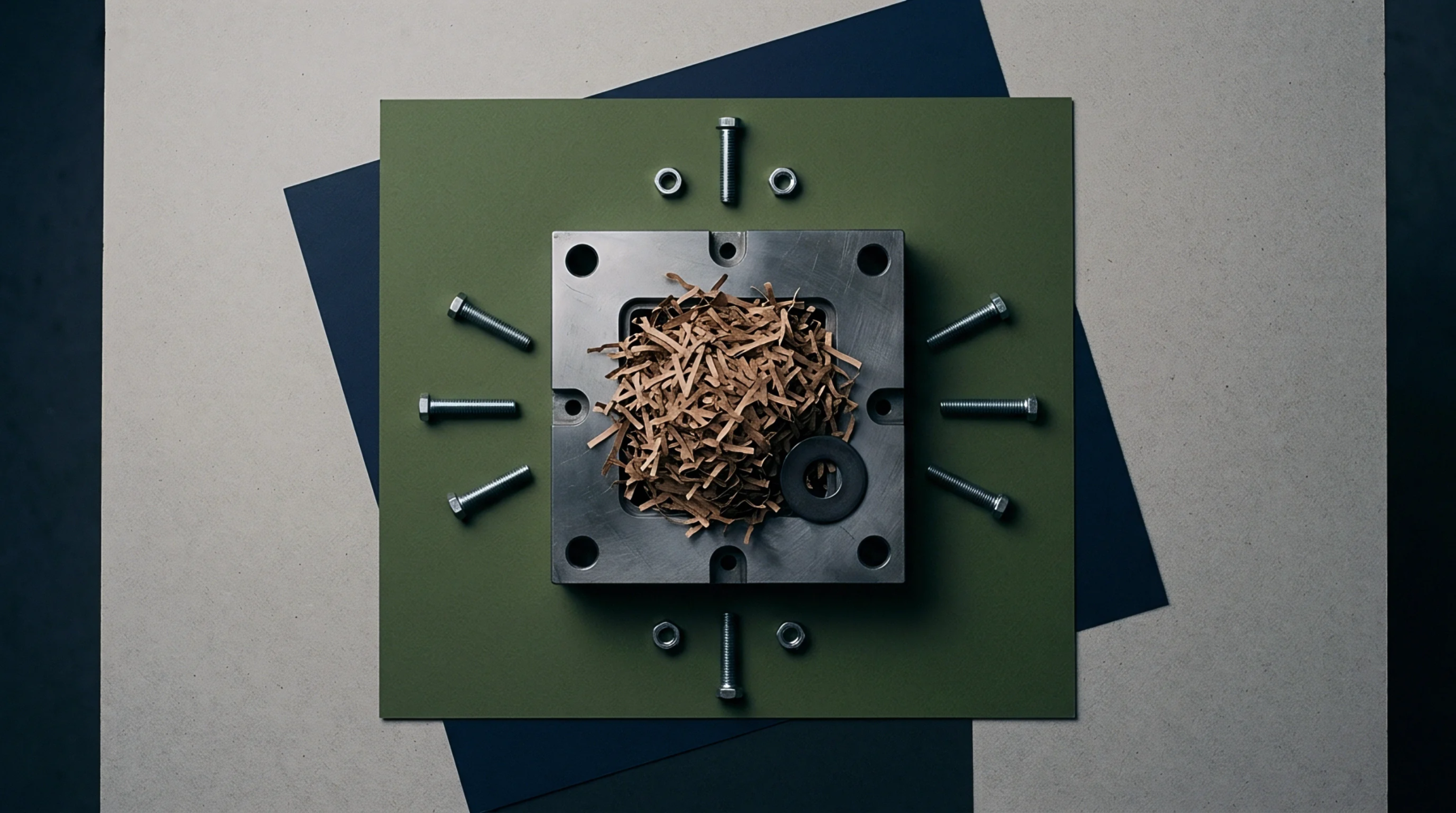
Precision-machined hardened steel plates featuring CNC-milled creasing channels provide male scoring rules with exact female registers during high-speed die-cutting operations. Die-cutting operations install a milled steel counter plate on cutting platens to convert solid bleached sulphate and folding boxboard sheets. Quality evaluation relies on ISO 2493 stiffness standards and dimensional tolerance measurements.
Applicability stops when short production runs make dedicated steel tooling cost-prohibitive compared to phenolic matrix strips.
Anvil Function
Computer-numerical-control milling machines cut channel grooves into hardened tool-steel plates according to structural CAD packaging files. Steel counter plates mount directly to cutting platens, maintaining exact channel alignment relative to cutting and creasing dies across millions of press impressions. Channel width and depth dimensions remain constant under continuous mechanical impact, preventing crease depth variance during long production runs.
Smooth channel chamfers facilitate paperboard deformation without scoring or tearing linerboard surfaces. High structural rigidity prevents platen deflection, ensuring uniform crease formation across large sheet formats. Converting plants store these plates for recurring packaging jobs, reducing press make-ready time during product reorders.
Wear Boundary
Particle contamination trapped beneath the steel plate causes uneven crease depth profiles across die-cut sheets. Debris accumulation inside milled channels requires periodic cleaning to prevent paperboard dust buildup and crease distortion.