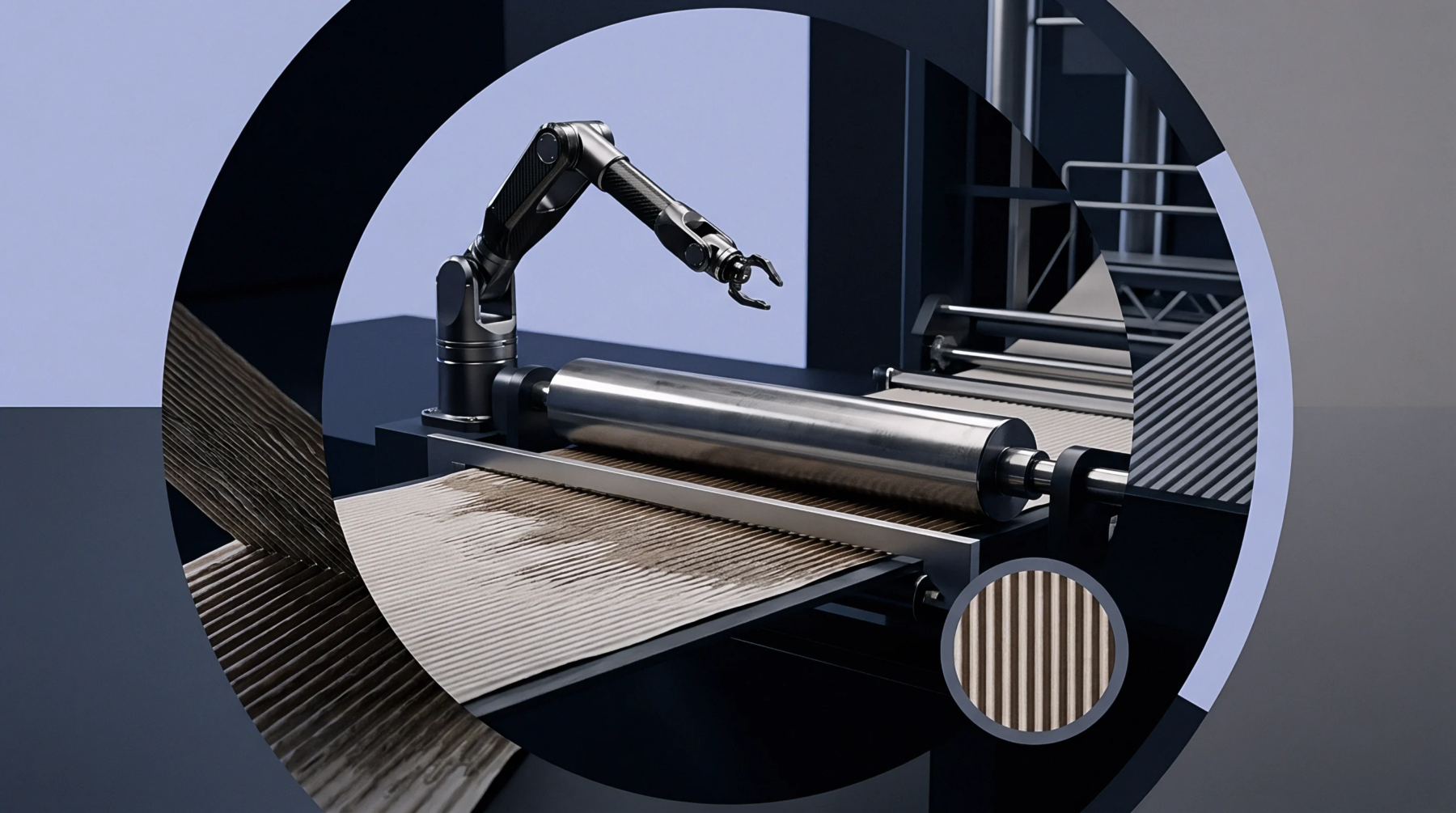
Curvilinear Irregularity
Moisture or thickness variations that take the shape of a broad curve across the width of the sheet indicate a systematic imbalance in the drying or pressing sections. An ox bow profile defect is characterized by values that are high at the center and low at the edges, resembling the wooden collar used for draft animals. This pattern suggests that the moisture removal process is not uniform, often because the air flow or heat distribution is more effective at the sides of the machine.
Drying Gradient
Tension differences across the rollers can exacerbate this shape as the paper shrinks more in areas with higher moisture content. The ox bow profile defect causes measurable issues during winding because the uneven diameter creates soft spots and hard spots within the same roll. Correcting this requires adjusting the crown of the press rolls or fine-tuning the pocket ventilation in the dryer section.
Flatness Standard
Converting operations such as sheeting or high-speed printing demand a flat profile to avoid jams and misfeeds. When an ox bow profile defect is present, the paper may exhibit a permanent curl or a tendency to twist when cut into smaller sizes. Maintaining a linear profile across the entire web width is a primary goal for quality control teams in any paper mill.
This defect is usually detected using an online scanner that provides a real-time visualization of the moisture and basis weight.