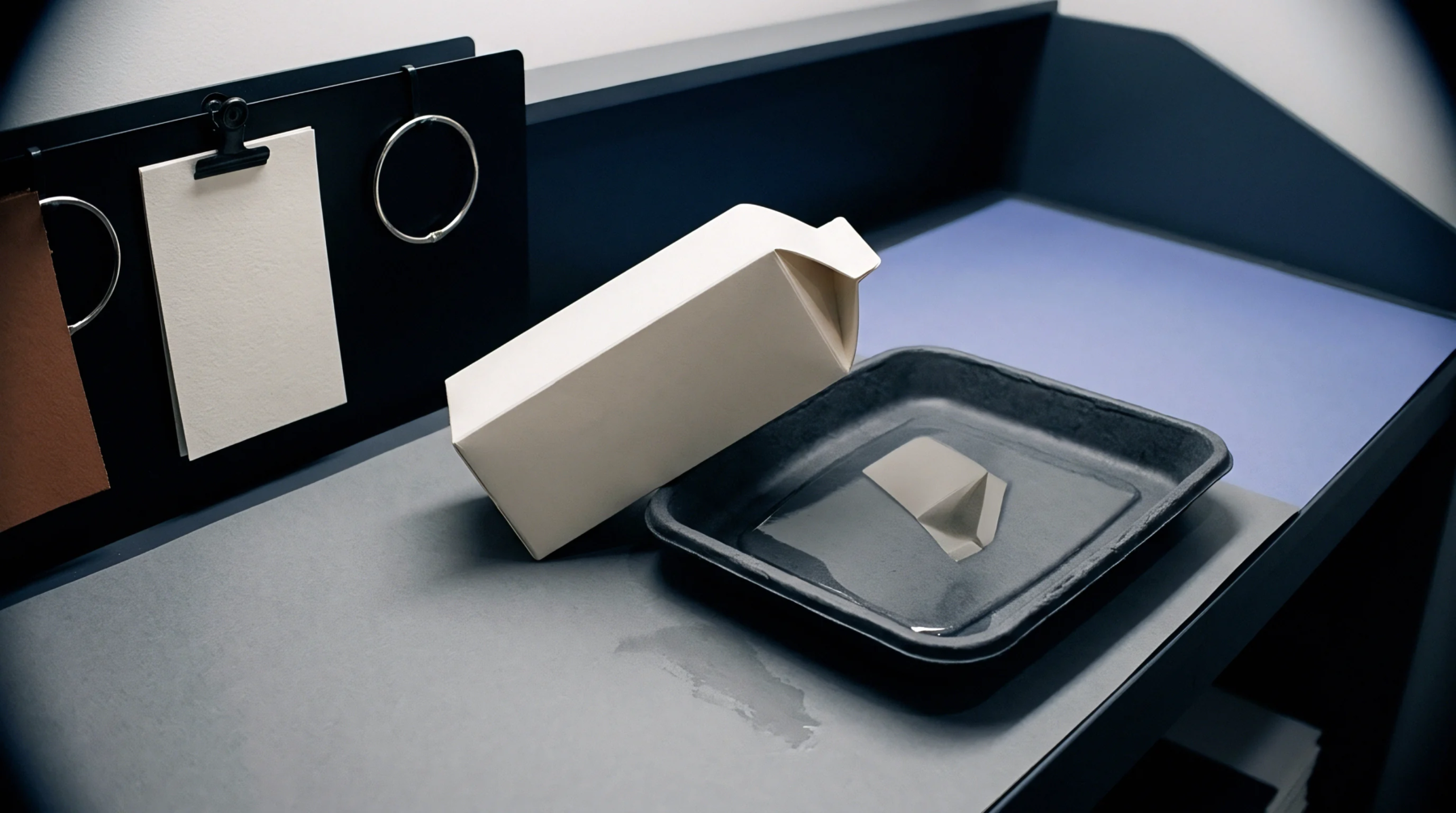
Chemical Migration
Unreacted chemical compounds from ultraviolet curable ink systems migrate from printed paperboard surfaces into contact layers or internal packaging spaces. Low molecular weight molecules such as benzophenone or isopropylthioxanthone remain mobile within cured ink films when radiation dosage is insufficient. Physical movement known as photoinitiator transfer occurs through direct contact in stacked sheets or gas phase volatility during elevated storage conditions.
Food packaging applications strictly regulate migration levels to prevent chemical contamination of dry or fatty food products. Formulators select polymeric or high molecular weight photoinitiators to reduce mobility within cured ink matrices.
Set-off Mechanism
Stacking freshly printed folding boxboard reels under high roll pressure forces unprinted reverse surfaces into tight contact with cured front face inks. Unreacted photoactive compounds diffuse into the unprinted reverse coating layer during storage, creating a pathway for food contact contamination after carton converting. Assessing photoinitiator transfer requires analytical extraction techniques paired with gas chromatography mass spectrometry to quantify migrate concentrations.
Absorptive woodpulp fibers retain volatile migrants, while synthetic barrier coatings suppress gas phase diffusion into underlying board layers. Incomplete UV lamp output or excessive line speeds exacerbate residual monomer levels, increasing migrant mobility.
Contamination Prevention
Polymeric photoinitiators reduce migration potential by anchoring reactive moieties to heavy polymer backbones that cannot diffuse through board substrates. Monitoring photoinitiator transfer ensures compliance with European food contact regulations for printed packaging materials.