Chromatographic Verification of Photoinitiator Specific Migration Limits in Printed Barrier Packaging
Chromatographic testing via LC-MS/MS verifies photoinitiator specific migration limits in printed barrier packaging to maintain compliance.
Extract
Specimen preparation for migration analysis requires controlled immersion or single-sided contact cells that isolate the non-printed food-contact surface. Test procedures defined under European standard EN 1186 and EN 14338 establish exposure conditions using food simulants tailored to the intended food matrix. Polyoxymethylene or modified polyphenylene oxide, commercially known as Tenax, serves as Simulant E for dry and fatty foodstuffs at elevated temperatures.
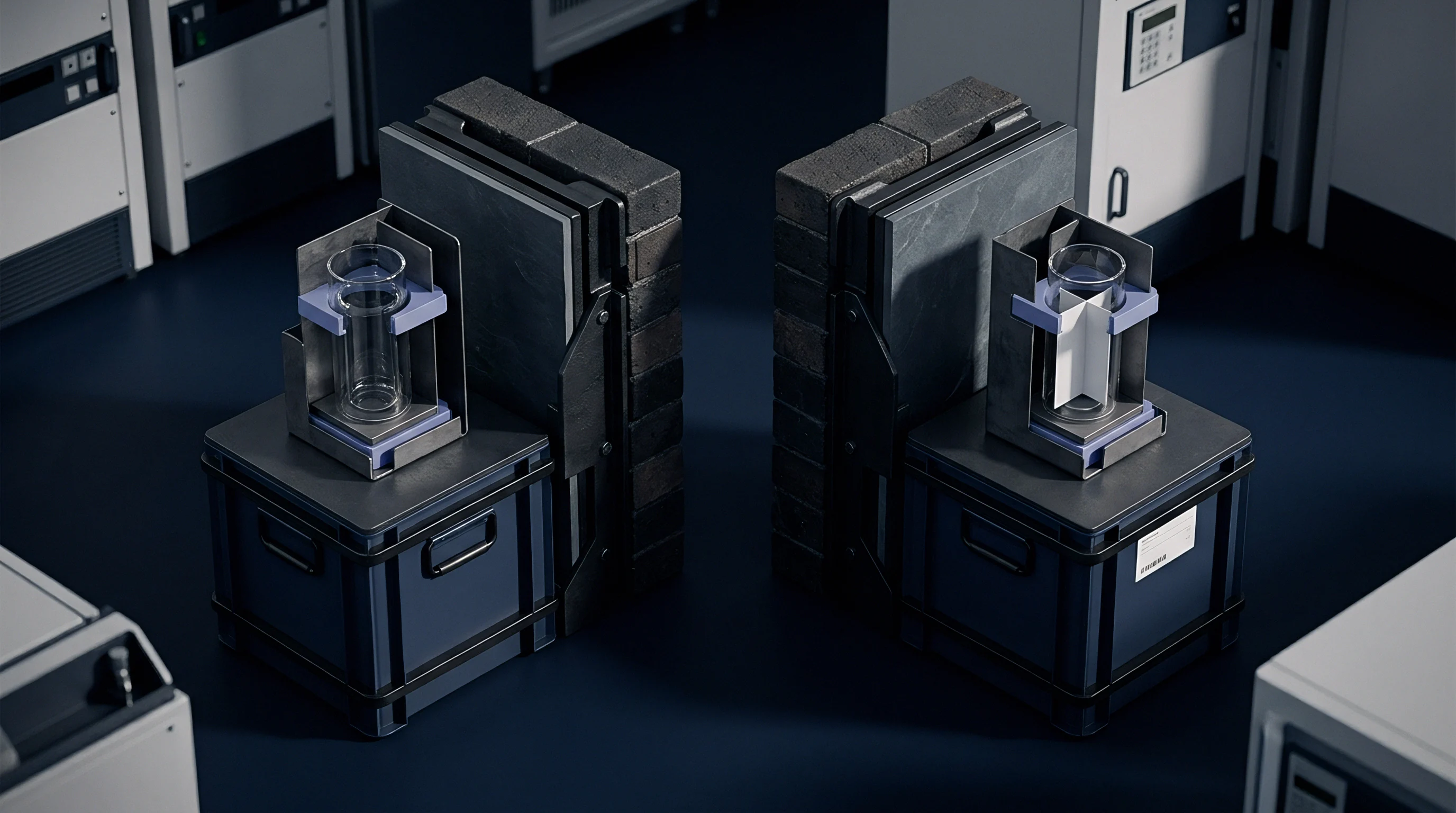
Cell design dictates whether volatile photoinitiator species evaporate or re-condense during thermal conditioning. In total immersion setups, photoinitiators migrate from both printed and unprinted substrate edges, distorting quantitative yields. Single-sided migration cells clamp the printed flexible film or coated board against a stainless steel cavity, exposing only the food-contact layer to ten grams of adsorbent per square decimeter.
Standard thermal exposures of 40 degrees Celsius for 10 days simulate extended room-temperature storage, while 60 degrees Celsius for 10 days models accelerated shelf-life conditions.
| Chemical Compound | CAS Number | Molecular Weight (g/mol) | Specific Migration Limit (mg/kg) | Primary Simulant |
|---|---|---|---|---|
| Benzophenone | 119-61-9 | 182.22 | 0.60 | Tenax / 95% Ethanol |
| 4-Methylbenzophenone | 134-13-4 | 196.25 | 0.60 (Group Limit) | Tenax / Isooctane |
| Isopropylthioxanthone (ITX) | 5495-84-1 | 254.35 | 0.05 | Tenax / 50% Ethanol |
| Irgacure 907 | 71868-10-5 | 279.40 | 0.01 | Tenax / Isooctane |
| Omnipol TX (Polymeric) | 813452-37-8 | 1000 | 5.00 | Tenax / 95% Ethanol |
Solvent extraction using diethyl ether or acetonitrile recovers adsorbed molecules from the Tenax matrix following thermal incubation. Ultrasonic agitation for thirty minutes at 20 degrees Celsius achieves recovery rates between 88 percent and 95 percent for low-molecular-weight initiators like benzophenone. Because low-molecular-weight initiators volatilize rapidly during elevated heating cycles, cell assemblies demand airtight seals with fluoroelastomer gaskets.
System blanks run alongside packaging specimens confirm that laboratory glassware and ambient air introduce no background contamination.
EN 1186 migration cell exposure to modified polyphenylene oxide at 40 degrees Celsius for 10 days yields a lower quantification limit of 0.002 milligrams per square decimeter for benzophenone.
Solvent Selection and Phase Behavior
Liquid simulants interact differently with polyolefin contact layers than solid adsorbents. Isooctane and 95 percent ethanol induce polymer swelling in low-density polyethylene, artificially accelerating the diffusion rate of unreacted UV-curable additives. Distilled water and 3 percent acetic acid simulate aqueous and acidic foods without swelling the polyolefin matrix, making them suitable for evaluating hydrophilic barrier performance.
Polymeric photoinitiators with molecular weights above 1000 Daltons are generally constrained from crossing polymer networks, though analytical verification remains standard practice.


Barrier
Functional layer selection dictates whether UV photoinitiator fragments diffuse into dry or fatty food simulants. Substrates utilizing aluminum foil at thicknesses exceeding 6.35 microns present zero porosity, blocking gas and liquid transport across the substrate. Thin metallized polyethylene terephthalate films with optical densities between 2.2 and 2.8 retard small molecule migration, yet pinholes formed during flexural fatigue can compromise overall barrier integrity.
Co-extruded ethylene vinyl alcohol resin layers provide gas-phase resistance when maintained below 50 percent relative humidity. Moisture absorption plasticizes the ethylene vinyl alcohol polymer chains, raising free volume and permitting low-molecular-weight photoinitiator molecules like 2-hydroxy-2-methylpropiophenone to migrate. Heat sealing operations along pouch seams generate localized thermal stress, thinning the functional polymer core and creating migration pathways near package edges.
- Set-off transfer during reel storage occurs when printed outer ink layers press directly against the unprinted inner food-contact surface under high winding tension.
- Solvent swelling of polyolefin layers expands the polymer matrix mesh size, enabling accelerated diffusion of photoinitiator fragments into fatty food simulants.
- Thermal pinhole formation during heat sealing degrades local barrier continuity, allowing volatile cleavage products to bypass structural polymer layers.
- Micro-cracking under score creasing fractures brittle functional coatings along folding lines, exposing underlying paper fibers to migratory compounds.
Lamination adhesives containing monomeric aromatic isocyanates alter photoinitiator retention times during liquid chromatography screening.
Substrate Imperfections and Pinhole Mechanics
Pinhole density per square meter governs the leakage rate of volatile photoinitiator components. Defect sites larger than 1.0 micron in diameter enable Knudsen diffusion, where gas molecules pass through micro-voids faster than classical Fickian diffusion through solid polymer phases. Converter quality audits measure pinhole frequencies via light transmission tables or helium leak detectors prior to lamination passes.
Slower lamination line speeds consistently yield tighter functional barrier structures than higher line speeds paired with elevated nip temperatures.

Run
Web tension, UV lamp power density, and press line speed govern photoinitiator crosslinking density across twelve thousand sheets. Medium-pressure mercury lamps operating at 160 W/cm emit ultraviolet radiation across 254 nm, 313 nm, and 365 nm spectral bands. Oxygen inhibition at the ink film surface quenches free radicals, leaving an uncured, highly migratory monomeric layer containing unreacted 4-methylbenzophenone.
Nitrogen inerting chambers installed over UV curing zones reduce ambient oxygen concentrations below 200 parts per million. Lowering oxygen exposure increases acrylate conversion rates from 82 percent to 97 percent, drastically reducing residual photoinitiator fractions available for migration. LED curing systems operating at 395 nm wavelength require specialized phosphine oxide photoinitiators, such as ethyl diphenyl(2,4,6-trimethylbenzoyl)phosphinate, which display distinct migration behaviors compared to traditional triarylsulfonium salts.

Worked Conversion and Migration Calculation
Consider a flexographic printing run on a 350 gsm solid bleached sulfate cartonboard with a 3.0 g/m² UV-cured varnish coating containing 3.0 percent by weight of 4-methylbenzophenone. The total photoinitiator coating mass equals 90 milligrams per square meter, corresponding to 0.90 mg/dm² of substrate area.
Analytical testing establishes a 94 percent photolytic conversion rate under standard UV exposure of 120 mJ/cm², leaving 6 percent of unreacted 4-methylbenzophenone in the cured layer. The residual unreacted photoinitiator mass measures 0.054 mg/dm². Assuming a standard packaging geometry where 6.0 square decimeters of board enclose 1.0 kilogram of food, complete migration of the residual photoinitiator yields a concentration of 0.324 milligrams per kilogram of food.
This calculated value sits below the specific migration limit of 0.60 mg/kg set by European regulations. However, if press line speed increases by 25 percent without adjusting lamp power, UV dose drops to 90 mJ/cm², reducing photolytic conversion to 86 percent. The unreacted residual fraction rises to 14 percent, producing an unreacted mass of 0.126 mg/dm².
Under identical package geometry, the potential migration concentration reaches 0.756 mg/kg, exceeding the legal specific migration limit and causing lot failure.
European Union Regulation 10/2011 Annex I restricts the specific migration limit of benzophenone to 0.6 milligrams per kilogram of food.
Rejection of a commercial flexible packaging batch due to photoinitiator migration exceeding specific limits forces scrap disposal, ink reformulations, and entire production lot replacements.
Chromatography
Quantitative chemical separation relies on triple quadrupole mass spectrometers paired with ultra-high performance liquid systems to isolate trace photoinitiator peaks. High-performance liquid chromatography coupled with tandem mass spectrometry offers superior selectivity for non-volatile and high-molecular-weight polymeric photoinitiators. Electrospray ionization operating in positive mode generates protonated molecular adducts that undergo collision-induced dissociation, producing diagnostic product ions for quantitation.
How Does Gas Chromatography Mass Spectrometry Disambiguate Photoinitiator Breakdown Products?
Gas chromatography paired with mass spectrometry resolves volatile fragments resulting from photolytic cleavage during UV irradiation. Isopropylthioxanthone degrades under high-intensity ultraviolet exposure into lower-molecular-weight aromatic sub-fragments, including thioxanthone and methyl isopropylthioxanthone isomers. Standard single-quadrupole detectors scanning in electron ionization mode match observed fragmentation spectra against reference libraries, distinguishing parent molecules from thermal breakdown products.
| Analytical Method | Stationary Phase Column | Mobile / Carrier Phase | Limit of Quantitation (mg/kg) | Sample Run Time (min) |
|---|---|---|---|---|
| LC-MS/MS (ESI+) | C18 Reversed-Phase (2.1 x 100 mm, 1.7 um) | Water / Acetonitrile with 0.1% Formic Acid | 0.002 | 8.5 |
| GC-MS/MS (EI) | 5% Phenyl Poly-siloxane (30 m x 0.25 mm) | Helium Carrier Gas (1.2 mL/min) | 0.005 | 22.0 |
| HPLC-UV (254 nm) | C8 Reversed-Phase (4.6 x 150 mm, 3.5 um) | Methanol / Water Gradient | 0.050 | 15.0 |
| Headspace GC-FID | DB-624 Capillary (30 m x 0.32 mm) | Nitrogen Carrier Gas | 0.100 | 12.0 |
Matrix interference obscures trace peaks during liquid chromatography analysis of polyolefin extracts. Acrylate oligomers co-extracted from the print layer generate high background noise, shifting retention times and quenching ionization signals in the mass spectrometer source. Deuterated internal standards, such as benzophenone-d10, spiked into the simulant extract prior to injection correct for ion suppression and volume losses during sample preparation.
- Cut a representative specimen of 1.0 square decimeter from the printed package, isolating the unprinted food-contact face.
- Clamp the specimen into a stainless steel single-sided migration cell with 10 grams of Tenax absorbent powder distributed evenly over the contact area.
- Seal the cell and store it in a climate chamber at 40 degrees Celsius for 10 days to simulate ambient long-term storage.
- Extract the Tenax adsorbent using diethyl ether solvent desorption for 30 minutes in an ultrasonic bath.
- Inject 1 microliter of filtered extract into an LC-MS/MS system calibrated with internal standards for target photoinitiator compounds.
Advanced triple quadrupole instruments running in selected reaction monitoring mode isolate precursor-to-product ion transitions, eliminating chemical noise from complex packaging matrices.
Whether future non-target screening techniques can fully characterize non-intentionally added substances arising from complex photoinitiator cleavage reactions remains an open analytical debate.

Certificate
Declarations of compliance for food-contact materials link laboratory test dossiers to specific ink batch numbers and converter lot codes. Framework Regulation EC 1935/2004 Article 16 commands that documentation accompany food-contact material shipments across all supply chain stages. Compliance dossiers detail the chemical identity of used photoinitiator systems, target specific migration limits, analytical methods employed, and verified migration values.
| Compliance Tier | Analytical Scope | Testing Cost per SKU (USD) | Dossier Validity Period | Legal Responsibility Allocation |
|---|---|---|---|---|
| Tier 1: Basic DoC | Formulation review and modeling calculations | 300 – 500 | 12 Months | Shared Converter / Ink Supplier |
| Tier 2: Screening Verification | GC-MS screening for target initiators | 1,200 – 1,800 | 24 Months | Converter Direct Liability |
| Tier 3: Full Migration Dossier | LC-MS/MS quantification into Tenax simulant | 2,500 – 4,200 | 36 Months or Raw Material Change | Brand Owner / Converter Joint Guarantee |
Non-intentionally added substances (NIAS) auditing requires screening for unexpected photolysis products, unreacted monomers, and synthesis impurities. High-resolution mass spectrometry paired with time-of-flight analyzers detects unidentified chromatographic peaks exceeding 0.01 milligrams per kilogram in food simulants.
- Batch specific gas chromatography data review verifies that residual photoinitiator levels fall within certified customer specifications.
- Functional barrier thickness verification confirms that co-extruded polymer film layers maintain minimum cross-sectional dimensions across the web width.
- Non intentionally added substance screening validation identifies toxicological risks stemming from ink decomposition products.
- Simulant exposure temperature alignment matches laboratory testing conditions to real-world hot-fill or retorting processing parameters.
Analytical testing of printed barrier laminates reveals that low-molecular-weight cleavage products migrate at rates five times higher than parent photoinitiators.
Swiss Ordinance SR 817.023.21 Annex 10 mandates that unlisted photoinitiators in food contact inks must not migrate above 0.01 milligrams per kilogram unless toxicological data proves safety.

Levy
Material surcharges and analytical testing expenditures directly modify the per-thousand unit cost of UV-cured barrier packaging runs. Low-migration UV ink systems formulated with polymeric photoinitiators carry a price premium between 25 percent and 40 percent compared to conventional standard UV ink series. Transitioning printing lines from conventional UV to electron beam (EB) curing eliminates photoinitiator raw material costs entirely, though capital outlay for EB equipment ranges from 650,000 to 1.2 million USD per press line.
Eliminating photoinitiators removes chromatographic migration testing expenditures, saving converters between 2,500 and 4,200 USD per printed SKU in recurring certification fees. Press make-ready waste during low-migration ink bring-up averages 3.5 percent of total substrate volume, driven by density adjustments and drawdown verifications. Evaluating total landed cost requires balancing raw material surcharges against analytical verification fees and long-term regulatory exposure.