Adhesion Force
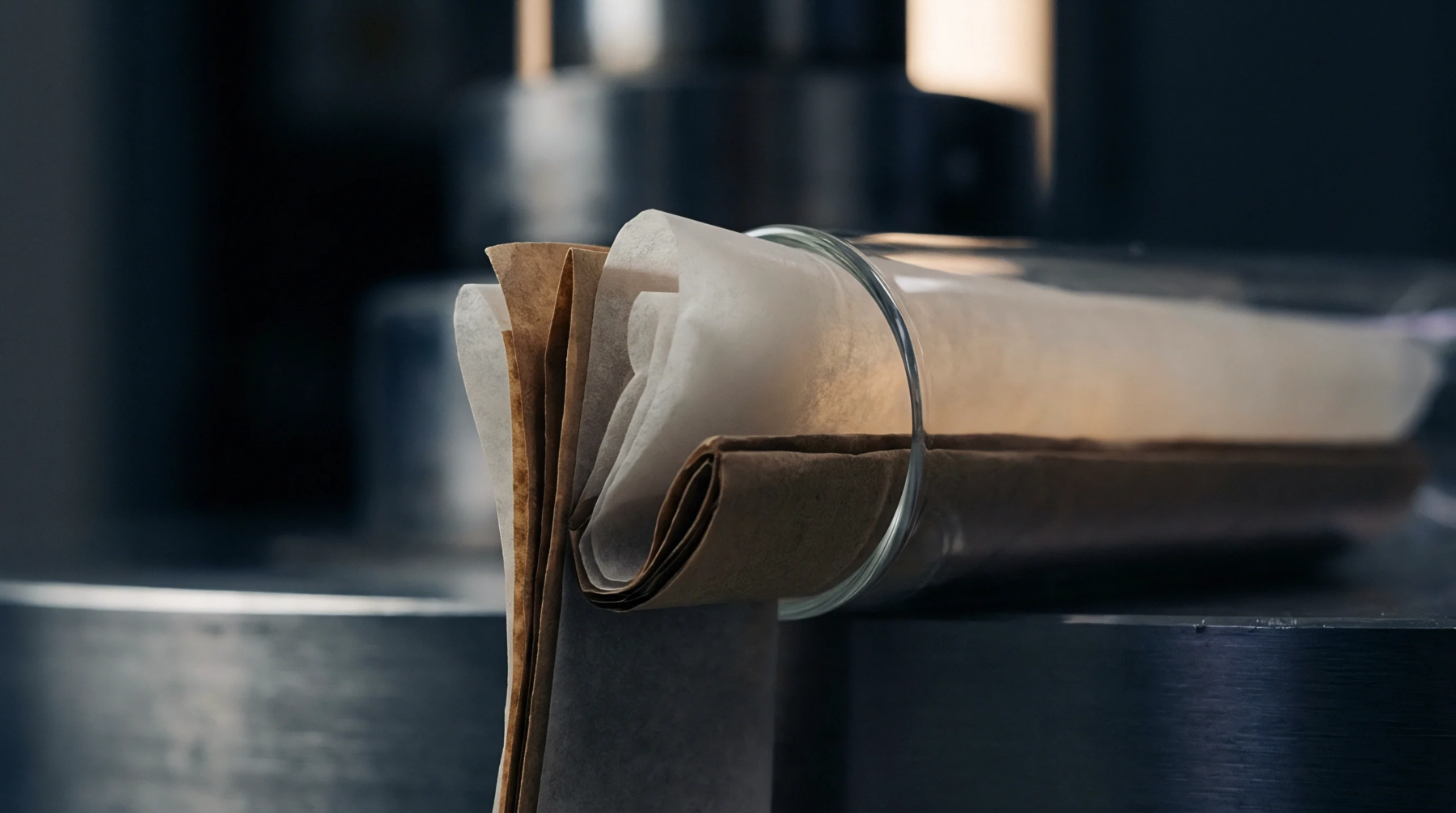
Compressed substrates lose individual surface integrity when the weight of a pallet induces static welding between adjacent sheets. This stack blocking phenomenon occurs when high contact pressure forces micro-crystalline migration across the film or coating interface. Chemical bonds develop between surfaces that remain motionless under vertical load for extended durations.
Increased heat levels within a warehouse environment accelerate this molecular migration. Rigid substrates or those treated with high-tack adhesives remain particularly prone to the formation of these permanent bonds.
Surface Separation
Converting lines require a consistent coefficient of friction to process reels or sheets without mechanical interruption. Machines fail to pull individual sheets from a supply stack if the vertical force exceeds the vacuum or friction feed capacity. Operators mitigate this resistance by applying slip additives or anti-blocking agents to the outer layer of the substrate during the manufacturing phase.
Correct calibration of these additives maintains separation while preserving the printability and foil stamping capacity of the finish.
Pressure Limit
Engineering parameters for pallet storage dictate the maximum vertical load a specific paper grade sustains before internal deformation creates cohesion. Warehouse managers calculate the total weight of the finished product against the surface area of the base footprint to avoid compressive failure. Dense coatings exhibit higher susceptibility to this thermal-mechanical interaction compared to porous paper stocks.
Optimal storage conditions maintain temperature and humidity levels within ranges that inhibit the flow of polymer layers. Proper airflow management prevents the heat buildup that promotes the fusion of adjacent substrates. Load distribution across flat pallets minimizes the localized pressure points that trigger adhesion.