Basis Weight Measurement
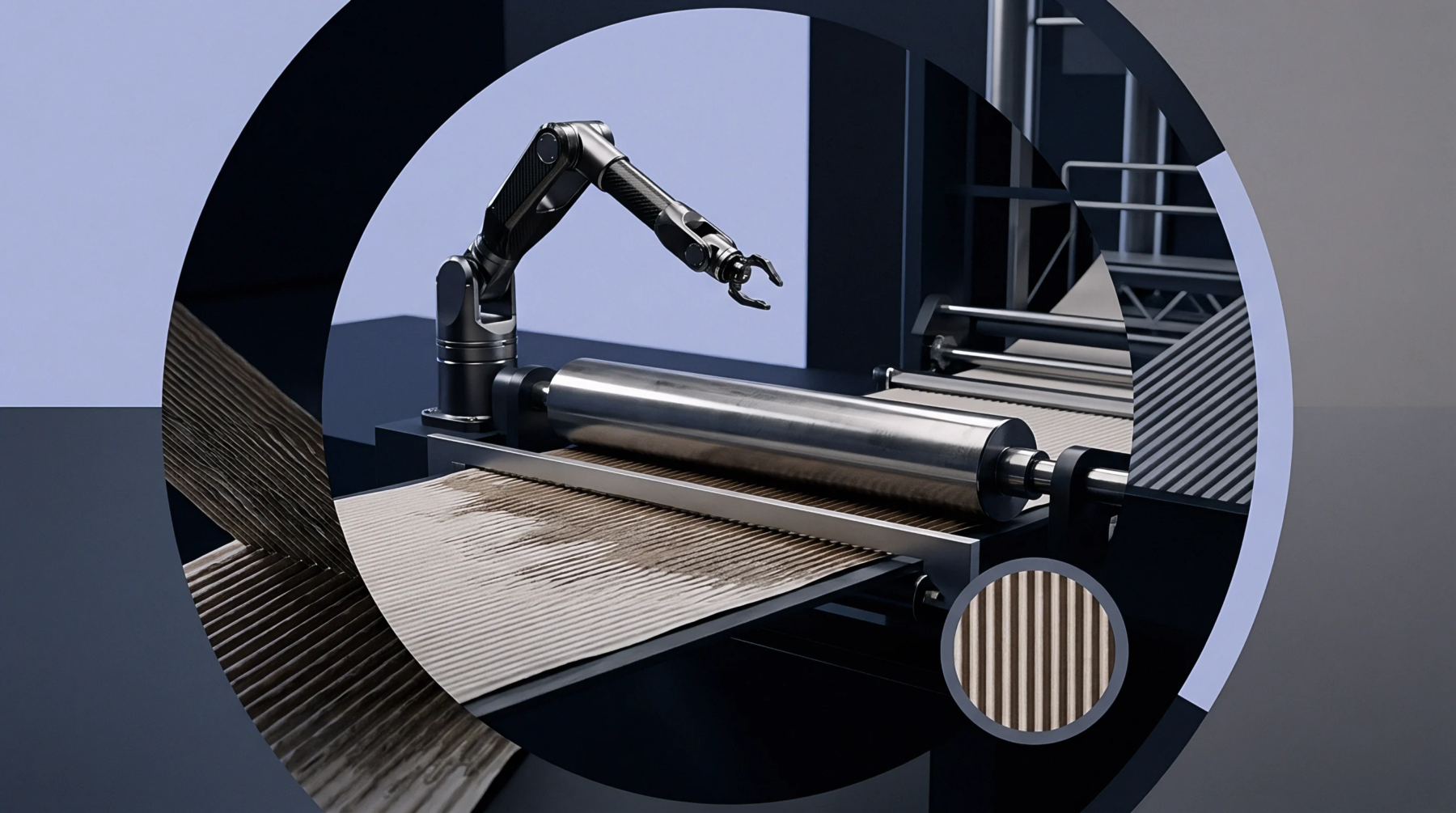
An industrial measurement instrument uses beta radiation attenuation to determine the basis weight of a moving paper web during manufacture. Continuous scanning by a beta absorption gauge provides real time mass distribution data across the machine direction and cross direction. The measurement relies on the relationship between the absorbed radiation and the mass of the material per unit area, operating independently of fibre composition or sheet moisture variations.
Radiation Mechanism
Radioactive isotopes such as krypton 85 or strontium 90 emit beta particles that pass through the paper sheet toward a receiver. As the density of the moving web increases, more beta particles are absorbed or scattered, reducing the flux that reaches the ionization chamber detector. This signal corresponds directly to the grammage of the paperboard, allowing the system to detect minor variations in the distribution of the fibres before the reel.
These raw readings are converted into mass values through calibrated absorption curves, enabling real time monitoring of paperboard density. Operators use these scans to adjust headbox slices, correcting density imbalances across the machine.
Environmental Sensitivity
Moisture levels and temperature changes in the air gap can affect the measurement accuracy by altering the density of the air through which the radiation travels. Modern systems employ temperature compensation sensors to correct for these environmental shifts, ensuring the calibration holds during long production runs. Air temperature fluctuations must be minimized to maintain a stable baseline.
Precise calibration remains necessary for lighter grades where small discrepancies represent a large percentage of total basis weight.