Structural Failure
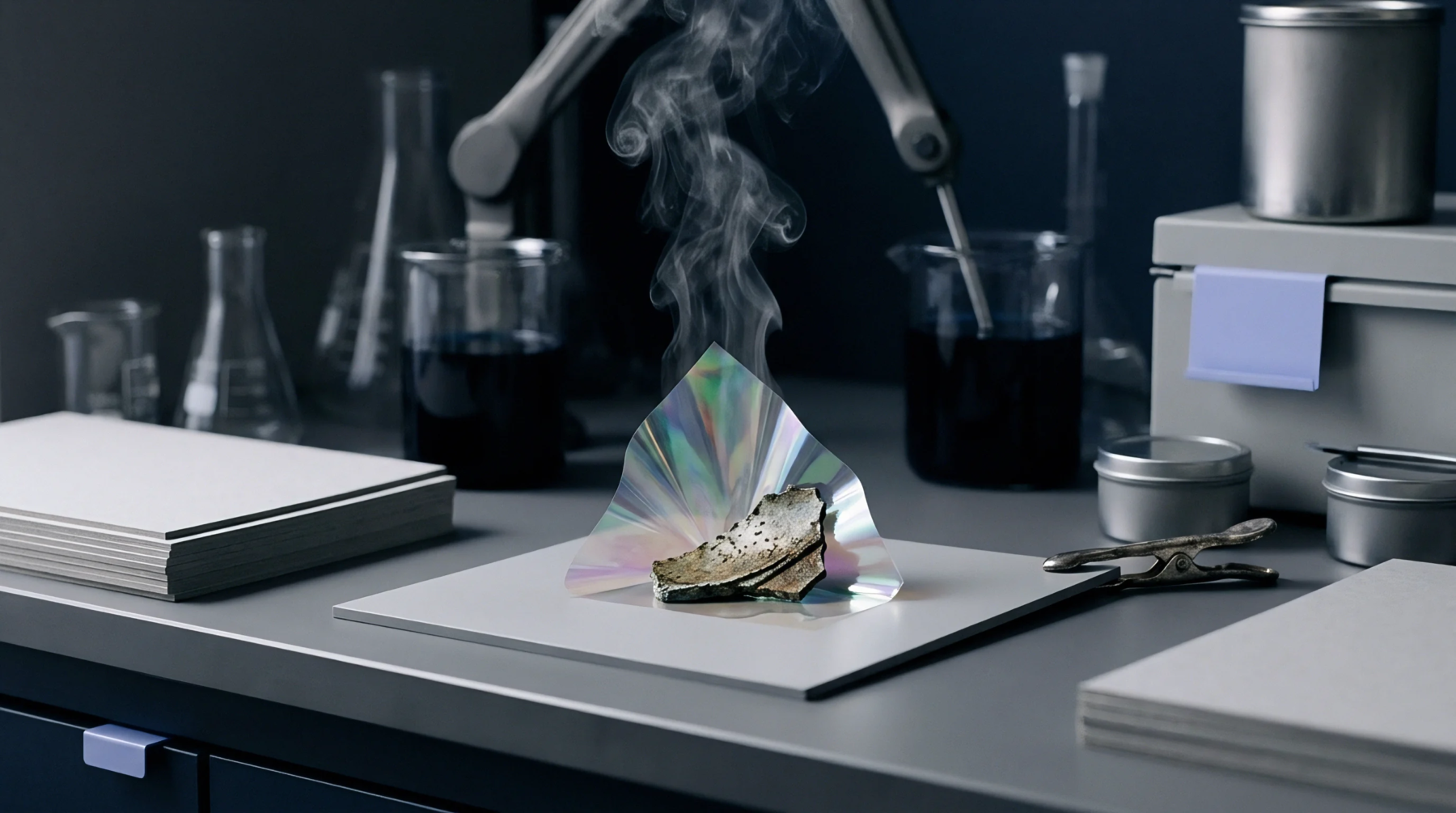
Coated paperboard surfaces fracture when trapped internal vapor pressure exceeds the z-direction tensile strength of paper webs during heat sealing. Substrate tearing caused by expanding water vapor during high-temperature sealing cycles is termed blister rupture. Heat-seal machinery applies thermal energy through polymer coatings to bond plastic blisters to clear-coated card stock.
Residual moisture within internal fiber networks flashes into gas when sealing jaw temperature rises above boiling threshold. High seal pressure prevents steam escape through edge channels, driving pressure upward within middle fiber layers. Fiber bonds yield under localized pressure, creating delamination pockets that tear through clay coating surfaces upon jaw release.
The failure mode applies specifically to coated paperboard packaging exposed to rapid thermal sealing and does not describe cold-seal adhesive failure.
Delamination Strain
Internal moisture vapor expands rapidly when platen temperatures exceed one hundred sixty degrees Celsius. Rapid expansion induces internal shear stresses that surpass internal bond strength values measured under standard testing methods. High-density outer coatings trap expanding steam, focusing mechanical tension within porous mechanical pulp layers.
Coated Substrate
Board manufacturers limit volatile moisture content below six percent to prevent vapor pressure accumulation during converting. Extrusion coated barrier boards exhibit greater susceptibility to blistering due to low vapor permeability across polyethylene film layers. Adjusting platen dwell time allows thermal energy to dissipate without triggering steam expansion inside web structures.
Machine operators reduce jaw temperature while increasing dwell time to maintain bond strength without initiating surface delamination.