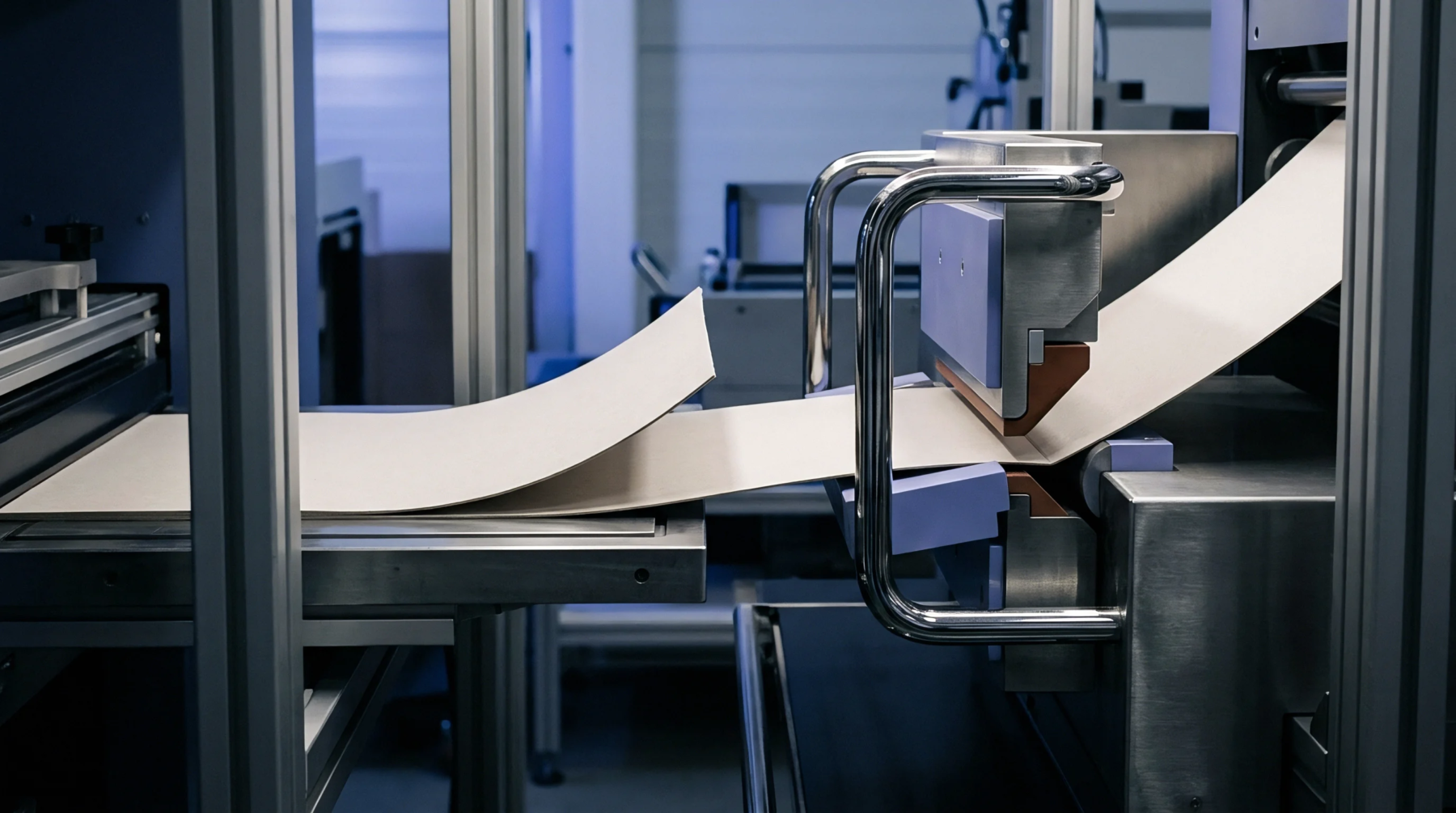
Bar Mechanics
Mechanical depth control defines breaker bar penetration during the conversion of heavy folding boxboard grades where creasing geometry dictates structural folding performance. Adjusting the clearance between the scoring rule and the opposing matrix controls breaker bar penetration to prevent surface cracking along the grain direction of multi-ply paperboards. Excess pressure applied by the tooling forces the creasing bead too deeply into the substrate and shears the outer liner fibers during the pressing cycle.
Insufficient depth produces an unconditioned hinge that resists clean folding on high speed automated packaging lines. Converting plants calibrate this metric against board caliper variations and moisture content fluctuations before releasing a production run to the assembly floor. Machine operators measure the resulting indentation profile with optical gauges to verify compliance with folding carton specifications.
Tool wear alters the applied force distribution across the web width and requires periodic recalibration of the pneumatic cylinders driving the bar assembly.
Fiber Response
Tensile strain tolerance governs how paperboard reacts to mechanical displacement during the creasing phase of box manufacturing. Long softwood fibers bridge the crease channel while short hardwood fillers absorb the compressive stress generated by the tooling. High lignin content in recycled linerboards reduces fiber flexibility and increases the risk of rupture when breaker bar penetration exceeds optimal limits.
Humidity levels within the finishing plant alter the moisture content of the paper stock and change the elongation capacity of the surface plies. Pre-heating the substrate softens internal sizing agents and allows better fiber movement without fracturing the coating layer. Laboratory technicians test conditioned samples using standardized folding endurance apparatus to establish the maximum tolerable strain for each paper grade.
Line Defect
Structural failure along packaging creases compromises box integrity during automated cartoning operations. Excess breaker bar penetration severs the structural integrity of the paperboard and creates a weak hinge prone to tearing under load. Substrate delamination occurs when localized pressure forces individual plies apart instead of bending them uniformly around the score line.
Correcting this fault requires immediate adjustment of the hydraulic actuators controlling the bar depth rather than modifying the adhesive application rates. Quality control inspectors reject batches showing surface cracking along more than two percent of the sampled carton inventory. Precision tooling maintenance eliminates uneven pressure distribution and ensures consistent box performance across extended print runs.