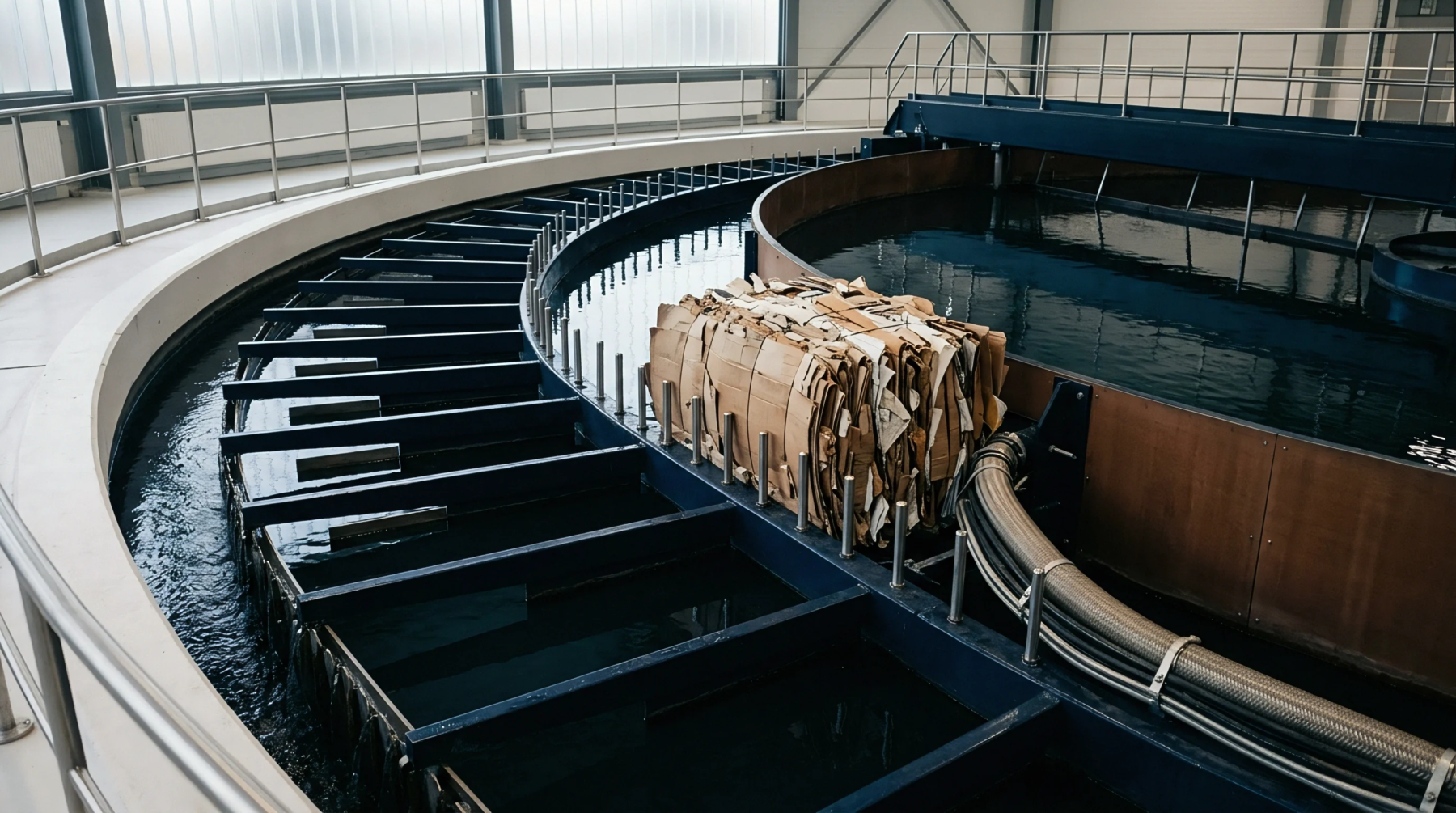
Retention Polymer
Water soluble synthetic polymers function as retention aids and drainage accelerators during the sheet-forming process in paper mills. Standard paper machines run at high speeds, and adding cationic polyacrylamide to the stock improves the retention of fine fibers and mineral fillers on the forming fabric. This chemical carries a strong positive charge that attracts the naturally negative surfaces of cellulose fibers and clay particles.
Flocculation Action
Dual polymer systems often employ this chemical to create bridges between small particles and form large flocs that resist shear forces. By binding these components together, the polymer prevents them from passing through the forming fabric into the white water system. This action reduces the solid load on the wastewater treatment plant and maintains a cleaner wet-end chemistry.
Dewatering Efficiency
Drainage rates increase because the polymer aggregates the fines that would otherwise clog the pores of the wet web. Improved drainage allows the paper machine to operate at higher speeds while reducing the steam energy required in the dryer section. The concentration must be carefully controlled to avoid over-flocculation, which degrades sheet formation and reduces the tensile strength of the paper.
Papermakers monitor the wet-end charge and adjust the polymer dosage to respond to changes in pulp quality or recycled fiber content. This optimization prevents deposits on the machine clothing and ensures consistent quality.