Interface Limit
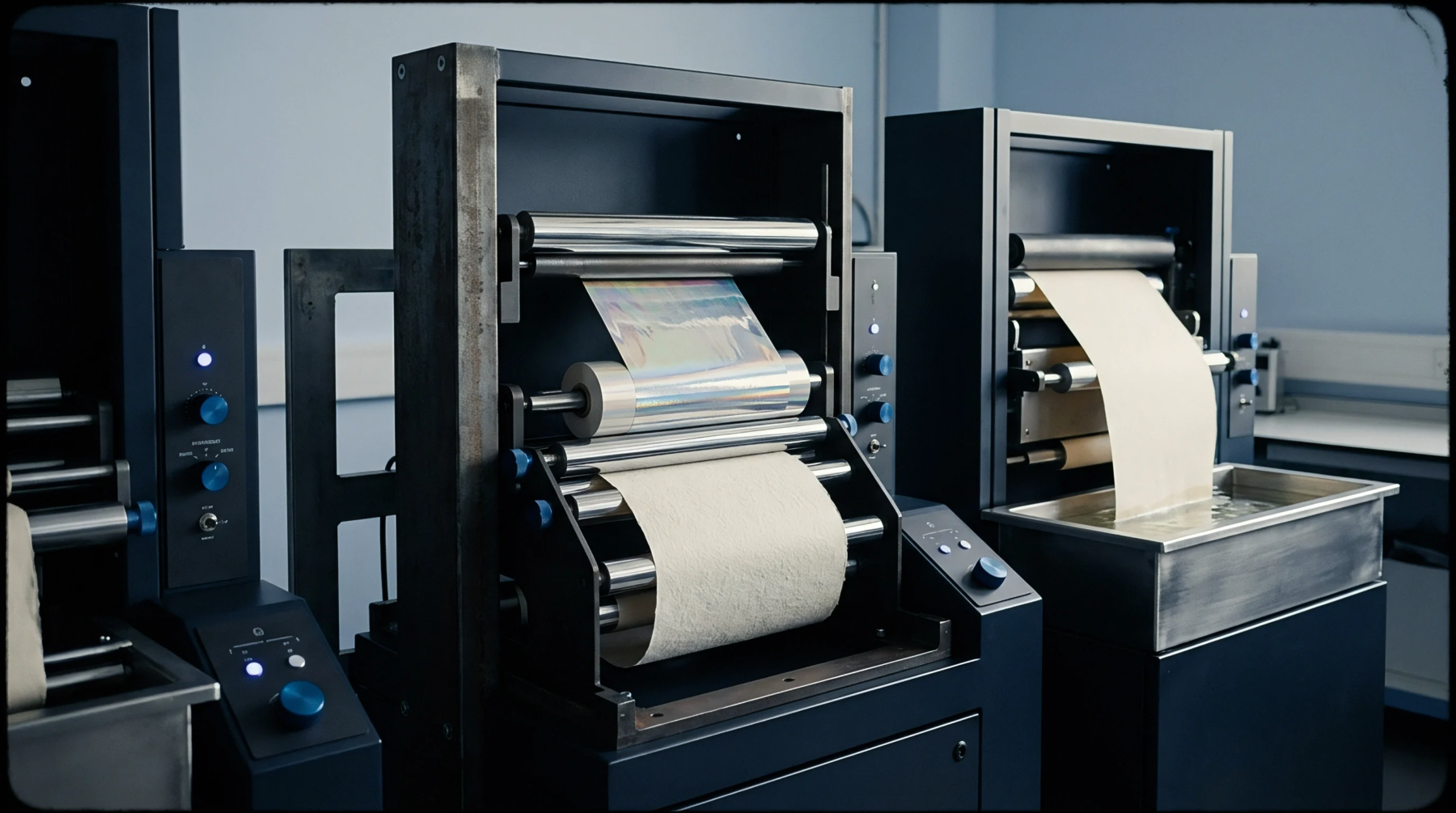
Interfacial fluid physics designates the maximum substrate speed at which a liquid phase completely displaces the air phase at a three-phase dynamic contact line. Exceeding the critical wetting velocity causes the advancing contact angle to approach 180 degrees, precipitating immediate air film entrainment between fluid and moving paperboard. Curtain coaters and flexographic print stations depend on remaining below this kinetic threshold to prevent un-wetted voids.
Dynamic Contact
Liquid surface tension, dynamic viscosity and solid surface energy dictate where this displacement boundary occurs during continuous coating runs. As substrate speed rises, the dynamic contact angle widens until the liquid meniscus can no longer advance fast enough to wet the rough fibrous topography. Surface roughness on uncalendered kraft board distorts the contact perimeter, which initiates localized air entrapment at speeds lower than those observed on supercalendered sheets.
Adding surfactant packages lowers dynamic surface tension, shifting the stable wetting envelope toward higher operating velocities. Higher fluid viscosity narrows the stable operating window by increasing viscous resistance against meniscus advancement.
Process Constraint
High-speed barrier coating lines require precise formulation balance to push this operational ceiling above targeted commercial machine speeds. When lines run faster than the displacement threshold, printed surfaces display pinholes, pattern breaks and mottled ink density across solid coverage areas. Blade pressure adjustment cannot compensate for the fluid detachment caused by crossing this fundamental kinetic boundary.
The property determines the upper speed limit for uniform aqueous dispersion coating on non-porous paperboard grades.