Morphological Ratio
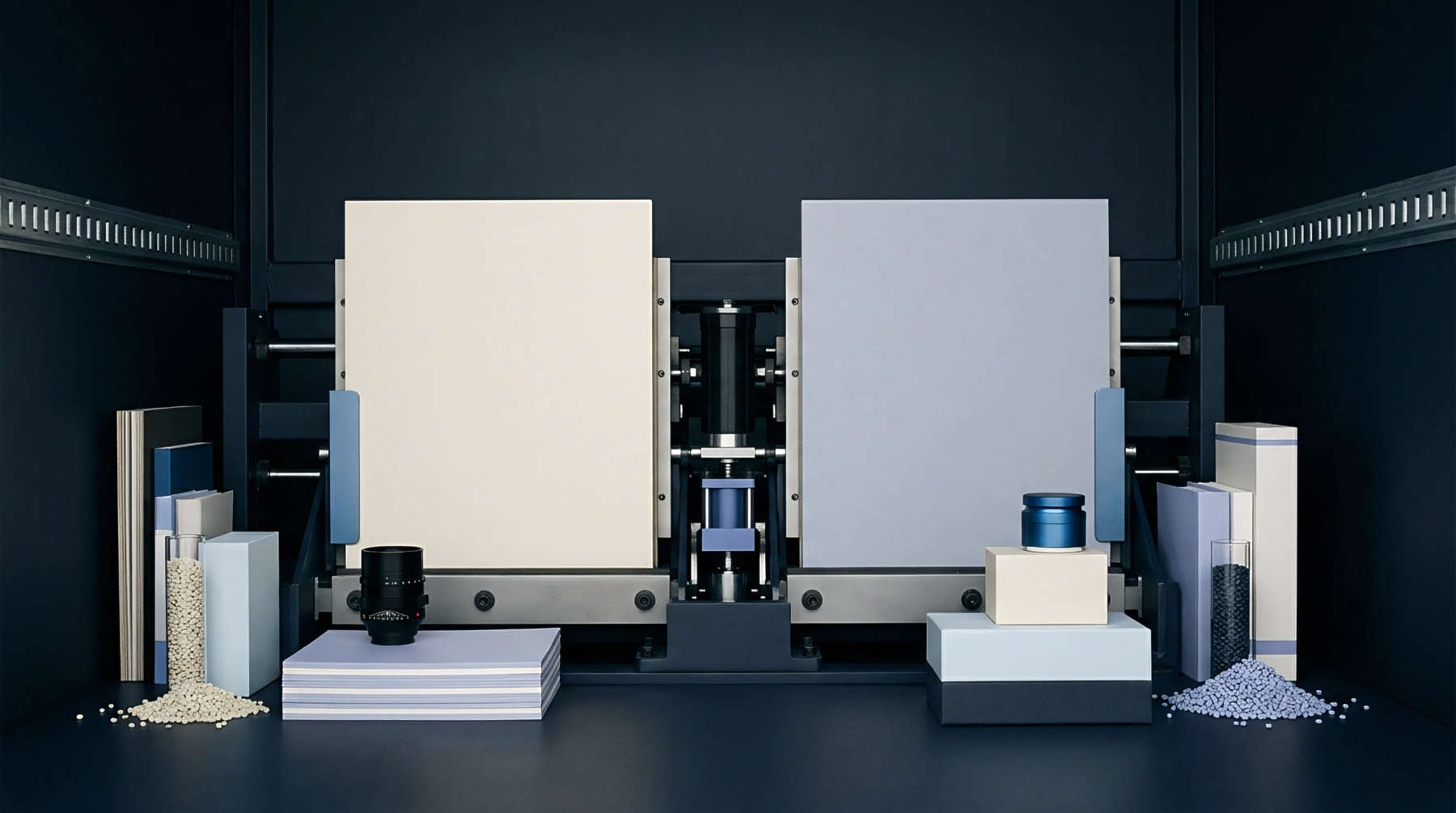
Polymer phase organization defines the mass fraction of structurally ordered crystalline domains relative to amorphous regions within solid polymeric packaging materials and native cellulose fibres. Converting processes depend on the degree of crystallinity to balance barrier resistance against film elongation, heat-seal initiation temperatures and carton creasing behaviour. Differential scanning calorimetry calculates this property by comparing sample melting enthalpy against that of a theoretical hundred-percent crystalline standard.
Density gradient columns and wide-angle X-ray diffraction provide non-thermal verification of this morphological state. The metric ceases to govern behaviour above the crystalline melting temperature where solid domains collapse into isotropic polymer melts.
Converting Performance
Extrusion chill-roll cooling speeds establish the final crystal distribution in polyethylene and polypropylene coatings applied to folding boxboards. Rapid quenching freezes polymer chains into an amorphous state that yields superior optical clarity and low heat-seal initiation temperatures on carton lines. Slower cooling creates dense spherulitic domains that elevate water-vapour resistance while increasing brittleness along scored boxboard hinges.
Polyethylene terephthalate trays require tight thermal management during thermoforming to prevent uncontrolled post-crystallization that causes stress cracking during cold-chain shipping.
Barrier Correlation
Gas diffusion through barrier packaging proceeds almost exclusively across disordered amorphous zones because tightly packed crystal lattices deny passage to permeant molecules. Raising crystalline density in biaxially oriented polypropylene reduces moisture transmission rates, creating stiffer substrates that feed stably through rotogravure presses. Highly crystalline structures concurrently resist molecular solvent penetration, limiting adhesive tie-layer wet-out during dry bond lamination.
Annealing stations on polymer extrusion lines therefore run narrow temperature windows to elevate barrier properties without inducing flex-crack failure in finished pouches. High molecular order consistently restricts the transport of volatile compounds across polyolefin sealant webs.