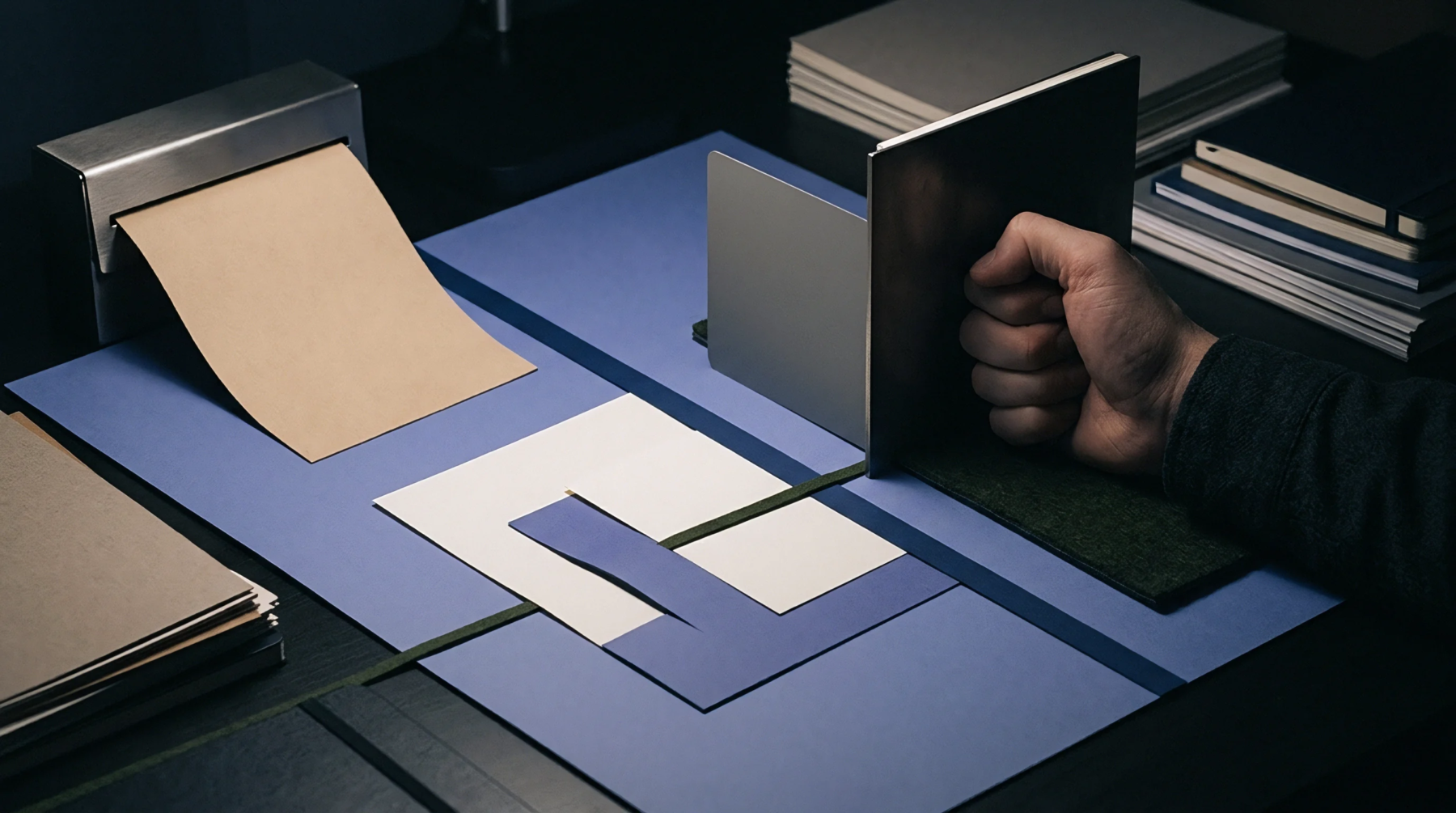
Geometry Control Mechanics
Mechanical mounting apparatuses designed to maintain an invariant peel angle between a flexible laminate and a rigid substrate ensure repeatable adhesion testing. In peel testing protocols such as ninety-degree and roll-peel configurations, a fixed angle fixture constrains the delamination front to eliminate geometric variations that distort calculated fracture energy. Free-hanging peel tests allow the peeling angle to drift dynamically as the flexible carrier bends and stretches, shifting the measured force vector unpredictably.
By utilizing low-friction sliding sleds, driven pulleys, or bearing-mounted moving platens, the apparatus synchronizes substrate displacement with crosshead travel.
Peel Angle Physics
Deviations in peeling angle alter the mechanical ratio of tensile to shear stresses at the adhesive separation line. Holding a constant ninety-degree or forty-five-degree trajectory via a fixed angle fixture guarantees that the recorded tensile force corresponds directly to standard peel adhesion formulas without trigonometric error corrections. In release liner evaluation and adhesive tape characterization, maintaining a strictly perpendicular angle prevents the backing from contacting the freshly peeled adhesive, which would create false frictional drag.
High-precision fixtures incorporate lateral adjustment screws and linear bearings to accommodate variable substrate thicknesses.
Operational Limits
Friction within the sliding components of the fixture represents the primary source of operational error. Dust accumulation, worn guide bearings, or poor lubrication inside the carriage mechanism introduce parasitic loads into the load cell data stream. When testing highly extensible plastic films, necking and lateral contraction can misalign the strip relative to the fixture axis.
The geometric constraint fails if the applied pull rate exceeds the dynamic tracking speed of the motorized sled.