Contact Angle Goniometry Protocols for Polyolefin Lamination Adhesion Verification
Sessile contact angle goniometry isolates polar and dispersive surface energy to verify polyolefin corona treatment and prevent lamination delamination.


Drop
Measuring polyolefin surface energy optically depends on dispensing liquid precisely onto untreated or corona-modified polymer webs. Converting lines for flexible packaging rely on biaxially oriented polypropylene (BOPP), low-density polyethylene (LDPE), and high-density polyethylene (HDPE) as primary barrier and sealing layers. Untreated polyolefins carry low surface free energy ~ typically 29 to 31 mN/m ~ driven almost exclusively by dispersive Lifshitz-van der Waals forces.
To get water-borne or solventless laminating adhesives to wet the substrate, corona discharge or atmospheric plasma treatment must push surface energy past 38 to 44 mN/m.
Historically, plant operators checked treatment levels with dyne test pens or drawdown solutions following ASTM D2578. Because these dyne mixtures rely on formamide and 2-ethoxyethanol, the aggressive solvents generate significant measurement artifacts on polyolefin film, yielding contact figures that fail to reflect true surface conditions.
Solvent Interaction Artifacts in Dyne Solution Testing
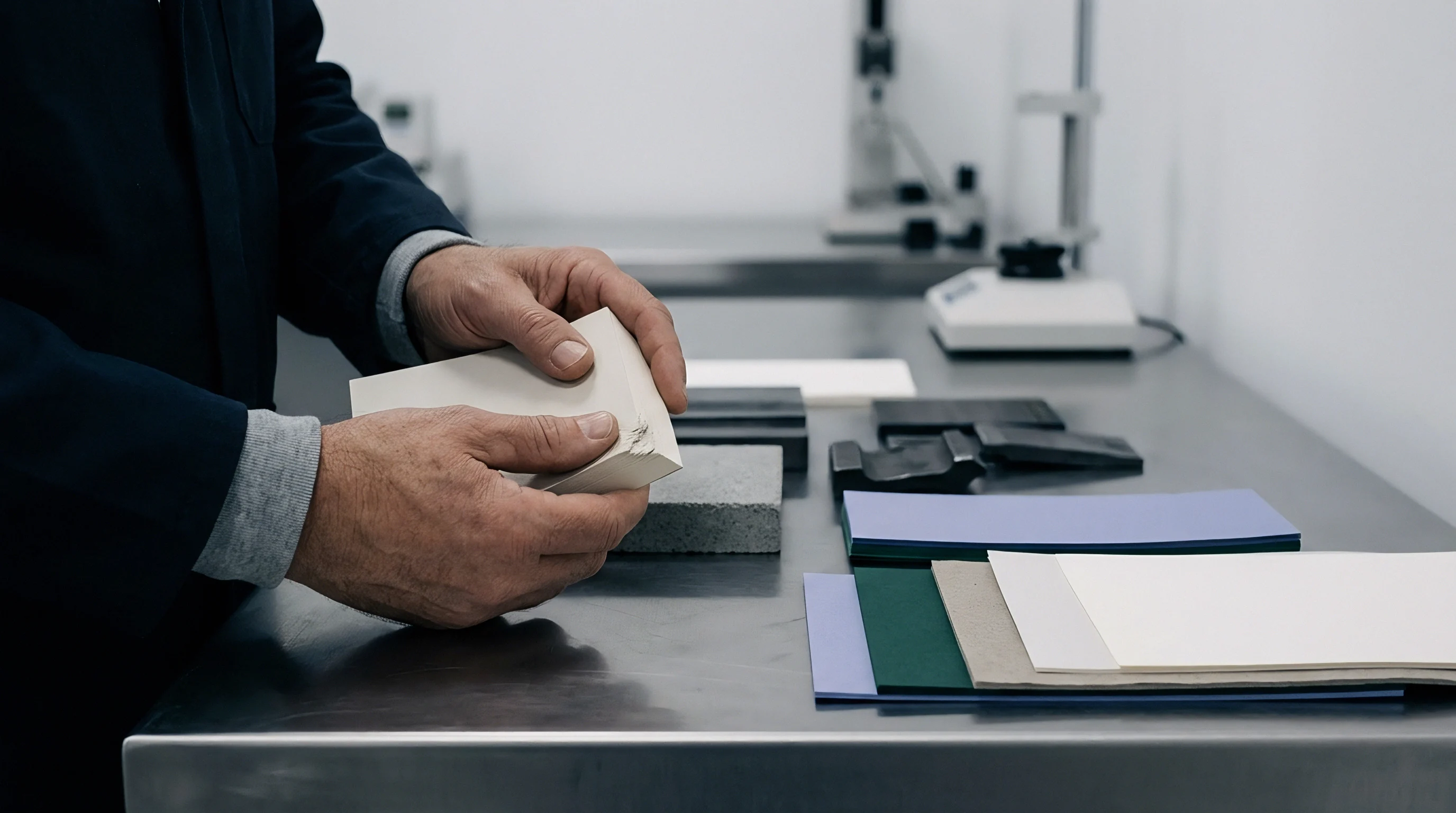
Standard test inks made with formamide and ethyl cellosolve swell low-density polyethylene webs within seconds. Corona oxidation generates polar carboxyl, carbonyl, and hydroxyl groups within just the top 1 to 5 nanometers of the polymer surface. Solvents present in dyne fluids easily soak into this thin oxidized layer, dissolving low-molecular-weight oxidized material (LMWOM) alongside exuded slip additives like erucamide or oleamide.
As these surface species dissolve, liquid-solid interfacial tension shifts during the test itself ~ meaning the solvent actively alters surface chemistry while the operator tries to read wetting. On top of that, dyne pens exert mechanical shear during application, smearing surface contamination and hiding local variations in oxidation. Goniometric contact angle testing avoids mechanical contact altogether by depositing static, microliter droplets onto an undisturbed web surface.
| Evaluation Method | Test Liquid Composition | Substrate Interaction | Measurement Accuracy | Destructive Nature |
|---|---|---|---|---|
| Dyne Drawdown (ASTM D2578) | Formamide and 2-ethoxyethanol mixtures | Solvent swelling and LMWOM dissolution | ± 2.0 mN/m (subjective visual threshold) | Destructive to tested area |
| Sessile Goniometry (ISO 19403-2) | Pure water, diiodomethane, ethylene glycol | Thermodynamic wetting without surface swelling | ± 0.2 mN/m (optical profile fitting) | Non-destructive, localized drop footprint |
| Dynamic Tilting Goniometry | High-purity deionized water | Evaluates contact angle hysteresis | ± 0.3° hysteresis resolution | Non-destructive, preserves web sample |
Sessile Volume Calibration and Baseline Detection
Automated precision syringes drop discrete liquid volumes between 1.0 and 3.0 microliters to prevent the contact boundary from sagging under gravity. Droplets larger than this sag and distort the contact line, giving artificially low angles; droplets under 0.5 microliters evaporate so quickly in ambient laboratory air that internal drop pressure and contact angle shift within milliseconds.
High-speed digital optics running at 60 to 500 frames per second allow automated goniometers to capture drop profiles instantly. Software then fits the three-phase contact line using Young-Laplace or polynomial algorithms. Finding an accurate baseline requires telecentric lighting to eliminate glare on reflective polyolefin films, as reflection artifacts offset baseline placement by several pixels and introduce systematic errors up to 4 degrees in calculated contact angles.
Because cold corona units degrade rapidly over time, contact angle instruments catch this loss of treatment before lamination failure occurs on the production floor.
Sessile drop measurements on untreated webs yield reliable surface energy data only when liquid is dispensed free of tip contamination or mechanical vibration.


Polarity
Polyolefin substrates possess low thermodynamic surface energy dominated by dispersive Lifshitz-van der Waals forces. Unmodified polyethylene film exhibits zero polar surface energy. Corona discharge treatment breaks carbon-carbon and carbon-hydrogen bonds at the web surface, creating free radicals that react with atmospheric oxygen, ozone, and nitrogen species to graft functional polar groups onto the non-polar polyolefin backbone.
Quantifying the balance between dispersive and polar components determines whether a laminating adhesive will spread across the treated film. Young’s equation links contact angle to surface tension components: total liquid surface tension times the cosine of the contact angle equals solid surface energy minus solid-liquid interfacial energy.

Owens Wendt Rabel Kaelble Surface Energy Calculations
Dividing total surface free energy into dispersive and polar fractions requires testing with at least two liquids of known surface tension attributes. The Owens-Wendt-Rabel-Kaelble (OWRK) model uses geometric mean calculations to separate dispersive and polar interaction terms across the solid-liquid interface, expressing total substrate surface energy as the sum of its dispersive and polar components.
Diiodomethane serves as the primary probe liquid for isolating the dispersive component, carrying a total surface tension of 50.8 mN/m at 23 °C with zero polar component. Its contact angle on a polyolefin web directly determines the polymer’s dispersive surface energy. High-purity deionized water serves as the polar-dominant probe liquid, presenting a total surface tension of 72.8 mN/m split into 21.8 mN/m dispersive force and 51.0 mN/m polar force.
Contractual specifications incorporating ISO 19403-2 baseline validation eliminate surface energy ambiguity across multi-layer lamination supply chains.
Solving the OWRK linear matrix yields exact polar and dispersive values for the treated film. Untreated BOPP displays a dispersive component of 30.2 mN/m and a polar component of 0.1 mN/m. Corona treatment targeting 42 mN/m total surface energy shifts the dispersive component to 33.5 mN/m and raises the polar component to 8.5 mN/m.
Adhesion of two-component solventless polyurethane resins depends primarily on this polar shift, as hydroxyl and isocyanate groups in the adhesive form hydrogen bonds with surface carbonyl sites.
Probe Liquid Thermodynamic Profiles and Selection
Selecting probe fluids requires strict purity control to prevent interfacial tension drift during testing. Tap water or contaminated diiodomethane introduces trace surfactants that drop liquid surface tension, distorting calculated polar values. Ethylene glycol offers an intermediate probe profile with a total surface tension of 48.0 mN/m (29.0 mN/m dispersive, 19.0 mN/m polar), serving as a secondary verification probe for complex multi-layer structures.
Acid-base surface energy models based on van Oss-Chaudhury-Good theory further separate polar interactions into Lewis acid and Lewis base components. Polyolefin surfaces modified by oxygen corona exhibit predominantly Lewis base (electron-donor) character due to oxygen lone pair electrons in carboxyl and hydroxyl structures. Isocyanate-terminated polyurethane prepolymers act as Lewis acids (electron-acceptors), creating strong acid-base donor-acceptor complexes across the lamination boundary.
While pure water exhibits high surface tension, diiodomethane carries no polar force whatsoever.
Purchase orders referencing ISO 19403-2 surface energy parameters bind film converters to deliver polyolefin rolls with minimum polar surface energy components, changing raw material rejection rights upon delivery inspection.


Decay
Corona discharge treatment generates short-lived hydroxyl, carbonyl, and carboxyl functional groups on polyethylene and polypropylene surfaces. High-energy electrical arcs convert atmospheric oxygen into reactive radicals that modify the polymer chain within milliseconds. Treated polyolefin rolls stored in converting facilities display progressive surface energy decay over time, reducing initial wetting performance.
Hydrophobic recovery drives surface energy regression through two primary mechanisms. Polymer chains undergo physical rotation, burying polar functional groups back into the amorphous bulk phase to minimize interfacial free energy. Simultaneously, low-molecular-weight additives migrate from the interior of the film matrix to the outer surface.

What Drives Corona Treatment Regression in Stored Film?
Erucamide and oleamide function as slip additives incorporated into polyolefin resins at concentrations between 500 and 1500 ppm to lower the coefficient of friction during film extrusion and bag converting. Synthetic silica acts as an anti-block agent. These additives possess low surface energy and high mobility within the amorphous regions of polyethylene and polypropylene.
Over storage periods ranging from 48 hours to 30 days, fatty acid amide molecules exude upward to the web boundary. The non-polar hydrocarbon tails of erucamide align outward toward the atmosphere, forming a hydrophobic monolayer that masks underlying polar oxidation sites. Water contact angles on freshly treated LLDPE film rise from 62 degrees immediately after corona exposure to over 84 degrees after 14 days of ambient storage at 25 °C.
At 23 °C and 50 percent relative humidity, erucamide slip migration increases water contact angles on corona-treated LLDPE by 1.8 degrees per day.
Surface oxidation initially introduces polar carbonyl groups, but blooming erucamide eventually covers them.
Elevated ambient temperature accelerates additive diffusion rates through the polyolefin web. Rolls stacked near warm extrusion lines or stored in unconditioned warehouses experience rapid contact angle regression. Goniometer measurements tracking contact angle over time generate decay curves that define the shelf life window for lamination operations.

Erucamide Migration and Surface Reorientation Kinetics
Quantifying treatment decay kinetics allows laminating plant managers to schedule production runs before surface energy drops below critical processing thresholds. Solventless polyurethane laminating adhesives require a stable polar surface energy component of at least 5.0 mN/m to maintain structural bond integrity. When erucamide migration drops the polar component below 2.5 mN/m, lamination lines experience catastrophic inter-coat delamination.
Washing stored film samples with high-purity n-hexane strips exuded surface slip amides without altering the covalent polyolefin network. Comparing contact angles before and after hexane extraction separates structural polymer chain relaxation from additive blooming. Polypropylene films exhibit slower chain rotation rates than low-density polyethylene due to higher glass transition temperatures and higher crystallinity.
Post-discharge energy loss stems from both improper warehouse storage humidity and high slip additive formulations in the resin recipe.

Stage
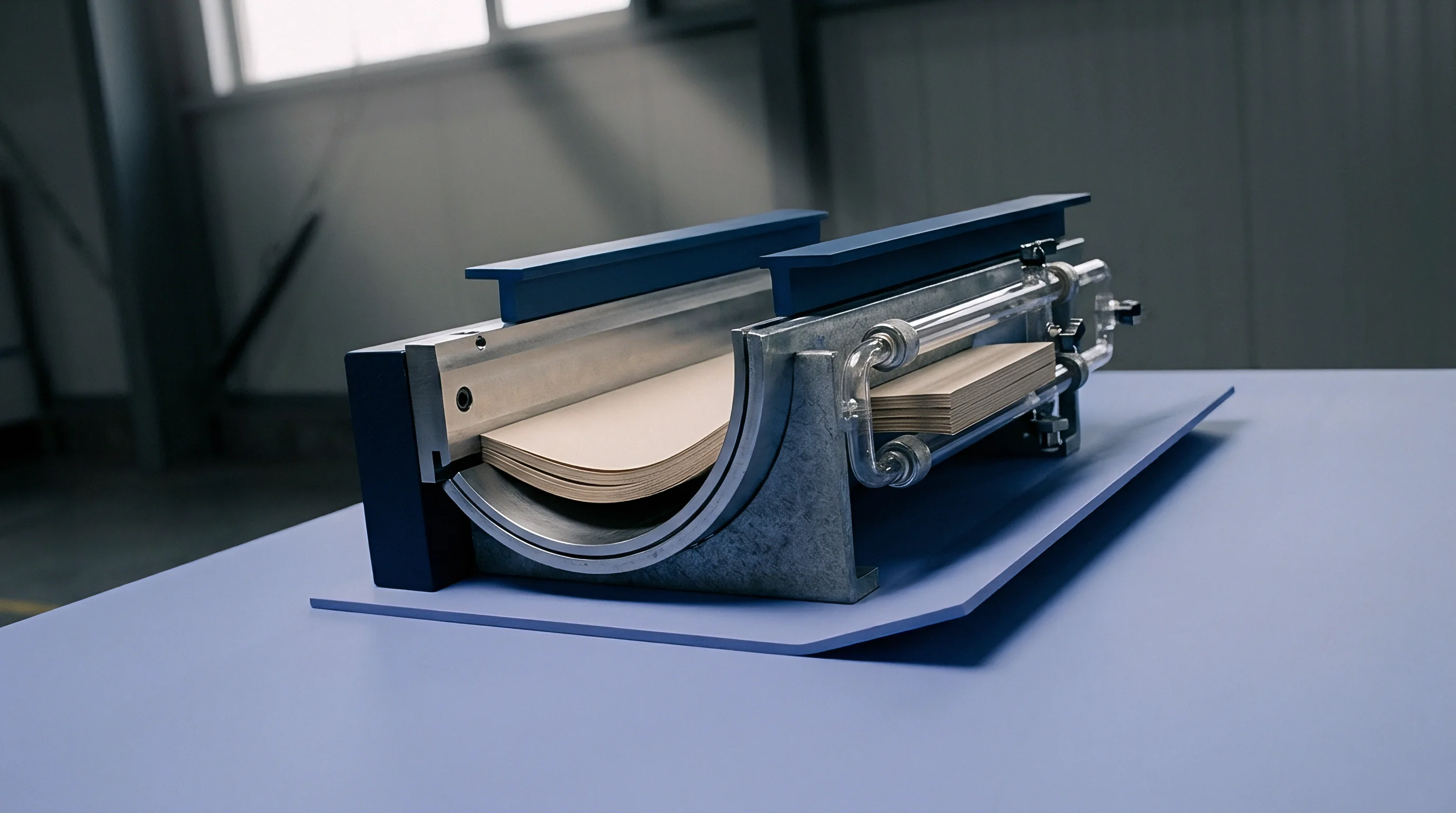
Benchtop goniometer setup demands strict atmospheric stabilization and mechanical isolation to prevent optical distortion during drop capture. Instrument placement requires an optical bench fitted with vibration-damping air legs or heavy granite slabs to isolate high-magnification cameras from converting press vibrations. Testing rooms operate under ISO 187 standard conditioning at 23 °C ± 1 °C and 50% ± 2% relative humidity.
Substrate preparation requires flat mounting without stretching or bending the polyolefin film. Flexing thin films introduces mechanical stress that alters contact line geometry. Spring-loaded film clamps secure web specimens across flat anodized aluminum vacuum stages.
Atmospheric Conditioning and Substrate Preparation
Polyolefin films absorb minimal atmospheric moisture, but surface condensation alters sessile drop spreading dynamics. Web samples must acclimate within the testing environment for a minimum of 24 hours prior to surface energy evaluation. Operators handle film edges using powder-free nitrile gloves to eliminate skin oil contamination.
Needle selection directly influences droplet geometry during automated dispensing. Polytetrafluoroethylene (PTFE) coated 27-gauge stainless steel needles prevent liquid climbing up the needle exterior. Uncoated steel tips cause liquid droplet cling, resulting in irregular drop volume delivery and non-spherical drop shapes upon stage deposition.
| Probe Liquid | Total Surface Tension (γ_l) | Dispersive Component (γ_l^d) | Polar Component (γ_l^p) | Untreated BOPP Angle (θ) | Corona BOPP Angle (θ) |
|---|---|---|---|---|---|
| Deionized Water | 72.8 | 21.8 | 51.0 | 98.5° ± 1.2° | 64.2° ± 0.8° |
| Diiodomethane | 50.8 | 50.8 | 0.0 | 53.1° ± 0.6° | 41.5° ± 0.5° |
| Ethylene Glycol | 48.0 | 29.0 | 19.0 | 71.4° ± 0.9° | 46.8° ± 0.7° |
| Data measured according to ISO 19403-2 optical sessile drop methods using circle fitting algorithms on 2.0 µL drop volumes. | |||||

Optical Baseline Fitting and Dosing Precision
Automated contact angle software relies on precise image segmentation to distinguish the liquid droplet outline from the substrate stage. The baseline marks the solid-liquid interface line. Surface reflection on glossy polypropylene films creates a mirrored image below the true baseline.
Advanced image algorithms use edge-detection thresholding to locate the sharp brightness transition corresponding to the physical contact line.
Dynamic contact angle evaluation measures advancing angle (θ_A) and receding angle (θ_R) by expanding and contracting droplet volume via continuous syringe pump movement. Advancing contact angles represent the dry substrate wetting threshold, while receding angles reveal surface chemical heterogeneity and contamination. The difference between advancing and receding angles defines contact angle hysteresis.
Dirty dispensing needles distort drop profiles, baseline drift introduces measurement error, and relying solely on static contact angles masks hysteresis.
The standard execution workflow for incoming polyolefin lamination qualification follows a defined mechanical and analytical sequence:
- Mount the polyolefin film specimen across the vacuum stage, securing tension clamps to achieve a planar surface without structural wrinkling.
- Purge automated syringe lines with fresh HPLC-grade probe liquid to remove micro-bubbles and internal fluid degradation.
- Calibrate camera magnification using a certified quartz calibration grid, setting pixel-to-millimeter spatial scale factors.
- Lower the dispensing needle until the tip sits 2.0 millimeters above the substrate surface.
- Dispense a 2.0 microliter liquid droplet at a controlled flow rate of 0.5 microliters per second.
- Translate the stage upward to touch the droplet to the web, detaching the liquid without kinetic impact.
- Capture drop profile imagery at 60 frames per second over a 10-second observation window.
- Apply Young-Laplace optical fitting algorithms between 1.0 and 2.0 seconds post-deposition to extract equilibrium contact angles.
- Calculate polar and dispersive surface energy components using two-liquid OWRK linear matrix equations.
Neglecting needle tip calibration alters liquid contact profiles, driving unrecorded lamination failures across multi-layer flexible structures.

Adhesion
Peel strength testing quantifies interfacial mechanical bond endurance between polyolefin films and polyurethane or solventless laminating resins. Mechanical peel testing according to ASTM D903 or ISO 8510-2 measures the force per unit width necessary to separate laminated layers at a 180-degree angle. Thermodynamic work of adhesion (W_a) calculated from contact angle data correlates with initial green bond performance on converting lines.
Work of adhesion represents the free energy change per unit area required to separate two contacting phases. High thermodynamic work of adhesion ensures complete liquid adhesive spreading across polyolefin topography during web nipping.
Worked Construction of Interfacial Bond Predictions
Evaluating adhesive performance involves comparing thermodynamic wetting work against mechanical peel force outcomes. Take a packaging lamination trial run joining a 20-micron corona-treated BOPP film to a solventless two-component polyurethane adhesive layer. Goniometric analysis of the treated BOPP film yields a dispersive component of 34.0 mN/m and a polar component of 7.5 mN/m, giving a total surface energy of 41.5 mN/m.
Contact angle testing on the uncured polyurethane adhesive reveals a liquid surface tension of 32.0 mN/m (24.0 mN/m dispersive, 8.0 mN/m polar). Applying the OWRK interfacial tension formula calculates the solid-liquid interfacial energy (γ_sl) as 0.73 mN/m. The thermodynamic work of adhesion equals solid surface energy plus liquid surface tension minus solid-liquid interfacial energy, calculating to 72.77 mN/m.
Assume an under-treated BOPP roll with a polar component of only 1.2 mN/m (total surface energy 34.2 mN/m) enters the lamination nip under identical processing conditions. Interfacial tension increases to 3.42 mN/m, dropping the calculated work of adhesion to 62.78 mN/m. This 13.7% reduction in thermodynamic work of adhesion causes complete adhesive bead dewetting inside the lamination nip, leading to optical tunneling defects and low green bond strength.
Thermodynamic work of adhesion exceeding 70 mN/m predicts complete adhesive spreading without micro-void entrapment inside the lamination nip.
Interfacial peel testing exposes bond failures, especially given that polyurethane resins rely on reactive sites and uncured bond strength remains low.

Failure Mode Categorization at the Polyolefin Interface
Lamination failures exhibit distinct physical characteristics depending on interfacial energy balance and adhesive cure state. Classifying delamination patterns pinpoints root causes between resin formulation flaws and substrate surface treatment decay.
- Interfacial Adhesive Failure occurs when the adhesive separates cleanly from the polyolefin web surface without leaving measurable resin residue. This failure indicates insufficient polar surface energy or severe slip additive blooming on the film prior to lamination.
- Cohesive Adhesive Failure takes place when the separation split occurs within the internal adhesive bulk layer while maintaining chemical bonds to both substrate webs. This mode indicates incomplete adhesive curing, incorrect stoichiometric mix ratios, or thermal degradation during storage.
- Substrate Tear Failure represents optimal bond strength where the interfacial adhesion force exceeds the structural tensile yield strength of the polyolefin film, causing film elongation and tearing during peel testing.
- Thermal Micro-Tunneling surfaces as narrow line unbonded channels across the laminated web. This defect arises when localized surface energy dips prevent wet-out under high-speed nip pressure.
Whether dynamic contact angle hysteresis can fully predict long-term solventless polyurethane bond degradation under high-humidity storage conditions remains open to ongoing laboratory investigation.


Dossier
Converting operations establish raw material incoming inspection criteria to verify surface energy compliance prior to lamination passes. Quality assurance departments write surface free energy specifications into procurement contracts to ensure film rolls meet processing requirements. Certificates of Analysis (CoA) submitted by film extruders must include statistical contact angle data alongside standard tensile and optical haze metrics.
Sampling plans governed by ISO 2859-1 (AQL 1.0, Level II normal inspection) require taking core and outer wraps from three randomly selected film rolls per extruded lot. Goniometric verification validates compliance with total surface energy and polar component thresholds.
Quality Control Tolerances and Certificate Protocols
Standardizing acceptance limits requires setting explicit thresholds for dispersive and polar components rather than accepting single total surface energy figures. A film displaying 40.0 mN/m total surface energy derived entirely from dispersive forces will fail to bond with polar polyurethane adhesives. Quality criteria must specify both total surface energy and minimum polar contribution.
| Substrate Grade | Minimum Total Energy (γ_s) | Minimum Polar Component (γ_s^p) | Max Water Contact Angle (θ) | Lamination Pass Spoilage Risk | Waste Outlay per 10,000m Pass |
|---|---|---|---|---|---|
| Standard BOPP (Lamination Grade) | 38.0 | 5.0 | 70.0° | Low (< 0.5% lot defect rate) | $120 (standard trim scrap) |
| High-Barrier Met-BOPP | 42.0 | 8.0 | 62.0° | Moderate (slip additive sensitive) | $450 (delamination web scrap) |
| Retort Grade LLDPE | 44.0 | 10.0 | 58.0° | High (requires thermal stability) | $1,200 (full roll rejection) |
| Recycled-Content PE (PCR 30%) | 36.0 | 3.5 | 76.0° | Critical (contaminant variance) | $2,800 (press downtime & scrap) |
Commercial Spoilage and Pass Economics
Running non-compliant polyolefin film through high-speed lamination lines generates massive commercial losses. Solventless lamination press speeds reach 400 to 600 meters per minute. A delay of 15 minutes spent identifying poor adhesive wetting on an under-treated web wastes over 7,500 meters of multi-layer material, incurring direct costs in raw film, laminating adhesive, and press downtime.
Lamination failure drives web spoilage, directly squeezing converter margins that depend on line speed, even as monomaterial films simplify packaging recycling.
Converter procurement teams evaluate supplier compliance using formal decision frameworks based on verified goniometric surface data:
- Mandatory Polar Component Limits force suppliers to certify minimum polar surface energy metrics exceeding 5.0 mN/m using two-liquid OWRK test protocols.
- Additive Migration Exudation Caps bound allowable slip additive concentrations to prevent post-discharge contact angle decay during 30-day storage windows.
- Batch Uniformity Index Thresholds restrict intra-roll contact angle variance to within ± 1.5 degrees across web width profiles.
- Recyclability Compliance Scoring aligns surface treatment protocols with CEFLEX monomaterial guidelines, avoiding heavy fluorination or non-recyclable primer coatings.
Monomaterial polyolefin packaging structures designed for circular recycling schemes under EN 13430 rely heavily on corona-mediated physical adhesion rather than chemical primers. Chemical primers alter the chemical purity of polyethylene and polypropylene recycling streams, earning financial penalties under European extended producer responsibility (EPR) packaging fee structures. Precise goniometric surface verification guarantees that physical corona modification provides sufficient bond strength, avoiding chemical primers while preserving maximum monomaterial recyclability grades and minimizing regulatory packaging surcharges.