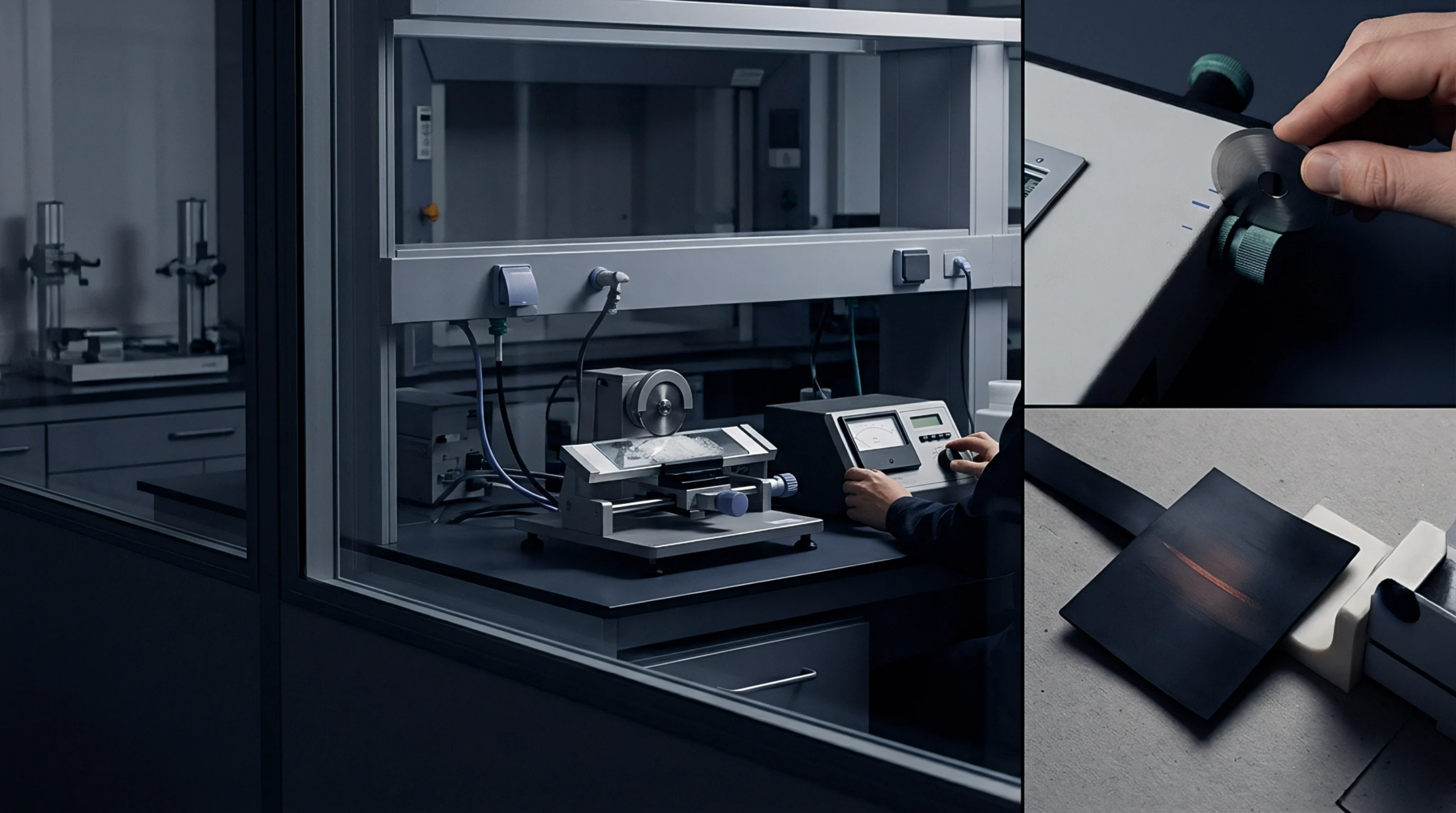
Disintegration Test
Standardized laboratory sieving procedures isolate, collect, and quantify structural fragments remaining after physical disintegration testing in compost or soil environments. A mesh retrieval assay isolates degraded packaging fragments using specific aperture sieves, typically two millimetres or ten millimetres, to measure macro-disintegration efficiency under controlled environmental conditions. The assay evaluates physical fragmentation and particle breakdown, stopping short of measuring molecular respiration or biological carbon assimilation.
Recovery Protocol
Conditioned compost matrices containing degraded packaging specimens undergo wet or dry mechanical sieving at designated incubation intervals to collect non-disintegrated residue. Conducting a mesh retrieval assay requires careful washing, oven drying, and gravimetric measurement of retained particles to determine the exact disintegration percentage relative to the initial dry sample mass. Fragile cellulosic remnants, biopolymer barrier films, and multi-ply laminates must be separated from adhering compost media without causing mechanical crushing.
Failure to pass the mesh screen indicates inadequate structural breakdown of barrier layers, wet-strength resins, or synthetic coatings.
Certification Threshold
International compostability standards including ISO 16929 and ASTM D6868 require that less than ten percent of original material mass remains on a two-millimetre sieve after twelve weeks. The mesh retrieval assay provides the definitive physical evidence required for disintegration compliance.