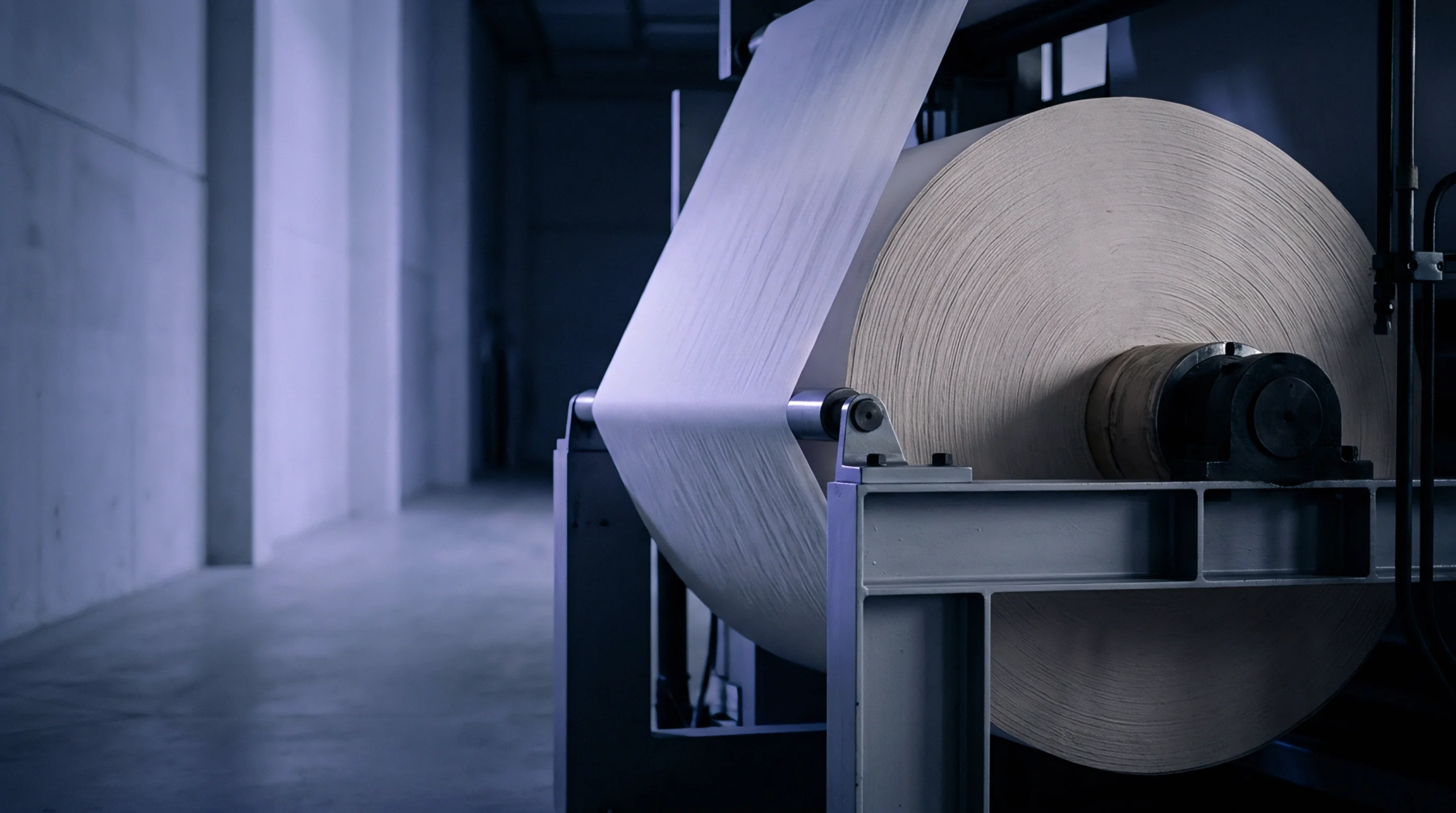
Reel Density
Winding structure defects occur when internal paper layers near the roll core are wound at lower density than outer layers. Paper finishing identifies soft center reels as paper or board rolls characterized by insufficient winding tightness around the core followed by higher tension in outer unwinding layers. Improper density profiles compromise structural roll integrity during storage and transport.
Tension Gradient
Paper mill winders use programmed torque and nip pressure curves to build uniform roll density from the core to the outer diameter. If initial winding tension or nip load at the core is set too low, inner paper wraps remain loose while subsequent outer layers wrap tightly over them. Compressive forces exerted by tight outer wraps compress the loose inner layers, causing core slip, inner layer buckling, and roll offset during handling.
Unwinding soft center reels on high-speed converting lines leads to severe tension fluctuations, web tracking instability, and core chatter on unwind shafts. Severe reel softness allows the core to move independently of outer layers, tearing web paper near the core region. Correcting density profiles requires adjusting winder torque control programs to establish high initial winding tension at the core face.
Converting Impact
Hardness instruments such as Schmidt hammers or roll density profilers evaluate radial hardness patterns across the roll face to detect internal softness. Non-destructive profile testing identifies loose inner wraps before shipping rolls to converting plants. Soft center reels represent a critical winding structure failure that impairs web tension stability during unwind operations.