Effluent Boundary
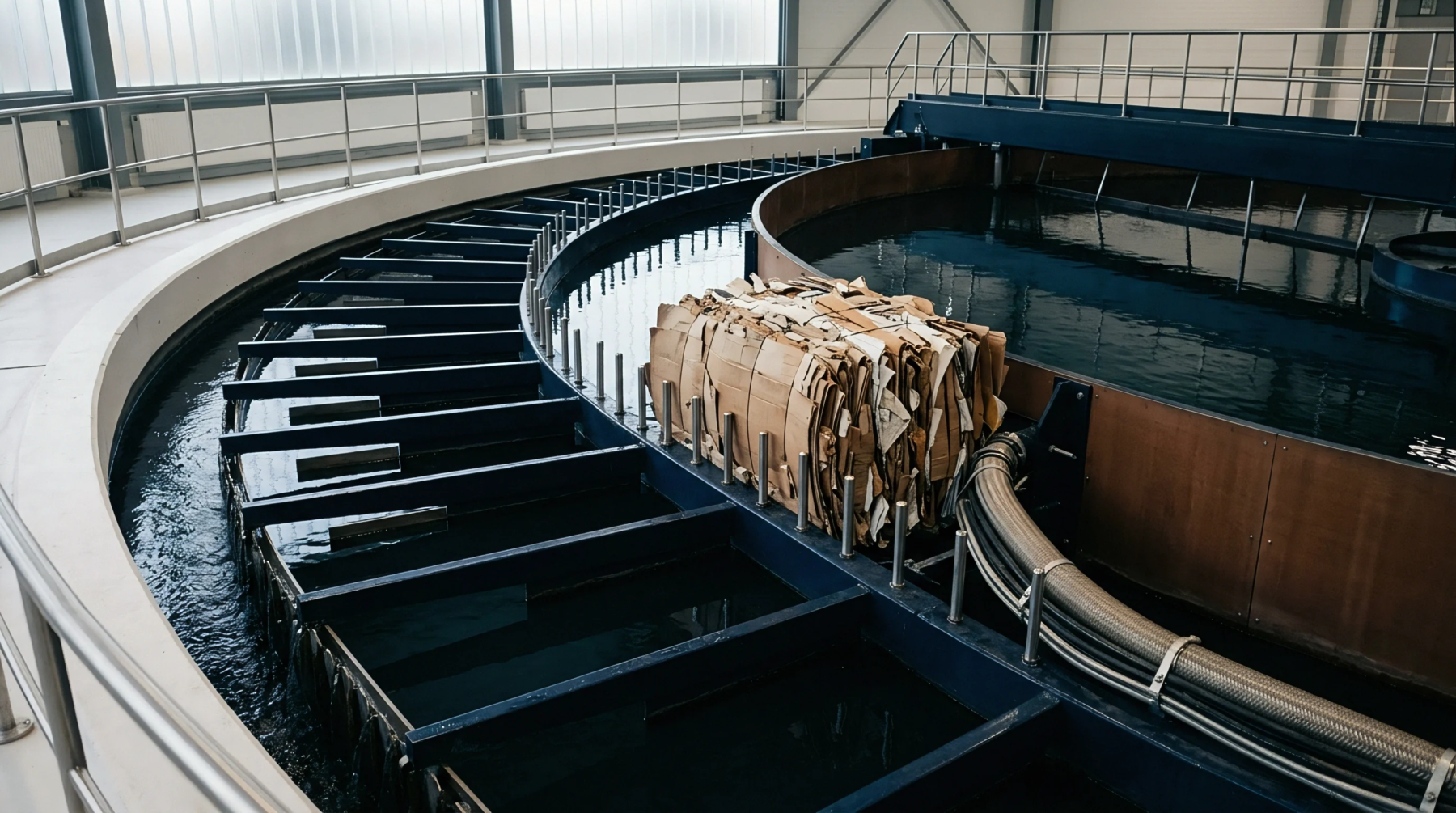
Complete water reclamation defines zero liquid discharge, an industrial configuration separating incoming aqueous process streams from outgoing municipal sewers through thermal and membrane concentration. Chemical pulping facilities deploy this closed loop strategy to halt raw effluent release into regional watercourses. Dissolved solids remain contained within a solid salt cake while recovered water returns directly to bleaching towers.
Evaporation crystallizers boil residual brine until solid crystals precipitate out of suspension. High operating energy costs restrict broader adoption across standard paper mills.
Brine Concentration
Multistage mechanical vapor recompression drives the concentration phase by recycling latent heat within large evaporator bodies. High salinity feedwaters require specialized titanium heat exchangers to resist pitting corrosion from concentrated chlorides. Supersaturated slurry leaves the final vessel for centrifugation or drum drying.
Filter cakes undergo landfill disposal or specialized chemical recovery depending on heavy metal content.
Regulatory Threshold
Discharge permits issued by environmental protection agencies dictate strict biological oxygen demand limits that motivate installation of closed loop systems. Zero liquid discharge compliance removes regulatory friction associated with surface water withdrawal quotas. Capital expenditure decisions depend on local wastewater taxation structures and water scarcity indexes.
Economic viability hinges entirely on disposal tariff avoidance rather than immediate operational savings.