Airborne Desorption
Volatile organic vapour emission from radiation-curable coatings identifies the discharge of residual monomers, photoinitiator cleavage products and processing solvents into atmospheric surroundings. Acrylic off-gassing occurs when ultraviolet-cured or electron-beam-cured acrylate layers on paper or board substrates release low-molecular-weight fractions following energy irradiation. The phenomenon ceases once volatile species deplete at ambient equilibrium or become permanently immobilised within the crosslinked vitrified matrix.
Substrate Entrapment
Coated folding carton boards and porous papers alter desorption kinetics by acting as secondary sorption reservoirs during stack storage. Uncured monomer fractions such as hexanediol diacrylate or free acrylic acid migrate into virgin cellulose fibres before initial atmospheric discharge takes place. High pallet pressures compress sheet surfaces together, transferring mobile volatile elements directly onto uncoated reverse carton surfaces through contact diffusion.
Heat generated by chemical crosslinking warms the stack interior, accelerating thermal vaporisation while simultaneously driving condensable compounds into internal sheet capillaries. Subsequent converting stages, including rotary die-cutting and high-speed folding, mechanically open locked fibres to release bursts of trapped vaporous components. Laboratory headspace gas chromatography coupled with mass spectrometry quantifies these releases across specified temperature steps.
Migration into moisture-barrier coatings or sealed polythene liners creates concentrated headspace pockets that compromise product barrier requirements. Controlled warm-air extraction tunnels mounted behind ultraviolet lamp cassettes actively scrub volatile species from passing webs before rewinding operations proceed.
Residual Extraction
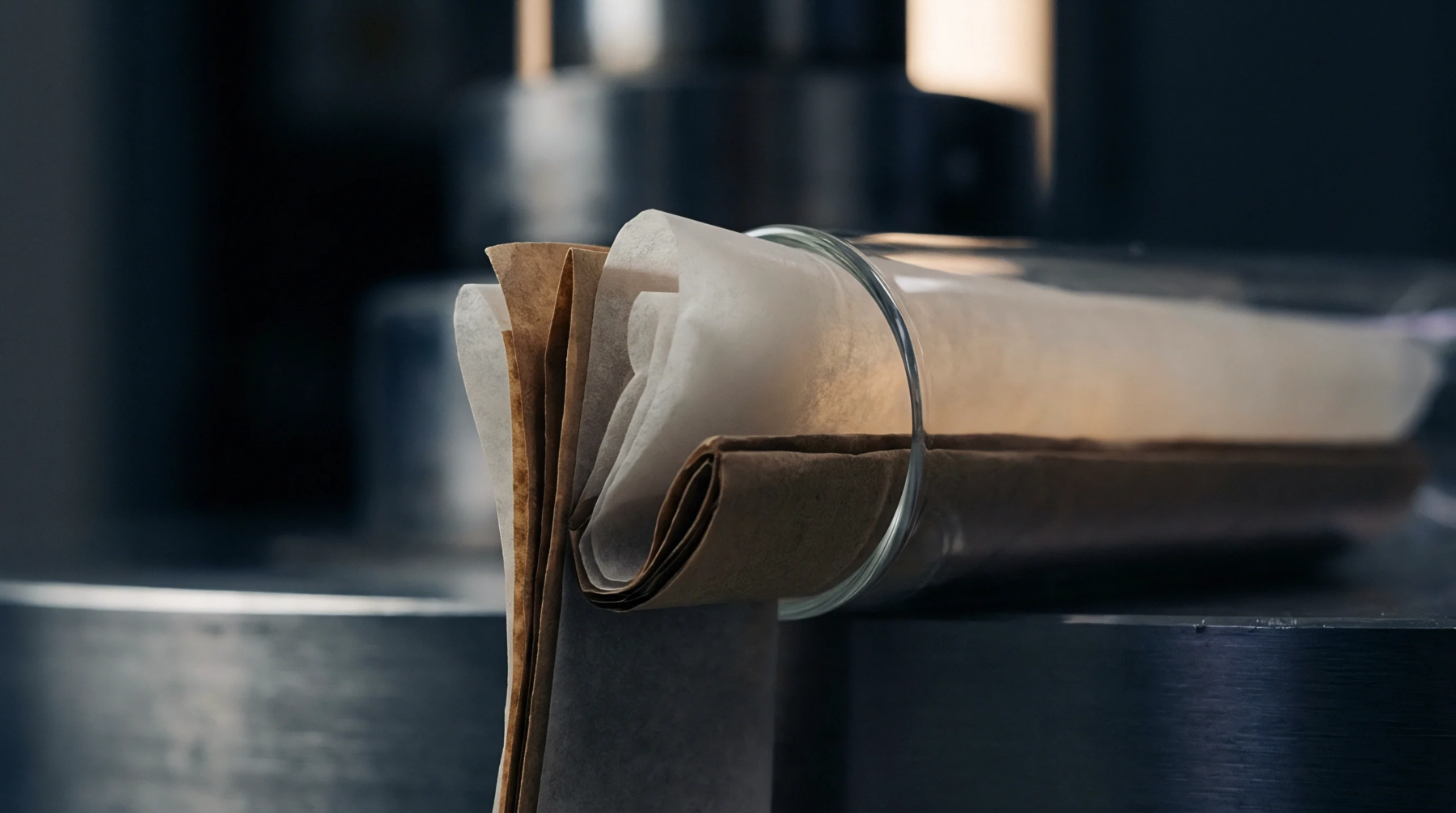
Gas chromatography measures airborne acrylic off-gassing from board samples heated inside closed desorption vials to benchmark volatile release against specific packaging compliance levels.