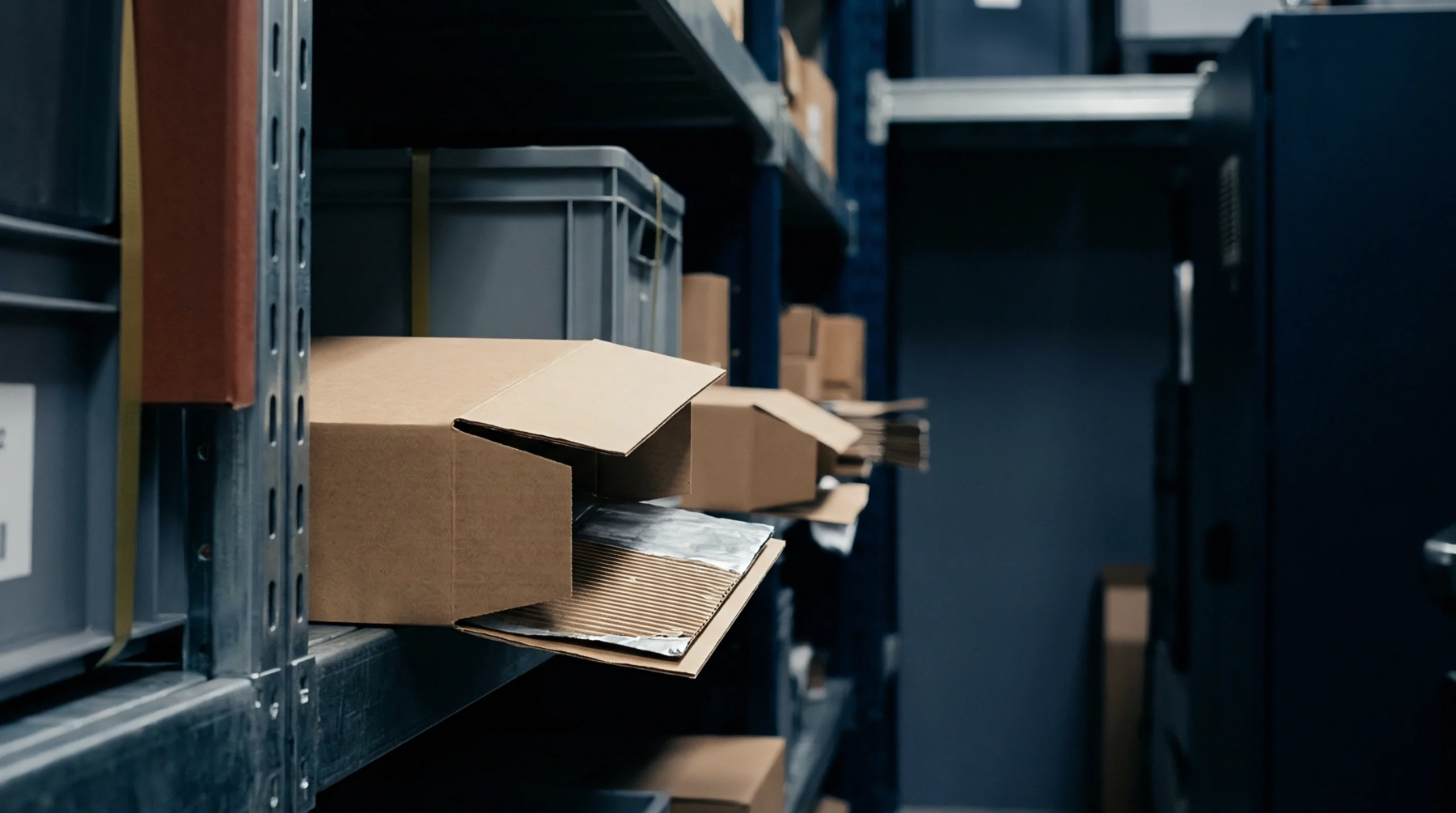
Structural Composition
Laminated corrugated fibreboard consists of two distinct fluted layers bonded to separate liners to create an rigid stacking architecture. This arrangement uses double wall fluting to achieve high vertical compression strength for heavy industrial packaging. The construction includes an outer liner, an outer fluted medium, an inner liner, an inner fluted medium, and a final inner liner.
Engineers select specific flute combinations like a combination of C and B flutes to balance impact cushioning with the structural rigidity required for long term warehousing.
Performance Characteristic
Resistance to crush forces during automated palletization depends on the total caliper of the combined sheet. Double wall fluting increases the resistance to puncture while maintaining a lower weight profile than solid wood crates. Converting lines rely on the consistency of this material to maintain tight tolerances during rotary die cutting operations.
Variations in the flute profile lead to uneven compression curves across the surface of the carton. Proper bonding of the five distinct paper layers ensures that the final assembly handles vertical loads without buckling under high static pressures.
Material Specification
Compliance with shipping standards requires validation of the edge crush test values inherent to the combined board grade. Packaging manufacturers verify these metrics by measuring the force required to collapse a standard sample section under controlled lab conditions. Suppliers certify the basis weight of every constituent liner and medium to guarantee that the final shipment survives the stresses of transit.
Global logistics protocols demand these specific mechanical thresholds to prevent load shift within intermodal containers. Rigorous testing of the individual flute geometries confirms that the final substrate provides sufficient protection for high density goods during international distribution.