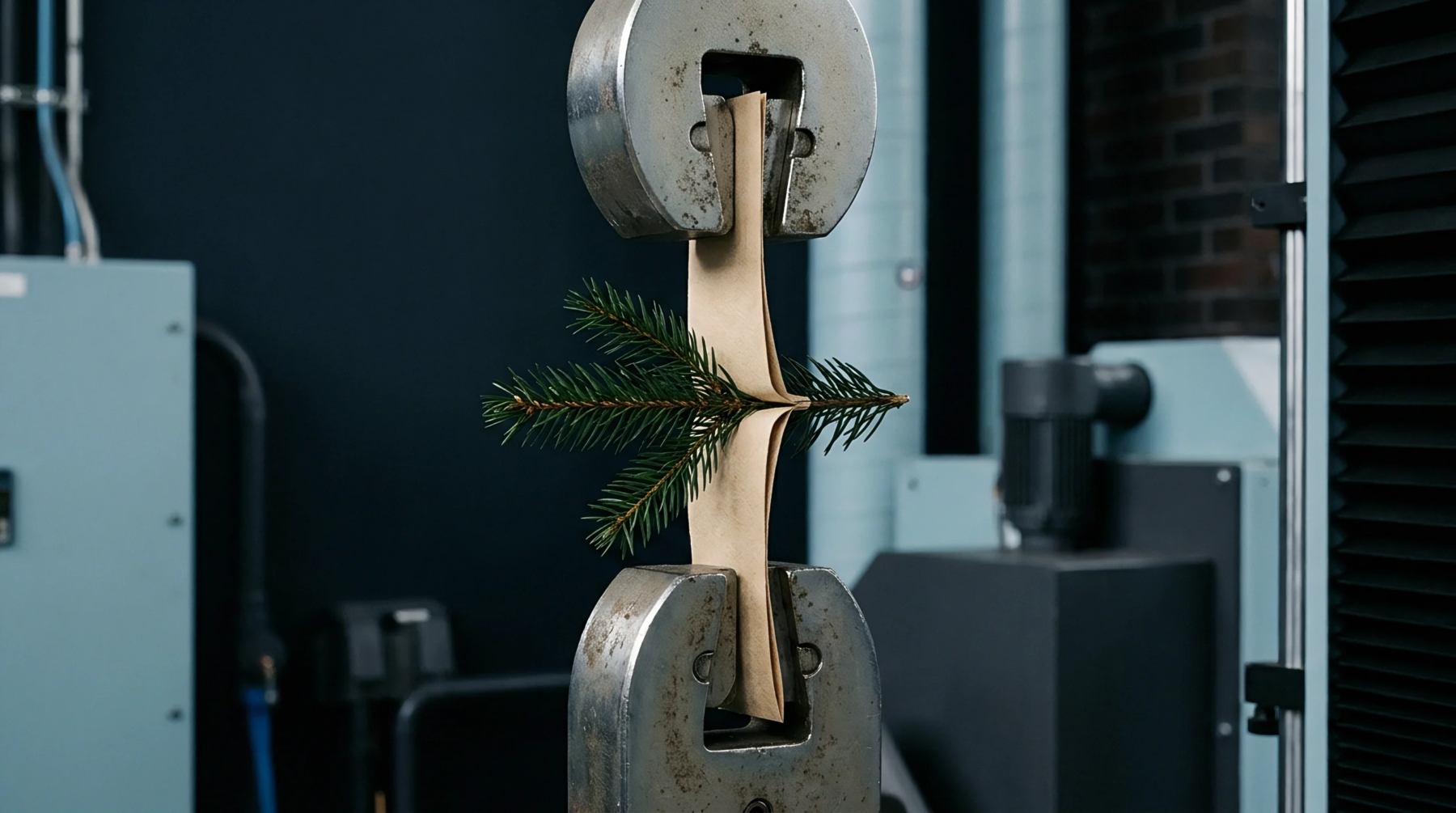
Testing Apparatus
Enclosed conditioning equipment provides precision atmospheric control over temperature and relative humidity to verify the performance of packaging substrates under simulated storage or transit conditions. An environmental chamber regulates thermal and moisture states within an insulated workspace using steam injection, refrigeration loops, desiccant air dryers, and air circulation fans. Paper, board, and combined shipping containers reside within the workspace to reach hygroscopic equilibrium before undergoing mechanical failure testing.
The instrument governs environmental exposure conditioning, excluding independent mechanical stress testing such as drop, vibration, or compression loading performed on external rigs.
Control Architecture
Chamber operations rely on closed-loop feedback systems using chilled-mirror hygrometers or thin-film capacitive sensors paired with platinum resistance thermometers. Microprocessors adjust electric heating elements and liquid cooling coils to maintain target temperatures, commonly between minus 40 degrees Celsius and 80 degrees Celsius. Relative humidity control ranges from 10 percent to 98 percent, matching standard TAPPI T 402 or ISO 187 preconditioning and testing atmospheres.
Internal circulation baffles distribute conditioned air continuously to eliminate thermal stratification and stagnant moisture pockets across test pallets. Standard conditioning protocols demand up to 72 hours of uninterrupted chamber exposure to bring heavy double-wall corrugated boards to true equilibrium moisture content.
Performance Verification
Corrugated shippers designated for cold chain transport undergo severe exposure cycling inside the chamber to replicate cold storage and tropical debarkation climates. Edge crush test coupons, carton blanks, and filled shipping units undergo controlled deterioration to establish real-world strength retention ratios. Packaging engineers identify structural design limits by monitoring flute creep, adhesive delamination, and score line failure under high-humidity dwells.
Uncalibrated chamber sensors lead to misstated board strength, resulting in carton collapse during ocean transport or over-packaging that inflates material costs. Reliable environmental chamber conditioning confirms that paperboard packaging formulations survive target distribution channels without catastrophic structural failures.