Quantifying Environmental Moisture Influence on Multi Layer Micro Delamination Fatigue Growth Kinetics
Environmental moisture ingress accelerates multi-layer micro-delamination fatigue kinetics by plasticizing adhesives and elevating Paris law growth exponents.
Kinetics
Interfacial fatigue in film-laminated folding boxboard initiates as sub-critical micro-cracking directly along the adhesive boundary. Multi-layer packaging structures that combine solid bleached board or folding boxboard with thin barrier films ~ including biaxially oriented polypropylene, polyethylene terephthalate, or polyethylene ~ undergo continuous cyclic flexure during converting, mechanical conveying, and automated carton setup. In dry ambient air, the mechanical bond across the polymer film, adhesive primer, and paperboard top coat behaves as a linear elastic system: micro-cracks remain stable until the applied strain energy release rate exceeds the composite interface’s baseline critical toughness.
Water vapor ingress fundamentally alters this fracture mechanics baseline. When relative humidity rises, water molecules diffuse through the polymer layer or migrate directly from exposed paperboard edges into the interfacial zone. These water molecules plasticize the synthetic primer, disrupt hydrogen bonding networks within the cellulose fiber matrix, and induce localized hydrolytic cleavage within polyurethane or acrylic adhesive chains.
Consequently, the energy required to extend a micro-delamination flaw drops significantly under sustained cyclical displacement.

Interfacial Hydrolytic Degradation and Bond Fatigue
Cyclic mechanical flexing forces the crack tip to open and close repeatedly, drawing moisture deeper into the disbonded region. Water molecules act as plasticizing agents at the tip, accelerating local yield deformation and cutting down the effective work of adhesion. Chemical bond dissociation occurs at far lower macroscopic stress levels during moisture exposure than under dry conditions.
Trapped free moisture within the adhesive matrix creates localized stress concentrations during tension-compression cycles, causing mechanical strain and chemical degradation to compound one another and drive crack growth rates beyond the sum of their individual effects.
Adhesion loss originates within microscopic voids along the adhesive interface. These voids, created during cold-foil or thermal film laminating passes by incomplete nip wet-out, collect condensed moisture under steep humidity gradients. Dynamic bending cycles then turn this trapped liquid into a hydraulic wedge at the crack tip, promoting forward shear separation.
The crack path transitions from cohesive fiber failure within the substrate coat to adhesive debonding directly along the polymer primer line.
Paris Law Mechanics at Moisture Saturations
Quantifying micro-delamination growth under cyclic loading relies on modified fracture mechanics relationships. The sub-critical fatigue crack growth rate per cycle, expressed as the derivative of crack length over cycle count, maps directly to the cyclic strain energy release rate range. Under dry baseline conditions, this relationship follows standard power-law kinetics.
Absorbed environmental moisture alters both the power-law exponent and the structural scaling coefficient, accelerating delamination kinetics across all operational load amplitudes.
At equilibrium moisture saturation, the threshold strain energy release rate below which no fatigue crack growth occurs shifts toward zero. Low-amplitude mechanical flexure, completely harmless under dry warehouse storage, generates measurable crack extension once the packaging stock absorbs environmental water vapor. Micro-delamination growth transitions rapidly from slow stable propagation to catastrophic sheet peeling during high-speed package forming operations.
Whether non-destructive acoustic emission monitoring during dynamic folding can separate moisture-induced fiber matrix fracture from pure adhesive film debonding remains open to empirical confirmation.
Swell
Cellulosic substrates undergo dimensional changes when exposed to fluctuating relative humidity levels. Paperboard expands as internal wood fibers absorb moisture and swell orthogonally to their alignment axis. In contrast, synthetic polymer laminating films exhibit minimal dimensional changes under changing moisture conditions.
This divergence in expansion rates generates permanent residual shear stress across the lamination interface prior to any external mechanical flexing.
The internal residual shear stress adds directly to the mechanical driving force produced by package scoring, folding, and handling operations. Moisture saturation alters the stress state at the crack tip, shifting pure Mode I tensile opening toward mixed-mode failure containing substantial Mode II in-plane shear forces.
Hygrothermal Residual Stress Distributions
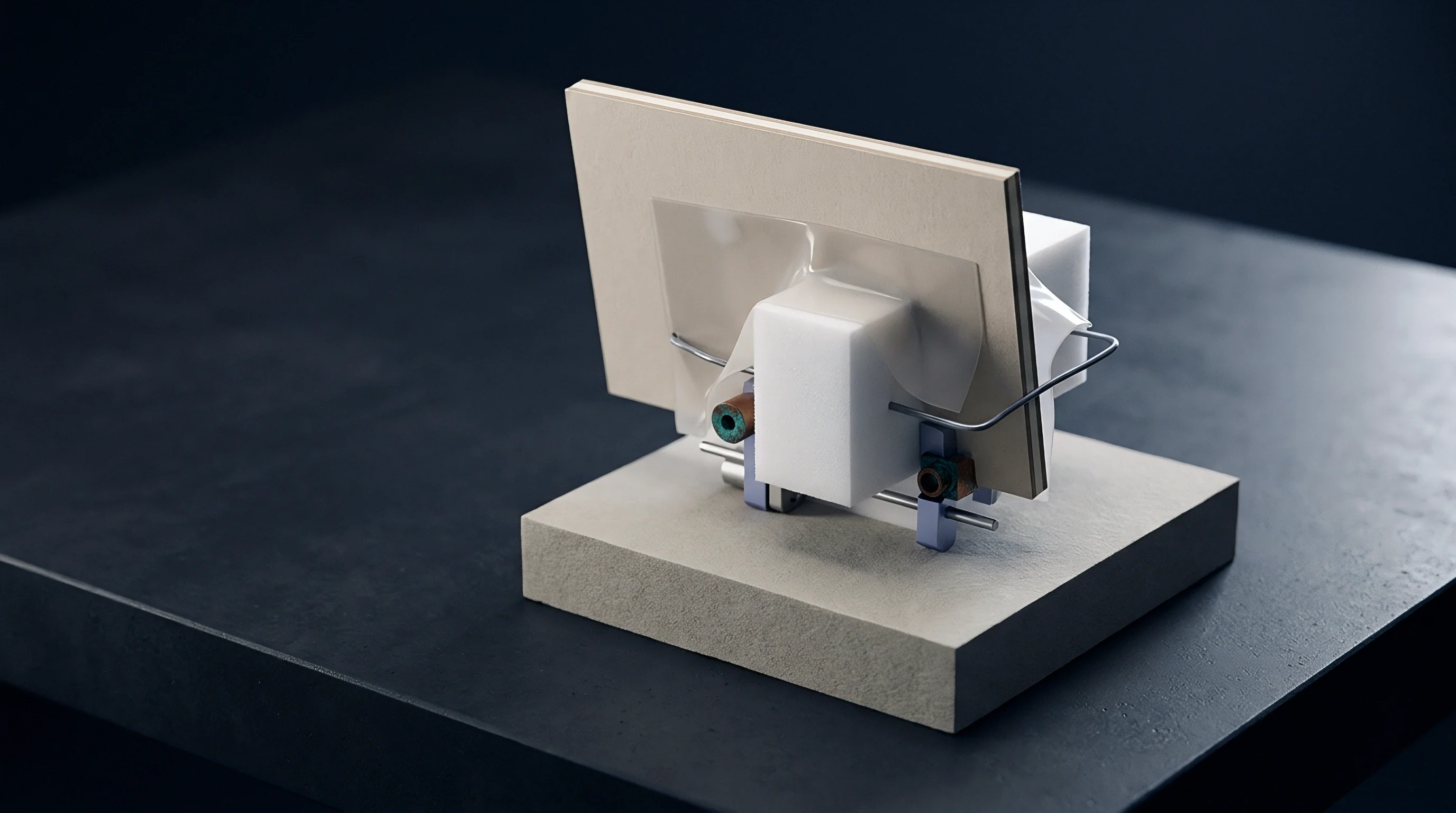
The cross-direction hygroscopic expansion coefficient of solid bleached board reaches levels nearly ten times greater than that of biaxially oriented polypropylene film. As environmental relative humidity increases from standard baseline conditions to tropical levels, the paperboard substrate expands while the attached polymer layer resists dimensional movement. The structural constraint forces the adhesive layer to sustain continuous static shear loading.
| Substrate Combination | Conditioning Atmosphere | Equilibrium Moisture Content (%) | Critical Energy Release Rate (J/m²) | Fatigue Threshold Delta G (J/m²) |
|---|---|---|---|---|
| 350 gsm SBB / 12 µm BOPP | 23°C / 50% RH (ISO 187) | 6.2 | 185 | 42 |
| 350 gsm SBB / 12 µm BOPP | 38°C / 85% RH (Tropical) | 10.8 | 62 | 11 |
| 300 gsm FBB / 15 µm PET | 23°C / 50% RH (ISO 187) | 6.5 | 210 | 55 |
| 300 gsm FBB / 15 µm PET | 38°C / 85% RH (Tropical) | 11.4 | 78 | 16 |
| 400 gsm WLC / 20 µm PE | 23°C / 50% RH (ISO 187) | 7.1 | 145 | 31 |
| 400 gsm WLC / 20 µm PE | 38°C / 85% RH (Tropical) | 12.2 | 41 | 8 |
High environmental humidity softens the top pigment coating of the paperboard, weakening the anchoring foundation of the laminating primer. Internal shear stress concentrated along the upper board layer causes microscopic fiber-peel initiation. These microscopic separations act as pre-existing flaws that accelerate delamination under subsequent fatigue cycling.
Mode Mixity Shifts under Moisture Gradient
Crack propagation paths respond directly to the ratio of tensile to shear stresses at the crack tip. Under dry conditions, crack growth in film-laminated board proceeds primarily in Mode I through adhesive layer cleavage. Environmental moisture ingress alters this fracture path.
As moisture plasticizes the cellulosic surface, the effective yield strength of the fiber network decreases, causing the crack path to plunge into the substrate fiber matrix under Mode II shear loading.
Conditioning a 12-micron polypropylene laminated folding boxboard at 85 percent relative humidity reduces interfacial fracture energy from 185 to 62 Joules per square meter.
Quantifying mode mixity requires measuring the phase angle of complex stress intensity factors as humidity varies. Moisture absorption increases phase angle values, demonstrating a dominant shear failure component. Mixed-mode fatigue loading accelerates delamination kinetics by driving microscopic crack growth along weak mechanical planes within the swollen board surface.
- Adhesive Cleavage ~ Separation occurs directly along the interface between the polyurethane adhesive and the polymer film surface layer.
- Cohesive Substrate Shear ~ The crack path jumps into the top cellulose fiber layer of the paperboard, tearing surface fibers apart.
- Interlayer Primer Hydrolysis ~ Water accumulation at the primer interface causes microscopic blister formation that weakens localized shear yield strength.
- Blister Micro-Delamination ~ Trapped moisture vapor expands under cyclical mechanical flexing, driving rapid crack propagation across low-adhesion regions.
A laminating adhesive that demonstrates micro-delamination along score lines under ambient warehouse storage will split completely when processed through automated folder-gluers at high machine speeds.
Chamber
Environmental control cabinets isolate temperature and relative humidity during mechanical testing of laminated board specimens. Precision testing requires controlling ambient conditions to isolate moisture-driven kinetic shifts from purely mechanical fatigue effects.
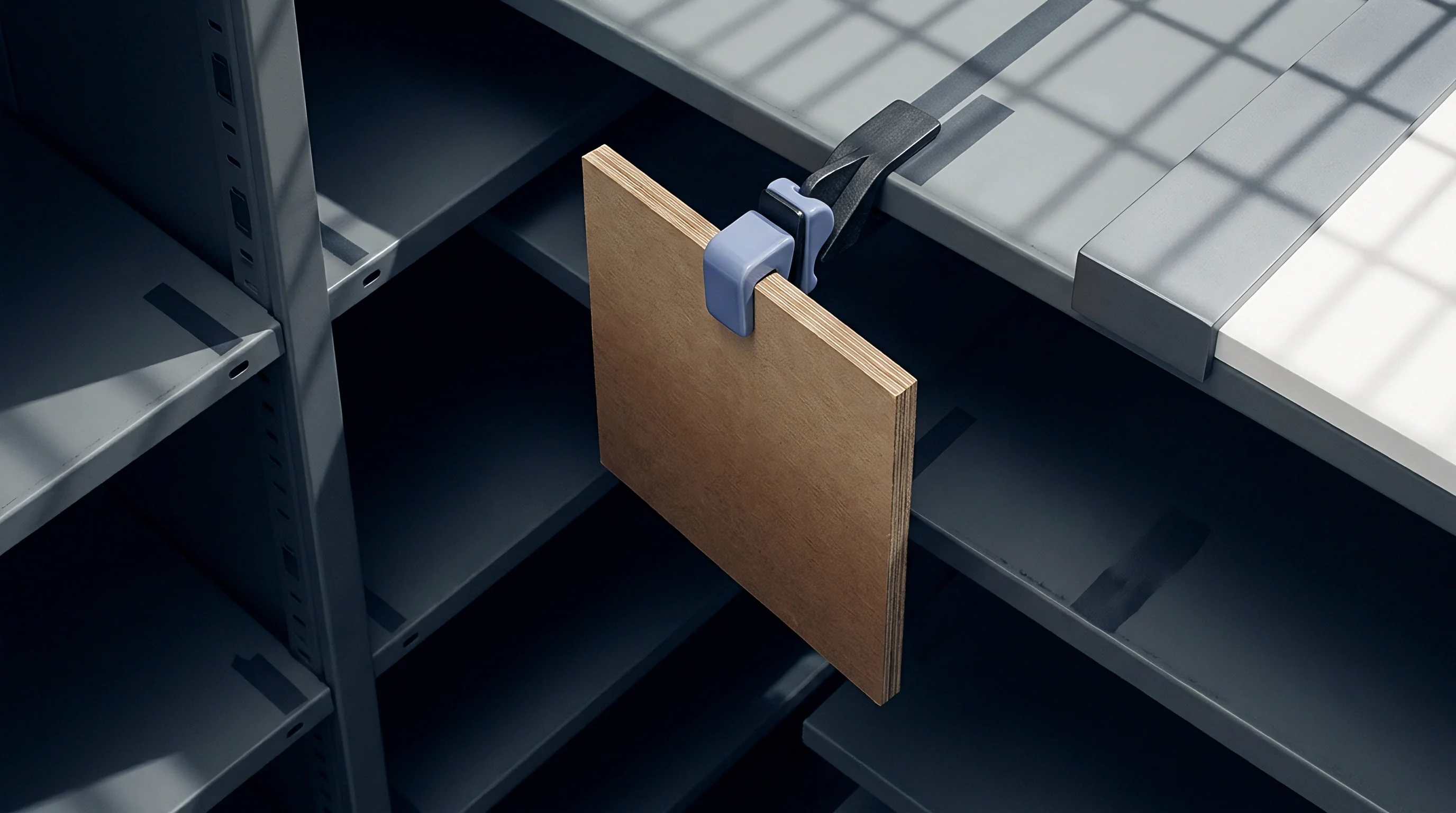
Cyclic Double Cantilever Beam Environmental Testing
Measuring micro-delamination kinetics relies on environmental double cantilever beam fixtures modified for flexible sheet laminates. Test specimens are bonded between thin aluminum stiffening arms to maintain stable flexural rigidity during cyclic displacement loading. The assembly mounts inside an environmentally controlled testing chamber where relative humidity remains regulated to within one percent.
Cyclic displacement applied at constant amplitude forces the crack tip to extend. Optical displacement sensors and digital image correlation track crack tip position through sealed glass viewing ports. Recording cycle counts alongside crack length values yields precise propagation rate data under constant environment profiles.
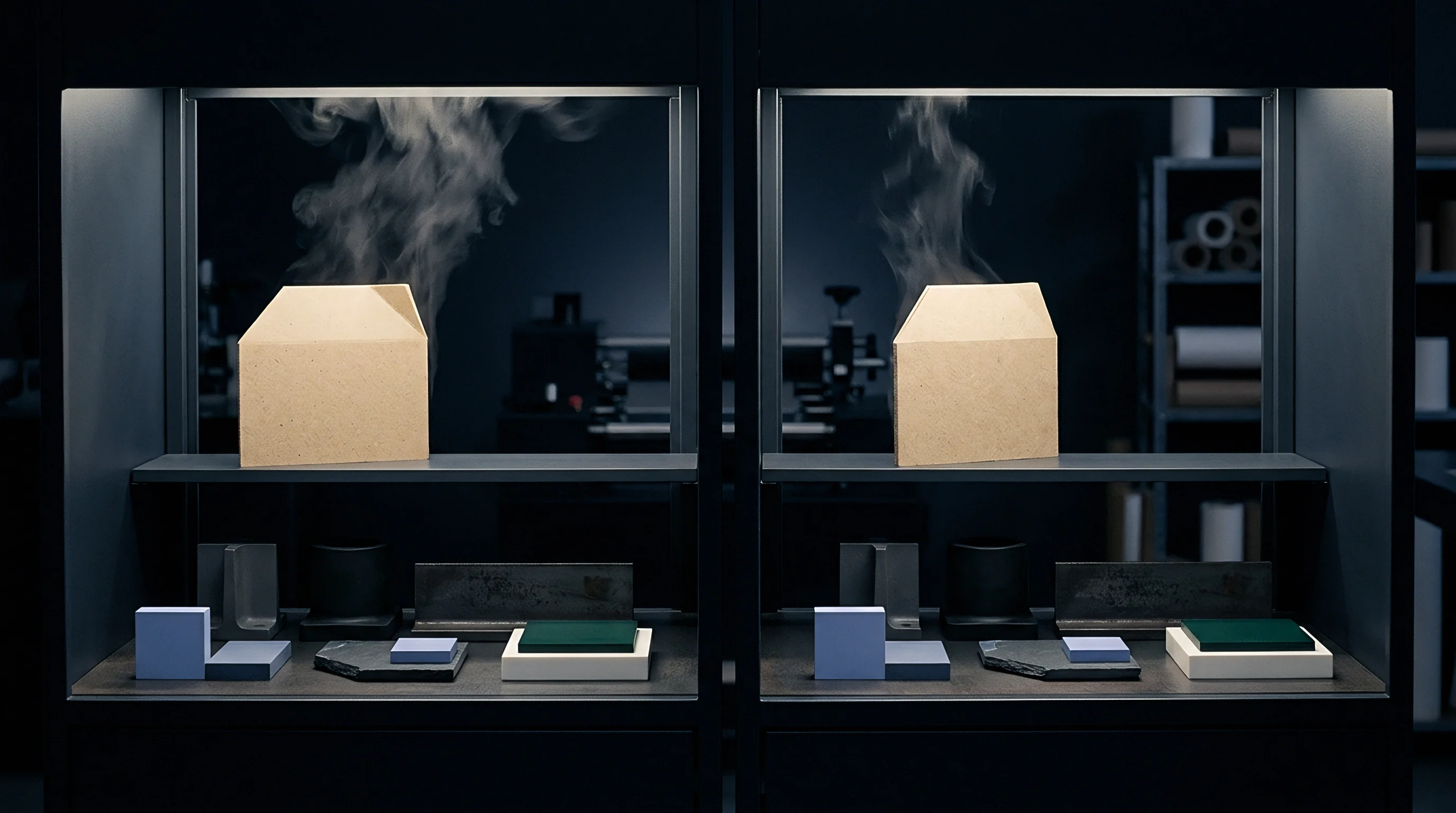
Which Conditioning Atmosphere Predicts Crease Delamination?
Standard testing carried out at room temperature and moderate humidity fails to expose latent adhesion flaws that cause package failures in humid supply chains. Simulating ocean shipping and tropical storage environments demands pre-conditioning test samples at high relative humidity levels until moisture equilibrium is established throughout the board thickness. Testing unconditioned samples inside a humid chamber introduces transient moisture gradients that distort crack growth rate measurements.
Deviating from the ISO 187 baseline standard of 23 degrees Celsius and 50 percent relative humidity during tensile fatigue testing invalidates supplier warranty claims for micro-delamination along score lines.
Equilibrium state verification requires weighing control samples at periodic intervals during pre-conditioning. Moisture equilibrium is confirmed when sample mass variations drop below one hundredth of one percent over twenty-four hours. Fatigue testing conducted prior to full moisture saturation reflects transient diffusion behavior rather than steady-state material properties.
- Cut test strips parallel and perpendicular to board machine direction according to sample layout drawings.
- Place specimens in an environmental cabinet at 23 degrees Celsius and 50 percent relative humidity for 48 hours to establish base equilibrium.
- Transfer designated test lots to an elevated environment of 38 degrees Celsius and 85 percent relative humidity for a minimum of 72 hours.
- Mount the conditioned specimen into the cyclic cantilever test fixture within five minutes of removal from the conditioning atmosphere.
- Apply cyclic displacement at a frequency of two Hertz while recording optical micro-crack advancement every five hundred cycles.
- Calculate the cyclic strain energy release rate using beam displacement and compliance calibration curves.
Fatigue Life Lifetime Prediction Model
Extrapolating micro-delamination propagation rates to real packaging life cycles relies on integrating Paris law kinetic parameters determined in the testing chamber. Consider a worked engineering assessment comparing a 350 gsm solid bleached board laminated with a 15-micron PET film under ambient dry conditions against elevated tropical humidity. The initial micro-delamination flaw size along a scored folding boxboard edge measures 0.05 millimeters following die-cutting operations.
Assume an automated packaging line subjects each box crease to cyclic flexure producing a strain energy release rate range of 25 Joules per square meter at a frequency of 5 Hertz. The Paris law equation governs crack extension per cycle:
da / dN = C (Delta G)^m
Under dry baseline conditioning of 23 degrees Celsius and 50 percent relative humidity, empirical bench testing yields a material scaling coefficient C of 1.2 x 10^-6 mm/cycle and a power-law exponent m of 3.2. Substituting the applied strain energy release rate into the kinetic relation establishes the dry fatigue growth rate:
da / dN = (1.2 x 10^-6) (25)^3.2 = 3.58 x 10^-2 mm / cycle
Calculating the number of cycles required to drive crack length from the initial flaw size of 0.05 millimeters to a terminal delamination width of 2.0 millimeters yields:
N_dry = (2.0 – 0.05) / (3.58 x 10^-2) = 54.5 cycles
Under tropical conditioning of 38 degrees Celsius and 85 percent relative humidity, hydrolytic plasticization shifts the material constants. Empirical chamber measurement establishes a wet scaling coefficient C of 4.8 x 10^-5 mm/cycle and an elevated power-law exponent m of 4.7. Re-evaluating the kinetic relation under identical mechanical loading gives:
da / dN = (4.8 x 10^-5) (25)^4.7 = 1.74 x 10^2 mm / cycle
Calculating the fatigue lifetime under high humidity yields:
N_wet = (2.0 – 0.05) / (1.74 x 10^2) = 0.011 cycles
The calculation demonstrates that environmental moisture saturation increases micro-delamination fatigue propagation rates by over four orders of magnitude, causing immediate interfacial failure upon initial flexure.
| Substrate and Film Structure | Test Humidity (% RH) | Coefficient C (mm/cycle) | Exponent m | Calculated Cycles to Failure |
|---|---|---|---|---|
| 350 gsm SBB / 15 µm PET | 50 | 1.2 x 10^-6 | 3.2 | 54.5 |
| 350 gsm SBB / 15 µm PET | 85 | 4.8 x 10^-5 | 4.7 | 0.011 |
| 300 gsm FBB / 12 µm BOPP | 50 | 2.1 x 10^-6 | 3.0 | 68.3 |
| 300 gsm FBB / 12 µm BOPP | 85 | 8.3 x 10^-5 | 4.4 | 0.038 |
| Test conditions: Temperature 23°C, applied Delta G = 25 J/m², initial flaw a₀ = 0.05 mm, terminal flaw a_f = 2.0 mm. | ||||
Specifying lamination adhesive systems without verifying high-humidity fatigue kinetics leads to mass delamination field failures across tropical distribution channels.
Loss
Unintended micro-debonding along packaging score lines drives up waste factors during high-speed converting. When laminated paperboard stores in unconditioned warehouses prior to converting, ambient moisture absorption degrades film adhesion strength. Processing moisture-softened sheets through automated folder-gluers at operating speeds exceeding 400 meters per minute causes immediate structural tearing.
High Speed Converting Line Spoilage Risks
High-speed folding equipment forces creased carton flaps through severe angular deflections within milliseconds. Dynamic mechanical loading imposes high strain rates on the laminated interface. If environmental moisture ingress has already lowered the threshold fracture toughness, micro-delamination spreads instantly along the entire score line length.
| Lamination System | Pre-Converting Storage Atmosphere | Folder-Gluer Jam Frequency (Per 100k) | Line Spoilage Rate (%) | Net Waste Cost per 100k Packs (USD) |
|---|---|---|---|---|
| Solventless Polyurethane / BOPP | 23°C / 50% RH (Controlled) | 1.2 | 0.8 | 240 |
| Solventless Polyurethane / BOPP | 30°C / 80% RH (Uncontrolled) | 14.6 | 5.4 | 1,620 |
| Water-based Acrylic / PET | 23°C / 50% RH (Controlled) | 0.8 | 0.5 | 150 |
| Water-based Acrylic / PET | 30°C / 80% RH (Uncontrolled) | 22.1 | 8.2 | 2,460 |
Separated polymer film jams high-speed folder-gluer transport belts, forcing line shutdowns and manual clearing passes. Waste mounts rapidly as entire production pallets suffer edge peeling. Financial costs include lost press time, extra setup passes, scrap material fees, and missed delivery schedules.
Financial Impact of Uncontrolled Storage Atmospheres
Micro-delamination failures create downstream commercial penalties extending beyond converting plant waste. Film-laminated cartons that pass initial visual inspection can fail during ocean transit or retail shelf storage. Ingress of tropical ambient humidity during transport reactivates micro-flaws along creased package edges, leading to complete structural failure when cartons are stacked on retail pallets.
Polymer film delamination during high-speed folding operations increases machine jam frequencies and generates immediate converting spoilage.
Modulated producer responsibility fees increasingly penalize non-recyclable multi-layer packaging formats. Laminated paperboard containing extensive adhesive delamination often fails repulping qualification audits under standardized recycling evaluation protocols. Intact film separation during pulping requires strong dry adhesion, whereas moisture-degraded interfaces shed micro-plastic fragments into recycled fiber streams, triggering regulatory surcharge penalties.
- Adhesion Qualification Target ~ Specify a minimum wet-state interfacial fracture energy threshold of eighty Joules per square meter under eighty-five percent relative humidity conditioning.
- Storage Equilibrium Hold ~ Require paperboard reels to maintain internal moisture content between six and seven percent prior to lamination passes.
- Polyurethane Primer Rating ~ Mandate moisture-crosslinking polyurethane adhesives rated for zero hydrolytic degradation after seventy-two hours of tropical exposure.
- Crease Geometry Tolerance ~ Adjust scoring rule widths to prevent outer liner micro-stretching during high-speed folding operations.
Inserting a mandatory wet-fatigue threshold clause into the raw material purchase agreement transfers financial liability for humidity-induced score line peeling back to the substrate converter.