Thermodynamic Interfacial Delamination Kinetics in Recycled Fiber Substrates under Dynamic Crease Stress
Recycled fiber crease delamination drops 35 percent when Z-tensile strength falls under 250 kPa; specify TAPPI T 541 minimums before converting.


Bond
Recycled cellulose fibers undergo severe physical changes during repeated pulping and drying sequences. Each mechanical processing cycle removes low-molecular-weight hemicelluloses from the outer cell wall layers, decreasing the total hydroxyl availability across the external fiber surface. Fiber cell walls lose their internal swelling capability through hornification, transforming elastic virgin tubules into rigid, collapsed ribbons.
When recycled fibers are re-slurried, refined, and formed into paperboard plies, the reduced wall flexibility yields fewer fiber-to-fiber contact points per unit volume. The internal bond energy per unit area falls significantly compared to virgin kraft fibers. Z-directional tensile values drop from typical virgin kraft levels of 400 kilopascals down to 180 to 240 kilopascals in multi-ply chipboard grades incorporating post-consumer waste.

Cellulose Fiber Wall Collapse Mechanics
Desorption processes during web drying force internal lumen voids to close permanently. Subsequent rewetting cycles fail to restore the original pore structure within the secondary cell wall layer. Micro-fibrils within the secondary layer consolidate into irreversible aggregates, reducing total specific surface area from 15 square meters per gram in unbleached kraft down to under 6 square meters per gram in triple-recycled fibers.
This loss of accessible surface area directly impairs the mechanical interlocking capacity of adjacent plies during web formation on multi-cylinder board machines.
Recycled paperboard experiencing severe hornification exhibits reduced inter-ply delamination resistance during high-speed scoring.
Short fiber fractions and fine particles accumulate in secondary stocks, filling interstitial gaps between larger structural fibers. While fines increase short-span compressive strength, they contribute minimal tensile strength along the out-of-plane axis. In high-density recycled boxboard grades, inter-ply adhesion relies heavily on residual starch spraying or synthetic dry-strength agents applied at the wet end.
Kraft pulp retains high cell wall flexibility. Recycled fibers resist plastic deformation during wet pressing, leaving microscopic air voids at ply interfaces that serve as crack initiation sites under localized bending stress.
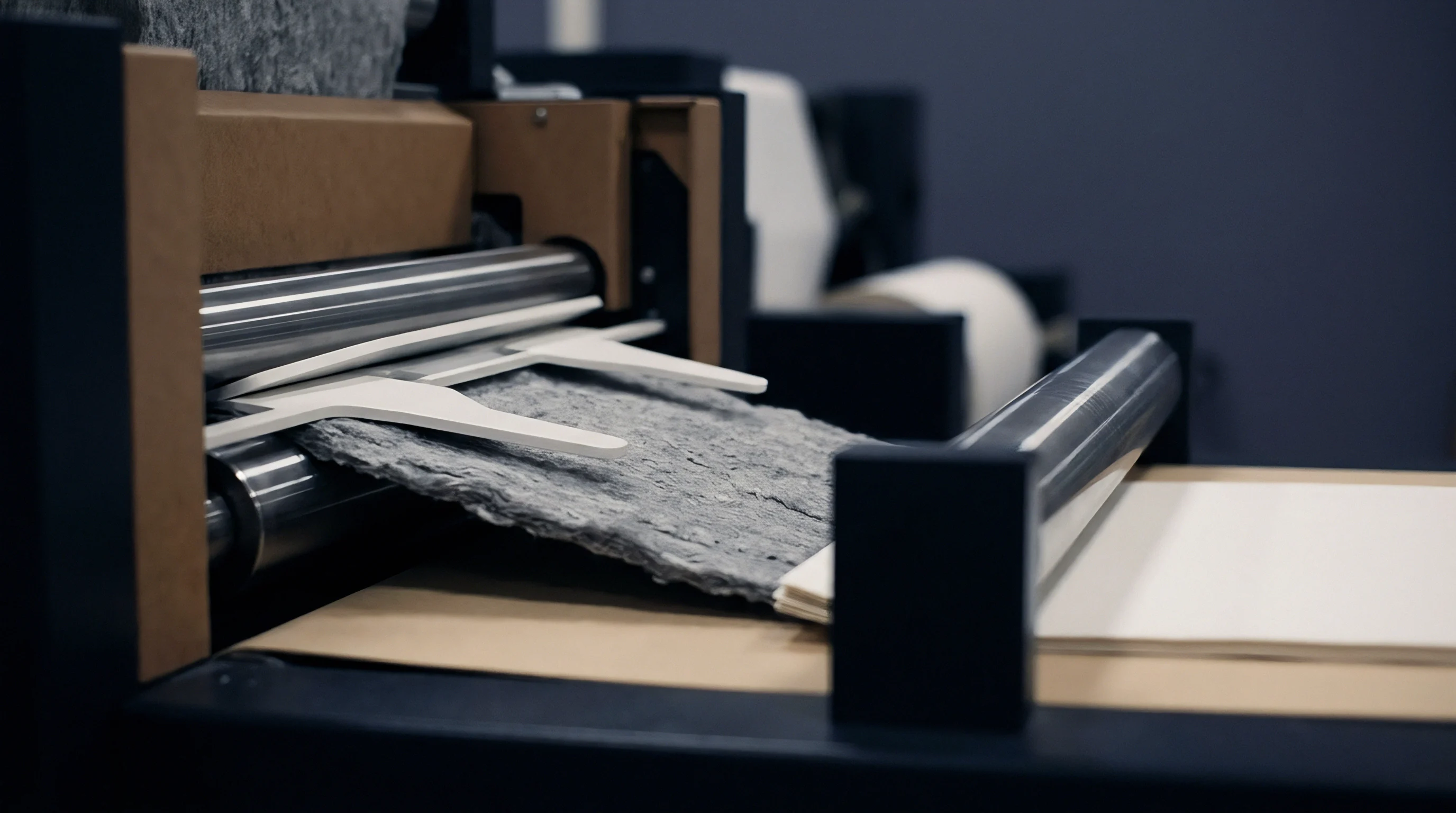
Internal Hydrogen Network Dissipation
Chemical hydroxyl accessibility declines as adjacent polymer chains consolidate under thermal strain. The thermodynamic work of adhesion between two fiber surfaces depends directly on the surface free energy components, specifically the polar acid-base interactions governed by accessible hydrogen bonding sites. Uncoated recycled paperboard displays total surface free energy values between 38 and 44 millijoules per square meter, with polar components accounting for less than 12 millijoules per square meter.
In contrast, virgin pulps maintain polar surface energy components above 22 millijoules per square meter. Lower polar energy limits dynamic bond reformation during converting operations, causing rapid micro-fracturing when external mechanical forces exceed the cohesive strength of the internal fiber network. Mill representatives frequently maintain that minor surface micro-cracking during scoring represents acceptable converting behavior rather than structural failure.


Mechanics
Converting paperboard into folded cartons subjects multi-ply board structures to severe out-of-plane forces. During scoring, a male creasing rule forces the substrate into a female matrix channel, inducing complex strain profiles across the board thickness. The top liner experiences high tensile strain, while the reverse side plies undergo sharp localized compression.
Between these boundary layers, high shear stresses concentrate along internal interfaces. If the magnitude of shear stress exceeds the local inter-ply shear strength, delamination initiates along the weakest internal boundary layer.

Stress Distribution across Scoring Profiles
Penetration of male scoring rules into female channel dies forces substrate plies to shear laterally. The magnitude of out-of-plane shear stress depends on rule width, matrix channel clearance, penetration depth, and machine operating velocity. Matrix depth governs out-of-plane deformation.
Rotary scoring induces asymmetrical shear stress. Excessive female matrix width allows the paperboard to bulge downward without forming crisp internal crease hinges, creating broad shear zones that weaken adjacent un-scored areas. Insufficient matrix clearance forces the male rule to pinch the board against the channel edges, crushing internal plies and causing premature tension failure of the top liner.
| Scoring Tool Configuration | Matrix Width (mm) | Matrix Depth (mm) | Peak Shear Stress (MPa) | Interfacial Delamination Rate (%) |
|---|---|---|---|---|
| Narrow Clearance | 1.20 | 0.50 | 4.85 | 42.5 |
| Standard Commercial | 1.40 | 0.55 | 3.10 | 8.2 |
| Wide Clearance | 1.65 | 0.60 | 1.95 | 2.1 |
| Deep Penetration | 1.40 | 0.70 | 5.40 | 68.0 |

Dynamic Bending Shear Modes
High-speed carton erecting lines fold scored edges within milliseconds, accumulating strain energy rapidly. The speed of deformation prevents stress relaxation within the amorphous hemicellulose and lignin networks. Substrates exhibit higher dynamic stiffness under short loading times, shifting failure modes from ductile fiber pulling to brittle inter-ply cleavage.
Under dynamic crease stress, four primary failure mechanisms manifest across recycled fiber packaging structures:
- Compressive Ply Buckling occurs when inner liner plies buckle inward under negative strain, detaching from middle core plies.
- Tension Side Fiber Rupture develops if outer print liners stretch beyond their ultimate tensile elongation threshold during zero-radius folding.
- Inter-Ply Shear Fracturing originates within core recycled layers where low Scott bond values permit horizontal crack propagation.
- Coating Micro-Crazing initiates at pigment-binder interfaces when mineral coatings fail to accommodate underlying fiber movement.
Dynamic female matrix scoring at fifty meters per minute generates peak out-of-plane shear stresses exceeding three megapascals in multi-ply chipboard.
Micro-voids coalesce into continuous fracture lines. Laboratory conditioning requires fifty percent relative humidity. Lower moisture contents reduce fiber compliance, exacerbating strain localization along the crease line during high-speed folding cycles.
Deep matrix channels paired with narrow male rules reduce shear strain energy accumulation along sensitive inner fiber layers.


Energy
Interfacial crack initiation in secondary pulps depends directly on the balance between applied strain work and dissipative fracture resistance. The thermodynamic energy release rate describes the net Mechanical energy made available per unit area of crack growth. In multi-ply recycled board, total fracture toughness represents the sum of intrinsic adhesion work and plastic dissipation occurring within the damage zone ahead of the crack tip.
While intrinsic adhesion work remains small, plastic dissipation through fiber pulling and micro-fibril bridging accounts for over ninety percent of total measured fracture resistance. Hornified recycled fibers undergo minimal plastic deformation prior to fracture, lowering total dissipative energy during crack extension.

What Thermodynamic Threshold Drives Crease Delamination?
Calculations of critical strain release rates require precise evaluation of fracture surface areas. Take a 40-tonne lot of 350 g/m² recycled folding boxboard undergoing converting on a flatbed die-cutter operating at 4 meters per second. Assume an initial Scott bond value of 140 joules per square meter and an ambient environment of 23 degrees Celsius and 50 percent relative humidity.
Crease scoring inputs localized elastic strain energy into the board thickness. When male rule penetration reaches 0.55 millimeters, the calculated strain energy release rate along the middle ply interface reaches 185 joules per square meter, exceeding the critical fracture toughness threshold of 140 joules per square meter. The excess kinetic energy of 45 joules per square meter drives rapid crack propagation at a calculated velocity of 12 meters per second along the center ply boundary.
Stress conditions alter dramatically when relative humidity shifts during storage or converting. Increasing ambient relative humidity to 75 percent introduces water molecules into the fiber matrix, softening inter-fiber hydrogen networks. Water absorption weakens inter-ply fiber networks.
Moisture acts as a plasticizer in cellulose. Under these altered conditions, the material Scott bond strength drops from 140 joules per square meter down to 95 joules per square meter. Applying the same 0.55 millimeter scoring penetration delivers an identical strain energy input of 185 joules per square meter.
The net driving energy expanding the crack tip increases to 90 joules per square meter, elevating crack propagation velocity to 28 meters per second. The heightened crack velocity causes complete inter-ply separation across the entire length of the carton crease line.
Crack propagation velocity along the polymer barrier interface accelerates when internal strain energy exceeds the critical thermodynamic fracture energy threshold.
Dynamic strain rate alters crack growth velocity. Dynamic crack growth in heterogeneous recycled media exhibits erratic stick-slip behavior. As the crack advances through zones of dense fiber entanglement, kinetic energy dissipates through acoustic emission and frictional heat, briefly arresting crack growth.
Upon reaching regions populated by recycled fines or residual filler particles, local resistance drops instantly, causing violent crack acceleration. Substrates display non-linear viscoelastic fracture kinetics under ambient manufacturing conditions. Whether non-destructive ultrasonic resonance testing can accurately predict dynamic crack initiation thresholds in real-time converting environments remains an open question for packaging engineers.


Fatigue
Repeated mechanical flexing during transit shifts micro-cracks from localized scoring zones into extended fracture networks. Packaging materials undergo continuous vibration and load fluctuations during transport, subjecting folded carton creases to low-amplitude dynamic fatigue. In recycled boxboard containing variable proportions of old corrugated containers and mixed waste, fatigue crack growth rates follow modified Paris law equations.
Higher proportions of mechanically degraded secondary fibers accelerate crack propagation per flexural cycle, shortening total functional package lifespan under stack pressure.

Cyclic Bending Stress in High Speed Erecting
Automatic carton machinery subjects scored hinges to rapid back-and-forth rotation during filling. High-speed video analysis reveals that hinges undergo reverse bending angles up to 180 degrees at frequencies exceeding 8 Hertz. Secondary fibers exhibit low endurance limits under cyclic strain.
Each flexural stroke severs residual hydrogen bonds bridging internal fracture surfaces. The cumulative damage accumulation lowers the residual burst strength of the carton edge, compromising structural stack integrity during downstream warehousing.
- Condition substrate samples at standard atmosphere for twenty-four hours before testing.
- Mount paperboard strips into dynamic cyclic scoring test equipment.
- Apply dynamic bending loads at target folding frequencies up to ten Hertz.
- Measure microscopic delamination crack growth via high-speed optical imagery.
- Calculate critical fatigue life cycles prior to functional barrier breach.

Polymer Barrier Interface Degradation
Flexible thin-film coatings applied over recycled boxboard experience intense localized tensile strains. When dispersion coatings, polyolefin extrusions, or polylactic acid films are applied onto recycled board surfaces to serve as liquid or grease barriers, their performance relies entirely on maintaining crack-free continuity across folded creases. Recycled fiber substrates display uneven surface topographies and localized density variations, leading to non-uniform coating thickness during application.
During dynamic crease folding, high peak strains concentrate directly over sub-surface inter-ply delamination zones. The polymer film must stretch across the underlying internal cavity created by fiber detachment. Polyethylene coatings possess high elongation capacity, accommodating structural movements beneath.
Brittle bio-polymers such as polylactic acid and highly pigmented aqueous dispersion barrier coatings feature low strain-at-break values, typically under 5 percent. When internal paperboard plies delaminate under dynamic scoring, the overlaying brittle barrier film stretches over the un-supported void and pinholes immediately.
Barrier coating pinholes degrade functional safety compliance. Under European packaging standards and food contact framework regulations, functional barriers must prevent mineral oil hydrocarbons, specifically saturated and aromatic fractions, from migrating from recycled fiber cores into dry foods. Disruption of the barrier film via micro-crazing or pinhole formation invalidates migration compliance declarations under Regulation EC 1935/2004 and national recommendations such as BfR XXXVI.
Testing delaminated creases with solvent staining solutions reveals direct migration pathways connecting recycled core fibers to inner food contact surfaces. Fiber length distribution shifts toward shorter fractions during repeated recycling cycles, decreasing the physical engagement distance between adjacent pulp fibers within the scored region.


Validation
Out-of-plane strength measurements quantify the force required to separate plies along their internal Z-axis. Standard laboratory evaluations must establish whether a recycled paperboard delivery batch possesses adequate internal bond strength before committing material to high-speed converting runs. Conventional Scott bond impact testing measures total energy absorbed during dynamic shear fracture, providing a single scalar value.
Specialized Z-direction tensile testing applies uniform uniaxial tension perpendicular to the board plane, producing complete stress-strain curves that reveal initial stiffness, peak strength, and total fracture energy.

Standard Test Protocols for Delamination Resistance
Accredited laboratories utilize precise physical test routines to qualify substrate batches against baseline converter specifications. Test results reflect conditioning parameters, sample preparation methods, and crosshead speeds. Small variances in relative humidity during sample preparation introduce significant scatter into out-of-plane tensile data.
| Test Method | Measured Parameter | Substrate Conditioning | Threshold Limit | Regulatory Relevance |
|---|---|---|---|---|
| TAPPI T 541 / ISO 15754 | Z-Direction Tensile Strength | 23°C / 50% RH | > 250 kPa | PPWR Structural Integrity Clause 6 |
| TAPPI T 569 / ISO 16260 | Scott Internal Bond Energy | 23°C / 50% RH | > 150 J/m² | FEFCO Crease Quality Benchmark |
| ISO 5626 | Double Fold Endurance Rate | 23°C / 50% RH | > 50 Double Folds | Transport Durability Protocol |
| EN 13430 / CEPI Method | Laboratory Recyclability Pass Rate | Standard Water Pulping | < 1.5% Coarse Reject | EU Green Claims Compliance |

Audit Documentation and Certificate Scopes
Verifying chain of custody claims demands tracing physical pulp lots directly to transactional paperwork. Certificate verification requires matching delivered reel batch numbers against accredited registry scope certificates. A valid forest stewardship certificate or PEFC claim on a delivery note guarantees raw material sourcing history, but does not confirm mechanical converting performance.
Qualified buyers demand combined documentation files incorporating physical laboratory reports alongside chain-of-custody credentials.
- Mill Test Certificates verify TAPPI T 541 Z-direction tensile values for every mill roll lot prior to dispatch.
- FSC Recycled Scope Statements align physical pulp origin declarations to batch delivery documentation.
- Food Contact Compliance Dossiers contain specific overall migration reports under BfR Recommendation XXXVI.
- CEPI Recyclability Reports confirm laboratory evaluation per European paper recycling guidelines.
Standard TAPPI T 541 Z-directional tensile values under two hundred kilopascals trigger structural package failure under transport stack compression.
Uncoated boards display higher initial energy dissipation. Compliance verification dossiers must contain real-time laboratory batch data rather than generic technical data sheets provided by sales brokers. Standard technical datasheets list average target values measured under ideal laboratory conditions, masking batch-to-batch variability inherent in post-consumer recycled fiber streams.
Incorporating clause four of ISO 15754 into procurement contracts shifts financial liability for scoring delamination directly to the substrate manufacturer when delivered rolls fail minimum Z-tensile specifications.


Liability
Delivered packaging lots that crack along folded edges expose consumer brands to regulatory rejection. Under emerging European packaging legislation, specifically the Packaging and Packaging Waste Regulation mandates, packaging designs must maintain structural integrity throughout their lifecycle while remaining fully recyclable within standard waste streams. Unintended interfacial delamination creates double non-conformity.
Structural failure during transport violates basic performance requirements, while damaged barrier layers allow contents to leak, contaminating adjacent recyclable paper fractions in secondary collection streams.

Commercial Exposure at International Frontiers
Border control authorities enforcing structural compliance under packaging rules detain substandard shipments at ports. Importers of record carry sole regulatory responsibility for non-compliant packaging entering regional markets. Customs inspectors check compliance files for matching test documentation.
If a laboratory report reveals Z-directional tensile strength below specified statutory limits, authorities hold authority to refuse entry, order shipment destruction, or mandate immediate repacking at port facilities. The resulting logistics expenses, demurrage charges, and retail stock-out penalties fall entirely on the importing brand owner when supply contracts lack explicit compliance transfer clauses.
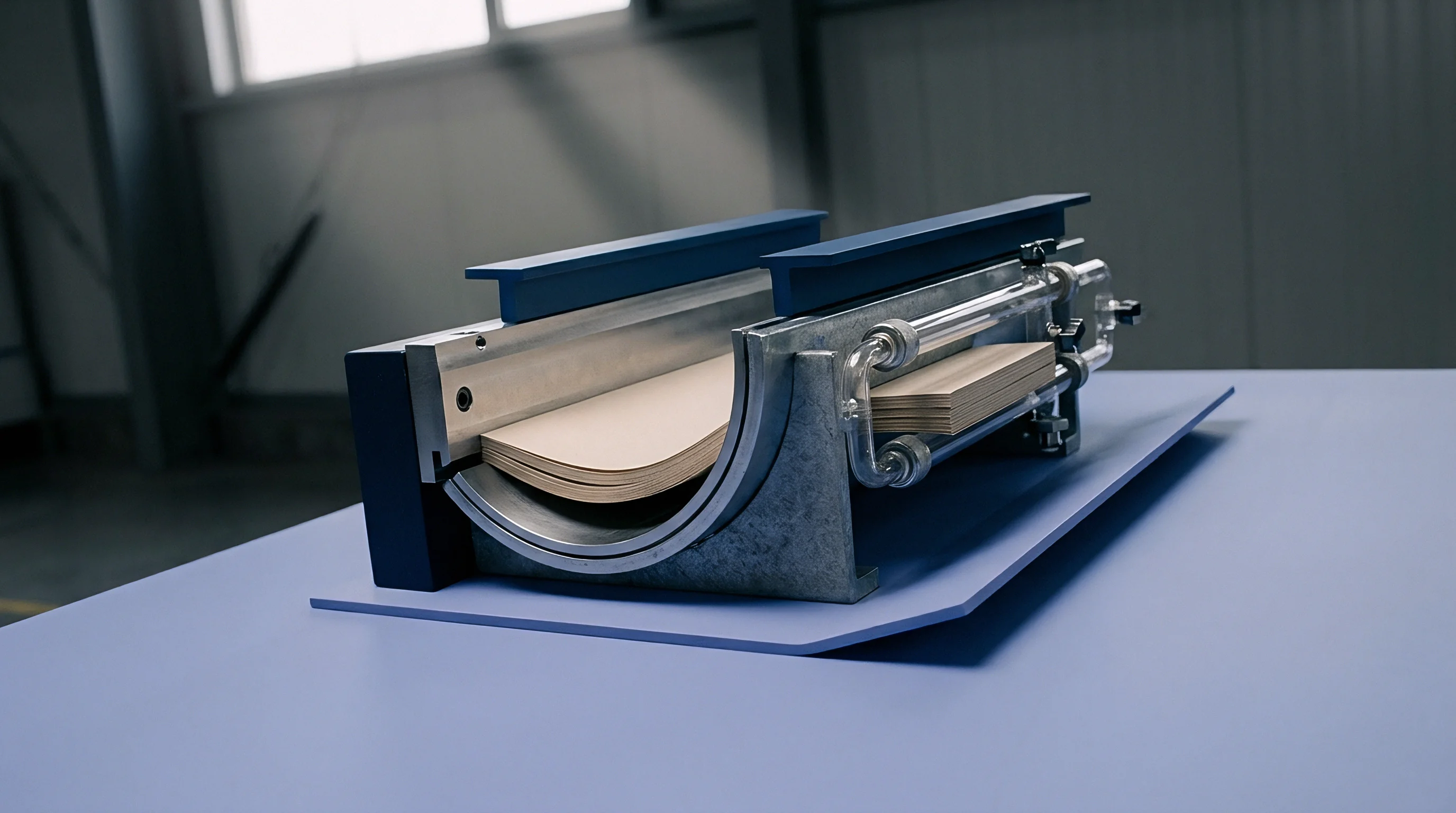
Contractual Specification and Risk Transfer
Procurement documents defining physical board properties state explicit minimum thresholds for out-of-plane strength. Standard purchase orders relying solely on basic grammage and thickness tolerances fail to protect buyers against inter-ply delamination defects. Legal enforcement of quality claims requires establishing clear test protocols, sample selection frequencies, and designated accredited reference laboratories within the primary supply agreement.
Structural failure invalidates packaging compliance claims. Secondary fibers suffer permanent pore structural collapse.
Contractual risk allocation requires linking physical substrate parameters directly to finished carton performance benchmarks. Quality clauses specify that substrate deliveries failing TAPPI T 541 Z-tensile minimums of 250 kilopascals grant buyers immediate rights of lot rejection without supplier cure periods. Incorporating defined financial penalty scales for converting downtime caused by crease delamination ensures rapid resolution of commercial disputes.
Unintended delamination along carton creases compromises moisture barrier integrity, leading to premature product spoilages, mass retail delistings, and substantial financial indemnification claims against packaging buyers.