Recycled Containerboard Compression Failure Mechanics under Environmental Exposure
Recycled containerboard compression failure under humidity requires dynamic creep derating and safety factors above three to prevent structural transit collapse.
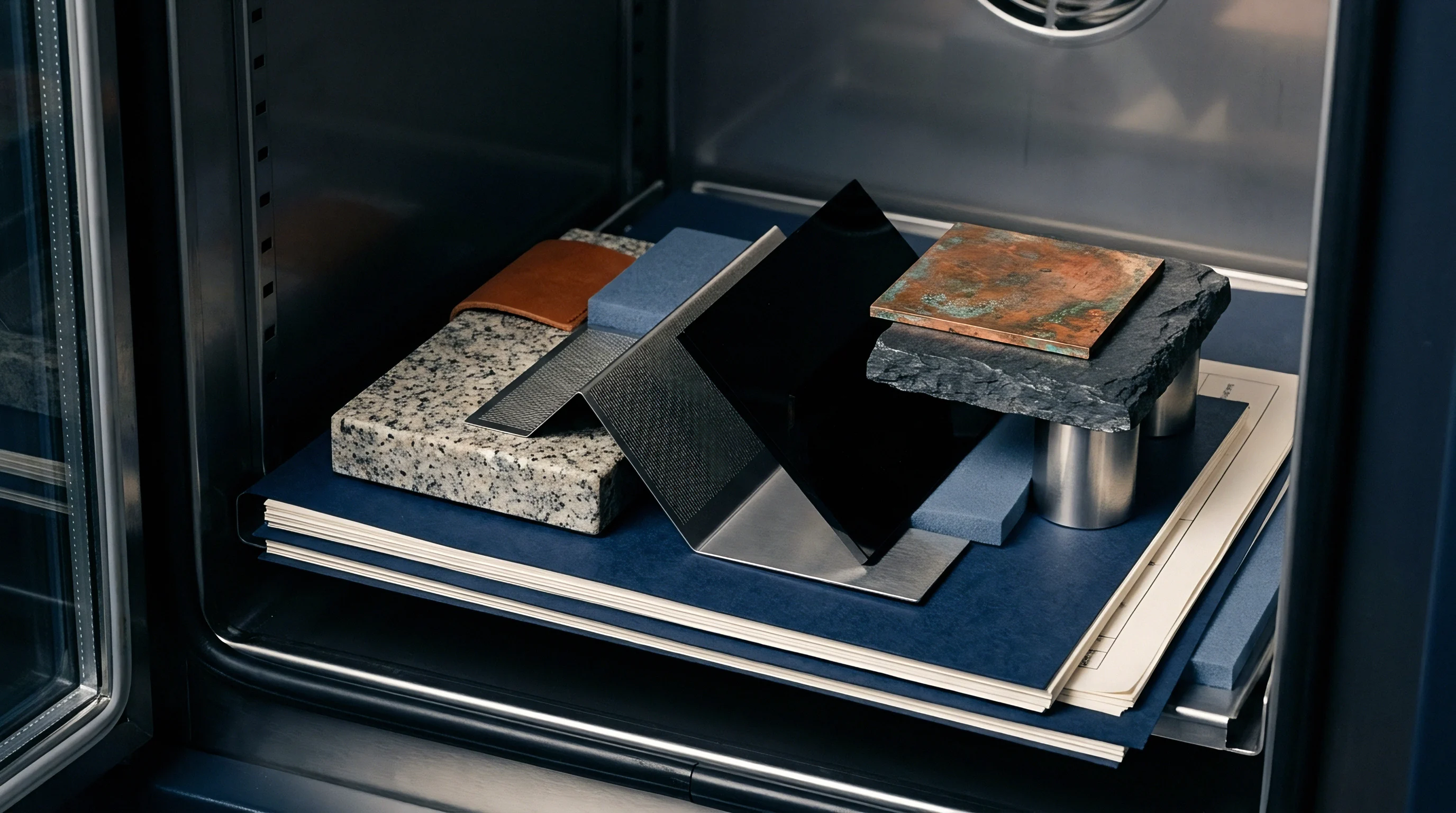

Hornification
Linerboard plies produced from recovered furnish enter the corrugator with irreversible structural defects created during previous drying cycles. Pulp suspension repulping fails to restore the native swelling capacity of secondary fibers. Pore volumes within the secondary cell wall close permanently when exposed to steam cylinders, driving microfibril aggregation and reducing the hydroxyl surface area available for inter-fiber cross-linking.
The consequence on the converting line is immediate: recycled testliner exhibits a thirty to forty-five percent reduction in transverse shear stiffness compared to unbleached softwood kraftliner of identical basis weight. Recycled fibers resist bonding. Compressive load resistance depends upon stress transfer through these fiber junctions, making the sheet vulnerable to localized plastic deformation when axial loading begins.
Under axial compressive stress, containerboard faces failure governed by out-of-plane microbuckling rather than pure material crushing. Short-span compression resistance, determined in ISO 5635 and TAPPI T 826 across a clamping span of 0.70 millimeters, quantifies the intrinsic strength of the cellulose network before Euler column buckling occurs. Virgin kraft fibers maintain a hollow, tubular geometry that distributes compressive loads across intact cell walls.
Repulped fibers display collapsed lumens, micro-creases, and longitudinal dislocations that act as stress concentration nodes. Axial loads force these pre-damaged segments into shear slip bands at stresses well below the theoretical compressive yield point of native cellulose.
Cell wall pore closure during repeated drying cycles prevents recycled pulp fibers from rehydrating with their original internal plasticization.
The distribution of raw material components further accelerates this structural breakdown. Recycled fluting and testliner contain significant proportions of short hardwood elements, mechanical pulp fragments, and mineral ash from coatings and fillers. Mineral fillers provide zero tensile or compressive strength, acting instead as physical discontinuities that interrupt fiber-to-fiber hydrogen networks.
Wall thickness decreases with recycling. Fines collapse under initial compression. When dry, chemical starch additions partially compensate for lost bonding capacity by filling void spaces.
That artificial stiffness remains stable under standard laboratory air, but disintegrates rapidly once environmental moisture enters the paper web.
Secondary fiber assemblies exhibit distinct modes of mechanical breakdown during standard short-span compression tests:
- Inter-fiber bond peeling initiates at tensile-shear interfaces between adjacent fibers, transferring compressive loads onto unsupported neighboring cells.
- Cell wall buckling develops along preexisting micro-compression creases formed during commercial waste baling and mechanical repulping.
- Parenchyma collapse crushes non-fibrous cellular fragments and short vessels, creating lateral voids within the sheet matrix.
- Transverse shear banding propagates across the core plies of multi-ply testliner, separating virgin top layers from recycled filler plies.
Mill technical sheets that emphasize dry ring crush test values overstate the functional durability of recovered furnish grades.

Creep
Moisture sorption alters the internal mechanics of cellulose networks by breaking intra-chain hydrogen bonds between adjacent glucan polymers. In containerboard, equilibrium moisture content follows a sigmoidal sorption isotherm governed by relative humidity and ambient temperature. At fifty percent relative humidity and twenty-three degrees Celsius, standard testliner stabilizes at roughly seven to eight percent moisture content by dry weight.
Raising ambient humidity to ninety percent increases web moisture content beyond twelve to fourteen percent. Water molecules act as plasticizers within the amorphous cellulose and hemicellulose zones, shifting the glass transition temperature of hemicellulose downward toward standard transit storage levels. Plastic deformation accelerates rapidly once this transition point is passed.
Short-span compression strength drops by forty-two percent when containerboard equilibrium moisture content rises from seven to twelve percent under ninety percent ambient humidity.
Static compression loads induce viscoelastic deformation that increases over time, a process termed primary and secondary creep. Under steady-state humidity, the rate of compressive strain diminishes as internal molecular chains find metastable configurations. Environmental cycling destroys this stabilization.
When corrugated containers experience alternating cycles of high and low relative humidity, the rate of creep acceleration expands by factors of three to ten relative to static conditions. Mechanosorption destroys structural stability. The combined action of external compressive stress and transient moisture fluxes drives physical slippage along the fiber axes that does not occur under constant moisture equilibrium.
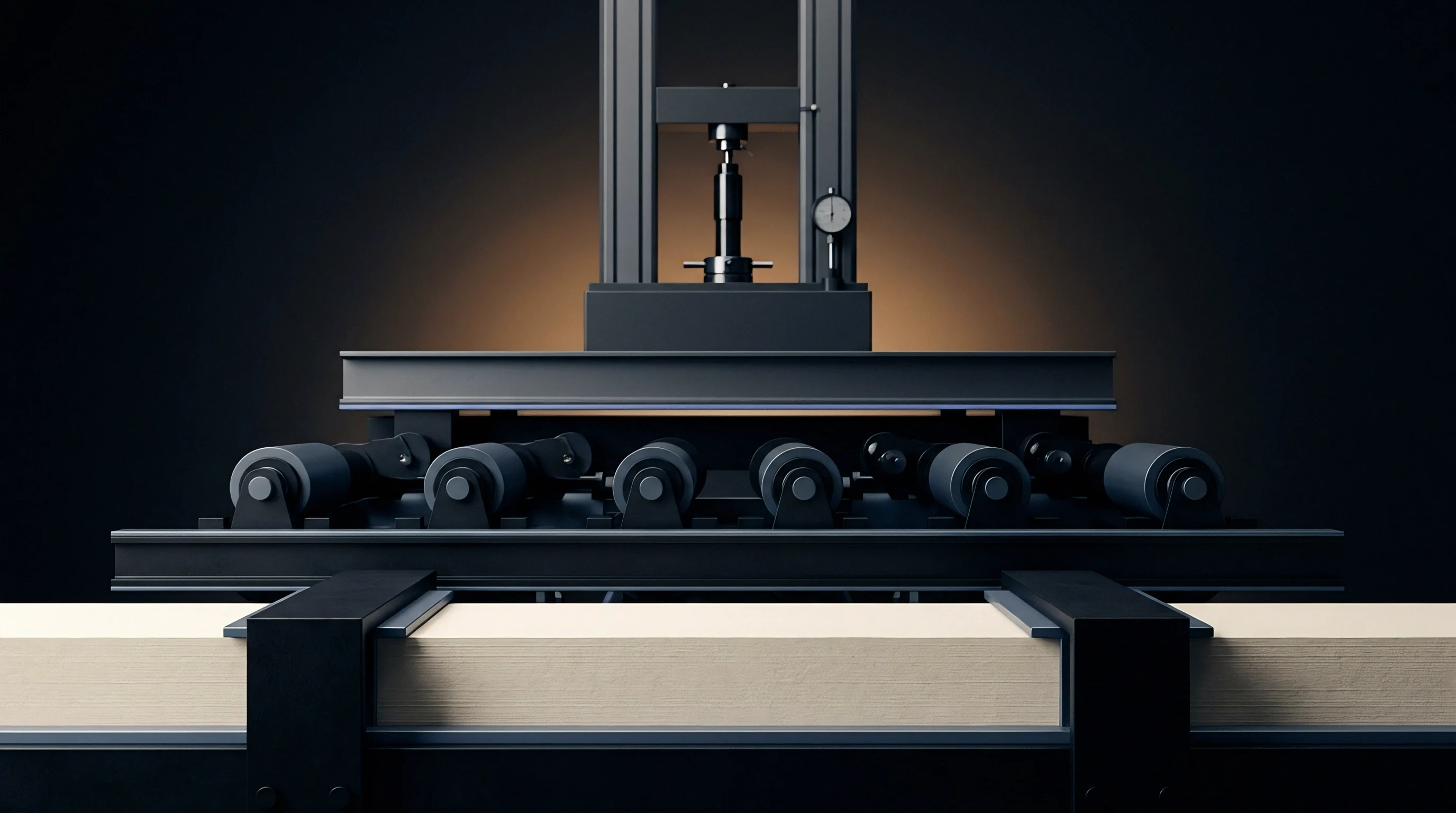
What Drives Mechano-Sorptive Collapse during Transit Cycling?
Relative humidity swings accelerate deflection. When humidity increases, the adsorption of water disrupts internal hydrogen bridges while external compressive loads are actively applied. Bond severance occurs while the cellulose microfibrils sit in tension or compression, allowing them to shift to lower-energy physical orientations.
Subsequent desorption dries the paper web under this distorted geometry, locking the deformation into place while forming new hydrogen bonds in the strained state. Each humidity cycle repeats this sorption-strain-locking sequence, adding an incremental ratchet of irreversible displacement to the container walls.
Transient moisture sorption degrades container performance through a predictable succession of physical events:
- Vapor diffusion drives moisture through board surfaces into the amorphous hemicellulose matrix within twenty minutes of humidity elevation.
- Hydrogen bond disruption frees molecular cellulose segments, reducing instantaneous elastic modulus by twenty to thirty percent.
- Stress reallocation forces compressive vectors away from plasticized outer plies into the drier, rigid center of the board.
- Micro-creep strain accumulation creates localized buckling zones along flute tips where converting shear stresses were introduced.
- Macroscopic panel deflection pushes sidewalls past critical elastic thresholds, causing catastrophic box compression failure.
The rate of mechano-sorptive failure depends heavily on furnish composition. Recovered containerboard fibers feature broken fibrils and elevated lignin contents relative to chemical pulps. Lignin possesses a higher hydrophobicity than cellulose, yet its heterogeneous interface with repulped cellulose creates capillary pathways that accelerate localized moisture uptake.
Glass transition temperatures of isolated hemicellulose fractions drop from nearly one hundred degrees Celsius under bone-dry conditions to fifteen degrees Celsius at eighty-five percent relative humidity. Warehouses lacking climate controls induce continuous cycling between nighttime cool dew points and daytime solar warming. Packaging boxes subjected to these warehouse variations fail under loads that represent barely twenty percent of their dry design limit, stranding distribution inventory on fractured pallets.
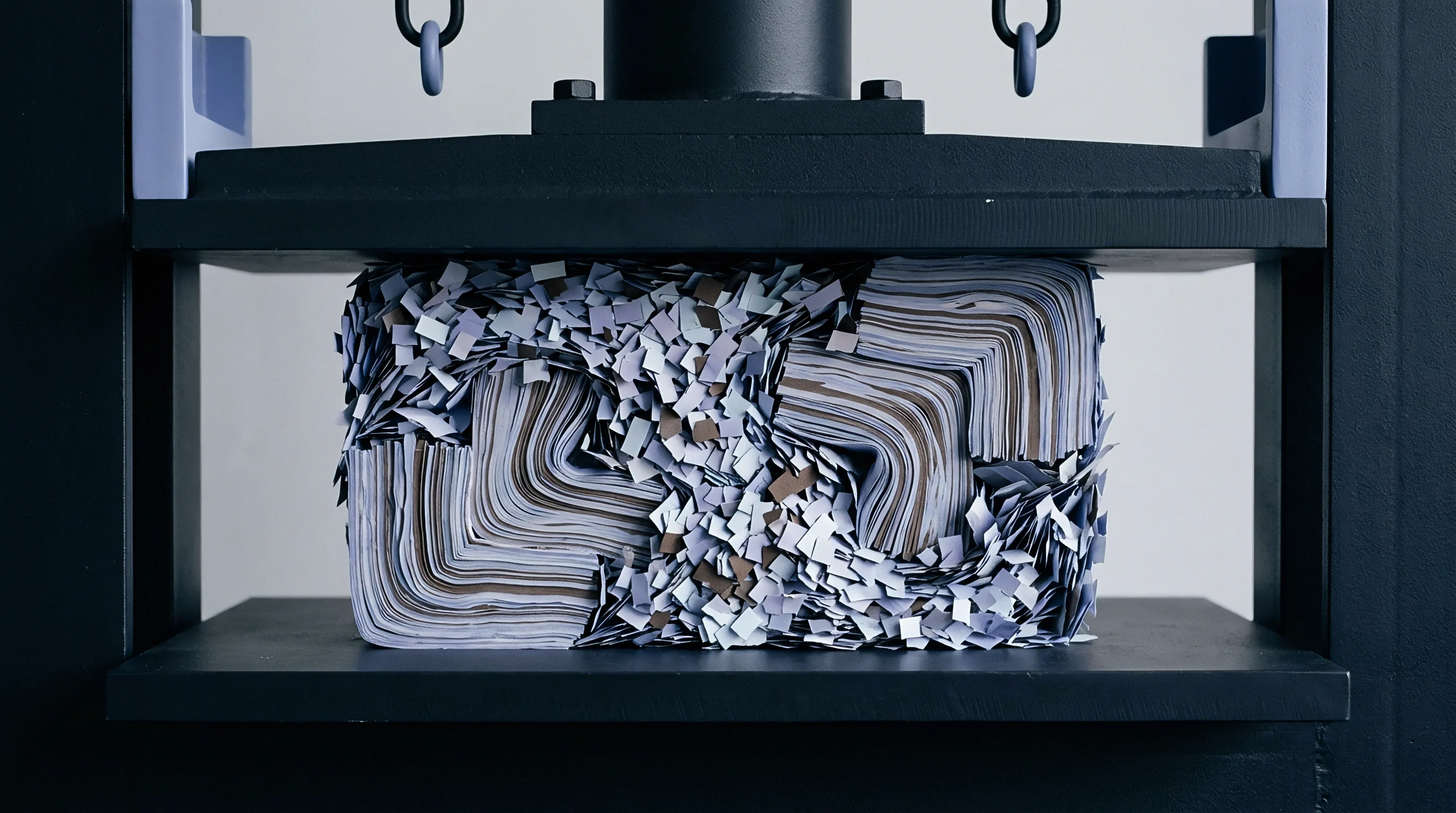
Swell
Hygroscopic expansion along the three structural axes of a paper sheet occurs unevenly. Cellulose fibers expand significantly across their diameter when absorbing water, while longitudinal expansion along the fiber axis remains negligible. Because paper machines align fibers primarily along the machine direction, containerboard undergoes minimal dimensional change lengthwise, moderate expansion in the cross direction, and dramatic expansion in the out-of-plane thickness direction.
Z-directional thickness swelling in recycled testliner can exceed twenty percent as water forces collapsed fiber layers apart. This localized expansion tears apart internal starch binders, destroying the mechanical integrity of multi-ply containerboard sheets.
Recycled furnish lines lose compression resistance faster during active humidity transitions than under any static saturation point.
Out-of-plane expansion directly destabilizes the geometry of corrugated board fluting. Corrugated boxes resist top-to-bottom pallet loads through the column stiffness of their vertical flutes, described mathematically by the moment of inertia of the flute profile. When fluting media swells under elevated moisture, the structural apex of each wave softens.
Under compressive loads, the flute tip rolls sideways instead of maintaining its vertical axis. Saturated flutes buckle instantly. This rolling action converts axial compression into pure bending stress across the inner and outer linerboard liners, inducing delamination blisters where starch adhesive seams attach to the medium.
| Relative Humidity Condition | Virgin Moisture Content | Recycled Moisture Content | Virgin SCT Retention | Recycled SCT Retention | Accelerated Creep Factor |
|---|---|---|---|---|---|
| 50% RH Standard Lab | 7.8% | 8.2% | 100% | 100% | 1.0 |
| 75% RH Storage Ambient | 10.1% | 11.4% | 81% | 68% | 2.4 |
| 85% RH Cold Chain Ocean | 13.6% | 15.2% | 64% | 47% | 5.8 |
| 90% RH Tropical Transit | 16.2% | 18.9% | 51% | 33% | 9.6 |
Corrugating starch adhesives introduce an additional chemical failure interface. Standard native corn starches are inherently water-soluble unless modified with synthetic cross-linking resins such as ketone-aldehydes or urea-formaldehyde resins. Wet adhesive seams yield early.
In low-cost recycled converting operations, starch formulation modifications are minimized to reduce unit costs. High-humidity environments soften these starch bridge joints between the liner and the flute crests. When the adhesive line plasticizes, individual flutes disconnect from the liner plies, eliminating shear transfer across the combined board.
Structural engineers evaluate combined board as an integrated I-beam; once adhesive failure decouples the facesheets from the core, the load-bearing capacity collapses down to the sum of the unbonded layers.
Paper suppliers routinely dismiss collapsed container shipments by asserting that pallet failure resulted from poor warehouse management rather than defective board structure.
Discrepancy
Laboratory conditioning standards established under ISO 187 and TAPPI T 402 specify preconditioning at twenty-three degrees Celsius and fifty percent relative humidity. These rules create an artificial testing environment that conceals the vulnerability of recycled containerboard. Mills report technical specifications, including ring crush test, short-span compression test, and edge crush test values, based exclusively on samples conditioned in these controlled rooms.
Uncalibrated testers yield false safety. A box constructed from one hundred percent recycled testliner that tests at thirty-five kilonewtons per meter of edge crush strength in an air-conditioned laboratory loses over half of that compressive capacity within forty-eight hours of entry into an unventilated marine shipping container.
Chain-of-custody paper certification schemes confirm origin metrics without verifying structural fitness. Certificates issued under international certification systems authenticate that the fiber content originates from certified post-consumer or pre-consumer reclaimed furnish. These audit trails prove chain of custody through percentage, transfer, or credit systems.
They do not validate physical strength, fiber length retention, or environmental performance. Similarly, emerging packaging waste regulations enforce minimum recycled content thresholds across secondary packaging. Converters meet statutory quotas by substituting virgin kraftliners with multi-ply recycled testliners without adjusting sheet grammage.
The paper documents customs compliance while introducing structural transit failure into cross-border supply lines.
Quality verification for moisture-exposed corrugated packaging requires rigorous technical validation criteria:
- Equilibrium pre-exposure demands conditioning test specimens under dynamic cycling between sixty and ninety percent relative humidity prior to edge crush evaluations.
- Short-span compression ratios determine the retention percentage of machine-direction SCT under ninety percent humidity relative to standard dry values.
- Starch water resistance measures bond integrity following immersion tests under international standards such as FEFCO Testing Method Number 9.
- Furnish verification testing cross-checks declared post-consumer claims against fiber furnish analysis to identify mechanical pulp fractions that accelerate moisture absorption.
Standard conditioning hides transport reality. A test certificate verifying certified recycled fiber provides zero defense against cargo crush claims when ambient transit conditions trigger out-of-plane buckling.
Delivery specifications lacking dynamic humidity derating clauses leave buyers paying full invoice value for boxes that collapse during ocean transit.
Sales contracts governing packaging procurement allocate moisture failure risk through explicit specification boundaries. If a purchase order defines containerboard quality solely through basis weight and dry edge crush values, the buyer assumes complete financial liability for crushed cargo whenever environmental loggers register relative humidity levels exceeding sixty-five percent during transit.
Settlement
Predicting container collapse under real-world environmental exposure requires dynamic modifications to classical box compression equations. The McKee formula provides a standard baseline for static box compression calculations, combining edge crush test values, combined board bending stiffness in both directions, and box perimeter. The traditional equation assumes constant environmental conditions and short-duration loading.
To protect recycled containerboard against environmental failure, packaging engineers apply derating coefficients that account for cyclic mechanosorption, moisture uptake, and extended storage duration under load.
Engineering design protocols establish safety factors by calculating the combined product of environmental, pallet pattern, and fatigue multipliers. Take a forty-tonne export shipment of agricultural produce packed in single-wall corrugated boxes using B-flute geometry. The baseline McKee calculation estimates top-to-bottom box compression capacity under laboratory conditions of twenty-three degrees Celsius and fifty percent relative humidity:
BCT = 5.876 multiplied by ECT multiplied by the square root of combined board caliper multiplied by container box perimeter.
Assume a box design measuring 400 millimeters in length, 300 millimeters in width, and 250 millimeters in height, yielding a perimeter of 1,400 millimeters. Using standard virgin kraftliner facesheets of 175 grams per square meter and a semi-chemical virgin medium of 127 grams per square meter, the combined board achieves a dry caliper of 3.0 millimeters and an ECT of 6.2 kilonewtons per meter. The baseline dry BCT calculates to 2,364 newtons.
The bottom box on a pallet column carrying four tiers of twelve-kilogram product experiences a static load of 353 newtons. Under dry conditions, the safety margin exceeds 6.7 to 1, providing complete structural stability.
Transit humidity breaks static calculations. Pallets collapse without external impact. Safety factors demand empirical derating.
If the buyer switches from virgin board to a one hundred percent recycled testliner specification of identical nominal basis weight to meet sustainable sourcing rules, the dry ECT drops to 5.1 kilonewtons per meter, yielding an initial dry BCT of 1,944 newtons. When this cargo travels through an equatorial marine corridor for thirty days, ambient relative humidity reaches eighty-five to ninety percent with daily ten-degree temperature swings that create internal condensation. The retention of edge crush strength drops to forty percent of dry laboratory values, reducing effective ECT to 2.04 kilonewtons per meter.
The cyclic creep factor imposes an additional thirty-five percent degradation penalty on top-to-bottom load duration.
| Board Construction Specification | Dry ECT (kN/m) | Wet ECT (kN/m) | Standard Dry BCT (N) | Derated Transit BCT (N) | Working Safety Factor | Landed Yield Result |
|---|---|---|---|---|---|---|
| Virgin Kraft 175 / Semi-Chem 127 | 6.20 | 3.16 | 2,364 | 1,087 | 3.08 | Stable Arrival |
| Recycled Testliner 175 / Wellenstoff 127 | 5.10 | 1.68 | 1,944 | 578 | 1.64 | Critical Creep Risk |
| Recycled Testliner 220 / Wellenstoff 150 | 6.35 | 2.10 | 2,421 | 722 | 2.05 | Marginal Performance |
| Recycled Testliner 250 / Resinated Flute 160 | 7.40 | 3.33 | 2,822 | 1,146 | 3.25 | Stable Arrival |
Delaminated plies cannot support load. Cold storage triggers rapid dew. Under the uncompensated recycled specification, effective box compression capacity falls to 578 newtons.
While this figure theoretically exceeds the static deadweight of 353 newtons, dynamic warehouse vibrations and interlocked pallet stacking patterns introduce misalignment penalties of thirty to forty percent. The functional capacity drops to 347 newtons, falling below the static stack weight. Progressive box panel deflection leads to catastrophic column lean, corner tearing, and crushing of inner consumer goods.
Correcting this structural vulnerability requires an engineered grammage uplift. Substituting 250 grams per square meter recycled testliner liners paired with a wet-strength resin-impregnated recycled fluting medium of 160 grams per square meter restores the derated transit capacity to 1,146 newtons. This design intervention increases the fiber mass of the packaging by nearly forty percent, directly offsetting projected unit-cost savings derived from sourcing recovered furnish.
Logistics liability claims hinge on whether purchase orders incorporate defined environmental exposure envelopes. Standard procurement documents that omit humidity-cycling derating factors leave commercial buyers absorbing direct product write-offs, disposal tariffs, and supply chain delays at arrival ports. What unresolved threshold of cross-linking resin chemistry can fully arrest mechano-sorptive creep in secondary fibers without invalidating pulping recyclability standards under EN 13430?