Short Span Compression Strength Testing Protocols for Recycled Containerboard
Standardized short span compression testing at 0.70 mm free span provides the primary edgewise yield metric for predicting recycled corrugated carton performance.


Grip
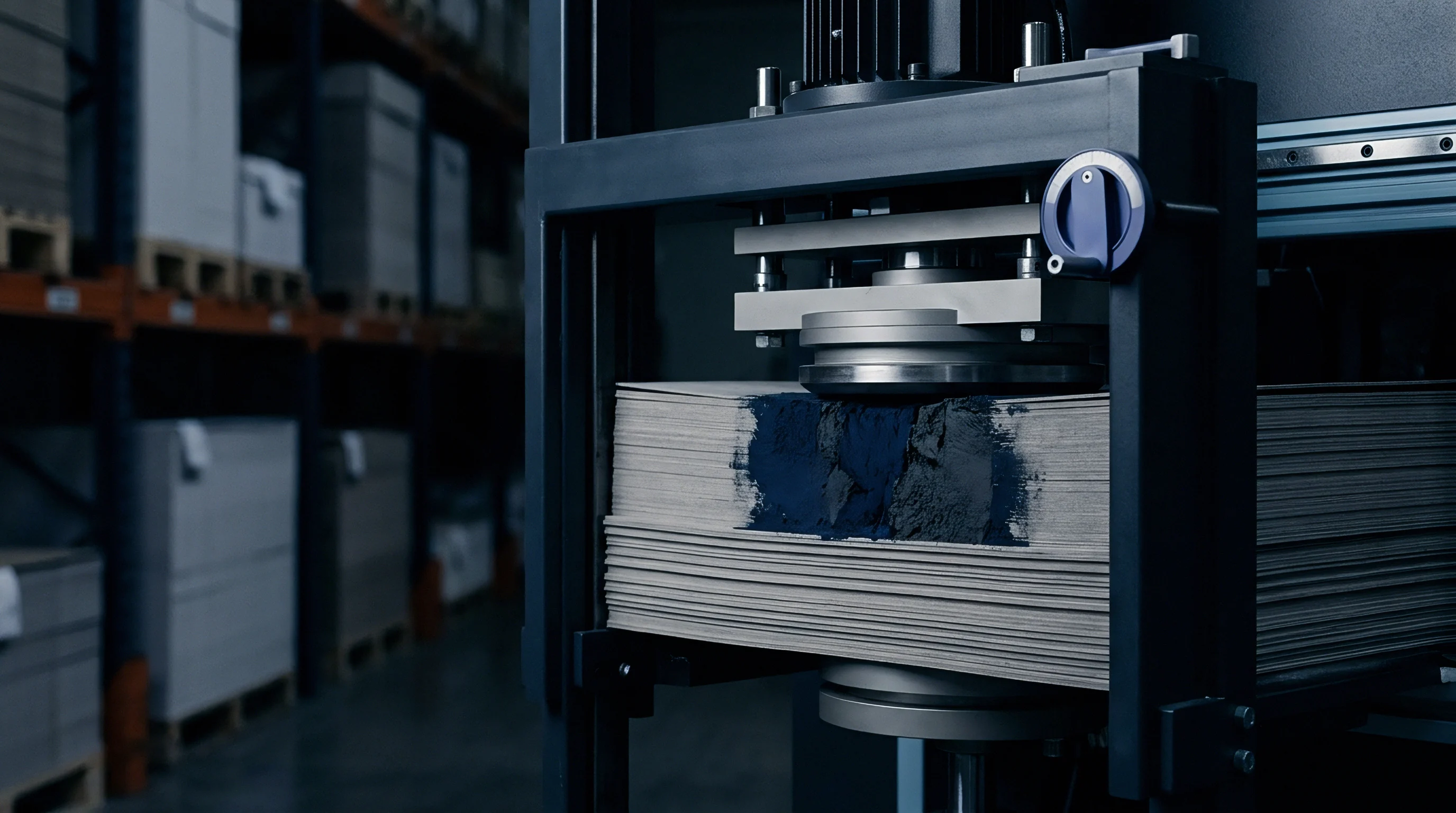
Short span compression testing measures the pure compressive yield strength of containerboard sheets under conditions that prevent elastic sheet buckling. Standardized testing protocols under ISO 9895 and TAPPI T 826 establish a fixed free span of exactly 0.70 millimeters between opposing clamping jaws. At this microscopic gauge length, the slenderness ratio of paper substrates between 100 and 400 grams per square meter stays low enough that compressive failure occurs through cell wall dislocation rather than structural sheet deflection.
A pneumatic clamping pressure of 2300 kilopascals across the thirty-millimeter test width suppresses specimen slippage while avoiding local fiber crushing along serrated grip edges.
Recycled containerboard behaves differently under mechanical clamping than virgin kraft materials, as secondary fibers exhibit lower surface friction and greater thickness variability across the sheet. These variations in local caliper create an uneven pressure distribution across the jaw face. When local clamping force drops below critical thresholds, individual fibers slip within the grip zone before reaching terminal load, while parallelism errors distort the fracture line.
Clamping arrangements with worn tungsten carbide surfaces or misaligned pneumatic pistons yield artificially depressed compressive values, misleading packaging buyers on actual corrugating performance.
A clamping pressure below 2300 kPa drops recorded compressive strength by fourteen percent on 140 gsm recycled fluting through premature micro-slippage at the tooth boundary.
Specimen gripping mechanics depend on three distinct structural interactions:
- Direct Frictional Shear transfers compressive force from the moving clamp face into the outer fiber layers of the containerboard strip without inducing surface fracture.
- Hydrostatic Core Compression compacts the internal network of recycled pulp, distributing transverse loads across secondary fiber walls.
- Edge Restraint Coupling confines out-of-plane fiber expansion directly along the 0.70 millimeter span perimeter, preventing delamination before peak load registers.
Testing laboratories encounter consistent mechanical anomalies when evaluating recycled testliner and fluting grades. Surface roughness profiles on recycled boards create localized stress risers under standard clamp pressures, while caliper swelling from excessive moisture or sizing agents shifts the neutral axis during jaw closure. The table below presents baseline short span compression test values across standard recycled containerboard grammages measured under standard laboratory conditions of 23 degrees Celsius and 50 percent relative humidity.
| Grade Designation | Nominal Grammage (g/m²) | MD SCT (kN/m) | CD SCT (kN/m) | CD SCT Index (Nm/g) |
|---|---|---|---|---|
| Testliner 2 | 125 | 2.45 | 1.75 | 14.0 |
| Testliner 2 | 150 | 3.05 | 2.15 | 14.3 |
| Testliner 3 | 140 | 2.50 | 1.70 | 12.1 |
| Recycled Fluting | 110 | 2.10 | 1.45 | 13.2 |
| Recycled Fluting | 130 | 2.60 | 1.80 | 13.8 |
| Recycled Fluting | 160 | 3.25 | 2.25 | 14.1 |
Inadequate clamping pressure permits micro-slippage that inflates displacement readings and generates false low-compression metrics, leading box plants to reject acceptable board reels or over-engineer packaging flutes with excess basis weight.
Furnish
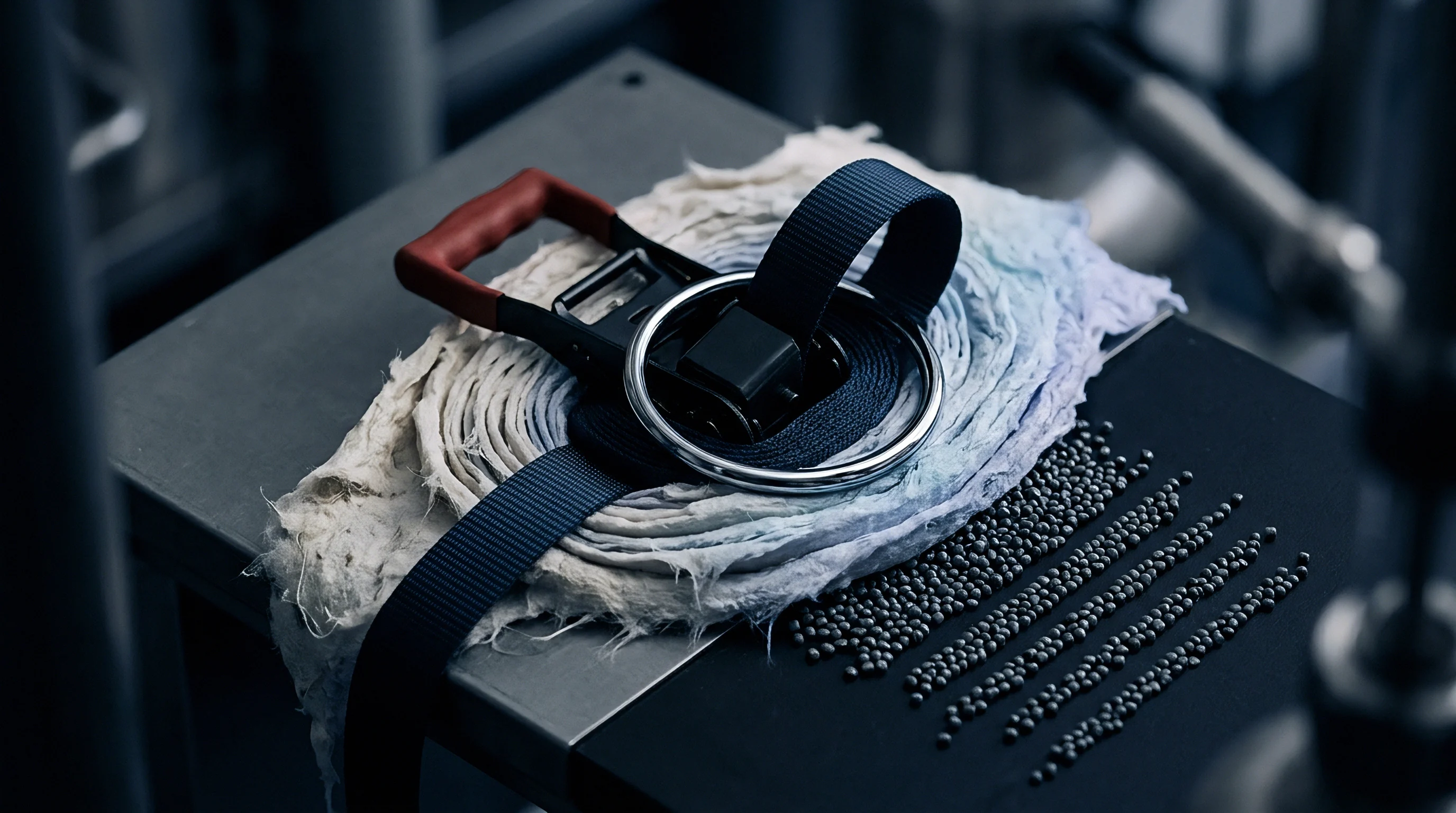
Fiber quality within recycled containerboard dictates the upper boundary of edgewise compressive strength. Because secondary fibers are shorter, every cycle of repulping, mechanical refining, and pressing alters the morphology of reclaimed cellulose. The primary mechanism diminishing compressive resistance is hornification ~ an irreversible internal restructuring of the cell wall during initial paper drying.
Desorption of moisture during previous machine runs forces microfibrils to coalesce, closing internal pore volumes and reducing the swelling capability of fibers upon subsequent rewetting.
Recycled furnishes consist predominantly of old corrugated containers, mixed waste paper, and converting clippings. Contaminants such as residual adhesives, waxes, and calcium carbonate fillers dilute the load-bearing fiber matrix. Papermakers counteract strength loss by adding native or modified starches at the size press.
Wet-end cationic starches and surface starch applications elevate cross-directional compressive strength by establishing artificial hydrogen bonds between inactive secondary fibers. Starches add rigid mass to the sheet, but they behave differently than native cellulose microfibrils under dynamic moisture shifts.

Why Do Secondary Fibers Accelerate Compressive Failure?
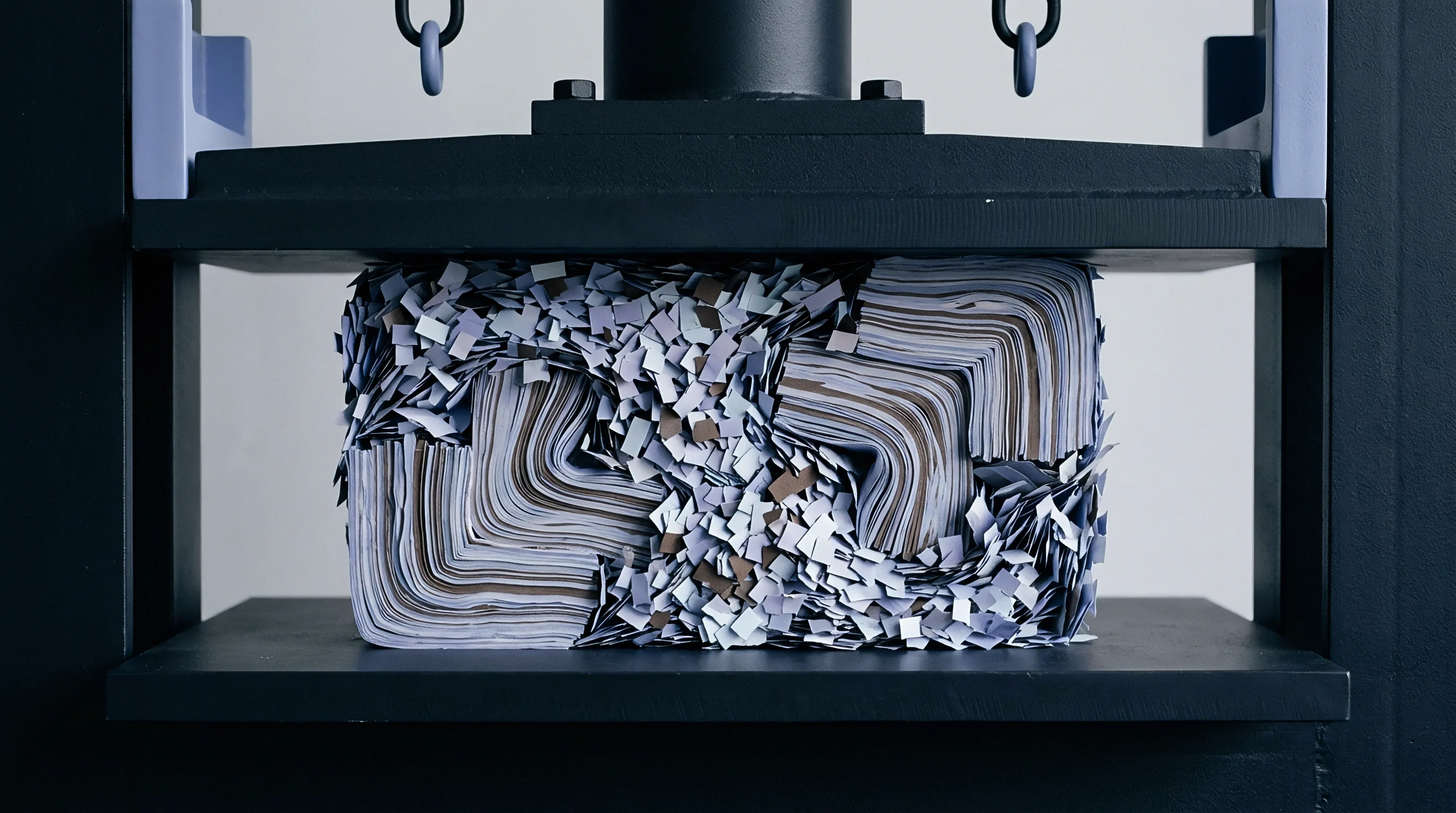
Residual lignin inhibits wet fiber swelling, and repeated refining of recycled pulp shears off the primary fiber wall to expose inner secondary walls to extensive micro-fissuring. Under axial compression, these damaged cell walls buckle at substantially lower critical stresses than virgin fibers. Virgin softwood fibers collapse through plastic micro-compressions across the whole lamella, whereas recycled hardwood and softwood blends develop catastrophic shear bands across localized voids within the sheet structure.
Fiber wall collapse from repeated recycling cycles reduces cross-sectional sheet density before any drop in apparent tensile values appears on the bench.
Micro-compressions generated during previous converting and drying cycles act as built-in stress concentrators. Fines content within old corrugated containerboard pulps frequently exceeds twenty-five percent by weight. These fines increase apparent density by filling interstitial cavities between larger fibers; while this consolidation improves tensile properties, it does little for short span compression resistance.
Edgewise compression performance depends directly on cell wall thickness and individual fiber moment of inertia, so when secondary fiber walls lose elastic modulus, the complete containerboard matrix fails under axial shear loads.
The unresolved dispute centers on whether aggressive secondary refining restores enough bonding surface to offset the structural wall thinning caused by mechanical fiber cutting.

Calibration
Standardized execution protocols demand uncompromising instrument calibration to yield reproducible short span compression measurements. Test houses operate under two primary standards: ISO 9895 and TAPPI T 826. Both standards mandate a 0.70 millimeter span and a 30 millimeter clamping width, yet operational distinctions emerge in jaw approach velocity and pneumatic regulation tolerances.
ISO 9895 specifies a constant compression speed of 3.0 ± 0.2 millimeters per minute. TAPPI T 826 allows electromechanical drives with controlled displacement rates that must register terminal fracture within a defined time-to-peak window.
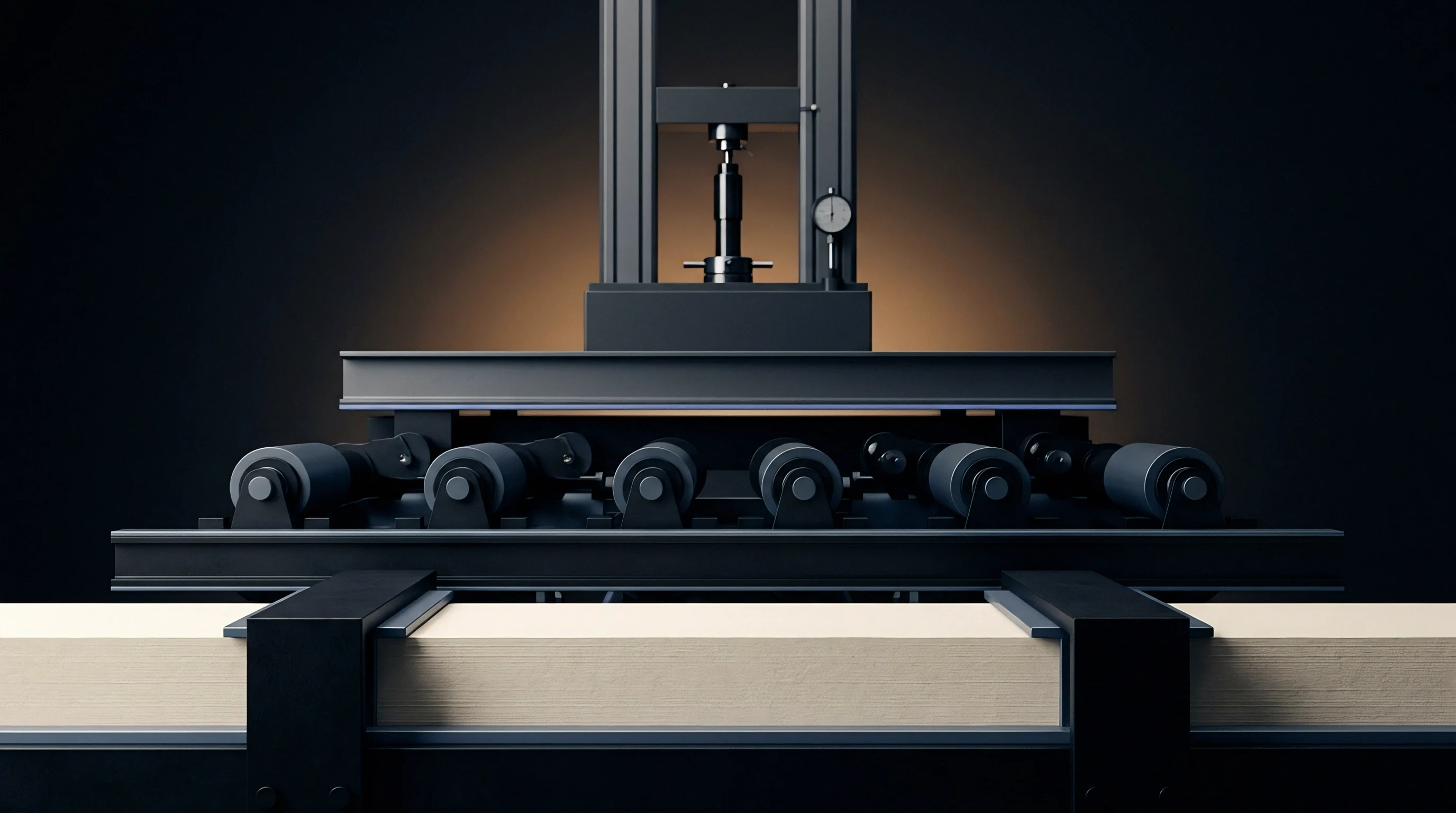
Instrument mechanics require precise physical verification at regular operational intervals. Jaw parallelism represents the most sensitive geometric variable in the apparatus: if clamping surfaces deviate from parallel alignment across the thirty-millimeter span by more than 0.005 millimeters, load concentrates along one edge of the specimen strip. As pneumatic lines bleed pressure over time, asymmetric loading introduces combined torsional and compressive strains, generating prematurely low rupture values accompanied by diagonal fracture geometries rather than uniform transverse breaks.
What Governs Instrument Alignment during Short Span Loading?
Mechanical parallelism depends directly on the rigidity of the moving jaw guide tracks. Dirt accumulation, paper dust ingress, and mechanical wear on linear bearings introduce lateral free play during forward travel. Alignment gauges with inductive displacement transducers measure the physical distance between opposing clamping faces across four points along the grip width.
Clamping surfaces require cleaning with technical isopropyl alcohol every fifty test cycles to remove starch dust and surface sizing residues, as hardened deposits on the clamp faces distort local pressure profiles and cause irregular clamping.
Specimen preparation influences measurement precision with equal severity. Specimen strips cut with dull guillotine blades suffer crushed structure, delaminated edges, crushed flutes, and fiber pull-out. Hand-held precision cutters or pneumatic double-blade strip punches must produce clean, parallel edges precisely 15.0 or 30.0 millimeters wide without burrs or angled cuts.
The angle between the strip axis and the machine direction of the containerboard roll must stay within 1.5 degrees, because an orientation error of three degrees reduces cross-directional compressive readings by four to seven percent.
- Pneumatic System Verification requires connecting a calibrated pressure transducer directly to the clamping cylinder intake to verify that the jaw delivers 2300 ± 500 kPa against the paper face during the entire pre-load cycle.
- Span Clearance Verification demands optical micrometric inspection using a calibrated steel feeler gauge to confirm that the gap between closed jaw edges measures 0.70 ± 0.05 millimeters across the full test width.
- Load Cell Linearization involves applying five certified class-F deadweights in ascending increments up to one thousand Newtons, recording voltage output linearity within 0.2 percent of full scale.
- Cutter Blade Parallelism Check inspects test strip cut dimensions across ten random samples using an optical toolmaker microscope to confirm width uniformity within 0.02 millimeters.
Adherence to ISO 9895 clause 6.2 restricts gauge length deviation to five micrometers, voiding calibration certificates when jaw travel exceeds that boundary.
Laboratories frequently neglect the internal damping characteristics of load cells. Piezoelectric and strain-gauge sensors respond differently to the rapid load drop marking ultimate failure. Modern computerized test software captures force data at sampling frequencies of one thousand Hertz or higher; lower acquisition frequencies truncate peak values and artificially soften the recorded failure point, while higher rates ensure that transient mechanical vibrations from the drive motor do not register as false compression peaks.
Under ISO 17025 laboratory accreditation terms, failure to record temperature, relative humidity, and jaw clamping force during each test run invalidates the test report for international certificate clearance.

Equilibrium
Atmospheric moisture alters the physical performance of recycled containerboard more aggressively than virgin cellulose materials. Recycled packaging grades contain high proportions of amorphous cellulose and open capillary spaces created by previous pulp processing, causing testliner to absorb ambient water quickly. Water molecules diffuse directly into the fiber network, acting as plasticizers that interrupt intermolecular hydrogen bonds between adjacent cellulose chains; as ambient moisture content rises, the compressive elastic modulus drops sharply.
Standardized conditioning regimes under ISO 187 specify an environment of 23.0 ± 1.0 degrees Celsius and 50.0 ± 2.0 percent relative humidity. Containerboard specimens reach physical equilibrium only after uninterrupted exposure to moving conditioned air for twenty-four hours. Testing laboratories face major operational challenges regarding sorption hysteresis: a containerboard sample brought to standard conditions from a high-humidity environment retains more moisture than an identical sample conditioned from an oven-dry state.
This hysteresis effect introduces a moisture content variation of up to 1.5 percent between drying and wetting curves, altering short span compression test results by eight to twelve percent.
| Relative Humidity (%) | Equilibrium Moisture (%) | SCT Retention Factor | Conditioning Window (Hours) |
|---|---|---|---|
| 30 | 5.2 | 1.18 | 24 |
| 40 | 6.4 | 1.08 | 24 |
| 50 (Standard) | 7.8 | 1.00 | 24 |
| 65 | 9.5 | 0.86 | 48 |
| 75 | 11.4 | 0.72 | 48 |
| 85 | 14.2 | 0.54 | 72 |
| Factors apply to 140–160 g/m² recycled testliner grades following adsorption equilibration from lower humidity states. | |||
Converting plants without climate-controlled testing spaces generate volatile data, as pulling test samples directly from humid production halls without prior conditioning yields artificially depressed SCT values and prompts unjustified rejection of mill reels. Furthermore, secondary fibers undergo accelerated viscoelastic creep when moisture contents exceed nine percent, leading to rapid fiber sliding under sustained edgewise compression.
Thicker recycled fluting loses edgewise stiffness faster than virgin kraftliner under damp storage because hornified secondary walls draw water directly into internal voids.

Conversion
Converting short span compression test measurements into accurate corrugated box performance models represents the primary commercial objective of quality testing. Containerboard buyers specify SCT properties to calculate expected Edge Crush Test values of combined corrugated board and ultimate Box Compression Test values of finished transport cartons. The traditional McKee formula relies on board thickness, flexural stiffness, and edgewise crush resistance to predict box stacking strength.
In modern box plants converting recycled containerboards, SCT has replaced the historical Ring Crush Test and Concora Liner Test due to its superior repeatability and freedom from specimen buckling artifacts.
Combined board edge crush resistance depends on the cross-directional SCT of individual linerboards and the fluting medium. Take a single-wall corrugated board construction incorporating a 150 g/m² Testliner 2 outer facing, a 130 g/m² Recycled Fluting medium corrugated with a C-flute take-up factor of 1.43, and a 140 g/m² Testliner 3 inner facing. Assume nominal CD SCT values of 2.15 kN/m for the outer liner, 1.80 kN/m for the fluting medium, and 1.70 kN/m for the inner liner.
Theoretical ECT derives from linear summation:
Theoretical ECT = Outer Liner CD SCT + (Fluting CD SCT × Take-up Factor) + Inner Liner CD SCT
Substituting the assumed values yields: 2.15 + (1.80 × 1.43) + 1.70 = 6.42 kN/m. Converting operations incur losses during corrugator fluting, slitting, and printing when off-spec fluting flattens inside corrugator nips. Nip pressures between corrugating rolls and pressure rolls fracture brittle recycled fiber walls, causing an eight to fourteen percent reduction from theoretical to measured board ECT.
| Combined Board Flute | Liner/Medium Grammages (g/m²) | Summed SCT (kN/m) | Measured Board ECT (kN/m) | Calculated BCT (kN) |
|---|---|---|---|---|
| B-Flute (Take-up 1.32) | 125 / 110 / 125 | 5.41 | 4.75 | 2.85 |
| B-Flute (Take-up 1.32) | 150 / 130 / 140 | 6.23 | 5.50 | 3.30 |
| C-Flute (Take-up 1.43) | 140 / 130 / 140 | 5.97 | 5.15 | 3.70 |
| C-Flute (Take-up 1.43) | 175 / 160 / 175 | 8.02 | 6.95 | 5.05 |
Calculation of finished box compression strength from measured board ECT applies the modified McKee equation: BCT equals 5.87 multiplied by ECT, multiplied by the square root of board caliper, multiplied by the square root of box perimeter. For an RSC carton measuring 400 × 300 × 250 millimeters made from C-flute board with a measured caliper of 4.0 millimeters and an ECT of 5.15 kN/m, box perimeter equals 1400 millimeters. Applying the formula yields a nominal peak stacking capacity of 3.70 kilonewtons under standard laboratory testing conditions.
Commercial acceptance protocols require packaging buyers to establish rigorous verification procedures on incoming mill certificates, as quality agreements define actionable boundaries for raw material conformance:
- Cross Direction SCT Minimums establish absolute contractual floors across ten individual specimen tests per reel, rejecting lots showing mean values more than five percent below specification.
- Machine Direction Anisotropy Ratios regulate fiber orientation symmetry between 1.30 and 1.60, preventing sheet skewing during high-speed corrugator runs.
- Moisture Balance Limits constrain reel moisture profiles between 6.5 and 8.5 percent upon container devanning, avoiding corrugator curl and blister defects.
- Recycled Content Chain Declarations bind mill shipments to verified secondary fiber inputs aligned with regional packaging waste regulations.
When packaging fails physical compression testing, importers face customs compliance penalties, downstream distributors encounter structural warehouse collapses, and organizations risk regulatory sanctions under extended producer responsibility frameworks. Containerboard reels that drop below declared SCT baselines pass their deficits into finished transport cartons, transferring structural risk straight down the retail distribution chain.