Tensile Strain Testing Protocols for Recycled Packaging Grades
Verify cross-direction tensile strain on recycled linerboard under ISO 1924-2 to prevent carton scoreline cracking during high-speed folder-gluer converting.
Jaw
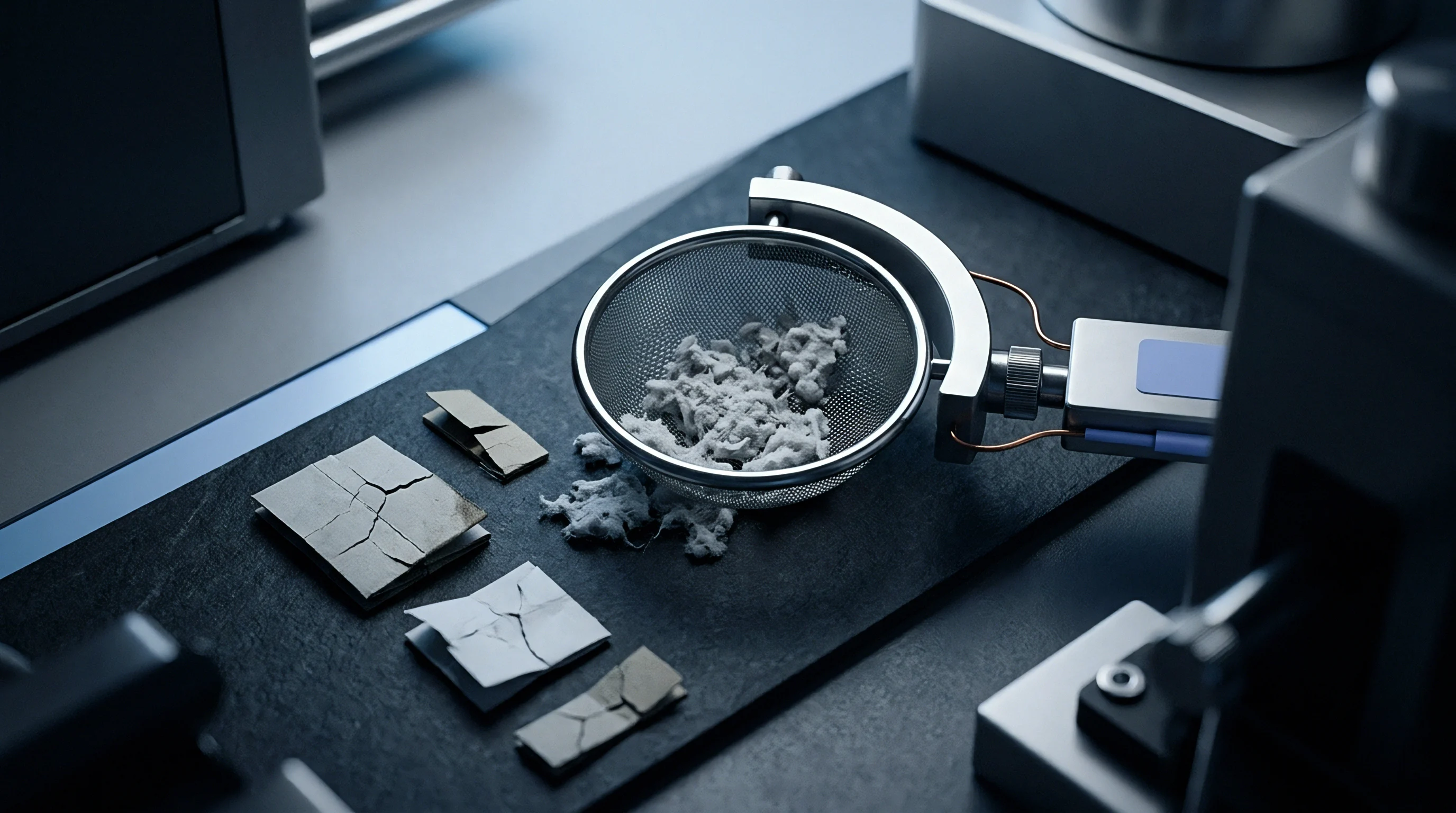
Tensile testing of recycled paperboard grades exposes mechanical vulnerabilities that standard burst or ring crush indices routinely conceal. Testing laboratories operating under ISO 1924-2 or TAPPI T 494 evaluate specimen strips cut to 15 mm or 25 mm widths clamped between pneumatically actuated faces set at an initial gauge length of 180 mm. The constant rate of elongation, standardized at 20 mm per minute under ISO 1924-2 and 25 mm per minute under TAPPI T 494, subjects the heterogeneous network of recycled cellulose to uniaxial stress until total rupture.
Unrefined secondary fibers display an abrupt decrease in strain at break compared to virgin kraft fibers. The strain value records as the percentage elongation relative to the initial gauge length, reflecting the extent to which the fibrous network reorganizes before individual fiber pull-out or inter-fiber bond cleavage precipitates complete web separation.
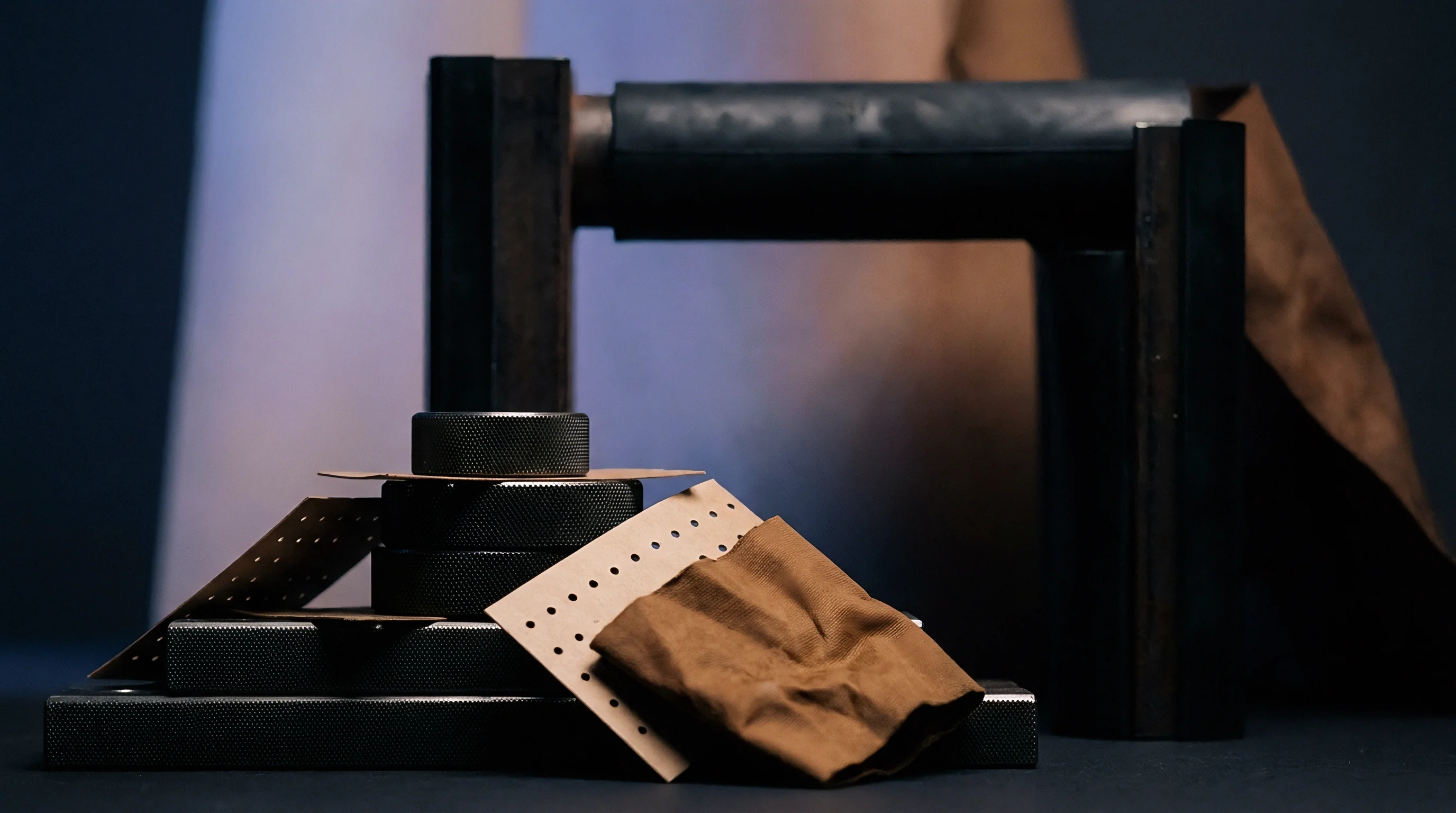
Specimen gripping mechanics govern the validity of the resulting stress-strain curve. Line-contact clamping faces faced with ground tool steel minimize specimen slippage under load, yet high clamping pressures risk crushing the delicate bulk of high-yield recycled testliners. Pneumatic line grips maintained between 0.4 MPa and 0.6 MPa provide uniform pressure across the 15 mm strip width without inducing edge fractures at the grip margin.
Serrated or knurled surfaces induce premature localized stress concentrations, cutting the exterior plies of multi-ply recycled liners and falsifying the elongation value. Flat rubber-faced grips distribute load across a broader area, but rubber deformation under high tensile loads introduces uncalibrated displacement that registers artificially as specimen strain.
Under ISO 1924-2 at 23 degrees Celsius and 50 percent relative humidity, 140 g/m² recycled testliner achieves a mean cross-direction tensile strain at break of 1.85 percent across a 180 mm gauge length.
Extensometers bypass grip displacement errors by tracking optical markers or physical knife-edges positioned directly on the paper web. Video extensometry delivers the cleanest data on recycled fluting and linerboard, tracking gauge markers deposited 50 mm apart along the central axis of the specimen. This direct surface measurement separates genuine material elongation from systemic compliance inside the load cell, drive screws, and clamping pads.
When optical tracking replaces crosshead displacement tracking, recorded elongation figures for recycled testliner contract by 0.15 to 0.40 percentage points. That difference dictates whether a reel lot passes or fails a high-speed converting specification.
| Test Method Designation | Specimen Width | Initial Gauge Span | Elongation Rate | Primary Metrics Reported |
|---|---|---|---|---|
| ISO 1924-2 | 15.0 mm ± 0.1 mm | 180 mm ± 1 mm | 20 mm/min ± 5 mm/min | Tensile strength, stretch at break, TEA |
| ISO 1924-3 | 15.0 mm ± 0.1 mm | 100 mm ± 1 mm | 100 mm/min ± 10 mm/min | Tensile stiffness, strain at failure, TEA |
| TAPPI T 494 | 25.0 mm ± 1.0 mm | 180 mm ± 5 mm | 25 mm/min ± 5 mm/min | Tensile breaking properties, elongation, TEA |
| DIN EN ISO 12625-4 | 50.0 mm ± 0.5 mm | 50 mm ± 1 mm | 50 mm/min ± 2 mm/min | Tensile strength, stretch, energy absorption |
Sample preparation introduces substantial variance into raw test data if cut edges carry micro-fissures. Guillotine cutters with worn shear blades leave compressed, micro-torn edges along the strip margins, acting as initiation sites for early tensile failure. Dual-blade rotary pneumatic cutters maintain parallel margins while preventing shear damage to outer plies.
The cutting sequence generates test pieces aligned precisely with the machine direction or the cross machine direction. Angular misalignments as small as three degrees shift the apparent strain response downward in the machine direction and upward in the cross direction, blurring the true anisotropy of the paper machine reel.
Calibrating the initial pre-tensioning force eliminates strip slack before crosshead motion begins. A static hanging weight or an automated pre-load routine applies 0.1 N to 0.2 N of tension prior to grip closure, establishing a true zero displacement baseline. Without accurate pre-load control, the displacement sensor records initial slack removal as material deformation, inflating the calculated tensile energy absorption by ten to twenty percent.
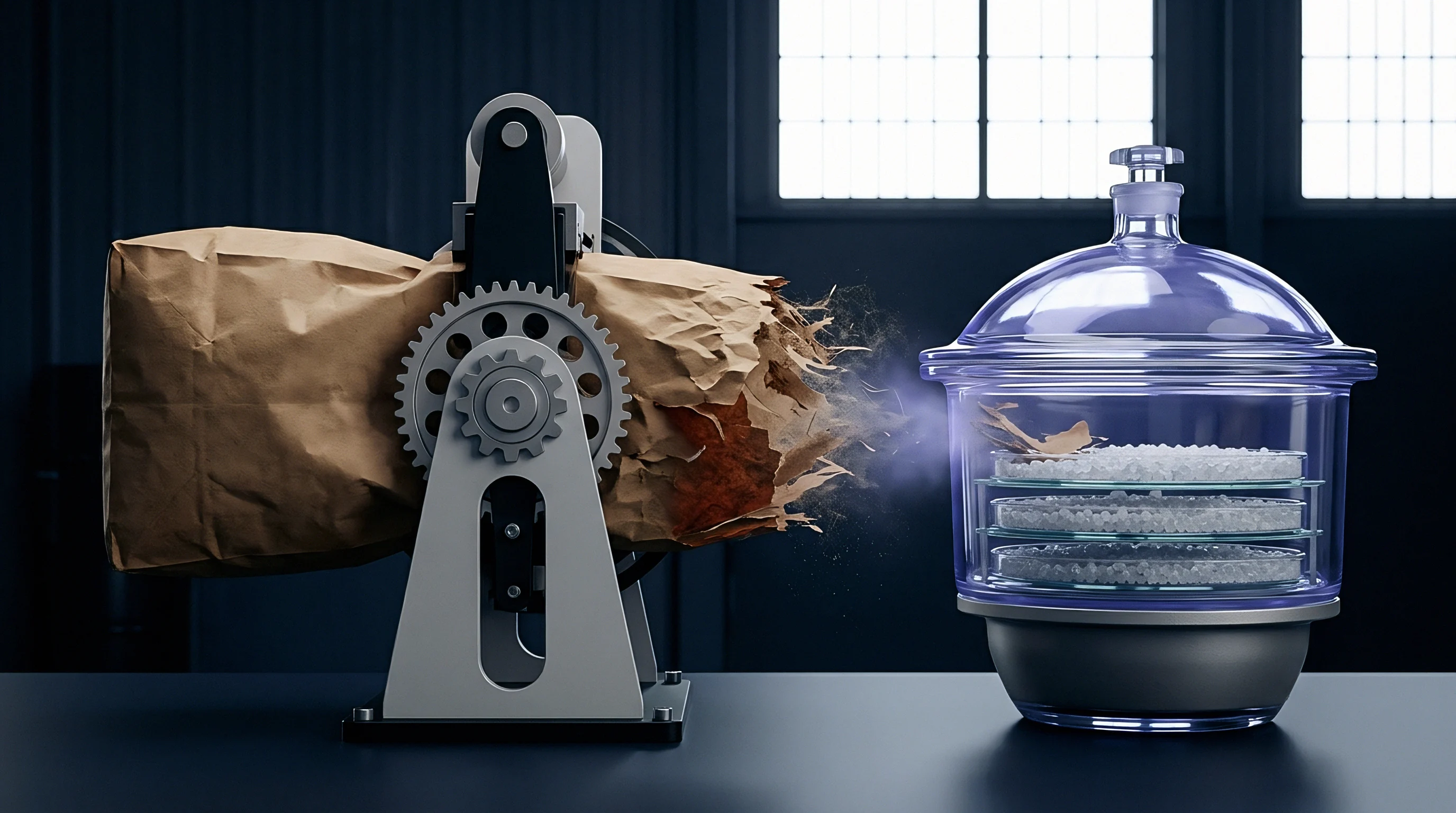
The mechanical jaw setup establishes the baseline accuracy for every subsequent furnish calculation.
Fibre
Recycled packaging substrates endure irreversible alterations during sequential repulping cycles. Hornification collapses internal fiber pores, hardening the cellulose matrix and shrinking the specific surface area available for hydrogen bonding. Secondary furnish sourced from old corrugated containers contains broken fibers, residual sizing agents, and elevated concentrations of calcium carbonate filler.
These components decrease network compliance under tensile stress. Virgin unbleached kraft fibers deform under tension, distributing load throughout the three-dimensional fibrillar network. Recycled fibers resist deformation until micro-cracks form across poorly bonded interfaces, causing abrupt, brittle rupture.
Anisotropic Response across Web Directions
Papermaking machines align fibers predominantly along the web path, establishing an anisotropic strength balance. Tensile strain values in the cross machine direction typically double those observed in the machine direction, while absolute tensile strength shows the inverse relationship. Cross-direction fibers retain crimps and micro-compressions imparted during drying shrinkage, allowing the sheet to stretch under transverse mechanical loading.
Machine-direction fibers dry under web tension, stripping out crimps and leaving the network taut and unyielding.
- Mechanical fiber refining restores swelling capacity by delaminating the outer secondary wall of recycled fibers, improving ultimate strain values by fifteen percent.
- Wet-end starch additions increase hydrogen bonding density between hornified fibers, boosting tensile strength while slightly reducing ultimate elongation.
- Retention aid adjustments prevent localized filler agglomerations that generate micro-voids, stabilizing strain uniformity across the entire trim width.
- Micro-creping processes impart artificial mechanical compaction to the damp web, elevating machine-direction stretch values above four percent.
Tensile Energy Absorption quantifies the total work required to rupture a unit surface area of paper. Calculated by integrating the area beneath the force-elongation curve from zero load to complete failure, this metric gauges carton impact durability far better than static burst testing. A sheet exhibiting high tensile strength with negligible strain absorbs little dynamic energy, cracking during rapid converting operations.
A lower-strength sheet with substantial elongation often survives severe drop impacts intact. Secondary fibers systematically lower the calculated energy absorption by truncating the plastic deformation region of the stress-strain trace.
Fibers dried under restraint sacrifice stretch to buy tensile stiffness.
Non-fibrous additions compound the strain deficit in testliner grades. Mineral fillers reduce raw material cost and increase optical opacity, but they do not form covalent or hydrogen bonds with adjacent cellulose fibrils. Every percentage increase in ash content displaces structural fiber, creating stress-concentration points that initiate crack propagation at lower strain thresholds.
Recycled testliner formulations containing twelve percent ash routinely register cross-direction tensile strain values twenty percent below matched virgin kraftliner compositions. Managing the balance between mineral content and fiber length determines web survival on high-speed corrugator lines.
Short fiber fractions dominate mixed municipal paper waste streams. Hardwood fractions and mechanically pulped fibers offer minimal elongation before bond failure occurs. Refining these short elements generates fines rather than fibrillated surfaces, increasing water retention without expanding the sheet strain envelope.
Mill technical teams counter this limitation by dosing synthetic dry-strength resins into the thick stock. Polyacrylamide resins form flexible interfiber bridges, permitting small amounts of network realignment under applied force before ultimate rupture occurs.
Network cohesion relies on contact area rather than individual fiber tensile strength.
Moisture
Cellulose behaves as a classical hygroscopic polymer, exchanging water vapor with the surrounding ambient air until reaching thermodynamic equilibrium. Absorbed water molecules penetrate amorphous cellulose domains, severing direct hydrogen bonds between adjacent chains and replacing them with flexible water-mediated linkages. This internal plasticization lowers the elastic modulus of the sheet while increasing its ultimate strain at break.
In dry environments, secondary packaging papers become excessively rigid and brittle, failing through abrupt surface tear when folded or scored.

Can Preconditioning Cycles Erase Web History?
Hysteresis governs the equilibrium moisture content of recycled containerboard. A specimen reaching five percent moisture through desorption from an initial soaked state holds a different physical structure than one reaching five percent through adsorption from a bone-dry state. ISO 187 stipulates preconditioning test specimens in a desiccated atmosphere between 20°C to 30°C and 10 percent to 35 percent relative humidity for a minimum of two hours before final conditioning.
Standard conditioning proceeds at 23°C ± 1.0°C and 50 percent ± 2.0 percent relative humidity for twenty-four hours.
Test samples conditioned exclusively by adsorption absorb less equilibrium water than those conditioned through desorption paths.
Water uptake dynamics differ markedly between virgin kraft and recycled containerboard. Recycled fibers display reduced hygroscopic capacity due to irreversible pore closure during previous drying stages. Despite lower total moisture regain, the mechanical performance of recycled fluting shows heightened sensitivity to ambient humidity fluctuations.
Residual starch and inorganic salts accumulated across repeated recovery loops dissolve or soften rapidly under elevated humidity, precipitating a catastrophic loss of compressive and tensile stiffness.
| Relative Humidity Level | Equilibrium Sheet Moisture | Tensile Index MD | Strain at Break MD | Strain at Break CD | TEA Index CD |
|---|---|---|---|---|---|
| 20% RH (Arid condition) | 4.2% ± 0.3% | 68.4 N·m/g | 1.21% ± 0.08% | 1.95% ± 0.12% | 0.58 J/g |
| 35% RH (Dry interior) | 5.8% ± 0.3% | 62.1 N·m/g | 1.44% ± 0.09% | 2.45% ± 0.14% | 0.74 J/g |
| 50% RH (Standard ISO 187) | 7.6% ± 0.4% | 54.2 N·m/g | 1.82% ± 0.11% | 3.10% ± 0.16% | 0.92 J/g |
| 65% RH (Humid warehouse) | 9.8% ± 0.5% | 45.0 N·m/g | 2.15% ± 0.14% | 3.85% ± 0.20% | 0.98 J/g |
| 85% RH (Tropical marine) | 14.1% ± 0.7% | 28.5 N·m/g | 2.52% ± 0.18% | 4.40% ± 0.25% | 0.76 J/g |
| Values represent cross-laboratory averages evaluated under ISO 1924-2 testing protocols using 15 mm specimen geometry. | |||||
Testing unconditioned reels taken directly from shipping trucks introduces unacceptable error into mill quality records. A winter shipment exposed to sub-zero transit temperatures arrives with cold, contracted paper webs that gain surface condensation when unsealed inside warm testing rooms. The resulting moisture gradient across the outer reel layers creates significant strain variations between edge and center test strips.
Laboratory technicians hold uncut sample sheets in suspended racks to ensure turbulent air circulation touches both faces of the paper for the full duration of the conditioning window.
The mill representative asserted that normal warehouse humidity variations would not affect packaging integrity because the total basis weight remained entirely within nominal invoice tolerances.

Crease
Folder-gluer lines run corrugated blanks at speeds exceeding four hundred units per minute. At these production rates, scoreline hinges fold through ninety or one hundred and eighty degrees within milliseconds. The mechanical action exerts severe localized tensile strain on the exterior linerboard ply.
If the material strain capacity falls below the strain demanded by the score profile, the outer face splits open along the hinge axis. Surface cracking exposes the fluting medium beneath, destroying the aesthetic quality of the printed carton and compromising top-to-bottom box compression performance.
What Governs Delamination during Score Bending?
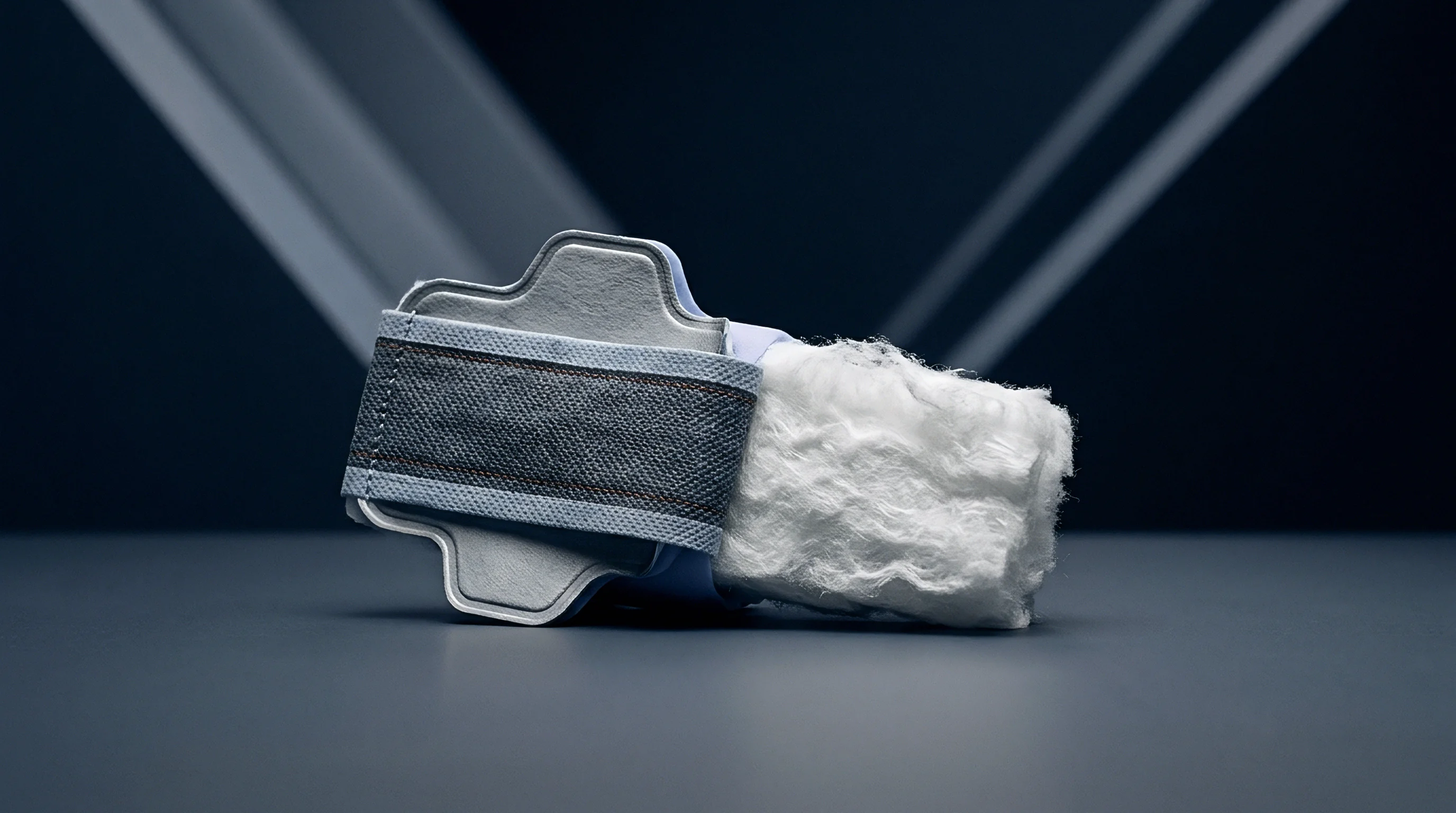
Controlled internal delamination protects the outer liner during creasing. As the scoring tool compresses the paperboard into the female counter-channel, internal shear stresses separate the central plies into distinct lamina. This controlled internal failure allows the inner layers to buckle inward without forcing the outer surface ply into extreme elongation.
High-strength virgin kraft boards delaminate cleanly between plies, accommodating tight fold radii. Multi-ply recycled boards containing weak starch binders or brittle recycled fibers either fail to delaminate internally or split completely through the thickness, transferring peak tensile strain to the exterior face.
The geometry of the scoring wheel dictates the strain field imposed on the packaging liner. Sharp creasing profiles create intense shear planes over narrow widths, concentrating tension in the outermost surface fibers. Rounded creasing profiles distribute displacement across a wider deformation zone, lowering the local strain magnitude below the rupture threshold.
Converting engineers adjust creasing rule depth based on sheet thickness and cross-direction elongation data derived from tensile protocols. Thicker recycled grades demand broader female channels to prevent excessive tensile strain generation during the fold.
Rotary die-cutting operations combine rapid shear compression with immediate tensile deformation. Anvil blanket wear shifts the penetration depth of cutting and creasing rules across the cylinder width. When blanket surfaces wear down by more than 1.5 mm, creasing rules compress the board against irregular urethane surfaces, imposing asymmetric tensile strain profiles along parallel scores.
Recycled liners with CD strain at break below 2.5 percent crack predictably under these uneven mechanical conditions, causing elevated scrap rates on automatic packing lines.

Converting Trial Evaluation Sequence
- Specimen sampling across reel positions extracts fifteen machine-direction and fifteen cross-direction strips across the drive side, center, and operator side of the parent reel.
- Environmental stabilization holds cut strips in climate cabinets at 23°C and 50 percent relative humidity for a verified twenty-four-hour cycle.
- Tensile strain screening measures elongation at break on calibrated tensile frames under ISO 1924-2 parameters, flagging lots with cross-direction values below 2.8 percent.
- Benchtop scoring verification forms ninety-degree test creases on laboratory creasing matrix devices under controlled anvil penetration depths.
- Fold resistance measurement records bending moment and visual surface cracking under high-magnification stereomicroscopy along the creased ridge.
- Line-speed converting run processes two thousand blanks through the folder-gluer at operational velocity, tracking carton flap splits and glue-joint alignment.
Field failures escalate rapidly when low-strain testliners enter automatic case erector equipment. Mechanical suction cups pull folded carton blanks square against mechanical flight bars. The erection stroke imparts dynamic torsional tension across every body crease.
When converted boards carry marginal tensile strain capacity, the sudden mechanical impulse tears the corner scores before the bottom flaps fold into position. The entire packing line halts, backing up upstream production lines and incurring substantial downtime losses.
Whether modern high-yield recycled containerboards can achieve four percent cross-direction strain without prohibitive chemical additions remains an active engineering dispute across major packaging converting networks.
Audit
Mill test certificates document batch properties against contractual parameters, but their figures demand rigorous commercial scrutiny. Mills frequently report tensile data generated under rapid screening speeds or historical furnish averages rather than real-time reel testing. Sourcing managers verify whether cited values represent single specimen breaks or genuine ten-test statistical averages conforming to ISO 1924-2 mandates.
A certificate displaying an impressive mean tensile index can obscure an unacceptable standard deviation across the trim width, hiding localized low-strain zones that fail on converting machinery.
Verification testing requires structured acceptance sampling protocols. Standard quality agreements reference ISO 2859-1 general inspection level II, establishing lot acceptance limits based on a specified Acceptable Quality Level. Receiving facilities cut test specimens from delivered reels, rejecting the outermost wraps to avoid handling damage and ambient moisture absorption.
If the mean tensile strain at break falls below the purchase order specification by more than two standard errors of the mean, the lot moves into quarantine status pending referee laboratory analysis.
Priced substitution mechanisms penalize converters who accept downgraded containerboard without verification. Virgin kraftliner commands price premiums over recycled testliner grades due to superior strength-to-weight ratios and higher strain capacity. Mills experiencing furnish shortages occasionally blend higher ratios of mixed paper waste into nominal testliner 2 grades, rebranding the product without adjusting list prices.
The resulting material meets basic burst specifications while suffering severe drops in tensile energy absorption and elongation capacity. Converters run these unverified substitute grades at reduced machine speeds to avoid hinge cracking, forfeiting press productivity.
Downgauging projects present severe technical risks when managed solely on basic weight calculations. Replacing a 175 g/m² recycled testliner with an advanced 140 g/m² grade reduces raw paper purchase costs by twenty percent per delivered metric ton. The thinner sheet carries less total fiber mass to distribute converting strain.
Unless the mill engineers higher tensile elongation into the lighter sheet through intensive stock refining and micro-creping, the carton scorelines fail on the folder-gluer. The apparent tonnage savings vanish beneath elevated converting spoilage and customer reject claims.
Section 7.2 of standard containerboard supply agreements dictates that delivered material failing to satisfy cross-direction strain minimums under ISO 1924-2 testing within fourteen days of arrival authorizes the buyer to reject the entire shipment at the mill’s expense, including freight and converting downtime charges.