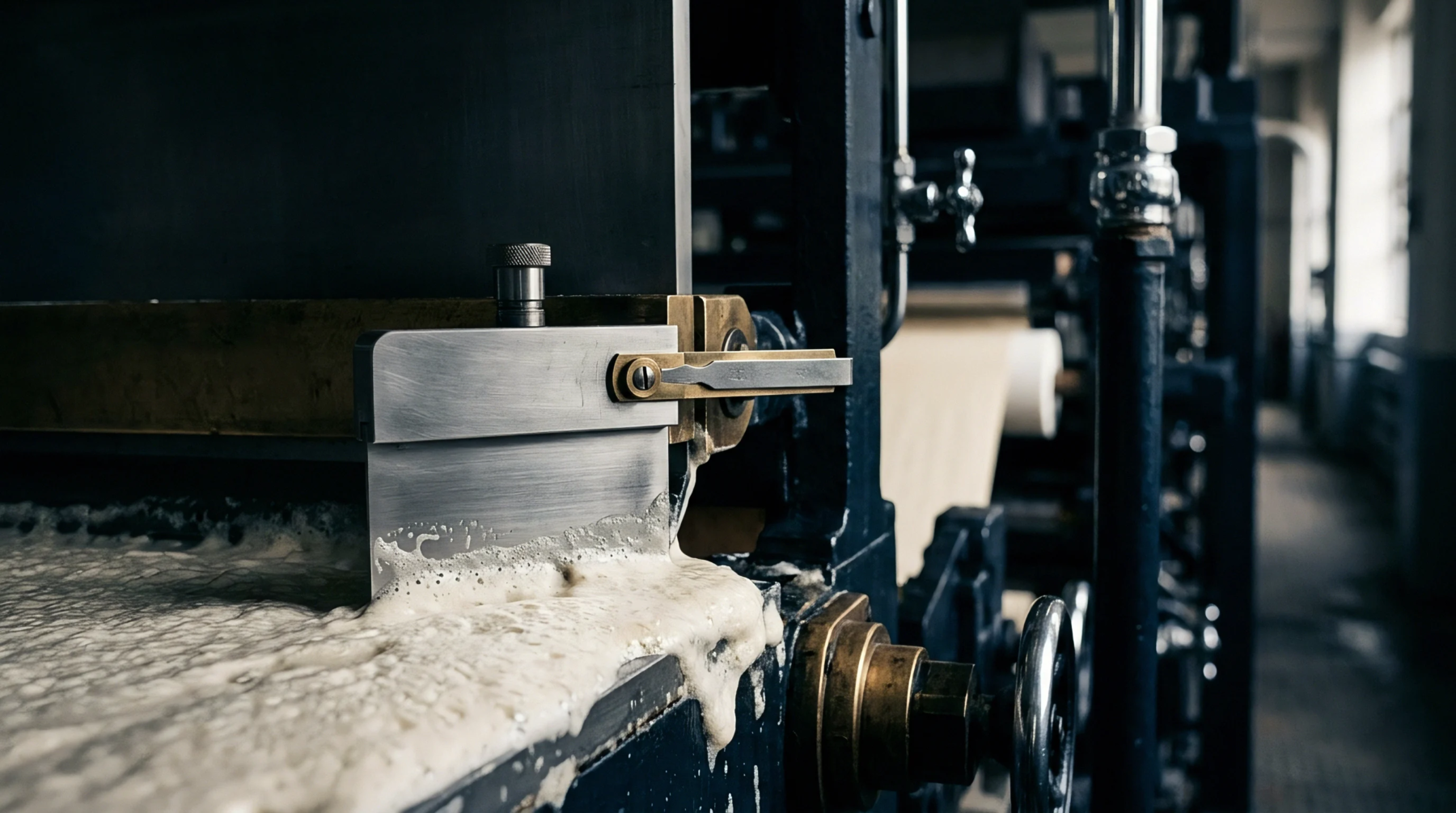
Volumetric Migration
Movement of a measured quantity of liquid from an engraved cylinder to a flexible plate and then to a receiving substrate defines the printing efficiency of a rotary system. Effective flexographic ink transfer relies on the differential surface energy between the cells of the anilox roll and the photopolymer surface. The volume of fluid moved dictates the final color density and the sharpness of the printed image.
Interface Performance
Contact between the raised image areas and the paper surface facilitates the physical displacement of the ink film. Maximizing flexographic ink transfer requires precise control over nip pressure to avoid squashing the dots while ensuring full coverage. Poor release from the anilox cells results in light prints and uneven solids, while excessive transfer causes filling in of fine text and halftone screens.
Substrate smoothness also influences the percentage of ink that moves from the plate, as rougher papers require a thicker film to reach the bottom of the surface valleys.
Viscosity Influence
Fluidity of the ink affects the speed at which it can fill and empty the microscopic anilox cells. When flexographic ink transfer is inhibited by high viscosity, the cells do not empty completely and the print becomes starved of color.