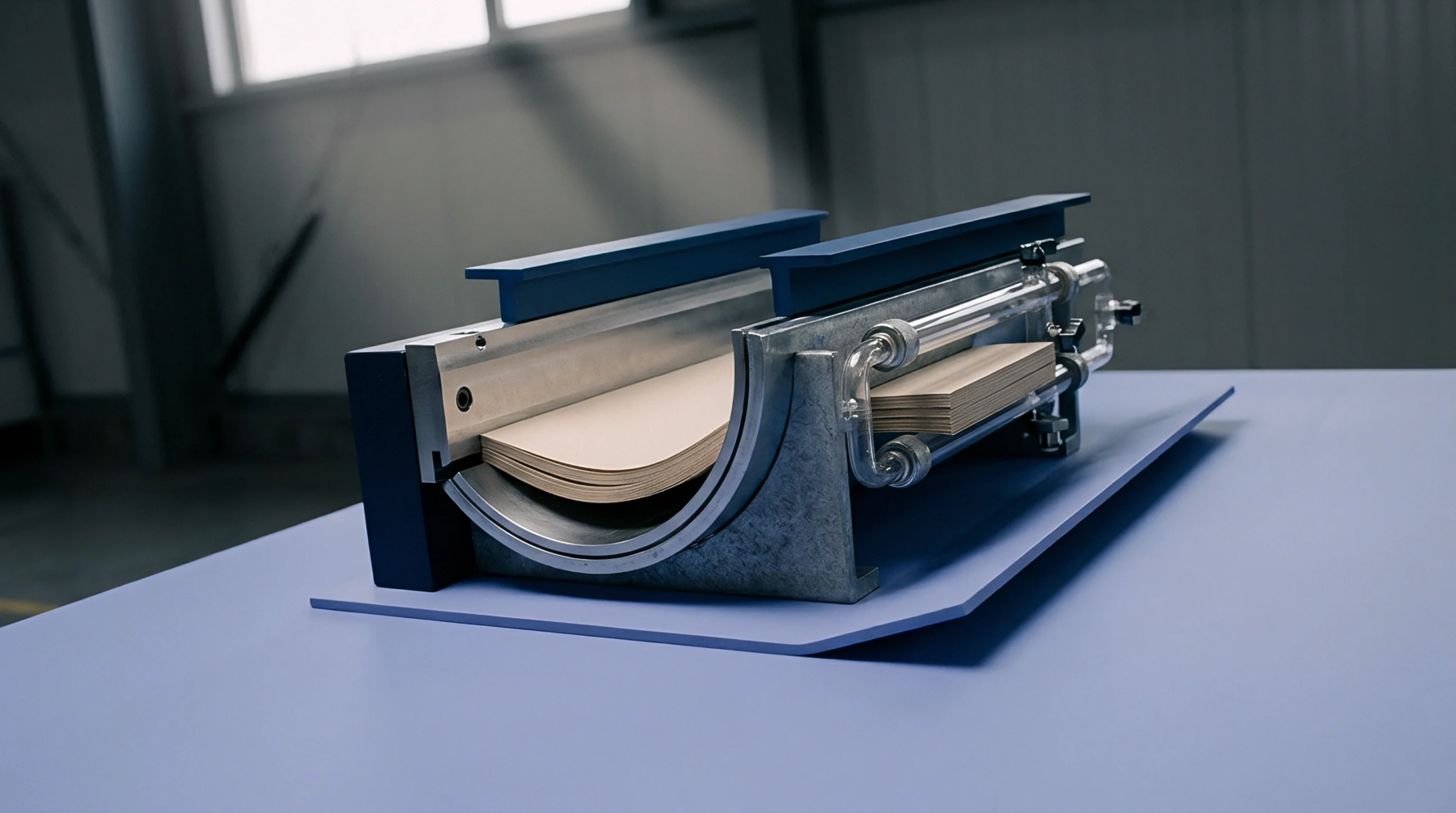
Thick Plate Mechanics
Mathematical framework for analyzing the bending and vibration of plates that accounts for the effects of transverse shear deformation through the thickness. Application of mindlin plate theory is necessary when the thickness of a material, such as a heavy corrugated board or a thick sandwich panel, is large relative to its length and width. Unlike simpler models, this approach does not assume that a cross section remains perpendicular to the neutral axis after bending.
It provides a more accurate prediction of the stiffness and deflection for substrates where the core is relatively soft.
Analytical Precision
Including the shear terms allows for a better understanding of how the internal layers of a composite panel contribute to the overall structural response. For thin papers, the shear effects are negligible, but for structural packaging, they represent a substantial portion of the total deformation. The equations associated with this model include a shear correction factor to account for the non uniform distribution of shear stress across the thickness.
This level of detail is required for the simulation of complex packaging geometries under impact or high stacking loads.
Theory Comparison
The model extends the kirchhoff-love theory to include materials where shear stiffness is low.