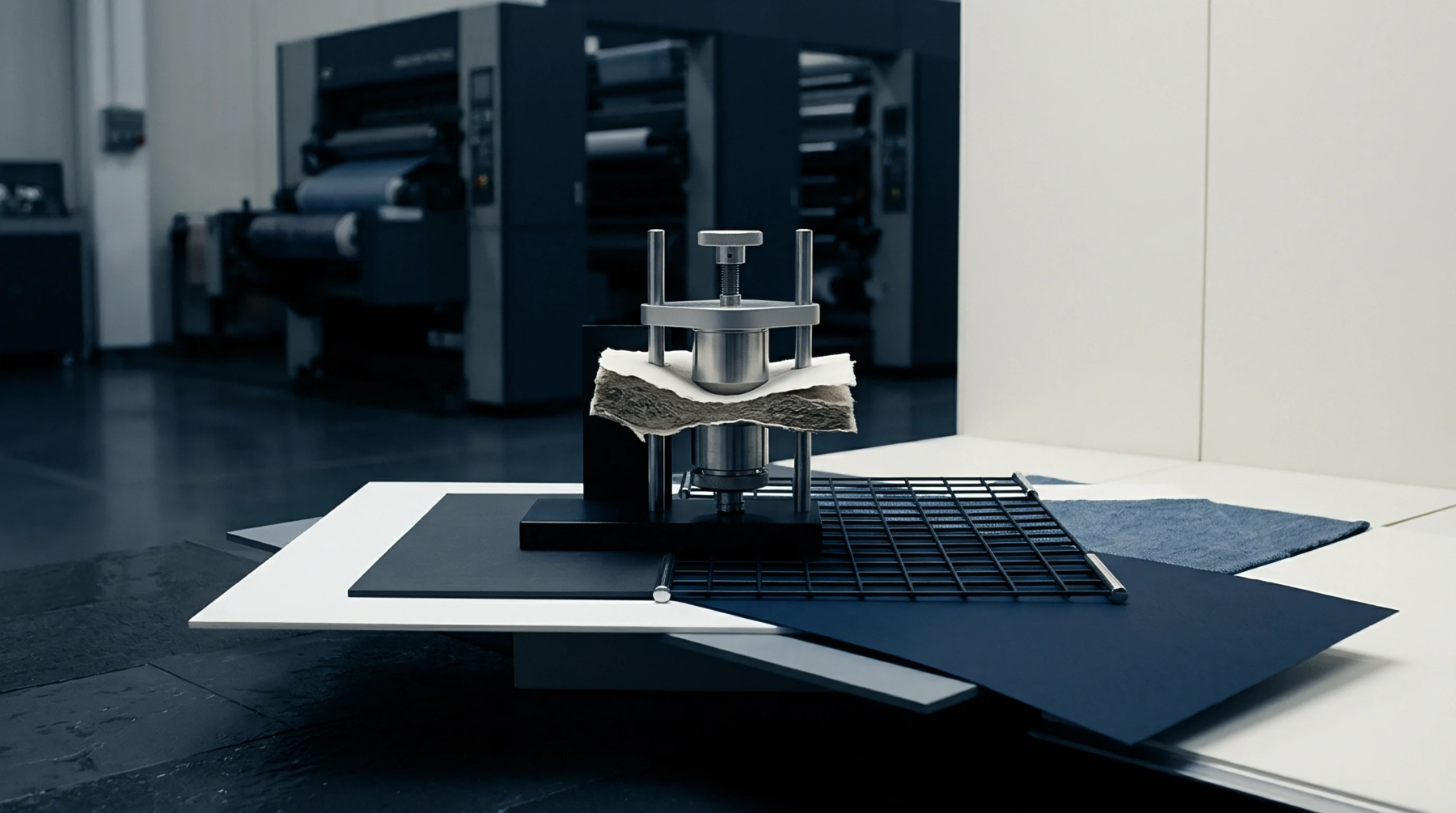
Mechanical Retention
Structural folding performance evaluates the capacity of scored paperboard to fold ninety or one hundred and eighty degrees without rupturing outer plies or collapsing carton edges. In packaging manufacturing, score crease integrity quantifies the retention of tear strength, barrier coatings and internal shear cohesion across carton score lines. The parameter determines whether folding cartons erect cleanly on packaging machines without panel bowing or corner pinholes.
Its evaluation does not apply to uncreased flat blanks or corrugated medium fluting profiles.
Board Delamination
Controlled internal ply separation enables thick paperboard to fold cleanly without cracking top liner surfaces. When a male creasing rule presses board into a female groove, shear forces deliberately break internal fiber-to-fiber bonds across the z-axis. This deliberate internal delamination creates a flexible hinge made of multiple unbonded plies that slide over one another during folding.
Insufficient rule penetration leaves the sheet rigid, forcing outer tension plies to fracture and expose base fibers. Excessive penetration crushes board fibers completely, destroying joint stiffness and carton stacking strength.
Converting Performance
High-speed cartoning machines demand uniform fold resistance to maintain square carton profiles during erection and sealing. Automated folding packaging lines run at hundreds of cartons per minute, where defective creases cause feed jams and skewed flap alignment. Barrier-coated boards designed for chilled foods require unbroken surface plies to keep moisture and grease away from unbleached kraft layers.
Creasing tool geometry and board moisture content between six and eight percent determine the outcome of score crease integrity. Dry board below five percent moisture suffers severe liner cracking under standard rule profiles. Correct creasing tool geometry preserves both visual graphic appearance and functional moisture barriers around every carton corner.