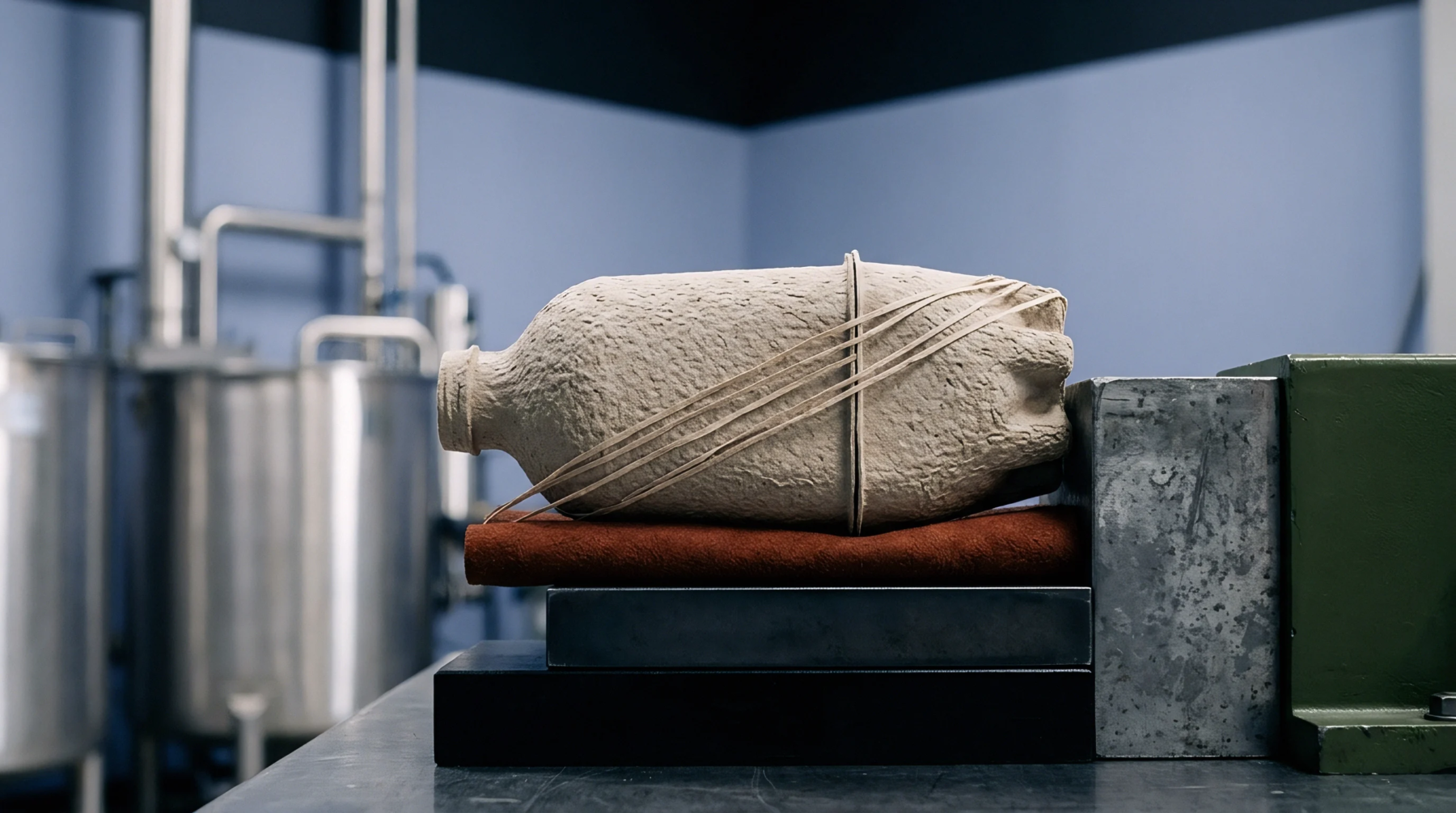
Extraction Fixture
Specialized laboratory hardware secures planar packaging specimens within a sealed clamp to isolate a single contact surface for controlled liquid or gas extraction testing. By sandwiching a sheet of paper, paperboard, or barrier-laminated board between an inert sealing flange and a food simulant reservoir, the single-side migration cell exposes only the intended functional food-contact layer to testing fluids. This mechanical exposure configuration prevents edge-wicking into open paper cores and blocks lateral extraction from the non-contact side, which typically bears decorative inks, coatings, or secondary recycled plies.
Testing scopes exclude multi-dimensional packaging articles like formed containers, focusing exclusively on flat web specimens assessed under formal compliance standards such as EN 1186. Laboratories depend on this design to measure overall and specific migration limits from direct-contact plies intended for dry, aqueous, acidic, and fatty foodstuffs.
Mechanical Assembly
Construction materials utilize chemically inert metals and fluoropolymers, primarily high-grade stainless steel and polytetrafluoroethylene gaskets, preventing background contamination during exposure cycles. Operators place the circular or square packaging specimen face-down against the open fluid chamber, securing the assembly with uniform torque through perimeter bolts or mechanical clamping rings. The cell reservoir fills with liquid simulants, such as water, acetic acid, ethanol solutions, or vegetable oil substitutes like modified polyphenylene oxide for high-temperature testing.
An internal seal eliminates headspace evaporation and maintains a fixed ratio of contact area to simulant volume, typically calibrated to six square decimetres of test surface per kilogram of simulant. The loaded unit then resides inside a temperature-controlled oven for durations ranging from hours to several days, replicating target storage conditions.
Substrate Assessment
Testing porous paper and paperboard without this fixture introduces substantial analytical error by allowing liquid simulants to saturate the exposed cut edges of the specimen. Conventional total immersion submerges the sample completely, drawing simulants into the fibrous core and leaching substances from reverse-side printing inks or internal wet-strength chemistry that would never contact food in normal commercial use. The single-side migration cell stops this cross-contamination, ensuring that measured migrants represent only compounds passing through the protective barrier coating or functional packaging face.
If a coated board fails specific migration criteria inside this cell, converters pinpoint chemical breakthrough directly to pinholes, inadequate coat weights, or insufficient barrier curing rather than edge penetration.