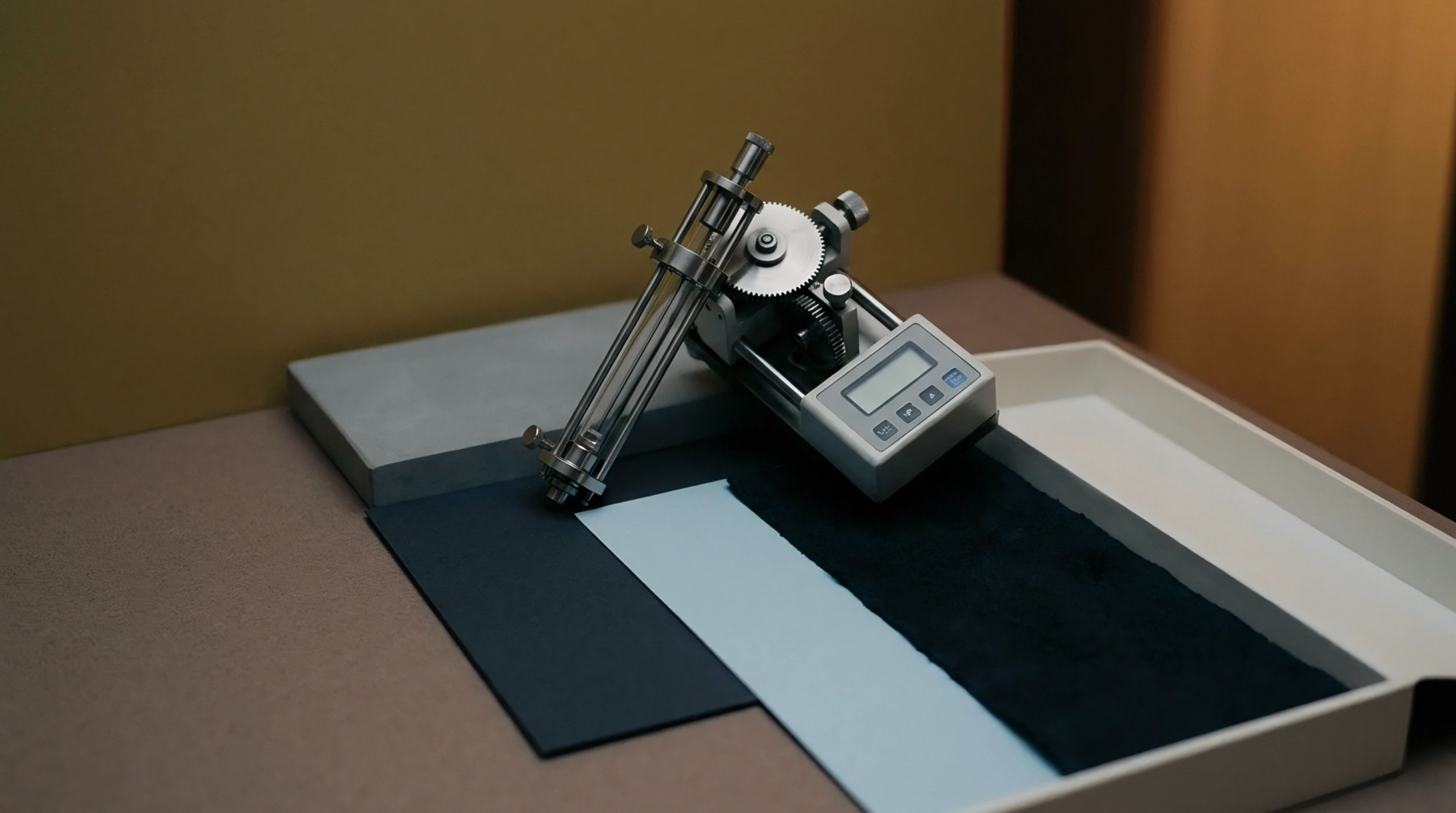
Anvil Component
Precision-machined steel plates containing milled counter channels act as rigid female tooling during flat-bed die-cutting and creasing of high-volume paperboard blanks. Steel counter plates provide backing support that forces paperboard substrate into milled grooves to create uniform crease lines across large sheet formats. Application covers high-speed converting of solid bleached board, coated unbleached kraft, folding boxboard, and micro-flute packaging, terminating where hand-cut creasing matrix strips or phenolic counter boards are substituted.
Impression Precision
Milled channel geometry on hardened steel plates dictates score definition and prevents board surface tearing under high press tonnage. During long press runs, steel counter plates maintain dimensional stability under cyclic compressive loads, preventing channel widening that degrades crease definition over time. Micro-milled position locating pins align the counter plate precisely with the male die board.
Channel depth and chamfer angle control substrate stretching during rule penetration. Surface hardness treatment prevents groove scarring from misaligned steel rules. Temperature variations on the press bed must be controlled to prevent thermal expansion from altering registration accuracy.
Clean counter channels prevent debris buildup that alters crease depth. Plate thickness calibration ensures uniform impression pressure across the entire cutting area.
Tooling Durability
High-volume packaging production relies on dedicated counter plates to achieve fast job changeovers and repeatable creasing quality across repeated order runs. In long-run converting, steel counter plates eliminate score variation caused by matrix strip wear. Exact channel alignment reduces press makeready duration.
Rigid plate construction prevents substrate marking.