Axial Shift
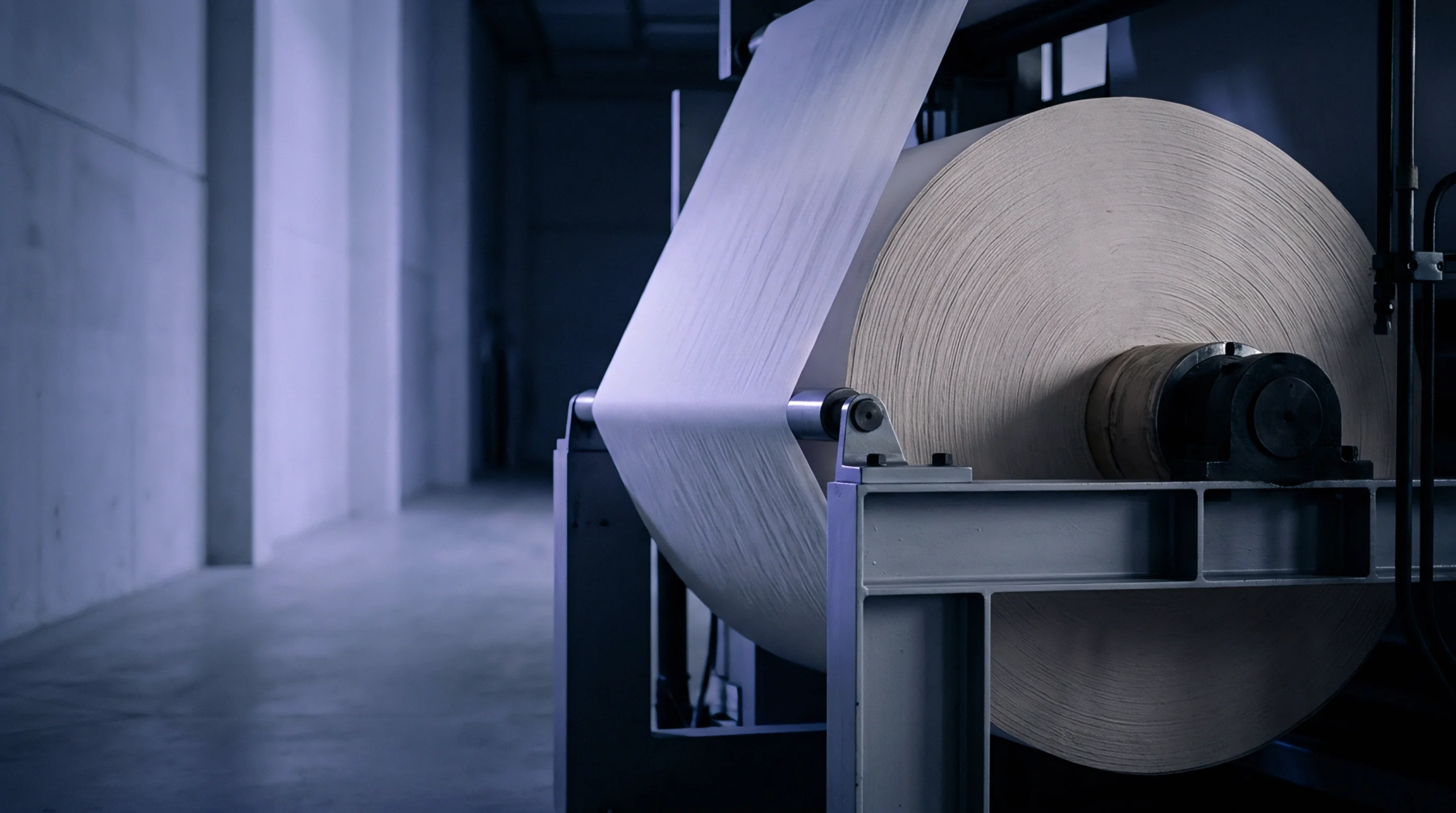
Progressive axial displacement occurs in paper rolls when adjacent wraps slip laterally relative to one another to form a funnel or cone shape. Roll handling defines telescoping rolls as a structural winding defect where paper layers shift axially along the central core during winding, storage, or unwind operations. Irreversible lateral movement destroys roll squareness and damages web edges.
Winding Friction
Winding tension gradients combined with low interlayer friction allow paper wraps to slide sideways under mechanical axial loads. Smooth surface coatings, high moisture content, or entrapped air boundary layers lower the friction coefficient between adjacent paper wraps. When rolls experience sudden axial impacts from clamp trucks or abrupt deceleration during unwinding, stored internal shear stresses force layers to step outward axially.
Progressive layer displacement exposes web edges to mechanical tearing and moisture absorption. Unwinding a telescoped roll causes severe web alignment errors, continuous edge guide hunting, and frequent web breaks on converting machines. Preventing axial displacement requires optimizing winder nip pressure, reducing air entrapment using grooved rider rolls, and controlling ambient storage humidity.
Unwind Boundary
End-face alignment checks measure axial offset relative to core position to determine whether a roll meets unwind machine specifications. Severely telescoped rolls cannot be safely mounted on standard unwind stands and must be discarded or sent to specialized rewinding facilities. Telescoping rolls represent a primary cause of material loss and web disruption in paper converting operations.