Asymmetrical Distortion
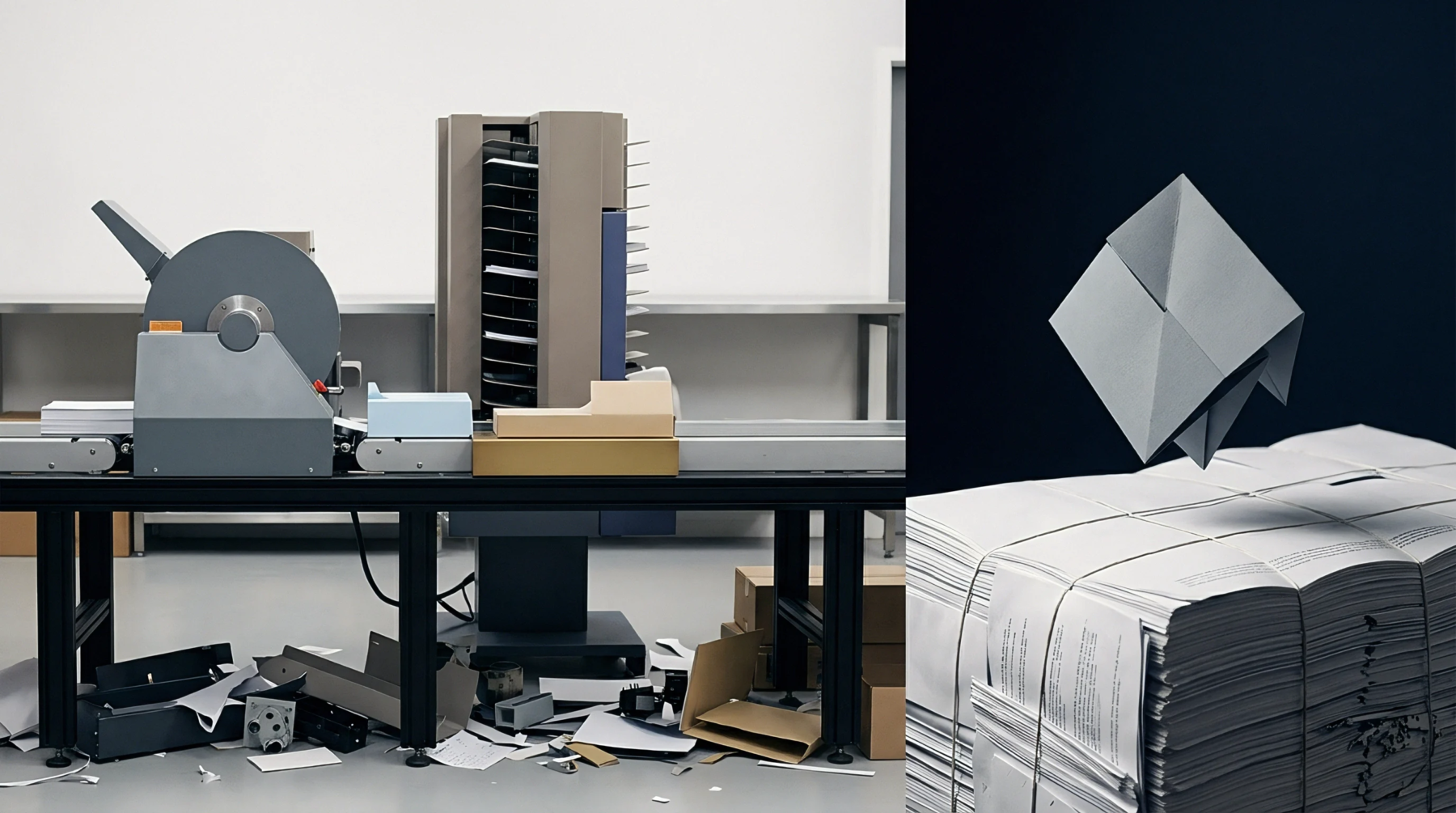
Curving of a printed sheet or web occurs when different layers of a composite material expand or contract unevenly due to temperature changes. Paperboards laminated with plastic films or treated with heavy coatings are particularly susceptible to thermal curl when they pass through heated drying ovens or UV curing stations. This curvature makes the sheets difficult to stack, feed, or die-cut in subsequent steps.
Thermal Expansion
Heating the sheet causes the plastic film or heavy ink layer to expand at a different rate than the underlying paperboard. When the sheet cools, the faster contraction of the plastic layer pulls the board toward it, creating a curved surface. This effect is compounded if the paper has been dried excessively by the heat source, causing the paper fibres to shrink as well.
The resulting warp can cause sheets to jam in the feeder of the die-cutter, resulting in costly downtime and wasted materials.
Correction Method
Process operators adjust the intensity of the drying lamps and the speed of the press to minimize the heat input to the sheet. Installing chill rollers immediately after the heat source helps cool the sheet quickly and evenly, reducing the development of internal stresses. By maintaining a balanced temperature profile, converters can produce flat, easy-to-handle sheets.