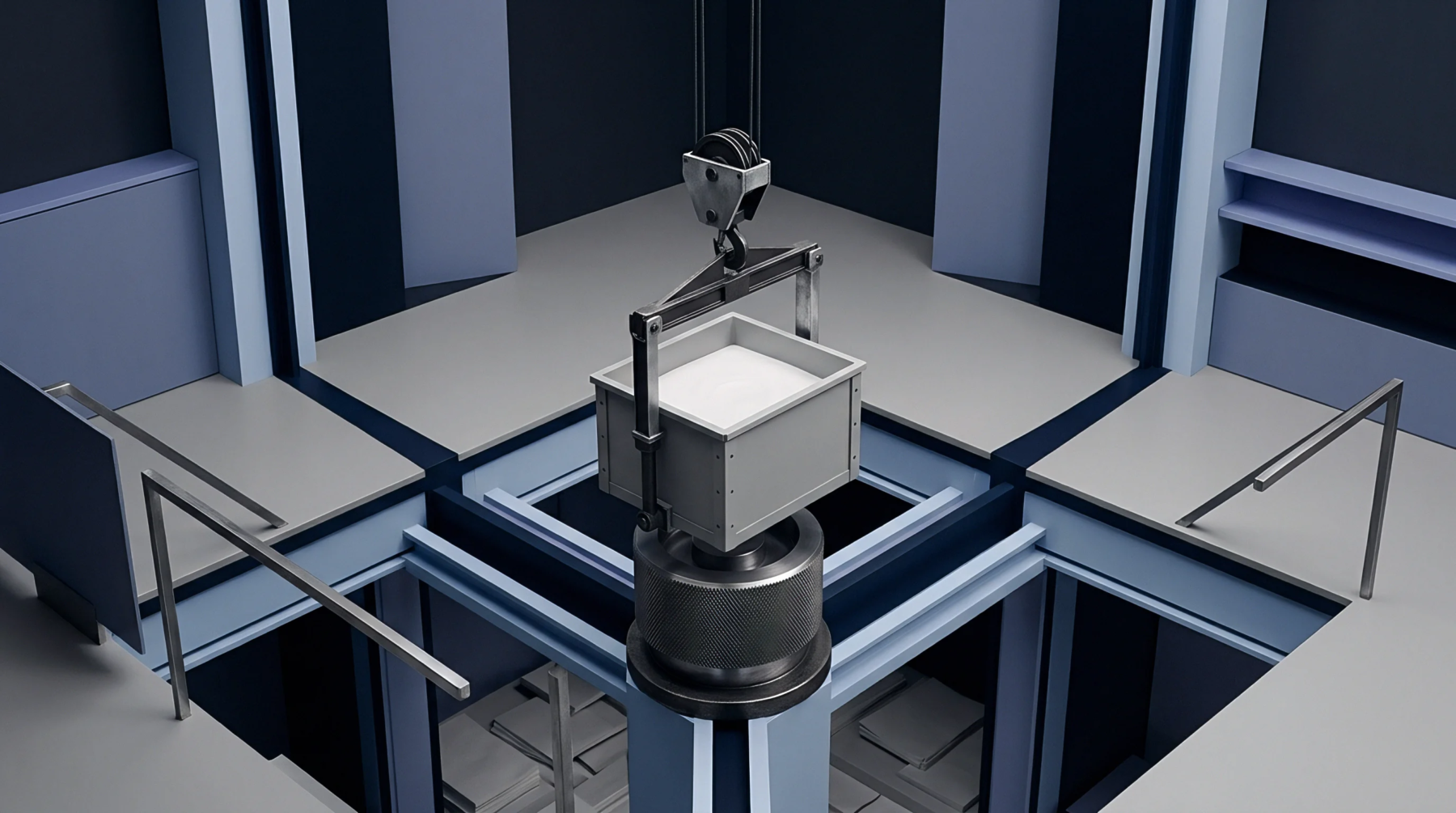
Dewatering Machine
Heavy-duty twin-roll or screw-type mechanical dewatering equipment cleans chemical wood pulp beds by sequentially combining liquor displacement with high-pressure consolidation. In continuous operation, the wash press receives stock at medium consistencies of three to ten percent solids and discharges a consolidated fiber sheet at consistencies reaching twenty-five to thirty-five percent solids. Perforated press rolls or screw screen baskets extract unbound mother liquor under pressure, while intermediate displacement zones inject cleaner wash liquid into the compacted pulp mat before final nip consolidation.
Operating limits exclude low-consistency slurries lacking rapid drainage characteristics and mechanical slurries prone to fiber shearing under extreme nip forces.
Dewatering Zones
Processing across parallel counter-rotating perforated rolls proceeds through clearly delineated mechanical stages. Slurry enters an enclosed headbox that distributes fibers across the perforated roll faces, forming twin mats under moderate hydraulic feed pressure. Rotation carries the mats past displacement wash showers located along the converging circumference, where clean filtrate displaces concentrated black liquor through the perforated roll shells into internal collection troughs.
Continued rotation forces the two distinct fiber mats into a converging press nip. Here, high mechanical linear loads squeeze interstitial liquid out of the web, raising discharge consistency and breaking the liquid boundary layers that trap dissolved organics.
Operational Efficiency
Mechanical expression of liquid in high-consistency presses delivers washing efficiencies far surpassing conventional vacuum drum filters. By discharging pulp at consistencies above thirty percent, these machines dramatically lower the carryover of black liquor solids into subsequent bleaching or stock preparation areas. The massive reduction in carried liquor volume allows modern pulp mills to reduce overall dilution factors, directly slashing steam consumption in evaporation plants by presenting a much higher solids feed.
Minimized chemical carryover protects downstream papermaking additives, improves the efficacy of wet-end sizing agents, and eliminates foaming on high-speed packaging board forming tables.