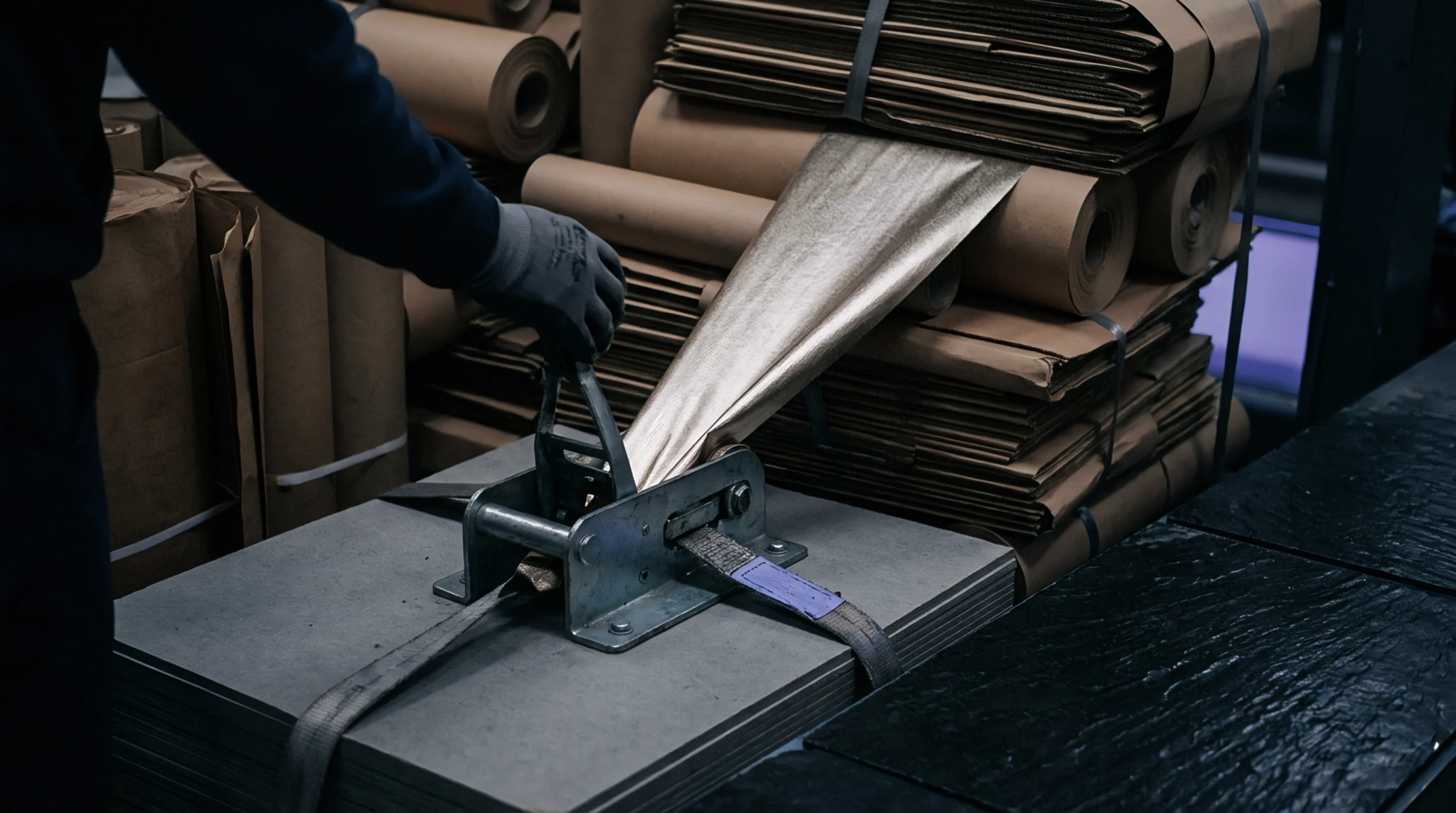
Plasticity Boundary
Mechanical limit marks the point where a material ceases to be elastic and begins to stretch permanently. Beyond the point of yield elongation, any further tension causes the molecular structure of the film or paper to slide past itself. This change is irreversible and usually signals the end of the functional life for a structural component.
Designers use this value to set the safe operating limits for packaging materials.
High Speed Converting
Operations such as deep draw vacuum packaging or heavy embossing push materials toward their deformation limits. Monitoring yield elongation prevents the material from thinning out too much or snapping during these processes. A film with a high yield point can be stretched further into a mould without losing its protective properties.
Standard Testing
Determining this property involves a steady pull on a sample until the resistance stops increasing linearly. The yield elongation value is recorded as a percentage of the original length. For many polymers, this point is clearly visible as a dip or a plateau in the stress graph.
Paper typically has a much lower yield point than plastic due to its rigid fibre network. Understanding these boundaries allows for the selection of the right substrate for complex shapes. Measurements are usually taken in both the machine and cross directions to account for the anisotropy of the material.
High precision load cells are used to capture the exact moment the transition occurs.