Recovered Paper Moisture Testing and Commercial Allowance Calculation
Excess recovered paper moisture requires gravimetric or microwave testing to adjust invoiced weights using proportional dry fibre ratios instead of point subtraction.
Limit
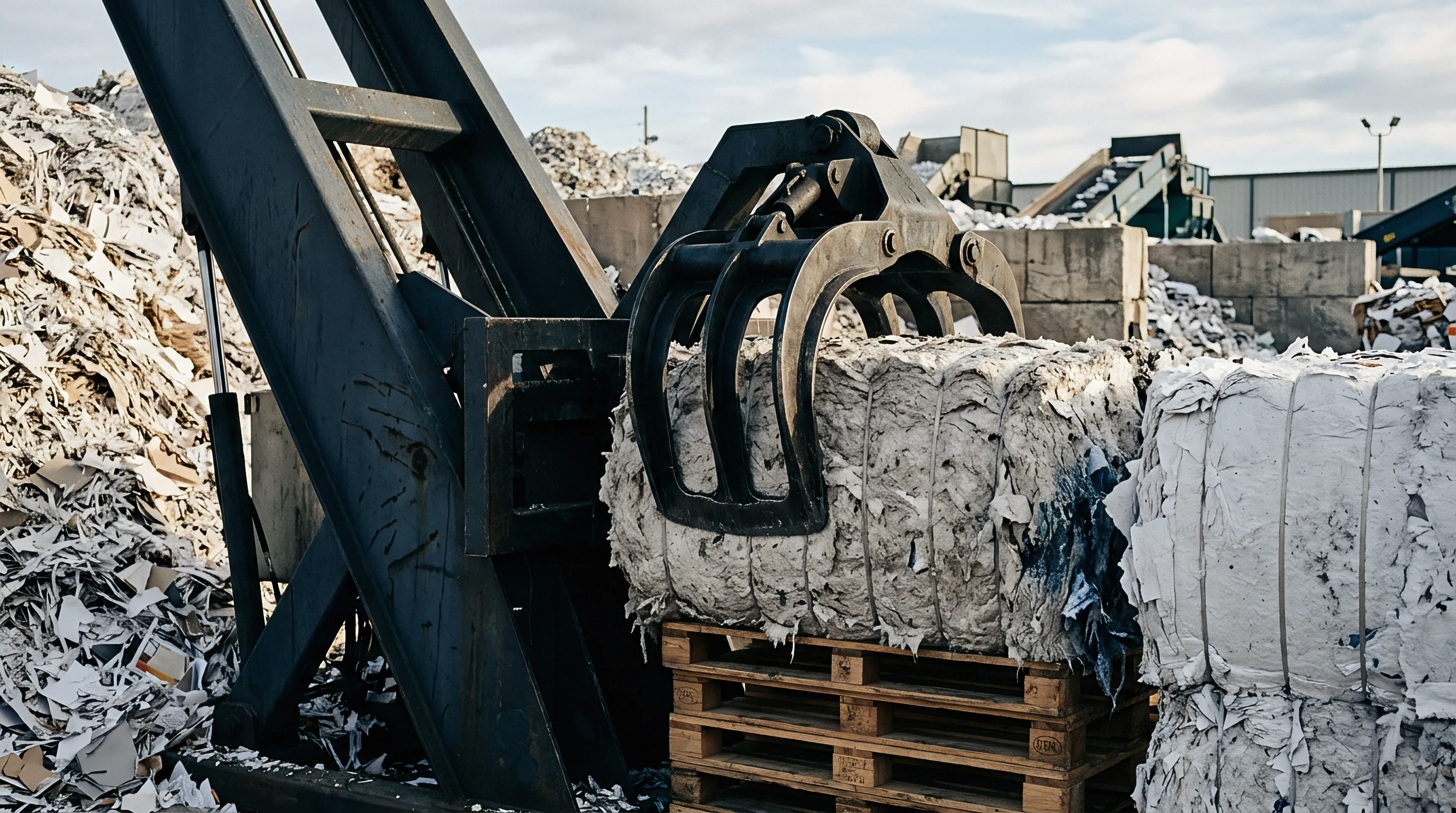
Commercial transactions in recovered paper operate on the trade of dry cellulose fibre. Water contained within incoming recovered paper bales increases vehicle weight at the weighbridge without contributing usable papermaking mass. Under European standard EN 643 and the Institute of Scrap Recycling Industries scrap specifications circular, recovered paper grades carry defined moisture limits alongside maximum non-paper component tolerances.
The commercial reference moisture content sits at 10 percent of total gross weight across most packaging grades, including old corrugated containers (EN 643 grade 1.05) and mixed papers (EN 643 grade 1.02). Certain publication grades, such as sorted graphic paper for deinking (EN 643 grade 1.11), set baseline contractual tolerances at 8 percent or 9 percent.
When gross moisture exceeds the agreed threshold, moisture tare deductions take effect. Delivery of water above the contractual standard dilutes the true yield of the pulper, consumes unnecessary thermal energy in drying cylinders, and inflates raw material costs. Mill contracts incorporate moisture adjustment mechanisms to protect pulping yield.
The buyer pays for delivered fibre adjusted to standard moisture equilibrium. Excess water beyond that equilibrium represents weight purchased at the full price of recovered fibre, unless an explicit commercial allowance reduces the invoiced tonnage.
Under standard European procurement terms, billing weights adjust downward whenever certified moisture exceeds 10 percent of gross delivery mass.
Recovered paper acts as a hygroscopic material. Cellulose fibres absorb and desorb atmospheric water vapour until equilibrium moisture content aligns with surrounding ambient relative humidity and temperature. Bales stored in unroofed recovery yards throughout prolonged rain events absorb significant surface and interstitial water.
Moisture within poorly stored bales penetrates past the perimeter wires into the compressed core over weeks of storage. Standard delivery agreements anticipate seasonal moisture shifts between 8 percent in dry summer storage and 12 percent under wet winter transit. Disputes arise when shipments exceed 12 percent, moving from normal atmospheric equilibrium into deliberate or negligent water loading.
Standard purchase specifications distinguish between normal moisture content, excess moisture, and outthrows. Non-paper components like plastic films, adhesive tapes, metal strapping, and waxes represent distinct contaminations governed by separate deduction formulas. Moisture testing isolates water weight from these non-combustible or foreign components to establish an accurate mass balance.
When a receiving mill identifies high moisture content, formal sample testing protocols commence prior to unloading.
CEPAC standard clauses define 10 percent air-dry moisture as the universal pricing baseline, which converts every recorded point of excess water into a direct, non-negotiable deduction against payable invoice weight.


Probe
Field screening of incoming recovered paper shipments on arrival demands rapid, non-destructive measurement across multiple points. Receiving yards process dozens of flatbed trucks and shipping containers daily. Destructive laboratory drying cannot deliver immediate unloading clearance at the gate.
Rapid testing relies on handheld electronic moisture meters utilizing electrical conductivity, dielectric permittivity, or radio-frequency microwave attenuation.
Electrochemical and Physical Meter Mechanics
Direct insertion resistance meters use insulated twin stainless steel probes driven into the bale between strapping wires. The instrument measures electrical resistance between the probe tips. Dry cellulose demonstrates high electrical resistivity, whereas moisture containing dissolved ions conducts electric current.
Resistivity measurements reflect moisture concentration immediately adjacent to the needle tips. These devices operate reliably between 7 percent and 18 percent moisture levels. Readings above 20 percent lose accuracy as free interstitial water saturates the conduction pathway.
Surface contact probes evaluate dielectric constants using radio-frequency capacitance fields, penetrating to depths between 50 and 100 millimetres. While surface probes enable non-penetrative scanning across bale faces, they systematically underestimate core moisture in wet-centred bales.
| Instrument Architecture | Operating Principle | Insertion Depth | Measurement Span | Standard Error Band |
|---|---|---|---|---|
| Dual Pin Resistive Probe | Direct electrical conductivity | 250 to 500 mm | 6.0% to 22.0% | Plus or minus 1.2% |
| Dielectric Surface Sensor | High-frequency capacitance | 50 to 100 mm | 5.0% to 18.0% | Plus or minus 1.8% |
| Microwave Resonator Spear | Phase shift attenuation | 500 to 1000 mm | 4.0% to 35.0% | Plus or minus 0.6% |
| Fixed Core Microwave Gate | Resonance transmission | Full bale penetration | 3.0% to 40.0% | Plus or minus 0.4% |
Microwave moisture measuring systems represent the most accurate electronic technology available for intake verification. Water molecules possess a strong electric dipole moment. When subjected to high-frequency electromagnetic radiation between 1 GHz and 10 GHz, polar water molecules rotate to align with the alternating field, producing measurable phase shifts and attenuation of the signal.
Microwave spear systems measure moisture along a continuous linear zone deep within the bale, minimizing the skew caused by localized surface wetting or dry surface crusts.
When Do Surface Readings Fail Deep Bales?
Bale density variations introduce direct errors into electrical and dielectric meter readouts. A bale compressed to 500 kilograms per cubic metre contains more cellulose fibres and mineral ash per unit volume than a bale packed at 300 kilograms per cubic metre. Higher density increases contact area across electronic pins, causing the meter to register an artificially elevated moisture level unless calibrated against specific density scales.
High concentrations of electrolytes, such as road salt contamination from winter collection or starch adhesives in corrugated board, distort electrical conductivity.
- Density calibration offset occurs when field operators fail to adjust meter settings between loosely baled residential collections and high-density industrial offcuts.
- Conductive mineral contamination alters resistance readings because soluble salts accelerate electron transfer independently of cellulose water saturation.
- Thermal gradient divergence distorts dielectric readings when cold exterior packaging shells enter heated warehouse testing docks.
- Surface evaporation drying creates a brittle exterior crust that conceals saturated cores exposed to open-wagon transit rain.
Suppliers routinely contend that transit rain dampens only the outer five centimetres of strapping faces while the core stays perfectly dry.

Oven
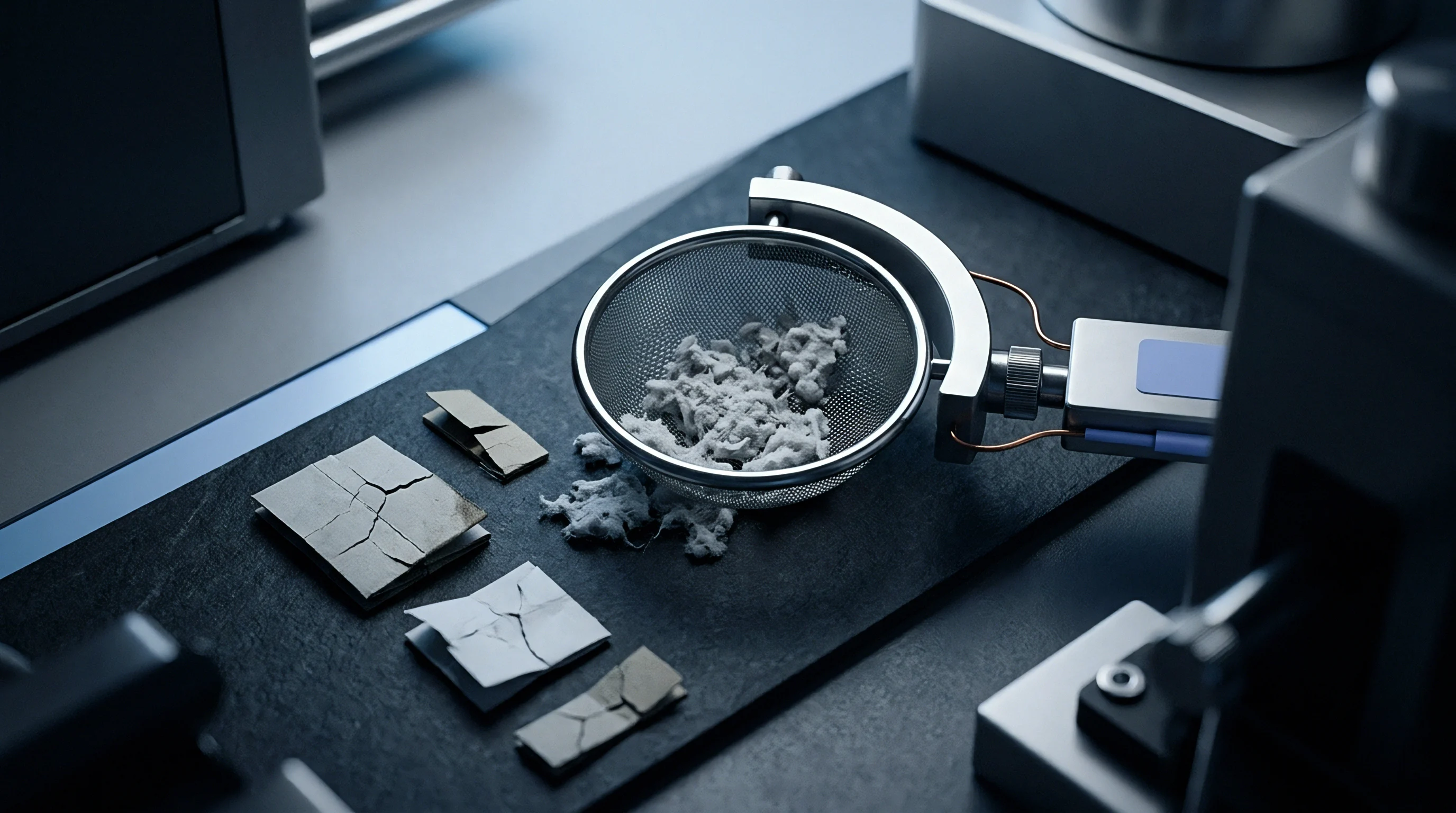
Gravimetric oven drying serves as the undisputed referee method under ISO 287 and EN 20287. Contractual arbitrations dismiss handheld meter records whenever moisture findings trigger financial penalties or shipment rejections. When an intake dispute arises, the receiving mill and the supplier must follow standardized gravimetric extraction protocols to establish definitive lot moisture content.
Standard Gravimetric Extraction Protocol
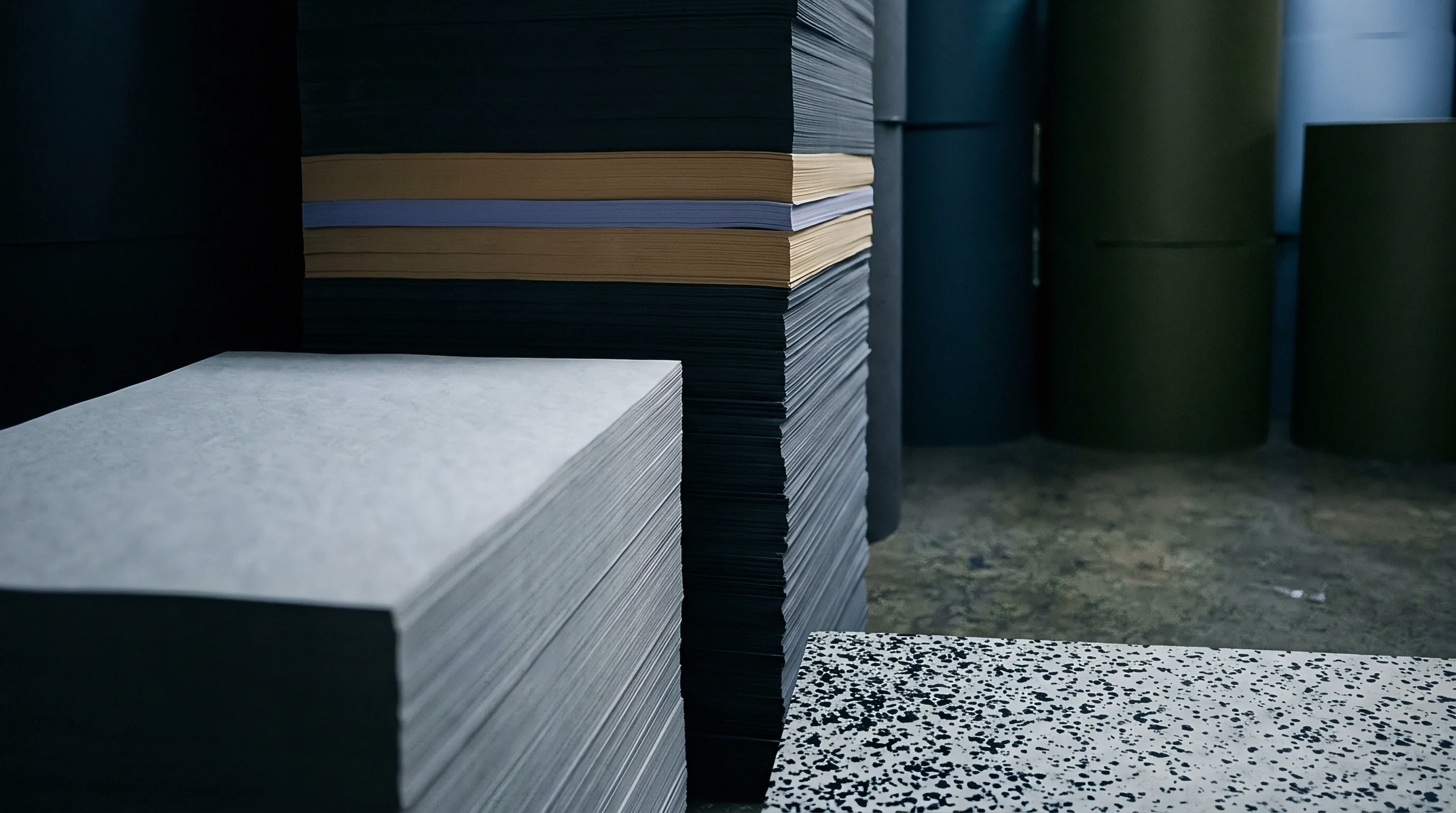
Testing requires drill-coring extraction equipment to gather cross-sectional samples throughout the mass of the bale. Under EN 20287, core drills with a minimum internal diameter of 50 millimetres penetrate at least 300 millimetres into selected sample bales. Bales selected for coring must follow statistical representative sampling, taking specimens from the top, middle, and bottom sections of the consignment.
Technicians immediately seal the extracted core shavings inside vapour-tight plastic containers or laminated aluminum pouches to prevent evaporative moisture loss during transit to the mill laboratory balance.
Laboratory gravimetric results superseding field meter readings require continuous drying at 105 degrees Celsius until mass stabilization confirms complete water evaporation.
Laboratory scales measure sample gross weight to an accuracy of 0.01 grams. Technicians transfer the extracted paper samples into ventilated drying ovens operating at 105 degrees Celsius, maintaining temperature stability within a two-degree tolerance band. The drying cycle continues until consecutive weighings, taken at intervals of at least one hour, show a mass variation below 0.1 percent of the total sample weight.
Standard testing durations range from 4 to 12 hours depending on paper caliper, basis weight, and initial wetness.
| Test Stage | Controlled Parameter | Tolerance Target | Analytical Risk |
|---|---|---|---|
| Extraction Coring | Coring speed and friction | Rotational heat below 45°C | Volatilization of core moisture |
| Vapour Containment | Bag seal integrity | Hermetic vapor barrier | Atmospheric desorption during transit |
| Initial Weighing | Ambient lab relative humidity | Balance chamber stability | Evaporation during transfer handling |
| Oven Residence | Chamber temperature | 105°C plus or minus 2°C | Thermal degradation of organic additives |
| Desiccation Transfer | Cooling chamber conditions | Silica gel desiccant active | Hygroscopic re-absorption of ambient moisture |
Sample cooling demands equal analytical rigour. After thermal drying completes, hot paper samples placed on an open balance pan induce thermal convection currents, falsifying balance readings. Samples must cool to room temperature inside sealed desiccators containing activated silica gel before the final dry weighing.
The standard formula determines moisture percentage by dividing the difference between initial wet mass and final oven-dry mass by the initial wet mass, multiplied by one hundred.
Volatile organic content introduces minor analytical error during gravimetric cycles. Certain coatings, waxes, hot-melt adhesives, and solvent-based inks evaporate at 105 degrees Celsius alongside water vapour. The loss of these volatile substances registers on the balance as moisture loss, causing a slight overestimation of true water content in heavily coated or printed recovered grades.
How commercial arbitration clauses can systematically separate volatile solvent loss from true water mass across contaminated post-industrial streams remains unsettled.

Deduction
Commercial allowance calculations convert measured moisture percentages into financial weight adjustments. The formula determines the precise tonnage deducted from the supplier invoice to ensure the mill pays solely for fibre within contractual moisture equilibrium limits. Two distinct mathematical formulas appear across global mill contracts: the direct excess moisture subtraction method and the commercial dry fibre basis method.
Commercial Weight Calculation Formulas
The standard European deduction model under EN 643 applies a direct proportional reduction based on the air-dry reference moisture baseline. Let initial gross consignment weight be represented by G, tested moisture percentage by M, and standard contractual moisture limit by S. When measured moisture exceeds standard moisture, the commercial invoice weight, designated as W, adjusts to restore agreed terms:
W = G multiplied by (100 minus M) divided by (100 minus S)
Under this formula, if a shipment arrives with 15 percent moisture against a 10 percent standard baseline, the payable mass does not drop by a simple flat 5 percent. Instead, the calculation divides the actual dry fibre fraction (85 percent) by the contractual dry fibre expectation (90 percent). The payable weight equals 94.44 percent of delivered gross tonnage, representing a 5.56 percent total billing mass reduction.
Calculating deductions as a flat subtraction of excess points deprives the buyer of legitimate compensation, because the buyer pays for excess water at dry fibre rates.
Why Do Mills Calculate Net Fibre Differently?
Certain North American and Asian mills utilize alternate invoicing conventions, applying absolute percentage deductions or tiered penalty structures. When moisture exceeds agreed thresholds, tiered penalties introduce administrative handling fees to compensate the mill for pulper energy consumption and freight charges paid on inert water mass.
- Threshold evaluation verifies whether tested moisture levels surpass the contractual base allowance, establishing whether deduction clauses activate.
- Direct mass adjustment calculates the true air-dry fibre equivalent, stripping out water mass delivered beyond standard specifications.
- Secondary penalty assessment applies surcharges when moisture exceeds critical thresholds, compensating the mill for excessive drying energy expenditure during paper machine processing.
- Freight reimbursement recovery debits proportional transport charges back to the supplier when road or ocean freight invoices include dead water tonnage.
Failure to use true dry mass ratios when adjusting invoices leaves mills paying full fibre pricing on unrecovered water mass.
The financial impact of moisture variance scales dramatically across commercial paper production. Consider a bulk delivery of 1,000 metric tonnes of European grade 1.05 (Old Corrugated Containers) priced at 160 EUR per metric tonne delivered. The contract establishes a baseline moisture standard of 10 percent.
Weighbridge intake testing and subsequent gravimetric lab verification confirm an average delivered moisture level of 14 percent.
| Calculation Parameter | Direct Point Subtraction | Dry Fibre Ratio Method | Tiered Surcharge Model |
|---|---|---|---|
| Delivered Gross Mass | 1,000.00 MT | 1,000.00 MT | 1,000.00 MT |
| Tested Consignment Moisture | 14.00% | 14.00% | 14.00% |
| Contractual Tolerance | 10.00% | 10.00% | 10.00% |
| Payable Billed Tonnage | 960.00 MT | 955.56 MT | 945.56 MT |
| Deducted Water Tonnage | 40.00 MT | 44.44 MT | 54.44 MT |
| Payable Invoice Total | 153,600.00 EUR | 152,889.60 EUR | 151,289.60 EUR |
| Financial Buyer Variance | Negative 710.40 EUR | Settlement Baseline | Plus 1,600.00 EUR |
Inadvertent reliance on direct point subtraction concedes 710.40 EUR in overpayments across a single 1,000-tonne transaction. Scaled across a containerboard mill processing 300,000 tonnes annually, flawed moisture deduction arithmetic transfers hundreds of thousands of Euros in unearned capital to raw material suppliers.


Clause
Precise contractual drafting transforms technical testing protocols into enforceable commercial protections. Dispute provisions must explicitly integrate sampling methods, arbitration authority, and chain of custody documentation. Without clearly drafted moisture clauses, mill claims face procedural rejection during formal arbitration or trade association dispute settlements.
Contractual Dispute and Arbitration Provisions
Dispute clauses must define the mandatory notification timeframe following delivery. Mills must complete screening tests and provide written notification of excess moisture to the supplier within 24 to 48 hours of intake. If the supplier disputes intake findings, standard agreements permit the dispatch of an independent certified surveyor.
The contract must identify the accredited laboratory responsible for conducting binding referee tests under ISO 287.
Arbitration clauses state liability for testing and demurrage expenditures. When referee testing confirms that delivery moisture exceeds the agreed threshold, the supplier absorbs third-party sampling costs, laboratory fees, and vehicle detention charges. If referee testing proves moisture sits within contractual tolerances, the receiving mill carries all associated costs.
Contracts should establish a rejection ceiling. Consignments showing moisture above 18 percent or 20 percent allow complete load rejection, obligating the supplier to remove the material from the site within five business days at their sole expense.

Regulatory Accounting and Custody Alignment
Moisture allowance calculations interact directly with environmental packaging compliance and chain of custody claims. Under the European Packaging and Packaging Waste Regulation, mills and packaging converters report strict material balances verifying recycled content quotas. Discrepancies between physical intake weights and dry fibre masses distort recycled content accounting files.
A mill booking 1,000 tonnes of recovered paper at standard weight without deducting 40 tonnes of excess water introduces systemic reporting errors into mass balance declarations.
Forest Stewardship Council and Programme for the Endorsement of Forest Certification standards apply rigorous chain of custody rules under credit and percentage accounting systems. Baled recovered paper enters FSC credit calculations under the reclaimed material category. If a mill credits 1,000 metric tonnes of FSC Recycled inputs on their volume credit account but accepts a 4.44 percent commercial moisture allowance deduction on the purchase ledger, their mass balance credit register overstates eligible output credits.
Regulatory inspectors review scale tickets, moisture certificates, credit registers, and commercial purchase invoices. Any unaligned moisture deduction exposes the organization to chain of custody non-conformity findings and border customs verification delays.
In commercial trading, unverified weighbridge records invariably lose disputes against accredited laboratory moisture certificates.