Standard Addition Method for Solvent Residue Quantification in Polyethylene Laminates
Standard addition headspace gas chromatography corrects polyethylene matrix bias to ensure accurate residual solvent quantification in flexible food packaging.
Matrix
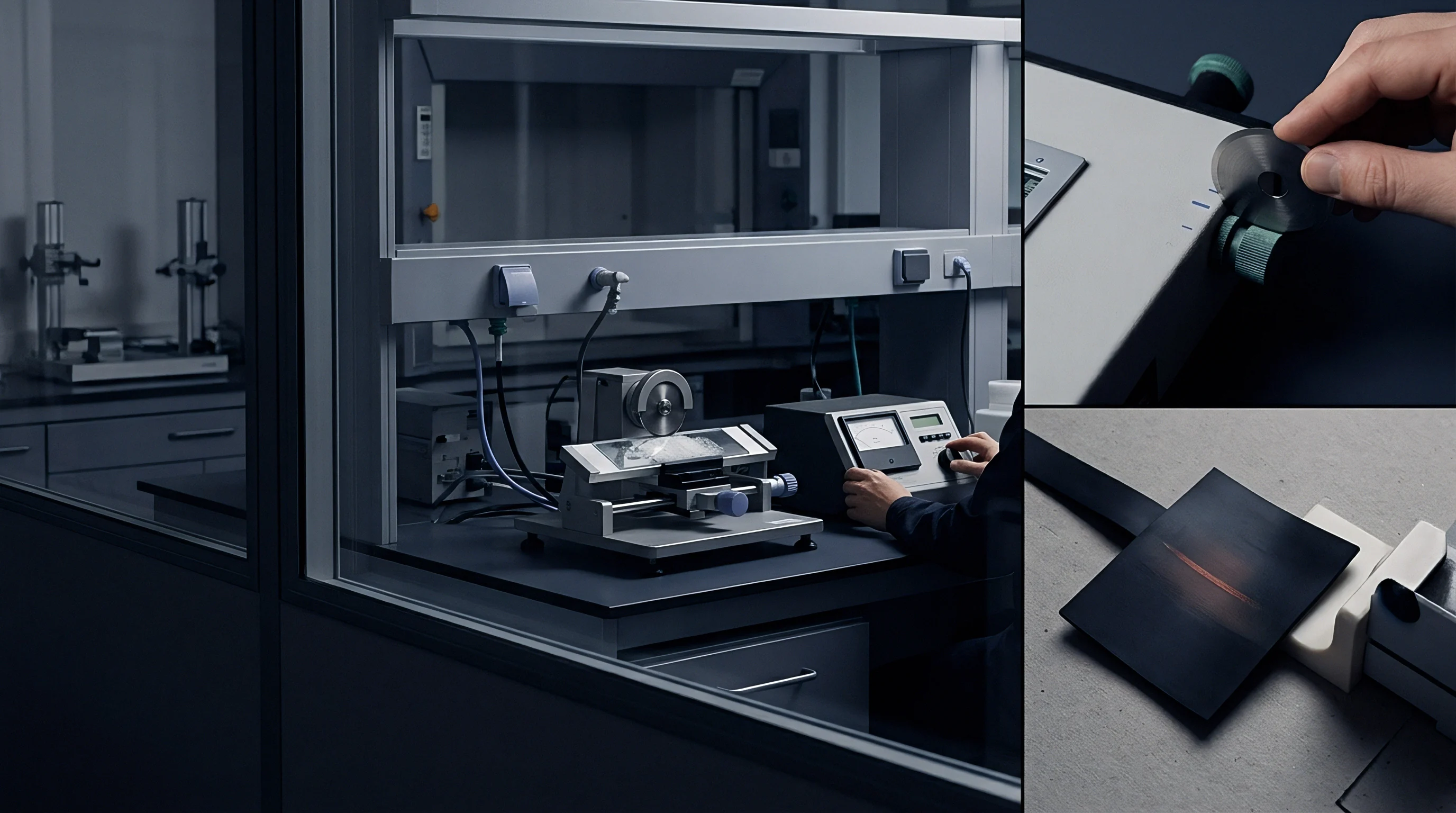
Polyethylene retains volatile organic compounds within its amorphous regions. Solvent-based laminating adhesives applied during gravure or flexographic converting release ester, alcohol, and glycol ether vapors into the moving web during drying. Standard drying tunnels driven by heated air turbulent flows remove the majority of volatile carriers from the wet layer.
Solvents trapped beneath barrier films or dissolved inside low-density polyethylene film layers stay bound within the polymer web. Measuring these residues accurately determines whether a finished roll meets regulatory migration limits and sensory requirements for food packaging.
Static headspace gas chromatography serves as the principal technique for quantifying residual solvents in flexible packaging. Liquid standards injected directly into an external calibration matrix fail to mirror the physical retention mechanics of solid polyolefin film samples. Gas-phase concentrations above a pure solvent matrix depend on pure liquid vapor pressures.
Gas-phase concentrations above a polyethylene laminate depend on matrix partition coefficients. Polyethylene retains volatile organic compounds.
The thermodynamic partition coefficient governs the distribution of volatile molecules between the solid polymer phase and the gas phase inside a sealed headspace vial. Chemical affinity between non-polar polyethylene chains and organic solvents reduces volatile release into the headspace gas volume. Polar alcohols like ethanol face different retention forces than moderately polar esters like ethyl acetate or aliphatic hydrocarbons.
Standard addition bypasses matrix variance by introducing known solvent quantities directly onto the tested laminate sample. Every calibration point shares the exact matrix environment of the unknown sample.
| Solvent Compound | Boiling Point (Degree C) | External Standard Recovery (Percent) | Standard Addition Recovery (Percent) | Matrix Bias Shift (Percent) |
|---|---|---|---|---|
| Ethanol | 78.4 | 68.2 | 99.4 | -31.2 |
| Ethyl Acetate | 77.1 | 74.5 | 98.8 | -24.3 |
| Isopropanol | 82.6 | 71.0 | 99.1 | -28.1 |
| 1-Methoxy-2-propanol | 120.0 | 52.3 | 97.6 | -45.3 |
| Toluene | 110.6 | 61.8 | 98.2 | -36.4 |
Quantification using external calibration curves generated from solvent solutions in clean diluents systematically underestimates residual solvent levels in polyethylene laminates. Matrix suppression leads to underreporting retained solvents by thirty to forty-five percent. Converting operations relying on external calibration release rolls that contain solvent levels exceeding legal migration thresholds.
Off-odor complaints, packaging taint, and regulatory product recalls follow when retained solvent testing relies on uncorrected external matrix standard curves.
Spike
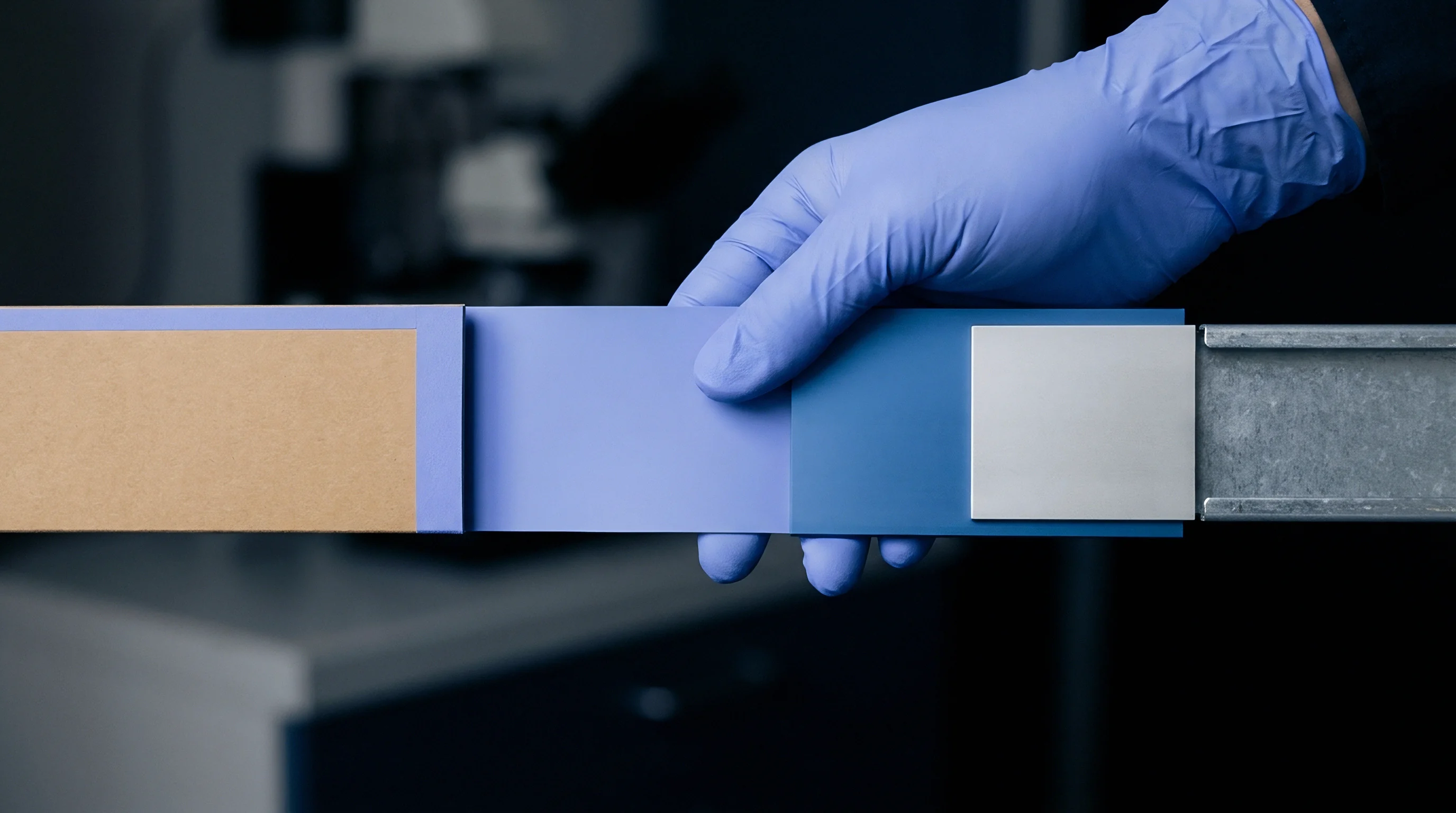
Precision spiking introduces target analytes into the headspace vial without altering sample morphology or inducing prematurely evaporated analyte loss. A representative sample cut from the converted laminate web must yield a defined surface area, typically one hundred square centimeters. Operators handle sample strips with clean forceps to prevent cutaneous lipid contamination.
Roll sample strips tightly with the polyethylene layer facing inward to maintain uniform thermal exposure across the tested laminate face.
Spiking solutions contain target solvents dissolved in high-boiling diluents such as dimethylacetamide or benzyl alcohol. Solvents with low boiling points evaporate rapidly when introduced to ambient air during vial preparation. Delivering the spiking solution directly to the bottom of the twenty-milliliter glass vial using a gas-tight micro-syringe limits flash vaporization before capping.
Immediate sealing with PTFE-lined magnetic aluminum crimp caps protects sample integrity prior to thermal incubation.
- Cut exactly one hundred square centimeters of the polyethylene laminate using a calibrated steel punch.
- Roll the laminate specimen tightly along its machine direction with the seal layer oriented interiorly.
- Place the rolled specimen into a clean twenty-milliliter static headspace glass vial.
- Inject the designated volume of multi-solvent standard solution onto the bottom interior surface of the vial using a ten-microliter syringe.
- Crimp the aluminum cap with a PTFE-faced silicone septum onto the vial mouth using a calibrated pneumatic crimper set to fifty-five pounds per square inch.
- Transfer the sealed vial into the static headspace autosampler oven preheated to one hundred degrees Celsius.
- Equilibrate the vial under agitation for exactly forty-five minutes to achieve complete solid-gas phase equilibrium.
- Inject the equilibrated headspace vapor into the gas chromatograph injection port via a heated transfer line maintained at one hundred ten degrees Celsius.
Sample preparation speed determines chromatographic repeatability. Leaving vials uncapped for more than five seconds after adding the liquid spike causes volatile ester loss into ambient room air. Ambient temperature fluctuations inside the testing laboratory shift evaporation kinetics during sample preparation.
Standard addition requires constant sample mass, identical vial volume, and strict time limits for every sample prep cycle.
A standard addition sequence remains valid only when the unspiked matrix and all spiked additions undergo identical thermal conditioning time.
Equal thermal exposure across spiked and unspiked samples stabilizes the partition coefficient. Chemical interactions between the polyethylene web and added solvent spiked molecules stabilize once thermal equilibrium is reached inside the sealed headspace chamber.

Calibre
Chromatographic quantification by standard addition relies on constructing a linear regression plot from a series of spiked sample vials containing identical amounts of the tested laminate. One vial receives zero addition, establishing the base signal from the unknown sample. Three or four subsequent vials receive incremental, known quantities of the target solvent analytes.
Gas chromatography using flame ionization detection produces peak areas proportional to total volatile concentration in the vial headspace.
The mathematical treatment plots analyte peak area on the vertical axis against the added concentration or mass on the horizontal axis. Linear regression yields the line equation y equals m times x plus c, where y represents the peak area, m represents the slope, x represents the added solvent mass, and c represents the baseline peak area from the unspiked sample. Extrapolating this linear regression line back to where peak area y equals zero identifies the absolute concentration of solvent present in the original, unspiked laminate sample.
The distance from the origin to the negative x-intercept represents the unknown sample content.
Consider a standard addition sequence evaluating residual ethyl acetate in a flexible packaging structure composed of twelve-micron printed PET laminated to forty-micron low-density polyethylene using a polyurethane solvent-based adhesive. Four vials each receive one hundred square centimeters of laminate, corresponding to zero point zero one square meters. Vial zero receives no spike.
Vials one, two, and three receive additions equivalent to zero point five, one point zero, and1 point five milligrams per square meter of ethyl acetate, respectively.
Chromatographic analysis yields peak areas measured in area units. Analysis of vial zero yields a peak area of twelve thousand four hundred units. Analysis of vial one yields twenty-four thousand eight hundred units.
Analysis of vial two yields thirty-seven thousand two hundred units. Analysis of vial three yields forty-nine thousand six hundred units. Plotting these peak area values against the added mass density creates a straight line with high correlation.
Linear regression yields the line equation y equals twenty-four thousand eight hundred times x plus twelve thousand four hundred. Linear regression yields the origin. To find the unknown concentration, set peak area y to zero, producing the equation zero equals twenty-four thousand eight hundred times x plus twelve thousand four hundred.
Solving for x produces x equals negative twelve thousand four hundred divided by twenty-four thousand eight hundred. This yields a value of negative zero point five. The absolute value demonstrates that the original polyethylene laminate sample contains exactly zero point five milligrams per square meter of residual ethyl acetate.
| Vial Identifier | Laminate Area (Square Meter) | Added Ethyl Acetate (mg/m2) | Observed Peak Area (Counts) | Calculated Concentration (mg/m2) |
|---|---|---|---|---|
| Vial 0 (Base Sample) | 0.01 | 0.00 | 12,400 | 0.50 |
| Vial 1 (Spike 1) | 0.01 | 0.50 | 24,800 | 0.50 |
| Vial 2 (Spike 2) | 0.01 | 1.00 | 37,200 | 0.50 |
| Vial 3 (Spike 3) | 0.01 | 1.50 | 49,600 | 0.50 |
Regression line slopes reflect the specific instrument response factor combined with matrix partition mechanics. Slopes remain linear across reasonable additions, but excess solvent additions overload the detector or saturate the polymer matrix. Spiking concentrations must bracket the expected residual solvent level, extending no more than five times the estimated unknown concentration.
High correlation coefficient values above zero point nine nine five validate the linear assumption underpinning the extrapolation calculation.
A standard addition plot with a coefficient of determination below zero point nine nine zero indicates matrix saturation or leakages in the headspace vial crimp seal.
Non-linear responses occur when added solvent volumes alter the physical composition of the polymer matrix. Polyethylene film swelling accelerates when exposed to high vapor concentrations of active solvents. Solvation shifts the baseline partition coefficient, changing the slope across higher spiking points and invalidating linear regression extrapolations.


Drift
Headspace gas chromatography exhibits operational drift when instrument parameters and physical sample conditions shift during testing sequences. Oven temperature fluctuations inside the static headspace unit change analyte kinetic energy, altering vapor pressure curves. A temperature variation of one degree Celsius inside the incubation chamber causes a three to five percent shift in total peak area output.
Maintaining rigorous thermal stability across extended autosampler sequences prevents signal drift.
Polyethylene web samples degrade under excessive thermal conditioning. Incubation temperatures above one hundred twenty degrees Celsius melt low-density polyethylene film structures, generating volatile low-molecular-weight alkane oligomers. Chromatographic columns receive these thermal breakdown products, producing baseline drift, ghost peaks, and overlapping retention zones that obscure primary target solvent peaks such as ethanol or ethyl acetate.
High temperatures melt low-density films.

What Drives Partition Coefficient Skew during Thermal Equilibration?
Matrix swelling driven by high solvent vapor concentrations alters the release kinetics of retained volatiles during incubation. Polyethylene chains absorb organic solvents, increasing free volume within amorphous regions. Absorbed solvents act as plasticizers, lowering the local glass transition temperature and accelerating residual gas diffusion into the headspace volume.
The partition coefficient decreases as the polymer matrix absorbs higher concentrations of solvent spikes.
- Vial Septum Bleed releases siloxane compounds into the column at elevated temperatures, generating interfering chromatographic peaks.
- Pneumatic Crimp Pressure Deficits permit volatile leakages past the PTFE face during forty-five minute incubation cycles.
- Solvent Flash Evaporation during room-temperature syringe transfer causes volatile analyte loss before sealing the vial.
- Polyethylene Oligomer Contamination coats the interior surface of the GC injection liner, reducing analyte transfer efficiency.
- Column Phase Degradation resulting from residual moisture accumulation alters retention times across sequential injections.
Septum bleed degrades signal clarity. Converting suppliers frequently argue that elevated residual solvent figures result from ambient laboratory solvent contamination rather than laminator drying failures. Rigorous laboratory blank runs, unspiked controls, and secondary reference standard additions isolate ambient background signals from true laminate retention figures.

Dose
European standard EN 13628-1 specifies static headspace gas chromatography using standard addition or external calibration for residual solvent quantification in flexible packaging. European standard EN 13628-2 defines total solvent residue extraction protocols using full evaporation technique methods. Compliance verification across European food contact supply chains demands strict adherence to total residual solvent limits, typically specified below five milligrams per square meter for primary flexible packaging structures.
Individual solvent compounds carry distinct toxicological and sensory limits. Retained ethyl acetate concentrations exceeding ten milligrams per square meter cause distinct chemical off-odors that taint fatty food matrices. Toluene residues are subject to tight restrictions due to health concerns, with individual limits often set below zero point zero five milligrams per square meter.
Standard addition provides the analytical precision required to certify compliance at these low detection limits.
| Parameter | EN 13628-1 Protocol | EN 13628-2 Protocol | Regulatory Target Limit |
|---|---|---|---|
| Extraction Method | Static Headspace Phase Balance | Multiple Headspace Extraction | Not Applicable |
| Matrix Correction | Standard Addition Spiking | Total Evaporation Matrix Stripping | Mandated for Polyolefins |
| Incubation Temperature | 100 Degree C | 120 Degree C | Max 100 Degree C for PE |
| Total Solvent Limit | Defined by Linear Plot | Defined by Extinction Curve | Less than 5.0 mg/m2 |
| Toluene Specific Limit | Quantified via Flame Ionization | Quantified via Mass Spec | Less than 0.05 mg/m2 |
Food contact declarations under European Union Regulation 10/2011 mandate that substance migration from plastic materials into food stimulants must not alter food composition or organoleptic characteristics. Testing certificates generated without matrix-corrected analytical methods fail audit inspections conducted by food safety authorities.
Declarations of compliance for printed laminates must include verified residual solvent values measured via matrix-compensated gas chromatography protocols.
Specifications written into supply agreements mandate that suppliers provide static headspace GC testing reports based on standard addition for every production lot. Changing adhesive systems or laminator line speeds invalidates previous compliance certificates, triggering mandatory re-qualification runs under standardized addition testing protocols.
Yield
Converting lines running high-speed gravure lamination generate significant costs when drying efficiency drops. Operating a lamination line at four hundred meters per minute with insufficient drying air volume leaves excess solvent trapped inside the polyolefin web. Unverified web rolls wound under high tension trap solvent molecules permanently within the core layers, leading to blocked rolls, print lifting, and ruined web lots.
Batch release hinges on compliance.
Offline testing using standard addition requires approximately two hours per sample set, including preparation, spiking, equilibration, and chromatographic running time. Converting facilities balance the cost of offline testing against the risk of scrapping hundreds of thousands of square meters of defective film. Implementing rapid matrix-corrected standard addition screening protocols prevents uncertified materials from entering converting or slitting queues.
- Master Standard Solution Preparation using high-purity analytical solvent blends traceable to certified reference standards.
- Laminate Web Sampling Protocol specifying sample extraction from the center and edge positions across the full trim width.
- Quadruplicate Headspace Vial Setup comprising one unspiked sample and three incremental solvent additions.
- Chromatographic Linearity Audit verifying that standard addition regression slopes achieve minimum correlation thresholds.
- Batch Release Dossier Generation recording calculated residual levels alongside laminator line speed and tunnel air temperatures.
Gravure lines generate ester emissions. What balance between line speed economics and offline testing frequency protects converting margins while guaranteeing zero solvent migration failures across high-barrier food packaging lots?