Quantification of Submicron Polymer Particle Carryover Limits in Recycled Board Mill Water Circuits
Submicron polymer carryover must stay below 150 mg/L in recycled board water loops to prevent felt compaction, bond loss, and converting failures.
Clarifier
Submicron polymer carryover enters recycled paperboard circuits when dispersed hot melts, latex binders, polyolefin coatings, and wax barriers bypass mechanical separation screens during pulping. These colloidal particles possess nominal hydrodynamic diameters between 0.05 and 1.00 micrometers. Standard slotted pressure screens reject macro-stickies larger than 100 micrometers, and fine slotted baskets capture particles down to 75 micrometers.
Mechanical cleaning leaves the submicron fraction suspended in process water. Mills operating closed or low-effluent loops accumulate this colloidal mass inside white water circuits, headbox delivery systems, and felt conditioning loops. The concentration builds continuously until deposition equilibrium or chemical precipitation occurs.
Direct quantification of this submicron mass governs wet-end runnability and final sheet adhesion. Mill chemists measure this fraction by combining membrane microfiltration with total organic carbon analysis, alongside solvent-extraction gravimetry using dichloromethane or methyl tert-butyl ether. The operational baseline for trouble-free operation on high-speed fourdrinier and multi-ply cylinder machines sits below 150 milligrams of extractable colloidal polymer per liter of clear filtrate.
Exceeding 250 milligrams per liter triggers rapid organic deposition on forming fabrics, press felts, and dryer cylinders.
Online dynamic light scattering and nanoparticle tracking analysis reveal that submicron particles maintain dispersion stability via electrostatic repulsion. Their zeta potentials range from negative 25 to negative 45 millivolts. When closed-circuit process water conductivity exceeds 3,500 microsiemens per centimeter through dissolved calcium and sulfate accumulation, this electrostatic barrier collapses.
Submicron particles aggregate into micro-stickies between 5 and 50 micrometers. Deposition initiates on machine clothing immediately.
A dissolved-air flotation clarifier removes 85 percent of submicron acrylic particles only when the cationic coagulant dosage satisfies 100 percent of the anionic colloidal demand measured by charge titration.
Polymer particles below one micrometer evade physical trapping by paper furnish during drainage. Instead, they circulate through the wire pit into short-circuit recovery systems. When the white water loop carries excessive submicron mass, finished recycled containerboard displays localized surface energy defects, reduced internal bond strength via Scott bond loss, and reduced coefficient of friction.
Mechanical entrainment in the sheet structure increases proportionally with machine retention chemistry efficiency. High-performance dual-polymer retention systems capture a fraction of these particles. The remainder accumulates across clarifiers, save-alls, and seal pits, driving thermal and mechanical degradation across the boardmaking process.
Colloid
Physicochemical State of Dispersed Organics
Recycled fiber furnish derived from old corrugated containers and mixed paper introduces synthetic polymers into hydrapulpers. High shear forces and elevated pulping temperatures, typically between 45 and 60 degrees Celsius, soften low-density polyethylene films, ethylene-vinyl acetate adhesives, styrene-butadiene rubber latexes, and polyacrylate pressure-sensitive labels. Mechanical attrition breaks these polymers into colloidal dispersions.
The physical fate of this organic matter divides into three distinct operational states: macro-stickies, micro-stickies, and submicron colloidal polymers.
Colloidal particles below one micrometer stay suspended indefinitely through Brownian motion. Their high specific surface area accelerates chemical interactions with dissolved wood sugars, lignosulfonates, and residual papermaking additives. The resulting complex coats inorganic fillers such as ground calcium carbonate, impairing inter-fiber hydrogen bonding when the solids redeposit onto cellulose fibers.
The process engineer quantifies this interaction by running continuous streaming current detection on headbox stock filtrates.
| Polymer Fraction Class | Hydrodynamic Size Range | Primary Chemical Constituents | Separation Mechanism | Primary Machine Vulnerability |
|---|---|---|---|---|
| Macro-Stickies | Above 100 micrometers | EVA hot melts, unvulcanized SIS rubber | Slotted pressure screens, fine outward screens | Wire clogging, hole defects in base sheet |
| Micro-Stickies | 1 to 100 micrometers | SBR latexes, oxidized waxes, acrylics | Dissolved-air flotation, centrifugal cleaners | Press felt compaction, dryer pick-outs |
| Submicron Colloids | 0.05 to 1.00 micrometers | Polyacrylates, vinyl esters, pure polyethylene waxes | Cationic fixation, microflocculation, ultrafiltration | Headbox foaming, sizing reversion, spot blistering |
| Dissolved Organics | Below 0.05 micrometers | Lignosulfonates, wood resins, oxidized starches | Biological wastewater reactors, membrane digestion | Biochemical oxygen demand spikes, high biocide consumption |
Submicron synthetic particles carry distinct negative charges originating from surfactant stabilizers used during adhesive manufacture and the ionization of functional carboxylic acid groups. When a closed paper mill reduces fresh water intake below 4 cubic meters per metric ton of produced linerboard, the closed system accumulates multivalent metal ions. Calcium cation buildup compresses the electrical double layer of the polymer colloids.
Agglomeration kinetics follow classic Derjaguin-Landau-Verwey-Overbeek theory. The critical coagulation concentration represents the operational threshold where process water electrolytes destabilize submicron polymers into tacky micro-aggregates. If the mill process water exceeds 600 milligrams of free calcium ions per liter, spontaneous particle agglomeration occurs inside low-shear zones such as machine chests and wire suction boxes.
The sheet formation process suffers immediately, yielding uneven moisture profiles and localized hydrophobic spots across the base board.
Understanding the submicron threshold demands continuous charge monitoring. The interaction between anionic polymers and cationic process additives changes the drainage behavior of the furnish. Uncontrolled colloidal carryover consumes added wet-strength resins, requiring dry-end operators to elevate chemical dosing to preserve physical test specifications.
Titration
Fractionation and Spectroscopic Isolation
Measuring polymer particles below one micrometer requires rigorous isolation from cellulosic fines and mineral fillers. Mills rely on stepwise dead-end membrane filtration under pressurized nitrogen gas to separate water fractions. The raw white water sample undergoes pre-screening through a 20-micrometer polyester monofilament wire mesh to discard long fibers and macro-contaminants.
The filtrate is then passed through an 8-micrometer cellulose acetate filter, followed by fractionation across a 1.2-micrometer glass microfiber disc under controlled vacuum at 50 kilopascals.
The operational filtrate contains the submicron target mass alongside dissolved chemical oxygen demand. The laboratory technician routes this liquid through an asymmetric polyethersulfone ultrafiltration membrane with a molecular weight cut-off rating of 100 kilodaltons, translating to approximately 0.01 micrometers hydrodynamic pore sizing. The retained mass on the membrane represents the colloidal synthetic fraction.
Gravimetric drying at 105 degrees Celsius followed by muffle furnace ashing at 525 degrees Celsius according to TAPPI T 211 separates combustible organic polymer content from residual suspended mineral ash.
Under TAPPI T 211 conditioning at 525 degrees Celsius, residual ash mass confirms the inorganic filler boundary before organic solvent reflux extraction begins.
Fourier-transform infrared spectroscopy equipped with attenuated total reflectance identifies the chemical functional groups of the isolated polymer cake. Distinct absorption peaks verify carryover chemistry:
- Ethylene-vinyl acetate copolymers exhibit diagnostic stretching bonds at 1738 inverse centimeters for acetate carbonyl alongside 1238 inverse centimeters for the carbon-oxygen ester link.
- Styrene-butadiene rubber polymers produce distinct out-of-plane carbon-hydrogen aromatic bending vibrations at 700 and 760 inverse centimeters with an isolated trans-alkene band at 966 inverse centimeters.
- Polybutyl acrylate emulsions reveal asymmetric aliphatic hydrocarbon stretching at 2958 inverse centimeters and intense (meth)acrylate ester carbonyl doublets positioned near 1730 inverse centimeters.
- Polyethylene wax fractions generate sharp methylene rocking doublets at 720 and 730 inverse centimeters, reflecting microcrystalline polymer chain segments.
Liquid chromatography paired with tandem mass spectrometry quantifies low-molecular-weight oligomers extracted from the dried membrane disc using high-purity tetrahydrofuran. Solvent extraction under TAPPI T 204 protocols isolates the sticky organic phase from non-sticking cellulose fragments. The mass of the extracted residue determines the submicron polymer carryover value, expressed as milligrams per kilogram of bone-dry furnish.
A procedural failure during gravimetric sample drying distorts these calculations. If the laboratory dries the filter membrane above 105 degrees Celsius, volatile fractions of tackifying resins and waxes evaporate. This sample loss understates the real adhesive mass in the water circuit by up to 22 percent.
Spill
Threshold Breakpoints in High-Yield Board Production
Physical contamination crosses the boundary into measurable operational loss when submicron polymer concentrations cross specific volumetric limits. Board mills running three-ply testliner, recycled fluting, and white-lined chipboard operate across varied levels of circuit closure. A mill utilizing 12 cubic meters of fresh water per ton runs a dilute white water circuit, while an integrated zero-liquid-discharge containerboard line circulates process water up to 40 times before mechanical biological treatment.
| Circuit Water Location | Target Ceiling Value | Severe Action Threshold | Test Method Reference | Operational Machine Consequence |
|---|---|---|---|---|
| Primary Headbox Feed | 85 mg/L organic mass | 190 mg/L organic mass | TOC / Dichloromethane Ext. | Micro-hole pinholes, streak formation on wire |
| Forming Wire Tray Filtrate | 110 mg/L organic mass | 240 mg/L organic mass | Pyrolysis GC-MS / 0.45 um | Fabric filling, localized sheet drainage stalling |
| First Press Suction Water | 45 mg/L organic mass | 120 mg/L organic mass | Turbidimetry / DLS Count | Felt compaction, hydraulic press bouncing |
| Clarified White Water | 30 mg/L organic mass | 75 mg/L organic mass | Dynamic Light Scattering | Nozzle scale formation in cleaning showers |
| Pulp Thickener Filtrate | 140 mg/L organic mass | 310 mg/L organic mass | Gravimetric THF Reflux | Loss of cationic polymer fixing efficiency |
When submicron polyacrylate and ethylene-vinyl acetate carryover across the primary headbox crosses 190 milligrams per liter, sheet drying dynamics destabilize. The submicron particles migrate along the evaporating moisture front toward the sheet surface during passage over the pre-dryer cylinders. When the web contacts dryer felts at 115 degrees Celsius, these softened polymer particles adhere to the synthetic felt fibers.
Felt permeability drops from 120 cubic feet per minute down to 35 cubic feet per minute within 96 operating hours, forcing steam pressure increases to maintain sheet dryness at the size press.
The sheet internal structure suffers direct mechanical degradation from submicron carryover. In an empirical production run producing 140 grams per square meter recycled fluting medium, a carryover shift from 70 milligrams to 260 milligrams per liter reduces the Concora Medium Test rating from 280 Newtons to 215 Newtons under standard ISO 7263 pre-conditioning at 23 degrees Celsius and 50 percent relative humidity. Polymer particles coat internal fiber bonding sites, preventing natural cellulose-to-cellulose hydrogen bonding.
Excessive colloidal carryover strips 18 percent of sheet tensile strength before any mechanical fiber degradation takes place.
Converting operations pay the ultimate penalty for headbox contamination. Board fabricated with excessive submicron carryover exhibits random release-force spikes during unwinding on corrugator double-facers. The adhesive starch fails to penetrate the hydrophobic surface patches created by redeposited synthetic wax and latex, resulting in catastrophic dry-bond blister delamination along the flute tips.
Settling
Chemical Fixation and Coagulation Efficiency
Mitigating submicron polymer accumulation requires active chemical capture onto long fibers before process water recirculation builds up massive particle counts. Coagulation and flocculation systems deploy highly charged, low-molecular-weight cationic polymers to sweep submicron colloids onto cellulose fiber surfaces, ensuring their departure inside the dried board matrix rather than through loop accumulation.
Poly-diallyldimethylammonium chloride, commonly designated polyDADMAC, with molecular weights between 100,000 and 400,000 Daltons, acts as an efficient coagulant. At active dosages between 0.40 and 1.20 kilograms per metric ton of furnished pulp, polyDADMAC neutralizes the negative surface charge of dispersed acrylic and SBR colloids. This step drops their absolute zeta potential below negative 10 millivolts, initiating rapid particle consolidation.
Mechanical addition points dictate chemical efficacy across the circuit. The chemical program deploys across specific sequential zones:
- Thick stock chest inlet dosing applies high-charge inorganic coagulants such as polyaluminum chloride at basicity levels of 70 percent to pacify high anionic trash volumes.
- Secondary fan pump suction ports receive organic cationic polymers to fix micro-flocs onto the long fiber furnish ahead of paper sheet consolidation.
- High-molecular-weight polyacrylamide arrives immediately before the machine headbox slice to bridge stabilized flocs, improving mechanical retention across the forming fabric.
- Continuous dissolved-air flotation feeds utilize cationic polyacrylamide variants to scavenge residual submicron particles out of cloudy white water circuits.
Polyaluminum chloride dosing demands tight pH control between 6.8 and 7.5. Operating outside this envelope dissolves aluminum hydroxide complexes back into ionic solutions, neutralizing their ability to bridge organic polymers. The mill buyer balances chemical additions against finished sheet conductivity limits to safeguard sizing efficiency.
Over-cationization represents a dangerous operational failure mode. Dosing coagulants beyond the isoelectric point reverses the colloidal charge to positive 15 millivolts or higher. Submicron polymers re-disperse into stable suspensions, escaping sheet entrainment and re-entering the machine water system with enhanced surface reactivity.

Depreciation
Yield Accounting and Conversion Economics
Submicron polymer carryover impacts production costs long before a wet-end sheet break halts the machine. A packaging converter ordering 175 grams per square meter Kraft Top Liner expects consistent surface energy to maintain flexographic ink adhesion and cold-set adhesive setting times. Submicron polymer particles that deposit on the sheet surface generate localized dyne level swings between 44 dynes per centimeter down to 31 dynes per centimeter, driving print rejects and edge flaking during high-speed die cutting.
Consider a continuous containerboard machine producing 350,000 metric tons annually of testliner and recycled fluting. Operating with uncontrolled submicron polymer carryover above 220 milligrams per liter requires aggressive chemical boilouts and acid washes every 18 days, rather than standard 35-day maintenance intervals. Each six-hour boilout costs 38,000 euros in direct cleaning surfactants, thermal steam consumption, waste treatment neutralization, and lost machine margin contribution.
Converting plants running board with elevated submicron polymer residue experience high delamination rates. The following worked financial balance demonstrates the landed cost penalty of running contaminated board through an automated corrugator line processing 45,000 metric tons of fluting per year. The baseline run uses stock from a mill holding water circuit carryover under 60 milligrams per liter, while the contaminated run processes stock from a facility exceeding 240 milligrams per liter.
Assume a raw board purchase price of 580 euros per metric ton delivered. Corrugator operations running clean material sustain average production speeds of 320 meters per minute with an unplanned web delamination rate of 0.35 percent across annual converting runs. The operational line requires 1.8 grams of native wheat starch per square meter of single-face bondline.
Processing board with excessive submicron polymer carryover degrades operations across three variables:
- Unplanned delamination scrap increases to 1.65 percent of input tonnage due to intermittent non-bonding flutes, representing 585 tons of degraded board scrapped to repulping at an internal loss of 280 euros per ton net recovered fiber value.
- Starch adhesive consumption rises by 18 percent as line operators elevate application rates to 2.12 grams per square meter, compensating for surface hydrophobicity to force physical fiber grab.
- Operating corrugator velocity drops from 320 meters per minute to 265 meters per minute across high-density liner fluting combinations to lengthen contact dwell time inside hot plate sections, losing 410 operating line hours.
The total financial penalty calculated across these three production deviations reaches 446,550 euros per year. This equates to an extra converting processing penalty of 9.92 euros per finished ton of board converted. Low-cost board procurement that disregards mill water loop chemistry metrics surrenders its raw material margin advantages through machine downtime and adhesive overconsumption.
A contract specification missing strict colloidal carryover thresholds yields a ten euro per ton converting penalty on high-speed corrugating lines.
Packaging line reject rates track this contamination directly. If automated packing machines reject shipping cases for joint failure, the brand owner transfers the entire packaging scrap penalty back to the box converter. The converter traces the root cause down to poor fiber pull along the glue flap, which happens when submicron acrylic particles accumulate at the paper surface during machine water removal.
Dossier
Does Circuit Conductivity Invalidate Standard Optical Particle Counters?
Dynamic light scattering and optical light obscuration particle counters deliver questionable data when applied to raw white water samples without proper specimen preparation. Optical particle counters infer particle size distributions from light scattering profiles, assuming spherical polymer geometries, uniform refractive indices, and zero background absorption. These baseline assumptions collapse inside real recycled paperboard circuits.
Closed mill loops carry dissolved lignins, hemicelluloses, optical brightening agents, and residual defoamers. These dissolved organics change the fluid refractive index and absorb light at typical laser wavelengths of 633 and 780 nanometers. Furthermore, submicron polymer particles do not exist as neat spherical spheres.
They form amorphous, hydrated organic complexes with dispersed fatty acid soaps and degraded starch fragments, altering Brownian diffusion rates.
Background process water conductivity above 2,500 microsiemens per centimeter induces optical measurement artifacts. High ionic strength alters the electrical double layer of colloidal particles, causing rapid reversible agglomeration inside the optical flow cell during diluted testing procedures. Optical counters classify these transient flocs as 5-micrometer micro-stickies, missing the true submicron population count entirely.
Centrifugal fractionation must always precede optical measurement to eliminate interference from non-polymer fines.
Alternative quantification via pyrolysis gas chromatography mass spectrometry coupled to high-performance size-exclusion chromatography eliminates optical bias. The analytical protocol pyrolyzes isolated membrane filtrates at 550 degrees Celsius, cracking polymer backbones into unique monomer building blocks. Modern mass spectrometers quantify the exact concentration of styrene, ethyl acrylate, vinyl acetate, and butadiene down to 0.5 parts per million, providing indisputable mass verification independent of water turbidity, ionic conductivity, or particle geometry.
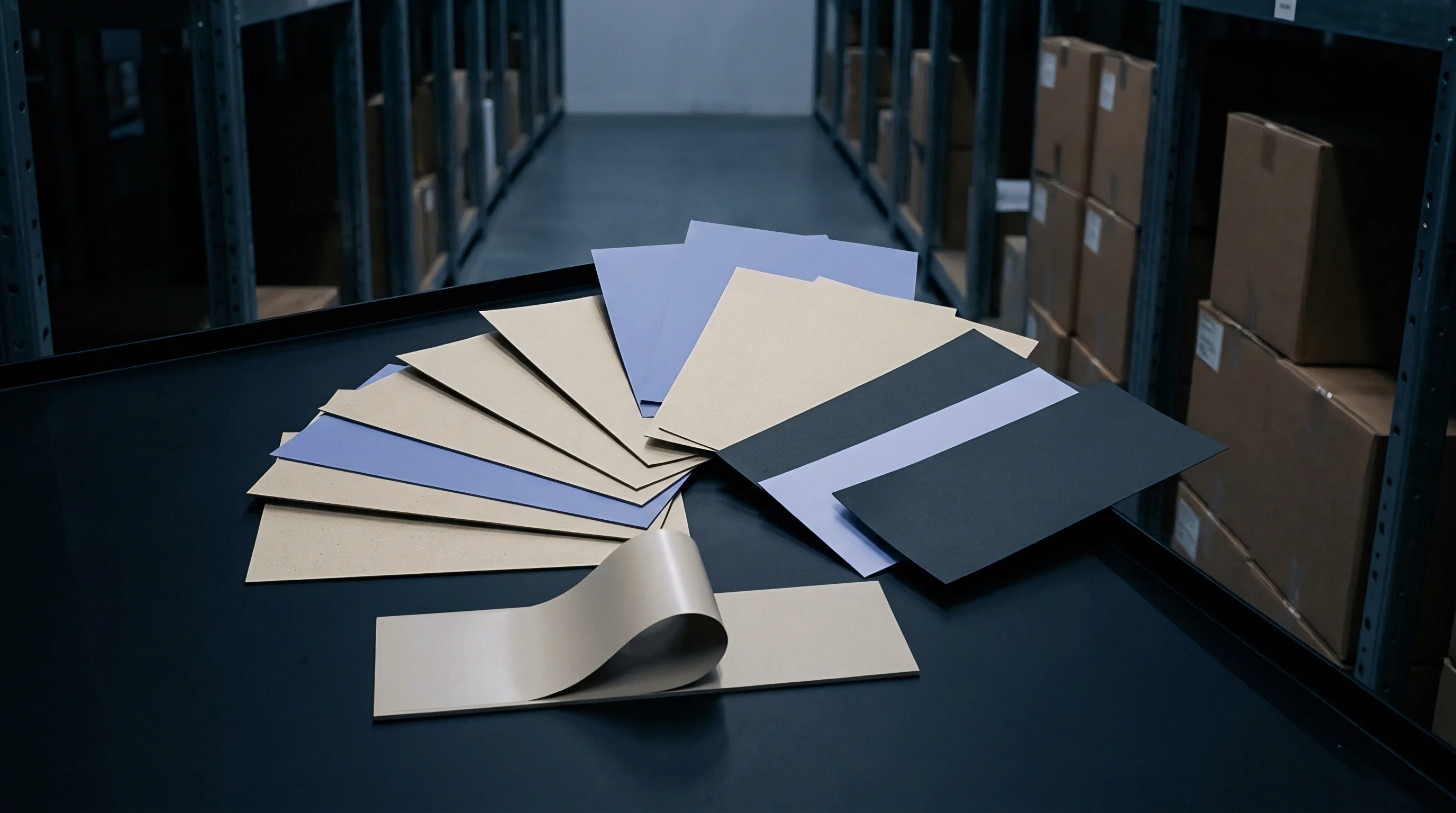
Sourcing engineers specifying recycled board grades for demanding barrier applications require verifiable mill-water test reports. Swatch-book claims of ultra-low stickie content fail to address colloidal carryover risk unless substantiated by high-resolution chemical testing. Incorporating exact limit requirements into purchasing contracts protects long-term operational profitability.
A supplier will often claim that slotted pressure screening down to 100 micrometers guarantees a clean board surface. This excuse ignores the fundamental physical reality of submicron polymer carryover. Millions of colloidal particles migrate freely through mechanical screens, accumulating in process circuits until the paper web itself is forced to act as the ultimate filter, catching the synthetic residue.