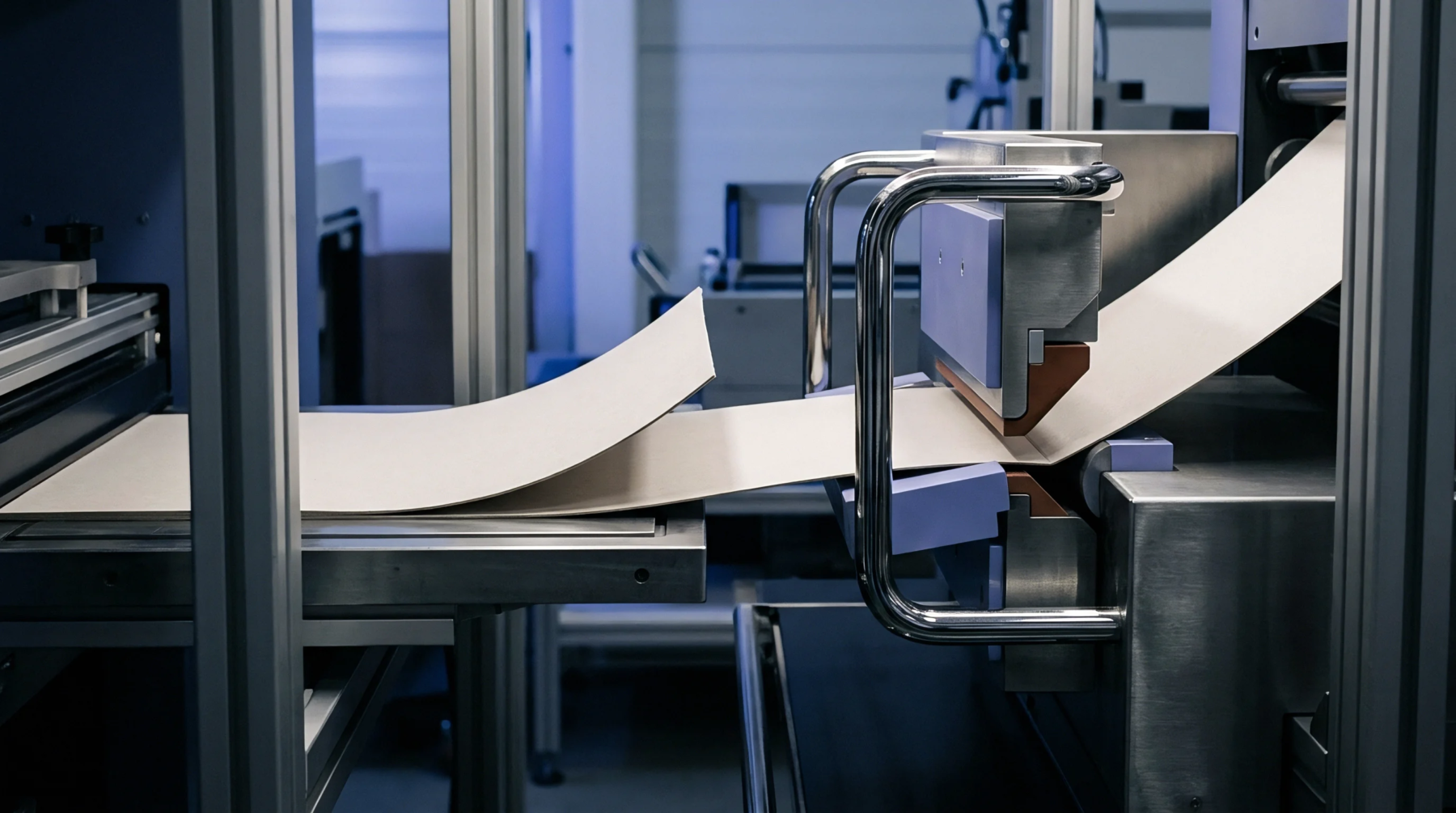
Structural Base
Rigid paperboard materials manufactured from virgin or recycled fibres provide the physical foundation required for folding cartons and heavy packaging structures. A board substrate carries functional coatings and withstands mechanical creasing without tearing across its surface fibres during high-speed printing operations. Multi-layer web formations combine mechanical pulp in the core with bleached chemical pulp on outer layers to balance yield and appearance.
This classification stops where light paper grades under 150 grams per square metre end, as lighter sheets lack the z-direction strength required for structural creasing.
Conversion Stiffness
Creasing and folding operations compress internal fibre layers to create permanent hinge lines without cracking the top liner. When die-cutting tools strike a board substrate, the internal bonding strength determines whether the sheet delaminates neatly along pre-scored channels or breaks unpredictably across the grain. High bending stiffness prevents panel bulging under vertical compression loads during warehousing.
Board moisture content directly impacts elasticity, where low relative humidity causes brittleness during creasing and excessive moisture causes permanent creasing swelling. Variations in density across the paperboard profile alter the scoring depth required to achieve consistent ninety-degree folds on automated carton gluers.
Caliper Threshold
Target thickness settings dictate the mechanical clearance needed between printing cylinders and impression rolls. Caliper variations across a mill roll create uneven ink transfer and localized pressure spikes during die-cutting. Outer limits of caliper tolerance are reached when thickness deviates beyond five percent of nominal specification.