Furnish Loop
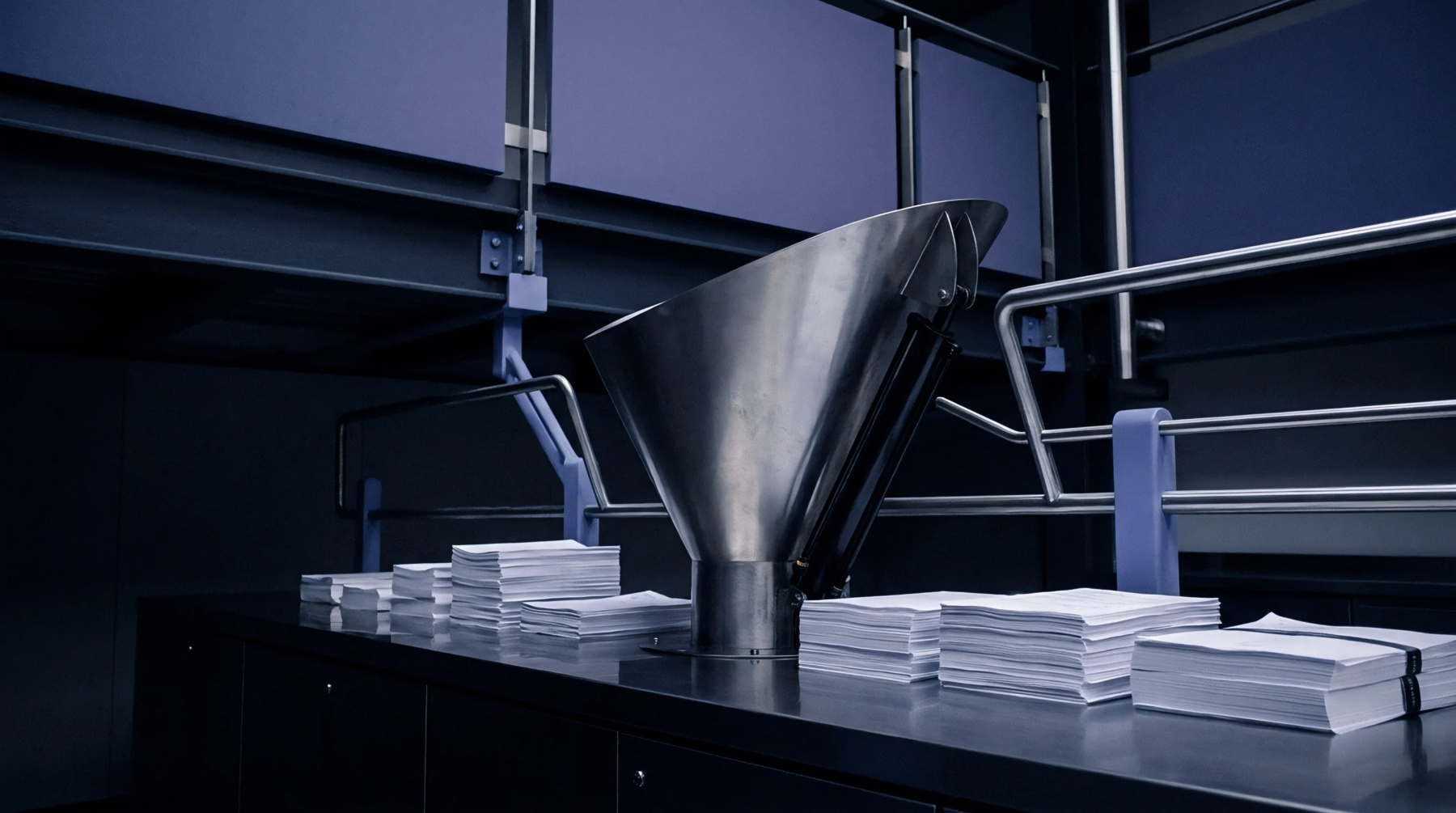
Papermaking reclamation systems recover clean manufacturing trimmings, rejected reels, and converting offcuts to reintroduce refined cellulosic mass directly into the stock preparation circuit. Internal broke recycling isolates dry and wet production waste from post-consumer waste streams, preventing contamination by foreign adhesives, synthetic films, or non-cellulosic debris. Dry waste gathered from reel slitters, winder operations, and finishing room sheeters passes into pulpers installed directly beneath the paper machine frame.
Heavy-duty rotors break down the dense fiber networks into pumpable slurries, typically at consistency levels between four and six percent solids. Chemical pulps release fibers with minimal mechanical energy, whereas highly sized, wet-strength, or coated grades demand extended residence times, elevated water temperatures, and specific chemical pulping aids to disperse the fiber bonds. Returning these re-slushed fibers directly to machine blend chests reduces virgin raw material consumption and stabilizes white water solids inventories.
The process terminates where converted material carries permanent cross-linked laminations, hot melts, or unyielding synthetic barriers that cannot be separated by standard mechanical screening.
Refining Response
Fibers subjected to prior drying undergo irreversible cell wall collapse and hornification, which diminishes swelling capability when re-wetted in the hydropulper. Secondary refining compensates for this loss of natural flexibility, applying mechanical shear to peel the external fiber wall and restore specific surface area for hydrogen bonding. Excessive refining of wet-end broke shears fragile cellulose chains, elevating the fine fiber fraction and slowing water drainage on the forming fabric.
Drainage resistance, measured via Schopper-Riegler or Canadian Standard Freeness tests, rises sharply if broke ratios fluctuate widely during production runs. Wet-end chemical additions such as cationic retention aids, alkyl ketene dimer, and starch accumulate within closed whitewater loops, altering wet-end charge balances and precipitating pitch deposits on forming wires.
Blending Control
Consistency transmitters monitor broke stock density continuously to prevent basis weight variation when cycling reclaimed material into the main furnish flow. Automated dilution loops inject clarified white water into the broke storage chest, maintaining target solids fractions within strict fractional tolerances. Feed gates blend recycled broke into the virgin stock line at steady volumetric ratios, usually bounded between ten and twenty-five percent of total machine feed.
Uncontrolled surges in broke proportion rapidly change tensile stiffness, tear propagation resistance, and moisture profiles across the paper machine reel. Precise blending sustains uniform mechanical sheet properties, protecting conversion efficiency on downstream high-speed flexographic presses and case gluers.