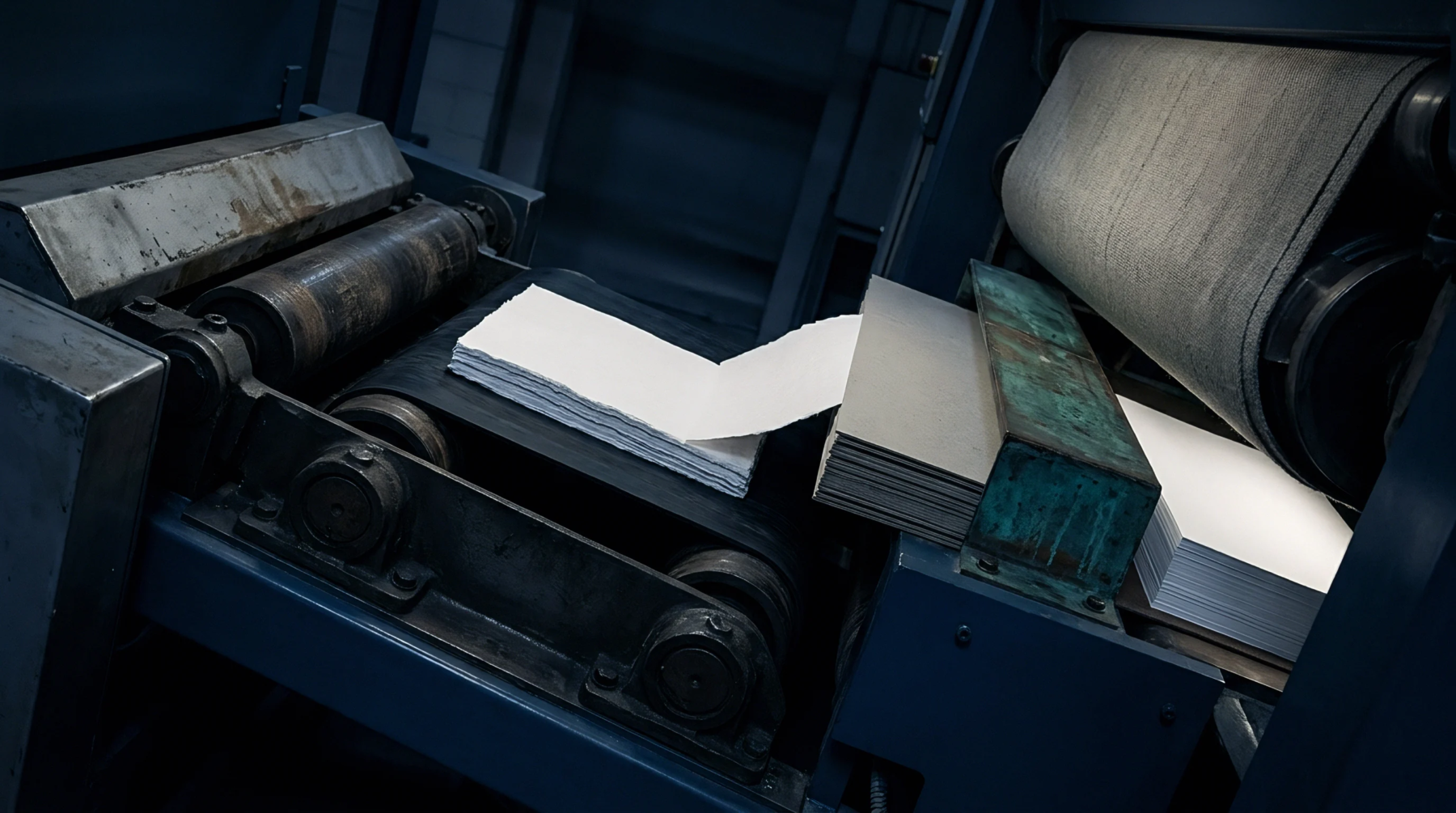
Thickness Expansion
Volumetric swelling of cellulose fibres occurs when paperboard absorbs moisture or undergoes mechanical stress relaxation during converting. Measured as a percentage of the original stock thickness, caliper gain affects the final dimensions of folded cartons and can cause jam-ups in high-speed packaging lines. The phenomenon occurs primarily during the gluing and conditioning stages of production.
Moisture Absorption
Liquid penetration during water-based adhesive application triggers fibre expansion along the vertical axis of the paper. When the moisture reaches the uncoated internal layers of the substrate, caliper gain increases rapidly. Maintaining a stable ambient humidity of fifty percent in the converting facility limits this expansion.
Uncontrolled swelling alters the folding resistance of the carton.
Mechanical Recovery
Compression during the calendering process at the paper mill temporarily reduces board thickness. Internal stresses are released as the sheet exits the nip, and caliper gain occurs as the fibres slowly return to their uncompressed state. This elastic recovery depends on the mechanical pulp content of the furnish.
High-yield pulps exhibit greater recovery than chemical pulping options. In addition, the recovery process continues for several hours after winding, meaning that the final roll diameter may increase slightly. The tension in the wound roll must be carefully managed to prevent telescoping as the paper thickness expands.