Coating Accuracy
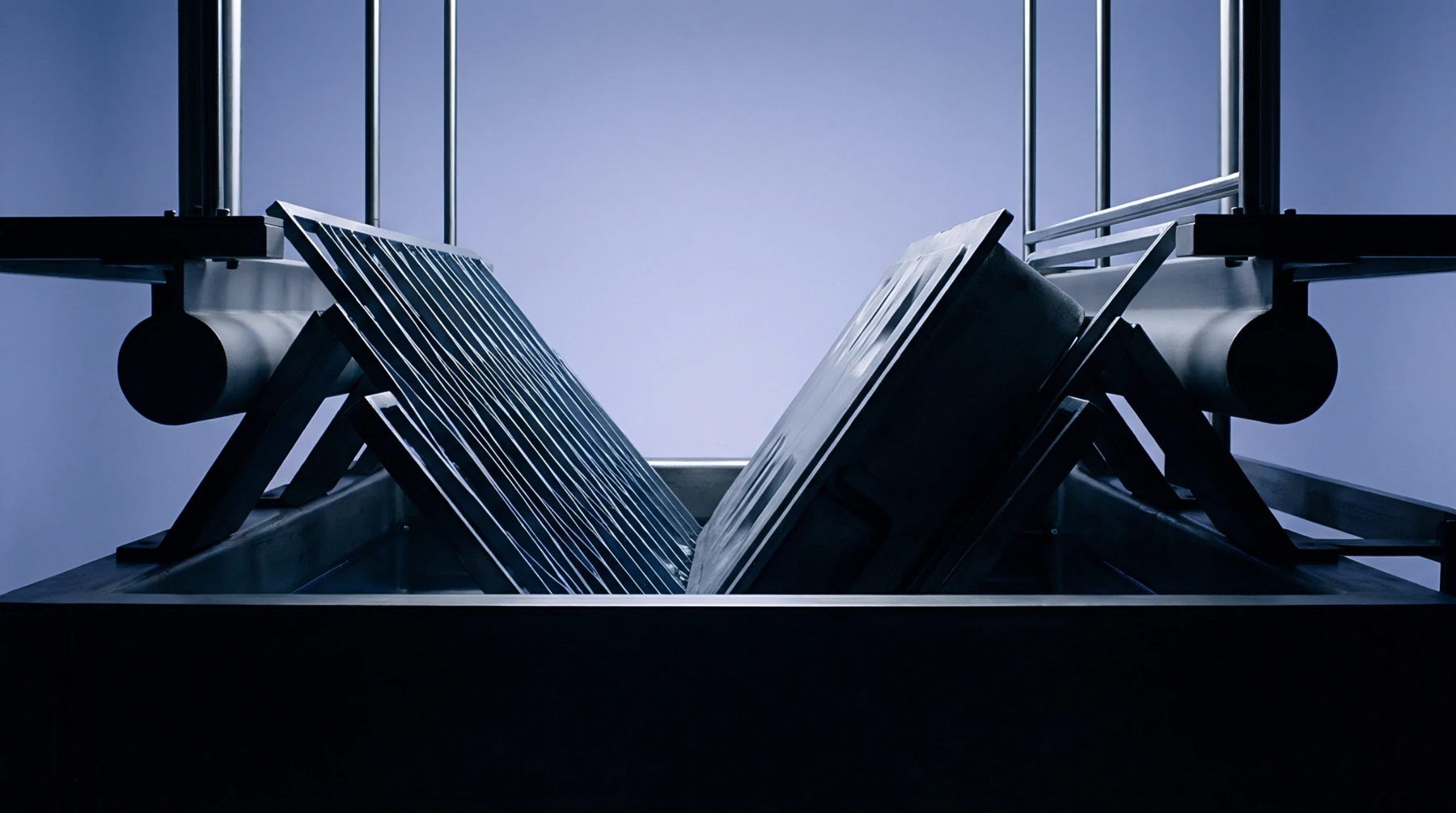
Precise liquid deposition defines the mechanism by which a mechanical blade regulates the layer thickness of functional chemistry on a moving substrate. Doctor blade metering utilizes a stiff physical edge positioned against a rotating applicator roll to shear excess fluid from the surface before contact with the target material. The gap between the blade and the roll determines the wet film weight, while the flexibility of the steel or ceramic edge influences the consistency of the coating across the machine direction.
Quality control of the final barrier or printability depends on the uniform pressure applied to this edge across the entire width of the web.
Physics Interaction
Hydraulic forces act upon the blade as fluid passes through the restricted opening, creating a pressure profile that maintains the required separation between the metering components. High viscosity mixtures require greater stiffness in the blade assembly to prevent deflection during operation, whereas lower viscosity solutions permit thinner, more flexible materials to achieve the same result. The angle of attack dictates the shear rate applied to the coating, which governs how the fluid spreads and levels immediately after the metering point.
Proper alignment of these components eliminates streaks or chatter marks that degrade the surface finish of technical papers and specialty films.
Operational Performance
Maintaining consistent gap control preserves the integrity of the coating process during long production runs where thermal expansion changes the mechanical properties of the machinery. Regular inspection of the edge geometry identifies wear patterns caused by abrasive particles in the pigment slurry or binder. Replacing the blade at pre-established thresholds ensures that the film thickness stays within the tolerance limits demanded by downstream converting or filling equipment.
This control methodology provides a reliable barrier against variation in the physical characteristics of the final product.